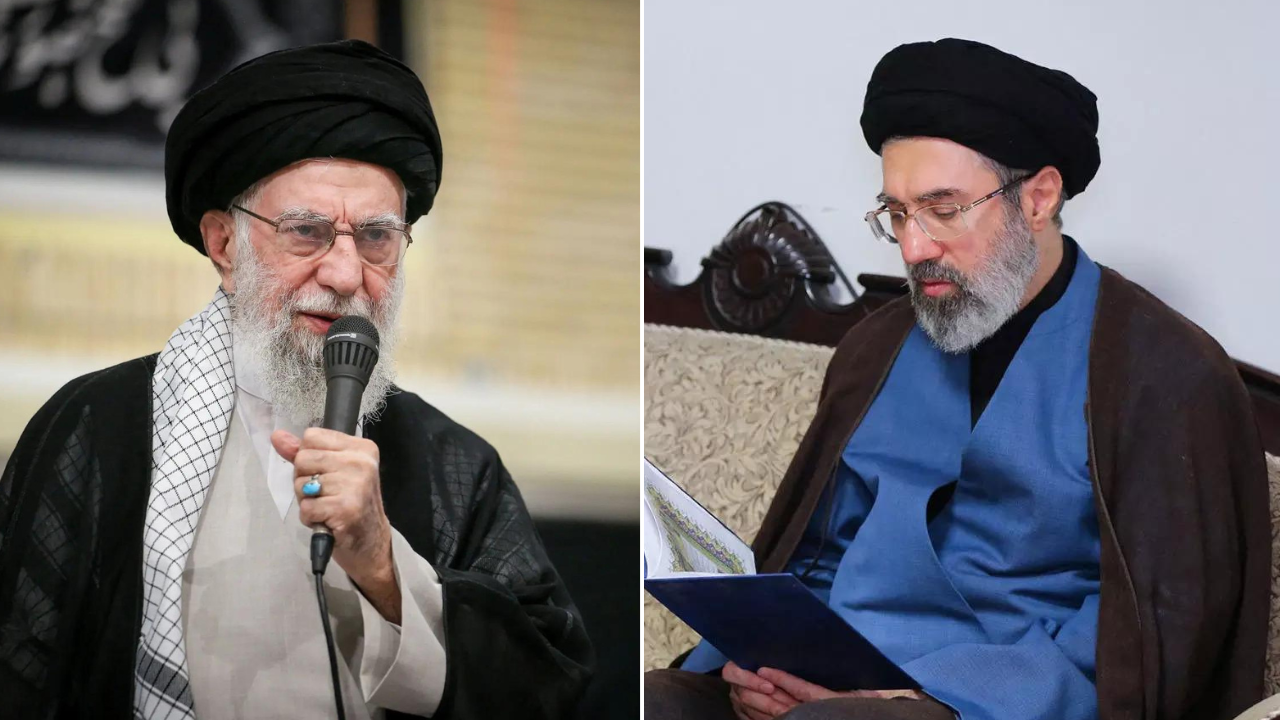




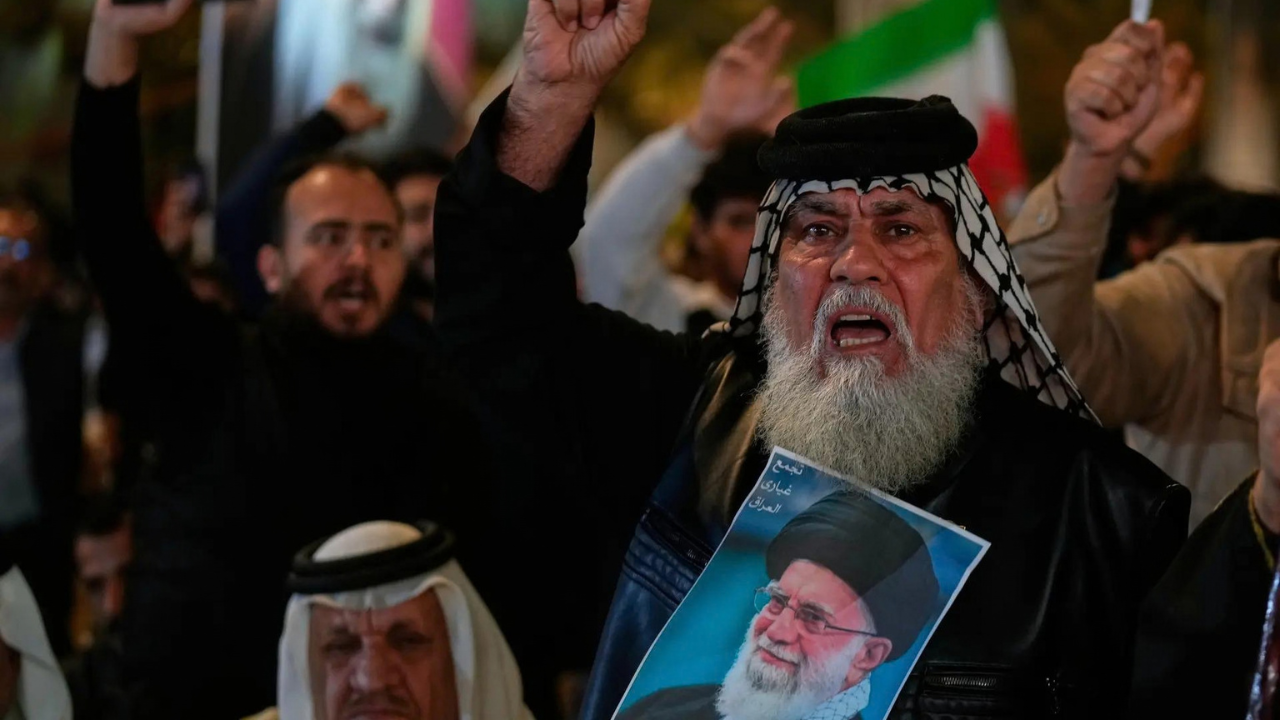
The political landscape of Iran is a subject of intense global scrutiny, particularly concerning the health and eventual succession of its Supreme Leader, Ayatollah Ali Khamenei.
Recent assessments from US intelligence circles suggest a profound paradox: even with a change at the very top, a fundamental regime change in Tehran remains an unlikely prospect.
Understanding the Succession Dynamic
The eventual passing of Supreme Leader Ayatollah Ali Khamenei will undoubtedly mark a significant moment in Iran’s modern history.
His tenure, spanning over three decades, has shaped the Islamic Republic’s domestic and foreign policies profoundly.
The Role of the Supreme Leader
The Supreme Leader holds ultimate authority in Iran, overseeing state policy, the military, and the judiciary.
This position is not merely ceremonial but is the lynchpin of the entire political system.
The Assembly of Experts, a body of 88 clerics, is constitutionally responsible for selecting the next Supreme Leader.
This process is designed to ensure continuity and ideological alignment with the principles of the Islamic Revolution.
US Intelligence Assesses Iranian Stability
A recent report, citing US intelligence findings, indicates a prevailing belief that the Islamic Republic’s foundational structures are robust enough to withstand a leadership transition without collapsing.
This assessment challenges common assumptions about the fragility of authoritarian regimes post-founding leader.
The ‘Unlikely’ Prediction and Its Basis
The core of the US intelligence warning is that the Iranian system possesses significant resilience mechanisms.
These include a powerful security apparatus and a deeply entrenched revolutionary ideology.
According to the Official Source, the intelligence community points to the lack of a unified, viable opposition capable of seizing power.
Furthermore, the state’s capacity to suppress dissent remains a formidable barrier to any popular uprising transforming into systemic change.
Pillars of Regime Resilience
Several critical institutions underpin the stability of the Islamic Republic, ensuring its endurance beyond individual leaders.
These pillars have been meticulously built and reinforced over decades.
The Islamic Revolutionary Guard Corps (IRGC)
The IRGC is far more than a conventional military force; it is a sprawling economic, political, and security organization.
Its primary loyalty lies directly with the Supreme Leader and the revolutionary ideals.
The IRGC controls vast segments of the Iranian economy, giving it significant leverage and resources.
It also plays a crucial role in internal security, quashing protests and maintaining social order.
The Basij Militia
As a volunteer paramilitary force under the IRGC, the Basij extends the state’s reach deep into society.
Its members are integrated into communities, schools, and workplaces, acting as eyes and ears for the regime.
The Basij is instrumental in mobilizing support for state-sponsored events and suppressing localized unrest.
Their presence underscores the regime’s broad surveillance and control capabilities.
Ideological Indoctrination and Institutions
The Islamic Republic has invested heavily in propagating its revolutionary ideology through education, media, and religious institutions.
This creates a significant segment of the population loyal to the system.
Seminaries, religious foundations, and cultural bodies actively reinforce the principles of Velayat-e Faqih (Guardianship of the Islamic Jurist).
This ideology legitimizes the Supreme Leader’s rule and frames challenges as foreign-backed conspiracies.
The Iranian Public and the Potential for Dissent
Despite the regime’s strength, public discontent over economic hardship, corruption, and political freedoms is undeniable.
Waves of protests have periodically erupted across the country, signaling deep-seated grievances.
Challenges to Unified Opposition
While anger is widespread, the opposition remains fragmented and lacks a cohesive leadership structure or a unified vision for a post-Islamic Republic Iran.
External support for opposition groups has often been insufficient or counterproductive, playing into the regime’s narrative of foreign interference.
The suppression tactics employed by the state are highly effective in preventing sustained, large-scale coordination among different protest movements.
Fear of severe repercussions also limits the willingness of many to openly challenge the system.
Regional Implications of a Stable Transition
A stable succession in Iran has profound implications for the already volatile Middle East.
Many regional actors closely monitor Tehran’s internal political developments.
Iran’s Regional Network
The Islamic Republic maintains a robust network of proxies and allies across the region, from Lebanon’s Hezbollah to various groups in Iraq and Yemen.
The stability of the core regime ensures the continuity of support for these entities.
A smooth transition could signal continued assertiveness in foreign policy, maintaining pressure on rivals like Saudi Arabia and Israel.
Conversely, internal instability could weaken its regional posture.
International Perspectives on Iranian Succession
Global powers approach the prospect of Iranian succession with varying degrees of concern and calculation.
Each nation weighs its interests against the potential for either continuity or disruption.
US and European Union
The US government, while hoping for a more democratic Iran, appears to be preparing for a scenario of systemic continuity.
Its focus remains on managing the nuclear program and containing regional influence, regardless of who holds the top office.
European nations largely align with the US but often prioritize diplomatic engagement and preserving the Iran nuclear deal (JCPOA).
They too are likely to adapt to a new leader within the existing framework.
Russia and China
Both Russia and China have strong strategic and economic ties with Iran, seeing it as a crucial partner in challenging Western hegemony.
They would likely welcome a stable transition that preserves the current anti-Western orientation.
A consistent Iranian regime would allow for the continuation of existing energy deals, military cooperation, and geopolitical alignment.
These powers have little interest in seeing a pro-Western government emerge in Tehran.
Economic Realities and State Control
Iran’s economy faces significant challenges, primarily due to international sanctions and internal mismanagement.
However, the regime has demonstrated a surprising capacity to endure these pressures.
Sanctions and Economic Resilience
Decades of sanctions have forced Iran to develop a resilient, “resistance economy” largely insulated from global markets.
This internal strength, while limiting prosperity, also reduces external leverage.
The state controls key industries, and illicit trade networks help circumvent some economic restrictions.
This structure ensures that vital resources remain under government control, preventing widespread collapse.
The Path Forward: Scenarios to Consider
While regime change may be unlikely, the succession will not be without its challenges or potential shifts.
The new Supreme Leader will face the task of navigating a complex domestic and international environment.
Potential Internal Power Shifts
A new Supreme Leader might lead to subtle but significant power shifts within the clerical establishment and the IRGC.
Factional rivalries could become more pronounced, though likely contained within the system.
The choice of successor could indicate a preference for a more conservative or pragmatic approach, influencing future policy directions.
However, these shifts are generally expected to occur within the established revolutionary parameters.
Watching for Evolving Trends
Observers will closely monitor the rhetoric and actions of the new leadership for any signs of deviation from current policies.
It’s crucial to follow latest trends in internal discourse and public sentiment.
The long-term economic trajectory and the state’s ability to manage public expectations will also be key indicators of future stability.
The resilience of the Islamic Republic will be continuously tested by both internal pressures and external dynamics.
FAQs
What is the role of the Supreme Leader in Iran?
The Supreme Leader is the highest political and religious authority in Iran, holding ultimate decision-making power on major state policies, the military, and the judiciary. This position is for life, unless incapacitated or removed by the Assembly of Experts.
Who selects the next Supreme Leader?
The Assembly of Experts, an 88-member body of high-ranking clerics, is constitutionally responsible for selecting the next Supreme Leader. They are also tasked with monitoring the current leader and, theoretically, can remove them.
Why do US intelligence reports suggest regime change is unlikely after Khamenei?
US intelligence assesses that the Iranian regime possesses robust institutional resilience, including a powerful and loyal security apparatus like the IRGC, a deeply embedded revolutionary ideology, and a fragmented opposition lacking unified leadership or popular reach to instigate systemic change.
What is the Islamic Revolutionary Guard Corps (IRGC)?
The IRGC is a major military, political, and economic force in Iran, distinct from the regular armed forces. It is directly loyal to the Supreme Leader and serves as a key pillar of the regime’s internal and external security, maintaining its revolutionary ideals.
How does the Basij militia contribute to the regime’s stability?
The Basij is a volunteer paramilitary force under the IRGC that extends the regime’s control into society. It helps suppress dissent, mobilizes support for the government, and acts as a surveillance network, reinforcing social and political order at a grassroots level.
What are the main challenges facing the Iranian economy?
Iran’s economy is severely impacted by international sanctions, particularly those imposed by the US, which restrict its oil exports and access to global financial systems. It also faces internal challenges such as corruption, mismanagement, and high inflation.
How does the Iranian regime control public dissent?
The regime employs a combination of repressive measures, including extensive surveillance, arrests, trials, and the use of force by security forces like the IRGC and Basij. It also controls media and information flow, while promoting its narrative through state-run channels.
What are the regional implications of a stable succession in Iran?
A stable succession would likely mean continuity in Iran’s regional foreign policy, including continued support for its network of proxy groups and allies. This could perpetuate tensions with regional rivals and maintain its assertive stance in the Middle East.
Do other major global powers agree with the US intelligence assessment?
While not all nations publicly articulate the same assessment, major powers like Russia and China generally seek stability in Iran due to their strategic and economic interests. European nations, while concerned about human rights, also tend to prioritize stability and diplomacy.
Could a new Supreme Leader bring significant policy changes?
While the overall revolutionary framework is expected to remain, a new Supreme Leader might introduce subtle shifts in domestic or foreign policy emphasis. These changes are likely to be within the existing ideological boundaries and might reflect the new leader’s personal leanings or the dominant faction’s agenda.
SEO Keywords: Iran succession, Khamenei, regime change Iran, US intelligence Iran, Islamic Republic stability, IRGC, Basij, Iran politics, Middle East geopolitics, Iranian leadership, Assembly of Experts, Iran sanctions, regional proxies, Iran foreign policy, Velayat-e Faqih.
Source: Times of India