


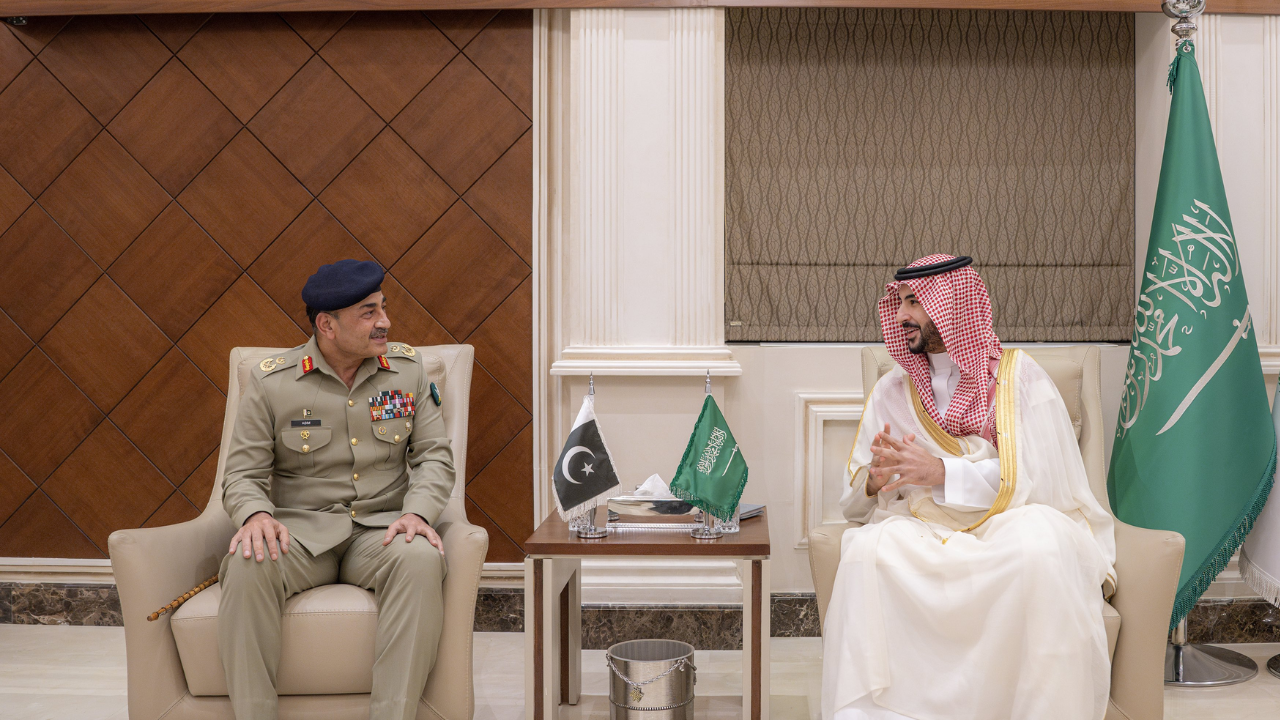
The recent high-profile meeting between Pakistan’s Chief of Army Staff (COAS) General Asim Munir and Saudi Arabia’s Defence Minister Prince Khalid bin Salman in Riyadh has ignited a fresh wave of speculation across geopolitical circles. This significant encounter, rich in diplomatic symbolism, has once again brought to the forefront discussions surrounding the potential for a unified Islamic defence alliance, often dubbed the “Islamic NATO.”
Such interactions between key regional players are rarely routine, especially when they involve nations with deep strategic ties and considerable military heft. Analysts are keenly observing whether these discussions signal a renewed impetus for greater collective security cooperation within the Muslim world, moving beyond existing frameworks towards a more robust, integrated defence architecture.
The High-Stakes Meeting: Details and Declarations
A Diplomatic Exchange
General Asim Munir’s visit to Saudi Arabia in January 2023 marked his inaugural overseas trip as Pakistan’s army chief, underscoring the profound importance Islamabad attaches to its relationship with the Kingdom. During his stay, he engaged in extensive discussions with senior Saudi leadership, including Crown Prince Mohammed bin Salman and Defence Minister Prince Khalid bin Salman.
Official readouts from both sides emphasized strengthening bilateral defence and security cooperation, counter-terrorism efforts, and matters of mutual interest. While specific details remained guarded, the language used pointed towards a deepening of an already robust strategic partnership.
Bilateral Strategic Importance
Pakistan and Saudi Arabia share a relationship forged over decades, rooted in religious affinity, shared strategic interests, and economic interdependence. Pakistan has historically been a key security guarantor for Saudi Arabia, providing military training, advisors, and defence equipment.
Saudi Arabia, in turn, has consistently supported Pakistan economically, especially during periods of fiscal strain, and is home to a significant Pakistani expatriate community. This symbiotic relationship forms a critical bedrock upon which any broader regional security initiative involving these two nations would be built.
The “Islamic NATO” Concept: A Historical Perspective
Genesis of the Idea
The concept of a pan-Islamic military alliance is not new. The most tangible manifestation of this idea emerged in December 2015 with the formation of the Islamic Military Counter Terrorism Coalition (IMCTC) by Saudi Arabia. Initially comprising 34 nations, it expanded to 41 members, with a stated aim to combat terrorism across ideological, intellectual, media, and military fronts.
Pakistan played a pivotal role in the IMCTC’s early stages, notably with its former army chief, General Raheel Sharif, becoming the first commander-in-chief of the alliance. This appointment was a significant diplomatic manoeuvre, symbolizing Pakistan’s commitment to the initiative and its leadership potential within the Muslim world.
Challenges and Skepticism
Despite its ambitious formation, the IMCTC has faced considerable skepticism and practical challenges, limiting its operational impact to date. Critics point to the absence of key Muslim nations like Iran, Iraq, and Syria, largely due to deep-seated sectarian divisions and geopolitical rivalries within the Middle East.
The coalition’s mandate has also been a subject of debate; while officially focused on counter-terrorism, many observers perceived it as an anti-Iran bloc, further complicating its widespread acceptance. Furthermore, the lack of a unified command structure, a clear mutual defence pact, and standardized military protocols among diverse member states has hampered its evolution into a true “Islamic NATO” analogue.
Drivers of Renewed Speculation
Shifting Geopolitical Landscape
The global security environment is undergoing significant transformations, directly impacting the Middle East and South Asia. The perceived gradual withdrawal of the United States from its traditional security commitments in the region has created a vacuum, compelling regional powers to reassess their defence strategies and explore self-reliance.
The rise of new geopolitical alignments, persistent threats from non-state actors, and the increasing complexity of proxy conflicts necessitate stronger regional defence mechanisms. This evolving backdrop naturally fosters discussions around collective security arrangements.
Pakistan’s Strategic Imperatives
For Pakistan, the deepening of ties with Saudi Arabia, including potential defence cooperation enhancements, serves multiple strategic imperatives. Facing severe economic challenges, Pakistan looks to Saudi Arabia for crucial financial support and investment, particularly under its ambitious Vision 2030 development plans.
Pakistan’s military, one of the largest and most experienced in the world, offers considerable expertise in training and counter-terrorism operations. Its readiness to engage in such alliances enhances its diplomatic standing and allows it to play a crucial bridging role between different Muslim nations, leveraging its unique geopolitical position.
Saudi Arabia’s Vision 2030 and Regional Leadership
Saudi Arabia, under Crown Prince Mohammed bin Salman’s Vision 2030, is actively diversifying its economy and strengthening its defence capabilities, aiming to become a regional security anchor. The Kingdom seeks to counter perceived threats effectively, maintain regional stability, and project its leadership within the Islamic world.
Investing in and potentially leading a robust Islamic defence alliance aligns perfectly with these broader strategic goals. Such an alliance could bolster Saudi Arabia’s influence, provide collective security against various threats, and reduce reliance on external security guarantees.
Potential Implications and Hurdles
Regional Stability and Power Balance
Should the IMCTC or a similar new alliance evolve into a more potent defence pact, its implications for regional stability and the existing power balance would be profound. It could potentially create a formidable bloc, capable of responding to both conventional and unconventional threats.
However, such a development would inevitably elicit strong reactions from non-member states, particularly Iran and its allies, who might view it as a direct threat. This could exacerbate existing tensions, leading to a more complex and potentially volatile security environment across the Middle East and beyond.
Defining the Scope
A primary hurdle remains the precise definition of such an alliance’s scope and objectives. Is it exclusively focused on counter-terrorism, or does it envision a broader mutual defence commitment akin to NATO’s Article 5? Achieving consensus on this fundamental question among a diverse group of nations, each with its own national interests and security priorities, is incredibly challenging.
Overcoming deep-seated sectarian divides, historical grievances, and conflicting foreign policy agendas is paramount. Without a unified threat perception and a clear, shared vision, any grand alliance risks remaining largely symbolic.
Operationalizing a Grand Alliance
Beyond political will, operationalizing a multi-national defence alliance presents immense practical difficulties. These include standardizing military equipment, interoperability of command and control systems, joint training protocols, and sustainable funding mechanisms. The logistical complexities alone are staggering.
Furthermore, questions of sovereignty, troop deployment, and decision-making authority in crisis situations would need to be meticulously addressed. The latest trends in international defence cooperation suggest such alliances are complex undertakings, demanding sustained commitment and significant resources from all participating members.
The Road Ahead
Beyond the Rhetoric
While the meeting between General Munir and Prince Khalid bin Salman undeniably signals a desire to deepen defence cooperation, it is crucial to distinguish between diplomatic overtures and concrete, actionable steps. The journey from discussing a potential “Islamic NATO” to its effective operationalization is long and fraught with challenges.
Analysts will be closely monitoring future developments, including potential joint military exercises, intelligence-sharing agreements, and arms procurement deals, as indicators of how serious this renewed push for collective security truly is. These practical steps will reveal the true momentum behind the rhetoric.
An Evolving Narrative
For now, the focus appears to remain on strengthening bilateral cooperation between Pakistan and Saudi Arabia, leveraging their historical ties and mutual strategic interests. The concept of a broader Islamic alliance, while certainly discussed, will likely be explored cautiously, perhaps through gradual enhancements to existing frameworks like the IMCTC, rather than an immediate, wholesale transformation.
The Munir-Khalid meeting, therefore, represents a significant moment in the ongoing evolution of regional security dynamics. It underscores the deepening of a critical strategic partnership and keeps the possibility of a more integrated Islamic defence architecture firmly on the geopolitical agenda. For more details on the initial report, consult the Official Source.
Frequently Asked Questions (FAQs)
1. What was the primary purpose of General Asim Munir’s visit to Saudi Arabia?
The primary purpose of General Asim Munir’s inaugural overseas visit as Pakistan’s COAS to Saudi Arabia was to strengthen bilateral defence and security cooperation between the two nations. It involved high-level discussions with Saudi leadership on strategic matters, counter-terrorism, and regional stability.
2. Who did General Asim Munir meet during his visit?
During his visit, General Munir met with several key Saudi officials, including Crown Prince Mohammed bin Salman, who also serves as Prime Minister, and Prince Khalid bin Salman, the Defence Minister. These meetings highlighted the strategic importance of the visit.
3. What is the “Islamic NATO” concept?
The “Islamic NATO” is an informal term used to describe a potential military alliance of Muslim-majority nations, envisioned to collectively address security threats, particularly terrorism. The closest existing entity is the Islamic Military Counter Terrorism Coalition (IMCTC), established in 2015 by Saudi Arabia.
4. What is the Islamic Military Counter Terrorism Coalition (IMCTC)?
The IMCTC is a Saudi Arabia-led coalition of 41 Muslim-majority countries formed to combat terrorism. Its stated aim is to coordinate efforts across ideological, intellectual, media, and military domains. Pakistan’s former army chief, General Raheel Sharif, served as its first commander-in-chief.
5. Why has the IMCTC faced criticism or limited operational impact?
The IMCTC has faced criticism due to the exclusion of major Muslim nations like Iran and Iraq, fueling perceptions of it being an anti-Iran bloc rather than a truly unified front against terrorism. Additionally, a lack of clear command structure, unified objectives beyond counter-terrorism, and consensus among its diverse members have hindered its full operationalization.
6. What are the historical ties between Pakistan and Saudi Arabia in defence?
Pakistan and Saudi Arabia share a long history of robust defence cooperation, with Pakistan providing military training, advisors, and defence equipment to the Kingdom. Pakistani military personnel have served in Saudi Arabia, and the two nations regularly engage in joint military exercises, cementing their strategic partnership.
7. How does Saudi Arabia’s Vision 2030 relate to its defence strategy?
Saudi Arabia’s Vision 2030 aims to diversify the Kingdom’s economy and reduce its reliance on oil, while also strengthening its defence capabilities and regional influence. Part of this vision involves enhancing self-reliance in defence, investing in its military, and leading regional security initiatives to ensure stability and counter threats effectively.
8. What role could Pakistan play in a more robust Islamic defence alliance?
Pakistan, with one of the world’s largest and most experienced militaries, could play a significant role in a robust Islamic defence alliance by contributing its expertise in training, counter-terrorism operations, and strategic planning. Its unique geopolitical position also allows it to act as a crucial bridge between different Muslim nations.
9. What are the main hurdles to forming an effective “Islamic NATO”?
The main hurdles include overcoming sectarian divisions and geopolitical rivalries within the Muslim world, achieving consensus on a clear mandate (counter-terrorism vs. mutual defence), establishing a unified command structure, standardizing military protocols and equipment, and securing sustained political will and funding from diverse member states.
10. What does the Munir-Khalid meeting suggest about the future of Islamic defence cooperation?
The meeting suggests a strong desire from both Pakistan and Saudi Arabia to deepen their bilateral defence cooperation and explore broader collective security frameworks. While a full-fledged “Islamic NATO” remains a complex aspiration, the discussions indicate a renewed commitment to enhancing regional stability through strengthened strategic partnerships and potentially evolving existing alliances like the IMCTC.
SEO Keywords
Pakistan Saudi Arabia Defence, Asim Munir Khalid bin Salman, Islamic NATO, Islamic Military Counter Terrorism Coalition, IMCTC, Regional Security, Middle East Geopolitics, Pakistan Saudi Relations, Defence Cooperation, Counter-Terrorism Alliance, Saudi Vision 2030, Muslim World Alliance, Geopolitical Shifts, Strategic Partnership.
Source: Times of India