



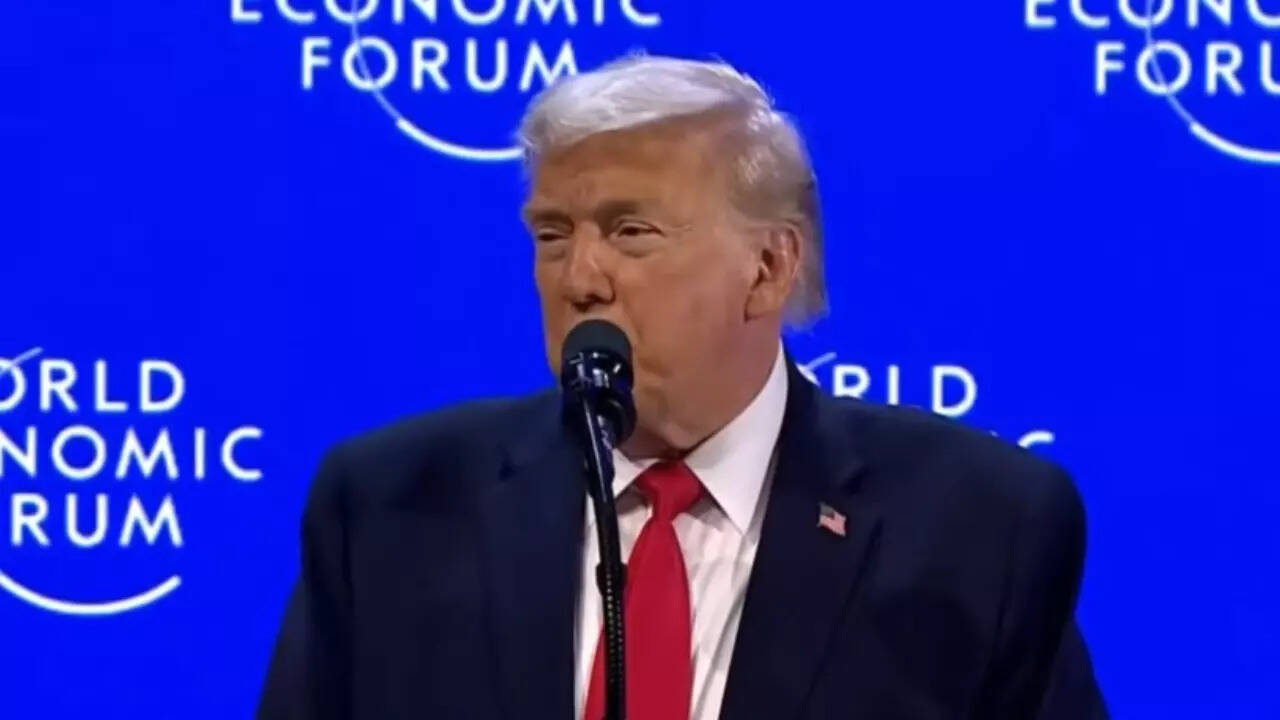
The intricate dance of international diplomacy often sees powerful nations comment on the internal affairs of others, yet rarely with such directness as recent pronouncements concerning Iran’s impending leadership succession. A significant voice from the global stage has recently stirred the geopolitical pot, asserting a controversial stance on who should, or should not, lead the Islamic Republic.
This assertive position underscores the profound implications of Iran’s future leadership on regional stability and global power dynamics. The comments have ignited debates across diplomatic corridors and academic circles, questioning norms of sovereignty and intervention.
The Statement Heard Around the World
Former President Donald Trump recently articulated a forceful perspective on the succession of Iran’s Supreme Leader, a position of immense religious and political authority. His statements have sent ripples through an already tense international landscape, highlighting the criticality of the transition.
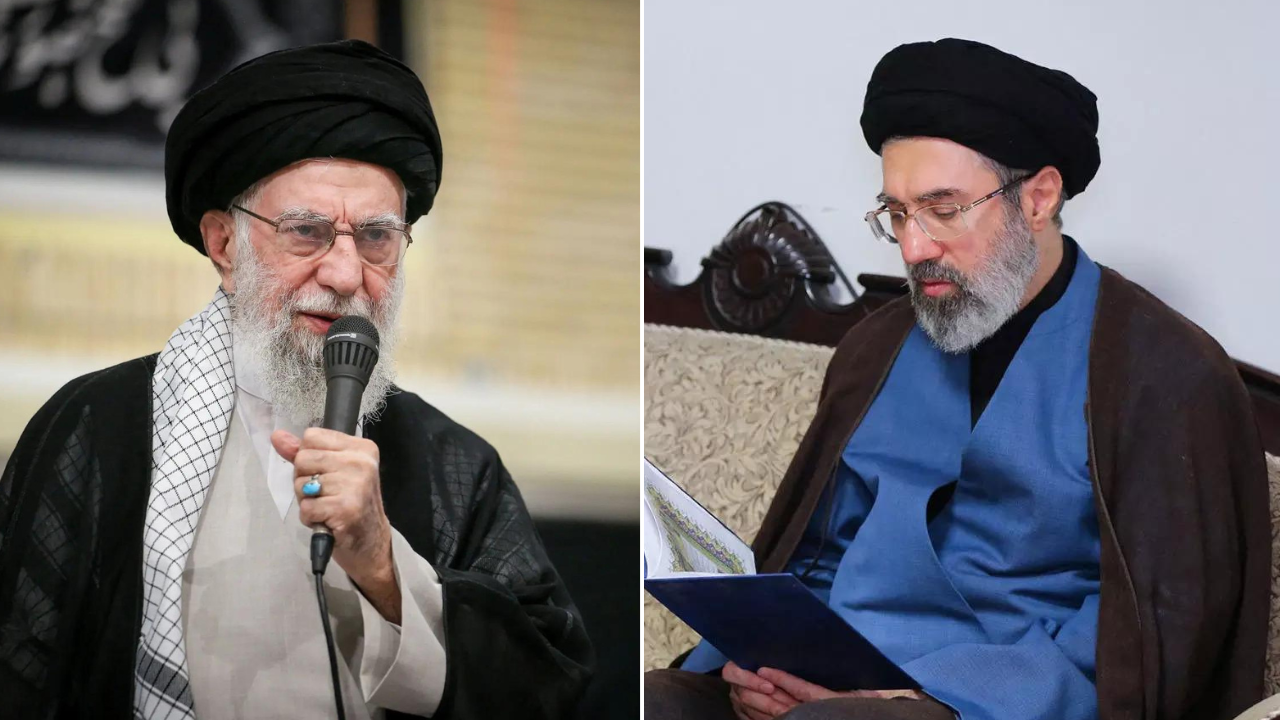
Trump’s remarks specifically targeted Mojtaba Khamenei, son of the current Supreme Leader, Ali Khamenei, deeming him an “unacceptable” and “lightweight” candidate. This public rejection signals a desire for external influence over a deeply internal Iranian process, as detailed by an Official Source.
Trump’s Specifics: Mojtaba Khamenei’s Candidacy
The focus on Mojtaba Khamenei is particularly noteworthy given the opaque nature of Iranian succession politics. While not officially designated as a successor, Mojtaba is widely seen as a prominent figure within the Iranian establishment, wielding considerable influence behind the scenes.
Trump’s direct dismissal of his suitability casts a long shadow over any potential candidacy. Such a public declaration from a former US president adds an unprecedented layer of external pressure to Iran’s internal deliberations and signals a clear preference.
The ‘Unacceptable’ and ‘Lightweight’ Label
The terms “unacceptable” and “lightweight” carry significant rhetorical weight in international discourse. They not only express disapproval but also attempt to delegitimize a potential leader in the eyes of the international community and, potentially, within Iran itself.
This labeling could be interpreted as a strategic move to shape perceptions and influence outcomes, rather than a mere personal opinion. It reflects a broader policy stance that views Iran’s leadership through a lens of American strategic interests and regional security concerns.
Geopolitical Implications of US Involvement
The explicit call for US involvement in the appointment of Iran’s next leader marks a significant departure from traditional diplomatic norms. Such statements challenge the principles of national sovereignty and non-interference in internal affairs, fundamental tenets of international law.
These pronouncements raise questions about the future of international relations and the extent to which powerful nations feel entitled to dictate leadership choices in other sovereign states. The potential for destabilization in an already volatile region is a key concern for global policymakers.
Historical Precedents and US-Iran Relations
The history of US-Iran relations is fraught with instances of perceived and actual foreign intervention, contributing to deep-seated mistrust. From the 1953 coup that reinstated the Shah to the complex dynamics of the nuclear deal, external involvement has always been a sensitive issue.
Statements asserting a right to be “involved” in leadership appointments are likely to reinforce existing narratives of external meddling within Iran. This could further entrench hardline positions and complicate any future diplomatic outreach, making reconciliation more challenging.
Reactions from Tehran and International Allies
Anticipated reactions from Tehran are likely to be strong condemnations, framing such comments as gross interference in internal matters. Iranian officials are expected to reaffirm their nation’s sovereignty and right to self-determination, potentially hardening their stance against Western influence.
International allies and adversaries alike will closely monitor these developments, assessing the implications for regional stability and global governance. The comments could inadvertently consolidate support for the current Iranian system by presenting a common external threat to national integrity.
The Dynamics of Iranian Succession
The process of selecting Iran’s Supreme Leader is deliberately shrouded in secrecy and guided by specific religious and political criteria. Understanding this internal mechanism is crucial to grasping the potential impact of external commentary.
The current Supreme Leader, Ali Khamenei, is 85 years old, making the succession a matter of immediate and profound national importance. The intricate process involves senior clerics and a powerful deliberative body, requiring careful navigation of internal factions.
The Assembly of Experts’ Role
The Assembly of Experts, a body of 88 high-ranking clerics, is constitutionally tasked with selecting the next Supreme Leader. Its members are directly elected by the people, though candidates are rigorously vetted by the Guardian Council to ensure adherence to revolutionary ideals.
This assembly holds immense power, making its deliberations and choices pivotal for Iran’s future direction. External attempts to influence this body are likely to be met with staunch resistance and perceived as an affront to national dignity and religious authority.
Potential Candidates Beyond Mojtaba
While Mojtaba Khamenei’s name frequently surfaces, other powerful figures within Iran’s clerical and political establishment are also considered potential successors. These individuals often maintain lower profiles, carefully navigating the complex internal politics of the Islamic Republic.
The selection process prioritizes a candidate’s religious erudition, revolutionary credentials, and ability to command broad support among various factions. The field of potential successors remains deliberately broad and non-transparent, adding to the inherent uncertainties of the transition.
The Supreme Leader’s Health and Succession Timelines
The age and health of the incumbent Supreme Leader naturally bring the succession timeline into sharper focus. While no official timetable exists, the possibility of a transition looms large, prompting internal calculations and external observations among global powers.
The precise moment of succession could be triggered unexpectedly, necessitating a swift and decisive action from the Assembly of Experts. This inherent uncertainty adds another layer of complexity to the ongoing geopolitical discourse surrounding Iran’s future.
International Law and Sovereignty Concerns
At the heart of Trump’s statements lies a challenge to established principles of international law, particularly concerning national sovereignty. The assertion of a right to “be involved” in another nation’s leadership selection is highly contentious and legally problematic.
Such pronouncements provoke a critical examination of the boundaries of foreign policy and the adherence to international norms. They risk setting dangerous precedents for future interventions globally, undermining the multilateral system.
Debating Interventionism vs. Non-Interference
The debate between interventionism and non-interference is a perennial one in international relations. While some argue for intervention on humanitarian grounds or to protect national interests, others champion strict adherence to sovereignty as fundamental to world peace.
Trump’s explicit call for involvement leans heavily towards an interventionist stance, potentially reigniting this complex debate on a global scale. This approach could be viewed as a stark contrast to more nuanced diplomatic engagements that prioritize stability through non-aggression.
The UN Charter and National Self-Determination
The United Nations Charter, a foundational document of international law, emphasizes the principle of sovereign equality of all its members and non-interference in their domestic affairs. Article 2(7) is particularly relevant, stating that nothing in the Charter shall authorize intervention in matters essentially within the domestic jurisdiction of any state.
These statements from a former head of state directly challenge these core principles, raising serious questions about their practical application in contemporary geopolitics. The right to national self-determination is a cornerstone of international legitimacy and global order.
Economic and Regional Ramifications
Beyond the legal and political implications, such high-profile statements carry significant economic and regional consequences. Iran’s position as a major oil producer and its pivotal role in Middle Eastern dynamics mean any leadership transition is globally significant.
Increased external pressure and rhetoric could exacerbate existing tensions, impacting global markets and regional alliances. The ripple effects extend far beyond Iran’s borders, affecting numerous international actors and stakeholders.
Impact on Oil Markets and Sanctions
Uncertainty surrounding Iran’s future leadership, especially coupled with external pressure, could lead to volatility in global oil markets. Iran’s oil exports are already heavily constrained by international sanctions, limiting its economic leverage.
Any perceived instability or increased confrontation might further complicate efforts to negotiate sanctions relief or expand Iran’s energy output. This has direct implications for global energy security and prices, affecting consumers worldwide.
Stability in the Middle East
The Middle East remains a region of complex rivalries and proxy conflicts. External interference in Iran’s leadership succession could destabilize existing fragile balances of power, potentially escalating regional tensions and igniting new confrontations.
Nations like Saudi Arabia, Israel, and other Gulf states will be closely watching, evaluating how these developments might shift regional alignments and security concerns. The prospect of increased confrontation always looms large in this sensitive geopolitical theater.
A New Era of Foreign Policy Rhetoric?
These recent comments might signify a shift towards a more overt and aggressive form of foreign policy rhetoric. The direct naming of an “unacceptable” candidate suggests a willingness to openly challenge internal political processes of sovereign nations.
This approach could reshape diplomatic engagement, making future negotiations even more challenging and fraught with mistrust. It signals a departure from more subtle, behind-the-scenes influence and traditional statecraft.
Reassessing US Strategy in the Gulf
Such statements necessitate a reassessment of US strategy in the Persian Gulf and broader Middle East. If a policy of open intervention in leadership succession becomes more formalized, it would mark a significant strategic pivot.
This could have far-reaching implications for alliances, military presence, and diplomatic priorities in a region already grappling with numerous challenges. The region’s intricate network of relationships is perpetually sensitive to external shifts and pronouncements.
The Role of Public Statements in Diplomacy
Public statements from influential figures, especially former heads of state, can have profound diplomatic consequences. They can signal intent, shape narratives, and influence both domestic and international audiences, sometimes with unintended outcomes.
In the context of Iran’s succession, these public comments serve as a strong indicator of a particular viewpoint and desire for specific outcomes. They add another layer of complexity to the already intricate world of foreign relations, influencing latest trends in international policy debates and future engagements.
The pronouncements regarding Iran’s leadership succession are far from mere political rhetoric; they are deeply consequential statements with the potential to reshape geopolitical realities. They challenge established norms of sovereignty, intensify regional tensions, and underscore the profound importance of Iran’s future direction.
As the world watches, the interplay between internal Iranian dynamics and external pressures will define a critical chapter in international relations. The path forward remains uncertain, fraught with both peril and possibility, demanding careful consideration from all global actors.
Frequently Asked Questions About Iran’s Leadership Succession
1. Who is Mojtaba Khamenei and why is he significant in the context of Iran’s succession?
Mojtaba Khamenei is the second son of Iran’s current Supreme Leader, Ali Khamenei. While he holds no official government position, he is widely perceived to wield significant influence within the Supreme Leader’s office, the Revolutionary Guard, and conservative circles. His significance stems from this informal power and the long-standing speculation that he could be a potential successor to his father, despite a constitutional tradition against hereditary succession for the Supreme Leader’s role. His name frequently emerges in discussions among analysts tracking Iran’s future leadership, making any direct external commentary on his suitability particularly impactful.
2. What exactly did Trump say about Mojtaba Khamenei and Iran’s succession?
Donald Trump explicitly stated that the US “has to be involved” in the appointment of the next Iranian leader. He specifically referred to Mojtaba Khamenei as “unacceptable” and a “lightweight” candidate. These remarks were a direct rejection of a prominent figure often mentioned in succession talks, and an overt declaration of intent for American influence over a sovereign nation’s internal leadership selection process. This level of directness is uncommon in public diplomatic discourse regarding such a sensitive and internal national matter.
3. What is the role of the Supreme Leader in Iran?
The Supreme Leader is the highest political and religious authority in the Islamic Republic of Iran. This position holds ultimate power over all major state policies, including foreign policy, military, and domestic affairs, effectively acting as the nation’s spiritual and political guide. The Supreme Leader is also the commander-in-chief of the armed forces and has the final say on strategic decisions, making the role the most powerful office in the country and central to its unique governance system based on the principle of Velayat-e Faqih (Guardianship of the Jurist).
4. How is the Supreme Leader of Iran appointed?
The Supreme Leader is appointed by the Assembly of Experts, a deliberative body of 88 high-ranking Shia clerics. Members of the Assembly are themselves directly elected by the public every eight years, though their candidacies are rigorously vetted by the Guardian Council to ensure their adherence to Islamic jurisprudence and revolutionary principles. When the current Supreme Leader dies or becomes incapacitated, the Assembly is constitutionally responsible for identifying, debating, and ultimately selecting a successor based on criteria such as religious scholarship, political acumen, and unwavering commitment to the revolution. The process is typically conducted with a high degree of secrecy until a decision is announced to the nation.
5. Why is the succession of the Supreme Leader such a critical issue for Iran and the world?
The succession is critical because the Supreme Leader defines Iran’s strategic direction, domestic policies, and regional posture for decades to come. A new leader could significantly alter Iran’s foreign policy, its approach to the nuclear program, its human rights record, and its relations with regional and international powers, creating a ripple effect across the globe. For the world, a change in leadership could reshape the geopolitical landscape of the Middle East, impact global energy markets, and influence the stability of a region already prone to conflict. The transition is seen as a pivotal moment for Iran’s future and global stability due to the immense power concentrated in the Supreme Leader’s office.
6. What are the historical precedents for US involvement in Iranian affairs?
The US has a controversial history of involvement in Iranian affairs, most notably the 1953 coup d’état. In this operation, the CIA and British intelligence orchestrated the overthrow of democratically elected Prime Minister Mohammad Mosaddegh, restoring Shah Mohammad Reza Pahlavi to power. This event is a deeply ingrained historical grievance in Iran and forms a foundational aspect of anti-American sentiment and a narrative of Western interference. Subsequent periods have seen various forms of engagement, sanctions, and diplomatic pressures, all against this backdrop of perceived and actual historical interventions that continue to shape Iranian perspectives on foreign relations.
7. How has Iran typically reacted to perceived external interference?
Iran has consistently reacted to perceived external interference with strong condemnation, framing it as a blatant violation of national sovereignty and a continuation of historical Western meddling in its internal affairs. Iranian officials typically respond by vigorously reaffirming the nation’s unwavering right to self-determination and criticizing foreign powers for attempting to dictate internal political processes. Such external pressure often serves the paradoxical effect of consolidating domestic support for the current regime, reinforcing narratives of resilience against imperialistic designs and hardening hardline stances on international issues, thereby making diplomatic breakthroughs more difficult to achieve.
8. What are the potential international law implications of Trump’s statements?
Trump’s statements about being “involved” in another nation’s leadership appointment raise serious questions under international law. They could be seen as a direct violation of the principle of non-interference in the internal affairs of sovereign states, a cornerstone of the UN Charter and customary international law. Article 2(7) of the UN Charter explicitly prohibits intervention in matters essentially within the domestic jurisdiction of any state, aiming to protect national sovereignty. Such declarations, especially from a former head of state of a permanent UN Security Council member, challenge the very foundations of international order and the principle of state sovereignty, potentially setting a dangerous precedent for future global relations and undermining the existing legal framework.
9. How might these comments affect the stability of the Middle East region?
These comments could significantly heighten tensions in an already volatile Middle East. By publicly injecting external influence into Iran’s succession, they risk provoking stronger reactions from Tehran and its regional proxies, who may see it as an act of aggression. This could lead to increased rhetoric, an escalation of proxy conflicts, and a hardening of positions among regional rivals, such as Saudi Arabia and Israel, potentially sparking new crises. Any perceived instability in Iran could also embolden non-state actors or create opportunities for external powers to further their interests, potentially destabilizing existing regional power balances and alliances and leading to widespread unpredictability.
10. What are the broader implications for future US-Iran diplomatic efforts?
The broader implications for future US-Iran diplomatic efforts are largely negative. Such direct and public statements of intent to influence Iran’s leadership succession will likely deepen mistrust and make future dialogue even more challenging and fraught with suspicion. They could be interpreted by Iran as an existential threat, reinforcing the long-held view that the US seeks regime change rather than genuine diplomatic engagement or conflict resolution. This perspective could lead to a more entrenched and defiant stance from Tehran, making negotiations on critical issues like the nuclear program, regional security, or human rights significantly more difficult and less likely to succeed in the near term, thus prolonging a period of strained relations.
Iranian succession, Supreme Leader, Mojtaba Khamenei, US foreign policy, Middle East stability, geopolitical analysis, international relations, Iran leadership, Trump statements, Assembly of Experts, national sovereignty, non-interference, Persian Gulf, nuclear program, sanctions impact
Source: Times of India