




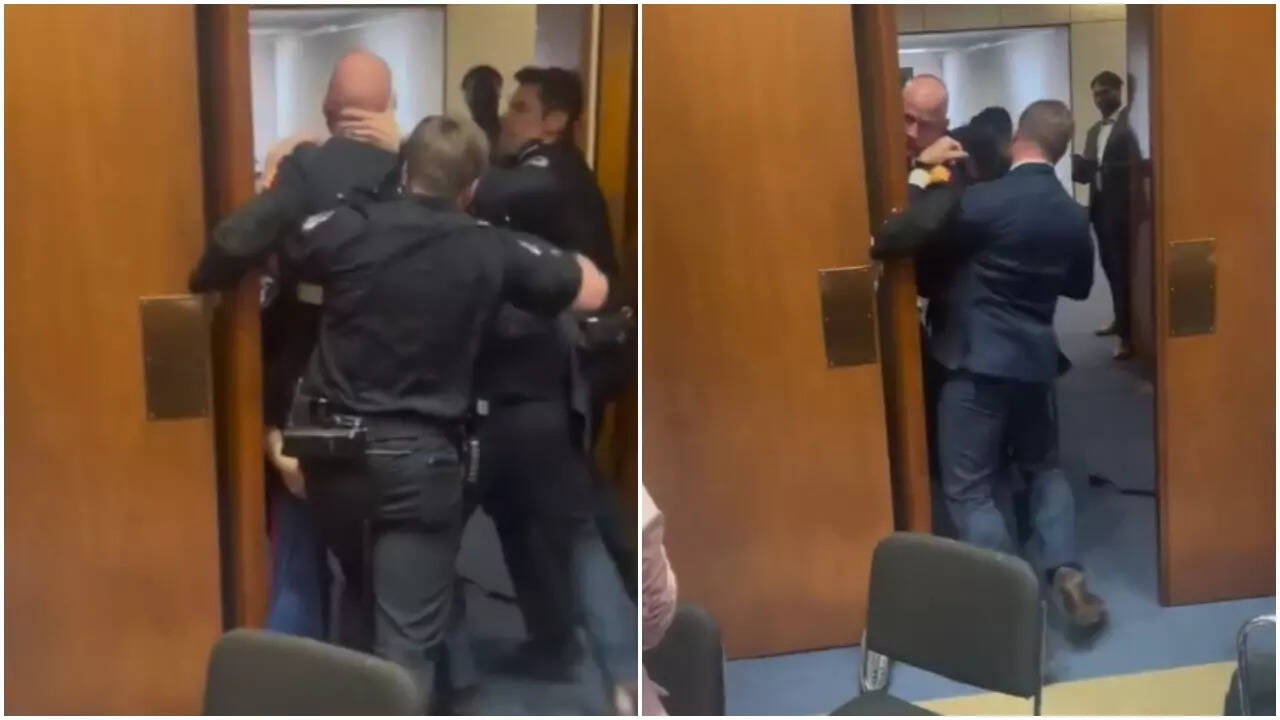
A recent anti-Iran war protest in Montana has drawn significant national attention following an alleged altercation between a former Marine, Brian McGinnis, and Senator Tim Sheehy. The incident has ignited a fervent debate, raising critical questions about political conduct, protest rights, and the nature of public engagement in a charged environment.
This comprehensive article delves into the intricate details surrounding the alleged clash, meticulously examining the claims presented by both parties and exploring the broader implications for contemporary political discourse. We aim to provide a detailed overview of the events as reported, while maintaining a neutral stance and acknowledging the ongoing, disputed nature of the situation.
The Protest and the Confrontation’s Genesis
The incident reportedly unfolded during a demonstration against potential military action in Iran, a topic that often galvanizes strong public sentiment. Brian McGinnis, a veteran with a notable history of anti-war activism, was among the demonstrators passionately expressing his views on foreign policy.
His presence at the event underscored the significant role veterans often play in advocating for peace and critically examining military interventions. The atmosphere at such protests can often be profoundly charged, reflecting the deep convictions and anxieties of the participants.
Brian McGinnis’s Detailed Account of the Alleged Altercation
Brian McGinnis has publicly stated that he suffered a broken arm during the alleged confrontation, a serious injury that has become central to his claims. He specifically attributes this injury to a physical interaction involving Senator Tim Sheehy.
McGinnis asserts that he was attempting to engage Sheehy in a direct conversation about the protest’s objectives when the alleged physical interaction abruptly occurred. His compelling account has since been widely circulated and discussed across various media and social platforms, sparking widespread concern.
Senator Tim Sheehy’s Forceful Denial and Counter-Narrative
Senator Tim Sheehy has vehemently denied the allegations of causing injury, presenting a starkly different account of the encounter. Sheehy’s campaign and official representatives have offered an alternative perspective on the sequence of events.
They suggest that McGinnis initiated an overly aggressive confrontation and that Sheehy either acted in a defensive capacity or that no interaction occurred that could have resulted in the reported injury as described. This fundamental disagreement in narratives forms the deeply contested core of the ongoing controversy.
The Backgrounds of Key Figures Involved
Understanding the respective backgrounds of Brian McGinnis and Senator Tim Sheehy provides crucial context for interpreting the incident. Both individuals possess profiles that resonate strongly with specific segments of the American public, influencing perceptions.
Their past experiences, public service records, and current public roles significantly contribute to how the alleged event is perceived, interpreted, and debated by different audiences across the political spectrum.
Brian McGinnis: A Profile in Veteran Activism
Brian McGinnis is widely recognized for his distinguished service as a Marine, a period of his life that profoundly shaped his subsequent trajectory into anti-war activism. His unwavering dedication to peace and the welfare of veterans has been a consistent and defining theme throughout his public life.
His active involvement in the anti-Iran war protest is entirely consistent with his established principles and long-standing advocacy efforts for non-interventionist foreign policy. This strong background lends considerable weight to his claims for many sympathetic observers and fellow veterans.
Senator Tim Sheehy: A Rising Political Figure and Veteran
Senator Tim Sheehy is a prominent and rising political figure, also a decorated veteran, who is currently engaged in a high-profile and keenly watched Senate race. His impressive military background is frequently highlighted as a cornerstone of his political campaigns and public persona.
Sheehy’s position as an elected public servant, coupled with his significant political aspirations, places increased scrutiny on his actions and all public appearances. The alleged incident has undeniably cast a spotlight on him, impacting his public image and campaign narrative.
The Broader Political Context and Resounding Public Reaction
The alleged clash did not occur in isolation; it is deeply embedded within a broader landscape of heightened political tensions and a critically important Senate election. The incident has rapidly become a central talking point in wider political discussions, both locally and nationally.
Public reaction has been diverse and often polarized, with strong opinions emerging swiftly from both sides of the political spectrum. This volatile situation starkly underscores the increasingly fragmented and impassioned nature of contemporary political discourse in the United States.
Profound Implications for the Ongoing Senate Race
Given Senator Sheehy’s active candidacy, the alleged incident carries significant potential implications for his crucial Senate race. Political opponents are likely to leverage these serious allegations to question his temperament, judgment, or overall fitness for high public office.
Conversely, his ardent supporters might dismiss the accusations as politically motivated attacks designed to derail his campaign. The evolving narrative surrounding this event could significantly sway crucial voter sentiment in what is already shaping up to be a tightly contested and pivotal election.
Safeguarding Freedom of Speech and Public Safety at Protests
The incident also precipitates fundamental questions concerning the constitutional right to protest and the absolute safety of individuals participating in public demonstrations. Peaceful protests are a cornerstone of democratic societies, providing an essential avenue for citizens to express dissent and advocate for change.
Ensuring that such expressions can occur freely and without fear of physical harm is paramount for upholding civil liberties and democratic principles. The alleged events prompt a necessary and urgent discussion about the boundaries of engagement and the responsibilities of all parties at political gatherings.
Calls for Investigation and Official Responses
Following the public revelation of the alleged altercation and injury, there have been immediate and widespread calls for official investigations into the matter. The pursuit of truth, accountability, and justice is universally paramount in such serious situations.
Various law enforcement bodies, government agencies, and public figures may be pressed to thoroughly address the incident and ensure a fair, impartial, and exhaustive assessment of all available facts. Public demand for transparency and a definitive resolution is often intense when such serious allegations surface against public figures.
Crucial Legal and Ethical Considerations
The claims of a broken arm introduce serious potential legal ramifications, including the possibility of criminal assault charges, depending on the findings of any investigation. Law enforcement agencies or other relevant investigative bodies would typically launch a rigorous examination of such grave allegations.
Beyond the strict legal aspects, there are profound ethical considerations regarding the conduct expected of public figures and their interactions with constituents and the broader public. These ethical standards are invariably expected to be much higher for individuals holding or aspiring to leadership roles, demanding exemplary behavior.
What Verified Information is Currently Available?
The information currently available publicly largely consists of competing and often diametrically opposed narratives from Brian McGinnis and Senator Tim Sheehy’s campaign. Official confirmations from law enforcement regarding the specifics of the alleged physical interaction or any ongoing investigations may remain limited or pending at this stage.
Journalists and the public are primarily relying on initial statements from the involved parties and any verifiable evidence that gradually emerges through the investigative process. For the Official Source for some initial reports, you can refer to established and reputable news outlets.
Navigating Clarity Amidst Conflicting Accounts
The profound challenge in incidents of this nature lies in accurately discerning the objective truth amidst sharply conflicting testimonies and subjective perceptions. Eyewitness accounts, if any exist, coupled with any available physical evidence, would be absolutely critical in definitively clarifying the precise sequence of events.
Public opinion can also be heavily swayed by initial media reports and the inherent political leanings of the audience, making objective analysis difficult. Therefore, a thorough, impartial, and transparent investigation by appropriate authorities is unequivocally essential to establish the undisputed facts of the matter.
The Media’s Vital Role in Reporting and Scrutiny
The media plays an indispensable and critical role in reporting such sensitive and high-stakes incidents, striving always for the highest standards of accuracy, fairness, and impartiality. Responsible journalists are tasked with presenting both sides of the story, allowing the public to form well-informed and considered opinions.
It is crucially important to rigorously differentiate between unverified allegations and independently proven facts, especially when reporting on events that could potentially have severe and far-reaching consequences for all individuals involved. For more insights on latest trends in political reporting and analysis, consulting trusted news sources is invaluable.
Charting the Path Forward and Potential Resolutions
As this complex and contentious situation continues to unfold, further official details, witness statements, and formal pronouncements may gradually emerge. The ultimate outcome of any potential investigations will be profoundly significant in definitively determining the facts surrounding the alleged incident and shaping public perception.
The public will remain keenly interested in precisely how this high-profile matter is ultimately resolved, particularly given the prominent status of the individuals involved and the implications for political discourse. This incident powerfully underscores the enduring importance of respectful engagement and civil dialogue, even amidst deep political disagreements and protests.
Frequently Asked Questions (FAQs)
1. Who are the main individuals involved in this incident?
The primary individuals at the center of this controversy are Brian McGinnis, identified as a former Marine and active anti-war activist, and Senator Tim Sheehy, a prominent political figure and fellow veteran who is currently campaigning for a Senate seat. The alleged altercation occurred between these two.
2. What is the central allegation made by Brian McGinnis regarding the incident?
Brian McGinnis has publicly alleged that he sustained a broken arm during a physical confrontation that he claims involved Senator Tim Sheehy at an anti-Iran war protest. He specifically attributes the cause of his injury to Sheehy’s actions during this encounter.
3. How has Senator Tim Sheehy and his campaign officially responded to these allegations?
Senator Tim Sheehy has adamantly denied the accusations of causing injury to McGinnis. His campaign and representatives have presented an alternative account, suggesting that McGinnis initiated an aggressive approach, or that Sheehy acted in self-defense, or that no interaction occurred that could have resulted in the reported injury as described.
4. Where and when did this alleged incident specifically take place?
The alleged incident reportedly occurred during an anti-Iran war protest held in Montana. Specific dates, times, and the exact location (e.g., city, public venue) would typically be detailed in initial comprehensive news reports covering the event.
5. What was the overarching purpose and focus of the protest where the clash occurred?
The protest was specifically organized to vocalize strong opposition to potential military action or intervention by the United States in Iran. Demonstrators, including Brian McGinnis, were advocating for peaceful diplomatic resolutions and a non-interventionist foreign policy stance.
6. Have any official law enforcement or governmental investigations been initiated into this matter?
Reports on whether official investigations have been launched may vary or be pending. Public statements from law enforcement agencies or judicial bodies would be the definitive source to confirm such actions and their progress. Currently, the situation is largely defined by the conflicting public statements of the involved parties.
7. Is there any independent corroborating evidence, such as witnesses or video footage, available?
The existence of independent eyewitness accounts, any available video recordings, or other forms of physical evidence would be of paramount importance in clarifying the disputed events. Public reports often indicate whether such crucial corroborating evidence is known to exist or is actively being sought by investigators.
8. What are the potential legal and political consequences if the allegations against Senator Sheehy are ultimately proven true?
If the serious allegations of physical assault are definitively proven true through an investigation, potential consequences could range from significant legal charges, such as assault, to severe political repercussions for Senator Sheehy, potentially jeopardizing his Senate campaign and significantly damaging his public standing and reputation.
9. How has this high-profile incident impacted Senator Sheehy’s ongoing political campaign for the Senate?
The incident has undeniably introduced a highly contentious and challenging element into Senator Sheehy’s ongoing Senate campaign. It has instigated widespread public debate and intensified scrutiny, potentially influencing voter perceptions and providing significant talking points for his political opponents during the election cycle.
10. What is the current reported status of Brian McGinnis’s alleged injury?
Brian McGinnis has publicly stated that he sustained a broken arm as a result of the alleged altercation. Further detailed information regarding his medical reports, his recovery process, or any ongoing treatment would typically be publicly disclosed by McGinnis or his official representatives if they choose to share it.
SEO Keywords
Former Marine protest, anti-Iran war, Brian McGinnis, Senator Tim Sheehy, political clash, alleged broken arm, veteran activism, Montana politics, Senate race controversy, public protest safety, political conduct, freedom of speech incident, electoral implications, Sheehy denial, McGinnis claims, veteran rights, political altercation, campaign scrutiny, public figure accountability, US foreign policy.
Source: Times of India