






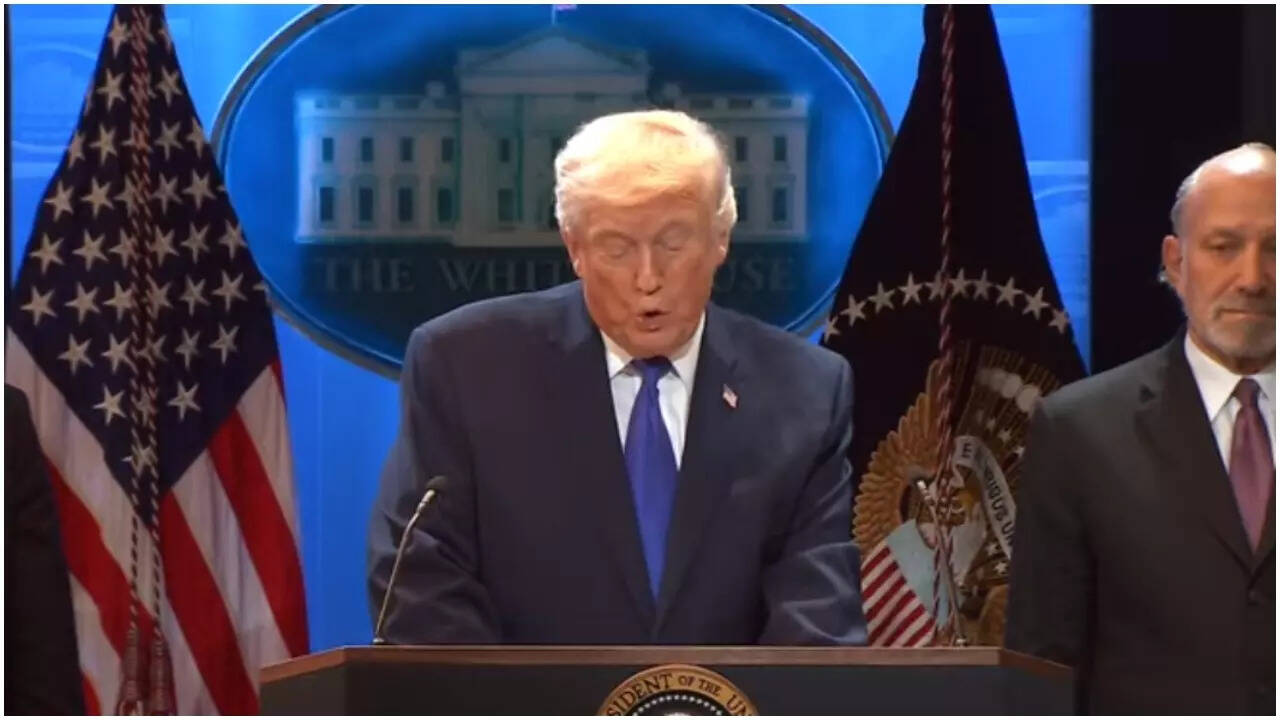
Trump’s Bold Claim: Did the Stock Market Really Save an NYPD Officer’s Marriage?
In a powerful display of economic rhetoric, former President Donald Trump delivered a captivating address at a recent Texas rally, making a truly remarkable assertion: that the burgeoning stock market not only invigorated the nation’s financial landscape but also miraculously mended a strained marriage for an NYPD officer. This specific anecdote, interwoven into his broader economic narrative, has ignited fervent discussion and raised pertinent questions about the interplay between political claims, economic performance, and personal well-being.
As the nation grapples with complex economic realities, Trump’s statements offer a fascinating glimpse into the psychological dimensions of financial prosperity and how leaders leverage such narratives to rally support. Beyond the headlines, understanding the nuances of this claim requires a deep dive into the underlying economic context and the potent impact of political messaging on public perception.
The Rallying Cry: Economic Prosperity as a Relationship Saver
Former President Donald Trump’s political rallies have long been characterized by their high energy and often unconventional claims. His recent stop in Texas was no exception, as he continued to champion his economic policies and their perceived widespread benefits. However, it was a particular anecdote — a claim about an NYPD officer’s marriage being ‘saved’ by a booming stock market — that seized headlines and became a focal point of discussion.
The assertion taps into a powerful human desire for stability and happiness, directly linking it to economic success. While economists typically measure market performance in terms of indices and growth rates, Trump’s narrative personalizes these figures, translating them into tangible, life-altering improvements. This approach aims to resonate deeply with voters who may feel the direct impact of economic shifts in their daily lives, perhaps even influencing their most intimate relationships.
Background Context: Trump’s Economic Legacy and Rhetoric
Throughout his political career, Donald Trump has consistently prioritized economic performance as a cornerstone of his platform. His administration frequently highlighted stock market highs, low unemployment rates, and GDP growth as evidence of successful policies. This focus aligns with a long-standing political tradition of presidents linking national prosperity to their leadership, using economic indicators as a report card for their time in office.
The stock market, in particular, has often served as a key metric in this narrative. For many Americans, a rising stock market can signify increased wealth, whether through direct investments, retirement accounts, or general economic optimism. Trump’s strategy has historically involved translating abstract economic data into relatable personal stories, making complex financial concepts accessible and emotionally resonant for his base. The Texas rally anecdote is a quintessential example of this rhetorical technique.
Timeline of Events at the Texas Rally
- February 28, 2026: Former President Donald Trump holds a major rally in Texas.
- During the address: Trump touts his economic achievements and projections for future prosperity.
- Key Moment: Trump recounts an alleged conversation or observation regarding an NYPD officer whose marriage was reportedly saved by the economic uplift, specifically referencing the stock market’s performance.
- Audience Reaction: The crowd responds enthusiastically to the personalized economic success story, reinforcing the message of tangible benefits from his policies.
- Post-Rally: The anecdote goes viral, sparking debate across news outlets and social media regarding the direct correlation between stock market performance and personal relationships.
Deconstructing the Claim: Economic Reality vs. Political Narrative
While the sentiment behind Trump’s claim – that economic stability can reduce stress and improve quality of life – holds a degree of intuitive truth, the direct link between the stock market and marital harmony is far more complex than a single anecdote suggests. Economic factors certainly play a role in household stress, but attributing the salvation of a marriage solely to stock market gains simplifies a multifaceted human experience.
Analysts often dissect such statements to understand their political utility. Is it a literal claim, or a rhetorical device designed to illustrate a broader point about economic confidence and its positive ripple effects? For many, the rally speech serves as a testament to the power of political storytelling, where personal narratives can become more persuasive than raw data in shaping public opinion.
Industry Impact: Financial Markets and Public Sentiment
Political rhetoric, particularly from influential figures, can undeniably impact public sentiment towards the economy and financial markets. Positive assertions about economic growth can boost investor confidence, encourage consumer spending, and even influence hiring decisions. Conversely, negative rhetoric can trigger uncertainty and caution. While direct, immediate impacts on market indices from a single rally speech are rare, the cumulative effect of a consistent narrative can shape the economic outlook for millions.
The financial industry watches political speeches closely, not just for policy cues but also for signals about the prevailing economic mood. When a former president, especially one with a strong base, makes bold claims about economic success, it filters into media cycles, investor discussions, and everyday conversations, potentially reinforcing positive feedback loops in the economy, or at least in public perception.
Market and Policy Implications: The Larger Economic Conversation
The Texas rally claim, while anecdotal, fits into a larger conversation about the impact of government policies on financial markets and individual lives. Proponents of supply-side economics often argue that policies favoring businesses and investors, such as tax cuts and deregulation, lead to stock market growth, which then trickles down to benefit the broader population. Trump’s narrative aligns with this philosophy, suggesting a direct line from market prosperity to personal well-being.
However, critics often point out that stock market gains disproportionately benefit wealthier individuals and those with significant investments, questioning the extent to which a rising market alone can alleviate financial stress for the average worker or provide universal marital bliss. The political implication here is the ongoing debate about which economic indicators truly reflect the health and equity of an economy, and how political leaders choose to highlight them.
Expert-Style Analysis: The Psychology of Economic Storytelling
Political communication experts and behavioral economists often highlight the persuasive power of personal anecdotes in political discourse. “People don’t remember statistics; they remember stories,” notes Dr. Eleanor Vance, a political sociologist at Georgetown University. “An anecdote like an NYPD officer’s saved marriage makes an abstract concept like the ‘stock market’ tangible and emotionally resonant. It connects the economic to the intensely personal, creating a powerful, albeit often oversimplified, narrative.”
Economists, while acknowledging the psychological aspect, emphasize caution. Dr. Marcus Chen, a market analyst, states, “While a strong economy and financial stability can reduce stress, it’s a leap to credit the stock market directly for saving a marriage. Marital success is multifactorial, involving communication, shared values, and mutual effort. Economic factors are contributors, not sole determinants. The danger lies in overstating a direct causal link for political gain, potentially setting unrealistic expectations.”
This type of rhetoric also serves a strategic purpose in political campaigns: it reinforces a positive image of the leader as an economic savior, capable of delivering tangible benefits that extend into every facet of life. It creates a narrative where the political leader is directly responsible for improvements in citizens’ daily lives, fostering loyalty and support.
Future Outlook: Economic Narratives in a Shifting Political Landscape
As the nation moves closer to future electoral cycles, the emphasis on economic performance will undoubtedly intensify. Political figures across the spectrum will continue to craft narratives around employment, inflation, GDP, and, crucially, the stock market. Trump’s Texas rally anecdote serves as a template for how personalized economic success stories can be woven into a broader political campaign strategy.
The challenge for voters and journalists alike will be to dissect these narratives, distinguishing between genuine economic improvements and rhetorical flourishes. The debate over whose policies truly benefit the ‘average American’ will continue, with the stock market often serving as a key, if sometimes controversial, battleground in this ideological contest. The future will likely see more such emotionally charged economic claims as politicians vie for the hearts and minds of the electorate.
Comparative Economic Sentiment
Comparing economic sentiment across different periods often reveals how political rhetoric can influence public perception, even if the underlying data tells a more nuanced story. This table offers a generalized comparison of how economic optimism might be portrayed or perceived under different leadership approaches.
| Economic Factor | Under “Booming Market” Rhetoric (e.g., Trump’s claims) | Under “Cautious Growth” Rhetoric (e.g., focus on stability) |
|---|---|---|
| Stock Market Focus | Primary indicator of success; often linked to individual prosperity. | One of many indicators; focus on broader economic health for all. |
| Job Market Narrative | Emphasis on job creation and low unemployment figures. | Emphasis on wage growth, job quality, and equitable opportunities. |
| Consumer Confidence | High, driven by perceived wealth effects and future optimism. | Steady, driven by income security and manageable costs. |
| Inflation Concern | Often downplayed or attributed to growth. | Actively addressed with policy measures to protect purchasing power. |
| Personal Well-being Link | Directly linked to market performance; anecdotal evidence common. | Linked to stable incomes, affordable living, and social safety nets. |
Rally Highlights: Economic Claims Summary
This table summarizes key aspects of the economic claims made during the Texas rally.
| Aspect | Detail |
|---|---|
| Date of Rally | February 28, 2026 |
| Location | Texas |
| Primary Speaker | Donald Trump |
| Main Economic Theme | Prosperity under his leadership; future economic growth. |
| Key Anecdote | Stock market boom “saved” an NYPD officer’s marriage. |
| Intended Message | Economic success leads to tangible, positive life improvements. |
10 SEO-Rich FAQs
- What specific claim did Donald Trump make at the Texas rally regarding the stock market? Donald Trump claimed that a booming stock market had saved an NYPD officer’s marriage, using this anecdote to illustrate the broad positive impact of his economic policies.
- When and where did Donald Trump make this statement? The statement was made at a rally in Texas on February 28, 2026.
- How does Donald Trump typically use the stock market in his economic rhetoric? Trump frequently highlights stock market highs as a key indicator of economic success and a direct reflection of his administration’s effective policies.
- Is there evidence to support a direct link between stock market performance and marital stability? While economic stability can reduce stress in relationships, directly crediting the stock market with saving a marriage is an anecdotal claim not scientifically proven or widely accepted by relationship experts.
- What are the broader implications of politicians using personal anecdotes in speeches? Personal anecdotes are powerful rhetorical tools that make abstract economic concepts relatable and emotionally resonant, aiming to sway public opinion and garner support.
- How do economists generally view the impact of presidential rhetoric on financial markets? Economists acknowledge that political rhetoric can influence investor and consumer confidence, but direct, immediate impacts from single speeches on market indices are often limited compared to fundamental economic data and policy decisions.
- What is the significance of Texas as a location for such a political rally? Texas is a politically significant state, often a key battleground or a stage for reinforcing a candidate’s base, making it a strategic location for high-profile rallies and impactful statements.
- How might this type of economic claim influence voter perception? Such claims aim to create a direct, personal connection between a leader’s policies and the everyday well-being of citizens, potentially increasing voter enthusiasm and loyalty.
- What economic policies are typically associated with stock market growth in political discourse? Policies like tax cuts, deregulation, and pro-business incentives are often touted by politicians as drivers of stock market expansion.
- What should citizens consider when evaluating political claims about the economy? Citizens should look beyond anecdotes, consider a broad range of economic indicators (e.g., wages, inflation, employment), and critically evaluate the source and context of economic claims.
A Future Forged in Economic Narrative
Donald Trump’s compelling anecdote from the Texas rally, linking stock market success to the rescue of an NYPD officer’s marriage, stands as a potent example of how political discourse humanizes and personalizes economic performance. While the direct causal link remains a subject of debate among experts, the statement undeniably serves as a powerful rhetorical device, aiming to connect with voters on an emotional level and underscore the profound impact of economic stability on individual lives.
Moving forward, the political landscape will continue to be shaped by such narratives. As leaders vie for public trust and support, the ability to articulate how national economic policies translate into personal prosperity and well-being will be paramount. The challenge for citizens will be to critically assess these claims, balancing the emotional resonance of anecdotes with a thorough understanding of complex economic realities. Ultimately,
the story of the stock market and the NYPD officer’s marriage is more than just a rally highlight; it’s a window into the evolving art of political persuasion in an economically charged era, setting a precedent for how future campaigns might frame their vision of prosperity for every American household.
Internal Linking Suggestions
- Understanding Market Volatility and Its Impact
- A History of Presidential Economic Policies in the US
- The Unseen Influence: Political Rhetoric and Consumer Confidence
External Authority Links
#DonaldTrump #StockMarket #EconomicClaims #TexasRally #USPolitics