



Trump Hints at Rapid De-escalation
Trump Signals Swift Resolution: “Off-Ramps” Emerge in High-Stakes Iran Campaign
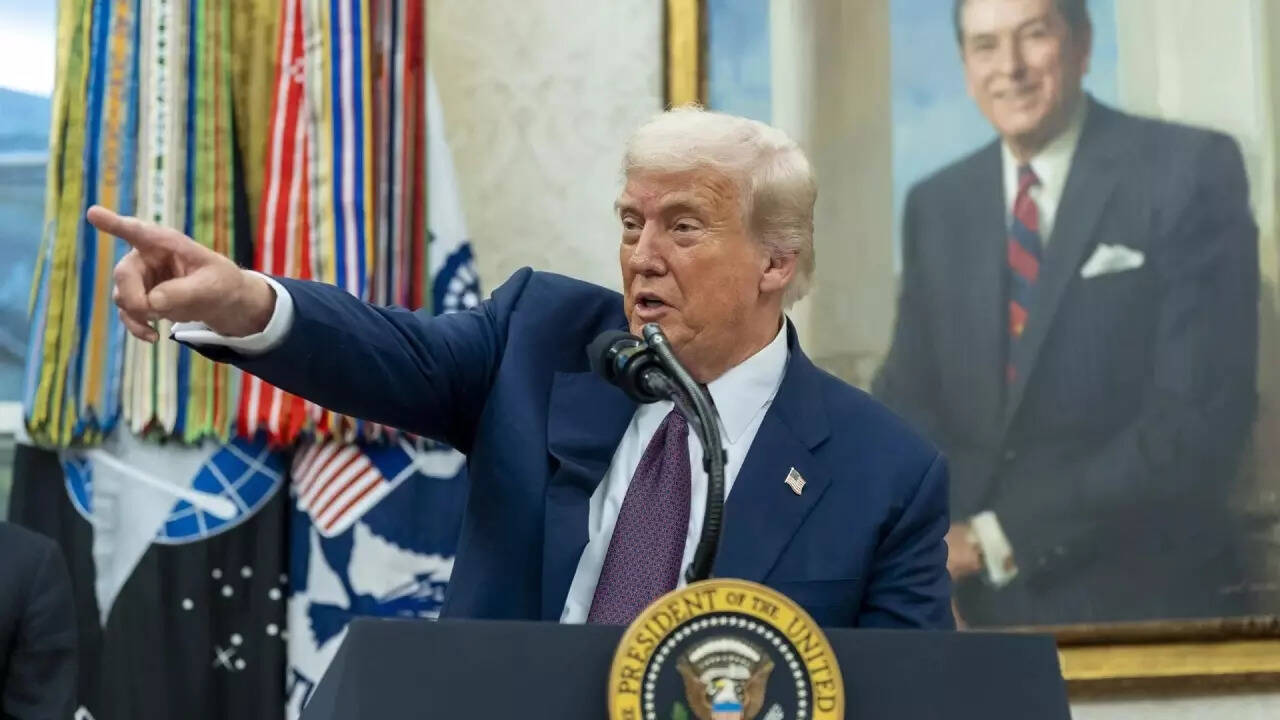
In a pronouncement that has sent ripples through diplomatic circles and global markets, former President Donald Trump has indicated the existence of clear “off-ramps” for the United States’ ongoing campaign concerning Iran. Signaling a potentially shorter and more decisive operation, Trump’s remarks suggest a calculated strategy aimed at achieving objectives without protracted engagement, injecting a new layer of complexity into the already volatile Middle Eastern landscape. The declaration comes at a pivotal moment, forcing analysts and policymakers to reassess the trajectory of US-Iran relations and the broader implications for regional stability.
Understanding the ‘Off-Ramps’ Strategy
The concept of “off-ramps” in foreign policy, particularly in the context of military or diplomatic campaigns, refers to pre-determined pathways or conditions that allow for a strategic withdrawal or de-escalation. For Trump, this often aligns with his “Art of the Deal” philosophy, where a strong negotiating position is established, followed by an opportunity to conclude engagements on favorable terms. His assertion of “off-ramps” implies that any action against Iran, or pressure exerted upon it, is not open-ended but has a defined exit strategy and duration.
The Geopolitical Chessboard
The Middle East remains a geopolitical chessboard where major powers vie for influence, and Iran plays a central role. Trump’s statement can be interpreted as a message directed both internally to a domestic audience and externally to adversaries and allies alike. To Iran, it could be a signal of a willingness to avoid prolonged conflict if certain conditions are met. To allies, it might offer reassurance that the United States is not seeking an open-ended confrontation, while to rivals, it reiterates a posture of strength with a clear endpoint.
Previous Stances and Current Shifts
During his presidency, Trump adopted a “maximum pressure” campaign against Iran, withdrawing from the Joint Comprehensive Plan of Action (JCPOA) and imposing stringent sanctions. This approach was characterized by economic coercion and robust military posturing, leading to several flashpoints. The current talk of “off-ramps” suggests a potential evolution or refinement of this strategy, perhaps indicating a desire to achieve specific, limited objectives rather than a complete overhaul of Iranian governmental structures. It hints at a transactional approach, seeking specific concessions or behavioral changes from Tehran within a constrained timeframe.
A Timeline of Tensions and Trump’s Iran Policy
The relationship between the United States and Iran has been fraught with tension for decades. During Donald Trump’s tenure, this reached new heights following the US withdrawal from the Iran nuclear deal.
- May 2018: The Trump administration unilaterally withdraws from the JCPOA, reimposing crippling sanctions on Iran.
- April 2019: The U.S. designates Iran’s Islamic Revolutionary Guard Corps (IRGC) as a foreign terrorist organization.
- May-June 2019: Several attacks on oil tankers in the Gulf region are attributed to Iran, escalating tensions over maritime security.
- June 2019: Iran shoots down a U.S. surveillance drone, prompting Trump to approve, then halt, retaliatory strikes at the last minute.
- January 2020: U.S. drone strike kills Iranian Major General Qassem Soleimani in Baghdad, leading to Iranian retaliatory missile strikes on US bases in Iraq.
- Late 2020: Iran continues to expand its nuclear program in violation of JCPOA limits, citing US sanctions and lack of economic benefits.
- Early 2021: Biden administration takes office, expressing willingness to return to the JCPOA, but negotiations stall amidst ongoing tensions.
- 2022-2025: Continued diplomatic deadlock, periodic escalations in rhetoric, and regional proxy conflicts keep US-Iran relations on edge.
- March 2026: Donald Trump states he has “off-ramps” from the Iran campaign, signalling a shorter operation.
Potential Industry and Market Repercussions
Any significant development in US-Iran relations invariably impacts global markets, particularly those tied to energy and defense. Trump’s statement, suggesting a potentially swift resolution, could have complex effects.
Oil and Global Energy Markets
The Strait of Hormuz, a vital chokepoint for global oil shipments, is central to any conflict involving Iran. The prospect of a “shorter operation” could initially soothe fears of prolonged supply disruptions, potentially stabilizing or even lowering oil prices from speculative highs. However, the initial shock of any military action, even if brief, could still trigger price spikes. Conversely, a clear path to de-escalation outlined by these “off-ramps” might provide a sense of certainty, allowing markets to price in a more predictable future, reducing the “Iran risk premium.”
Defense Sector Implications
For defense contractors and investors, a shorter, more contained operation could mean a focused demand for specific military hardware and services, as opposed to the sustained spending associated with protracted conflicts. While initial defense stocks might see a boost from the prospect of decisive action, a rapid de-escalation could temper long-term projections. The emphasis would shift from continuous engagement to precision and efficacy of military technology for discrete operations.
Policy Implications: A Diplomatic Shift?
Trump’s comments raise questions about the overarching policy goals and potential shifts in diplomatic strategy, regardless of who occupies the White House.
Regional Alliances and Dynamics
U.S. allies in the Middle East, particularly Saudi Arabia, Israel, and the UAE, have consistently expressed concerns about Iranian regional influence. A strategy with “off-ramps” might be seen differently by these nations. Some might appreciate the clarity of a defined approach, while others might fear that a “shorter operation” could leave core Iranian challenges unaddressed or might be a precursor to a less robust U.S. presence, leaving them more exposed. Maintaining a unified front among allies remains a critical diplomatic challenge.
International Reactions
European powers, who have largely sought to preserve the JCPOA and advocate for diplomatic solutions, would likely welcome any indication of de-escalation. China and Russia, with their own strategic interests in the region and relationships with Iran, would closely monitor any US moves, seeking to protect their energy supplies and geopolitical standing. The international community will be watching to see if these “off-ramps” lead to genuine dialogue or merely a new phase of brinkmanship.
Expert Analysis: Reading Between the Lines
Seasoned geopolitical observers are dissecting Trump’s words, looking for deeper meaning beyond the surface-level announcement.
Domestic Political Considerations
As a prominent figure in American politics, Trump’s statements are often viewed through the lens of domestic political aspirations. Signaling a “shorter operation” with “off-ramps” could be a way to appeal to an electorate wary of costly, drawn-out foreign entanglements, promising decisive action without the burden of endless wars. It projects an image of control and strategic foresight, aligning with his political brand of unconventional, results-driven leadership.
The Art of the Deal in Foreign Policy
For many analysts, Trump’s rhetoric mirrors his past negotiation tactics. By publicly announcing “off-ramps,” he might be setting expectations for a swift conclusion, thereby creating leverage. The statement could be designed to put pressure on Iran to negotiate from a position of perceived weakness or to provoke specific responses that could then be capitalized upon. It’s a classic move: define the boundaries, signal an end, and push for a deal within that framework.
The Future Outlook: Navigating the Middle East Labyrinth
The coming months will be crucial in deciphering the true intent and impact of Trump’s “off-ramps” declaration. Will it pave the way for a genuine de-escalation, or is it merely a new phase in the ongoing strategic competition? The answer will depend on various factors, including Iran’s response, the reactions of regional actors, and the global geopolitical landscape. The path forward remains complex, demanding astute diplomacy and measured responses from all parties involved.
Comparison of US Approaches to Iran (Selected Tenures)
| Administration | Primary Iran Policy | Key Characteristic | Outcome/Perception |
|---|---|---|---|
| Obama Administration (2009-2017) | Diplomatic Engagement (JCPOA) | Multilateral negotiation, sanctions relief for nuclear limits. | Reduced nuclear threat, criticism over regional influence. |
| Trump Administration (2017-2021) | Maximum Pressure Campaign | Unilateral sanctions, JCPOA withdrawal, military deterrence. | Crippled economy, heightened regional tensions. |
| Current Trump Rhetoric (2026) | “Off-Ramps” for Shorter Operation | Defined exit strategy, contained action, seeking swift resolution. | Uncertainty, potential for de-escalation or decisive limited action. |
Key Milestones in US-Iran Relations (2018-2026)
| Date | Event Description | Significance |
|---|---|---|
| May 2018 | US withdraws from JCPOA | Reinstatement of sanctions, end of nuclear deal compliance by US. |
| Jan 2020 | Soleimani assassination & Iran retaliation | Major military escalation, risk of full-scale conflict. |
| Early 2021 | Biden administration seeks JCPOA return | Attempt at diplomatic re-engagement; ultimately stalled. |
| Ongoing (2022-2025) | Iranian nuclear program expansion | Reduction of “breakout time,” increased international concern. |
| March 2026 | Trump’s “Off-Ramps” Statement | Hints at strategic shift, focus on rapid resolution. |
Frequently Asked Questions About Trump’s Iran Stance
- What exactly does “off-ramps” mean in this context?
In foreign policy, “off-ramps” refer to pre-defined conditions or strategies that allow for a controlled de-escalation, withdrawal, or conclusion of a military or diplomatic campaign without prolonged engagement. - Why is Trump signaling a “shorter operation” now?
The timing could be strategic, potentially aimed at a domestic audience wary of lengthy conflicts, or to signal to Iran and international players that any action would be decisive yet limited, perhaps to gain leverage. - How might Iran react to these statements?
Iran’s reaction could range from dismissiveness to a calculated reassessment of its own strategic positions, potentially seeking to understand the specific conditions that would constitute an “off-ramp.” - What are the potential impacts on global oil prices?
Initially, uncertainty could cause volatility. A perceived “shorter operation” might alleviate fears of prolonged disruption, but any military action could still trigger temporary spikes. - Will this lead to renewed diplomatic talks or further escalation?
It could potentially do either. “Off-ramps” can be a prelude to negotiation by defining boundaries, but also a justification for limited military action if those boundaries are crossed. - How do U.S. allies in the Middle East view this development?
Allies like Israel and Saudi Arabia will be keenly observing. Some may welcome decisive action, while others might be concerned about the implications of a swift disengagement. - Is this a departure from Trump’s previous “maximum pressure” campaign?
It could be seen as a refinement rather than a complete departure, indicating a more targeted application of pressure with a clearer endgame in mind, rather than an open-ended campaign. - What role does domestic politics play in these statements?
Domestic political considerations, especially a desire to avoid unpopular long-term foreign entanglements and project strong leadership, are often significant factors in such pronouncements. - What are the risks of a “shorter operation” in the Middle East?
Even a short operation carries risks of miscalculation, unintended escalation, humanitarian consequences, and broader regional destabilization if not executed with extreme care and clear objectives. - What is the overall goal of signaling “off-ramps” in this scenario?
The primary goal is likely to achieve specific strategic objectives concerning Iran’s behavior or capabilities, while simultaneously managing risks, controlling narrative, and assuring stakeholders of a defined conclusion.
Conclusion: Navigating the Crossroads of Power and Diplomacy
Donald Trump’s declaration of “off-ramps” from the Iran campaign marks a critical juncture in the convoluted narrative of US-Iran relations. While signaling a desire for a shorter, more contained engagement, these remarks underscore the persistent tension and the intricate dance between diplomatic pressure and military deterrence. The international community watches intently,
as this declaration could herald either a pragmatic de-escalation or merely a tactical recalibration in a protracted struggle. The ability to effectively utilize these “off-ramps” will be the ultimate test of strategic foresight and the pursuit of stability in one of the world’s most volatile regions, shaping not only the future of the Middle East but also the global geopolitical order.
Relevant Internal Readings:
- Unraveling the Complexities of Middle Eastern Geopolitics
- The Future of American Diplomacy: Challenges and Opportunities
- Global Oil Market Predictions Amidst Geopolitical Tensions
External Authority Links:
#TrumpIran #IranPolicy #MiddleEastGeopolitics #USForeignPolicy #Deescalation