


Trump Claims Iran Seeks Dialogue: Unpacking the Geopolitical Ripple Effect
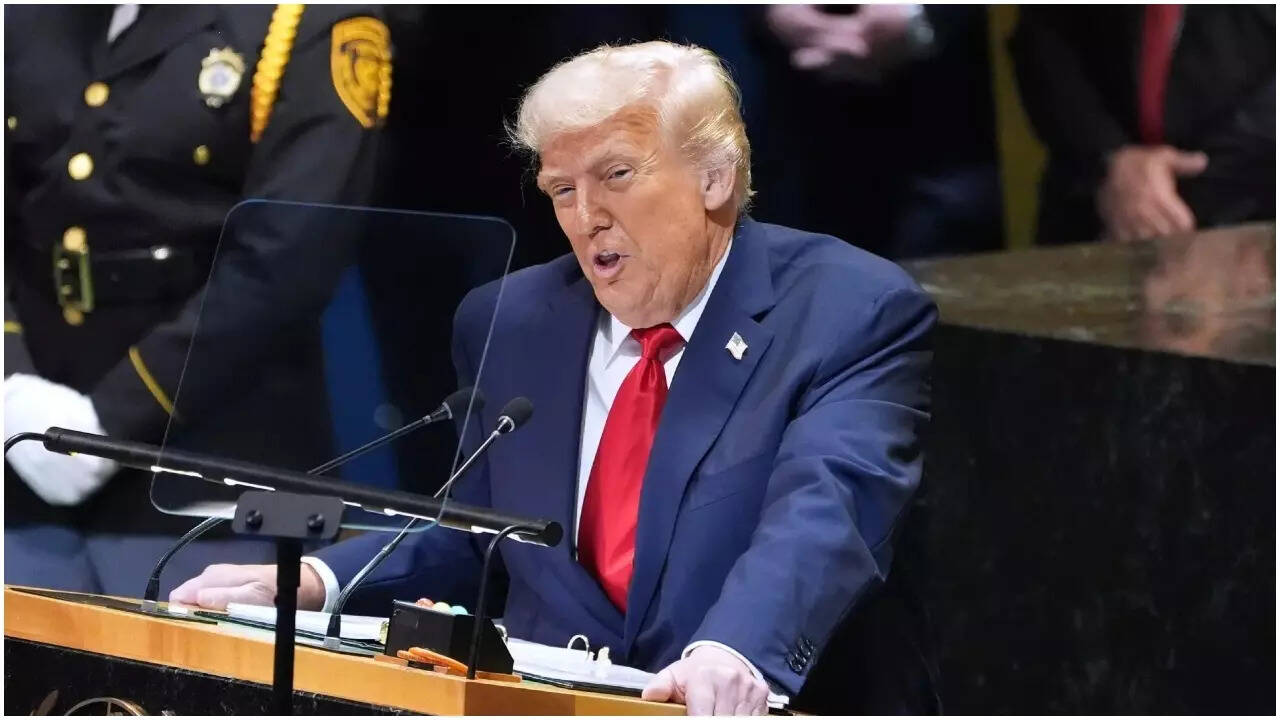
In a pronouncement that has reverberated across global capitals, former President Donald Trump recently asserted that Iran is actively seeking dialogue with him, a claim he states he has agreed to. This revelation, if accurate, signals a potentially dramatic shift in the long-strained relationship between Washington and Tehran, raising immediate questions about future diplomatic pathways, regional stability, and the intricate dance of international power. The prospect of renewed engagement, even speculative, opens a new chapter in a saga defined by tension and distrust.
The Shifting Sands of US-Iran Relations
The relationship between the United States and Iran has historically been characterized by periods of intense animosity punctuated by fleeting moments of potential de-escalation. From the 1979 revolution and hostage crisis to the nuclear deal negotiations and subsequent withdrawal, the trajectory has been anything but smooth. Trump’s latest statement comes against a backdrop of complex geopolitical maneuvering, with both nations deeply entrenched in various regional conflicts and vying for influence in the Middle East.
His claim suggests a potential departure from the “maximum pressure” campaign that defined his administration’s approach to Iran, which involved stringent sanctions aimed at crippling Iran’s economy and forcing it to renegotiate the nuclear deal. While the efficacy of this strategy remains a subject of debate among policy experts, it undeniably pushed the two nations further apart, leading to heightened tensions in the Persian Gulf and several near-confrontations. The mere mention of dialogue now hints at a different potential pathway, one that could prioritize direct engagement over coercive measures, albeit under specific and yet-to-be-defined conditions.
Historical Context: A Legacy of Distrust
To fully grasp the magnitude of Trump’s claim, it’s essential to recall the deep-seated historical grievances and ideological differences that have long fueled the US-Iran rivalry. The memory of the 1953 coup, US support for the Shah, and the subsequent Islamic Revolution laid the groundwork for decades of mutual suspicion. Efforts at rapprochement, most notably the 2015 Joint Comprehensive Plan of Action (JCPOA) – a multilateral agreement designed to limit Iran’s nuclear program in exchange for sanctions relief – were ultimately short-lived under the Trump administration.
Trump’s withdrawal from the JCPOA in 2018 was a pivotal moment, re-imposing sanctions and ushering in an era of heightened confrontation. This history underscores the immense challenges inherent in any attempt to bridge the divide, making the former president’s assertion of Iran seeking dialogue all the more remarkable and, to some, perplexing.
Timeline of Key US-Iran Developments (2018-Present)
- May 2018: Trump administration withdraws from the JCPOA and reinstates sanctions on Iran.
- November 2018: All U.S. sanctions lifted under the nuclear deal are reimposed, targeting Iran’s oil, banking, and shipping sectors.
- May 2019: Iran begins reducing its commitments under the JCPOA in response to U.S. sanctions and European inaction.
- June 2019: Iran shoots down a U.S. surveillance drone; Trump authorizes and then calls off retaliatory strikes.
- September 2019: Attacks on Saudi oil facilities, attributed by the U.S. and its allies to Iran, significantly escalate regional tensions.
- January 2020: U.S. airstrike kills Iranian General Qassem Soleimani in Baghdad; Iran retaliates with missile strikes on Iraqi bases housing U.S. troops.
- April 2021: Indirect talks between the U.S. and Iran begin in Vienna, aiming to revive the JCPOA.
- August 2022: European Union proposes a “final text” to revive the nuclear deal, but negotiations falter.
- March 2026: Donald Trump claims Iran is seeking dialogue with him, stating, “They want to talk, and I agreed.”
Industry Impact and Geopolitical Implications
The very whisper of potential US-Iran dialogue carries significant implications across various sectors, most notably in global energy markets and regional security. Any movement towards de-escalation could theoretically lead to increased Iranian oil exports, potentially impacting global crude prices. Conversely, a failure to materialize meaningful talks could further entrench existing tensions, contributing to continued volatility in the Middle East, a critical region for oil production and maritime trade routes.
Furthermore, regional alliances and proxy conflicts would undoubtedly be affected. Countries like Saudi Arabia and Israel, traditional adversaries of Iran and close allies of the U.S., would closely monitor any diplomatic overtures. The prospect of the U.S. engaging directly with Iran could either be seen as a pathway to broader regional stability or a potential threat to their own security interests, depending on the nature and outcomes of any discussions.
Market and Policy Implications: A Delicate Balance
From a policy standpoint, the implications are profound. If dialogue were to commence, the critical question would be its scope: Would it focus solely on the nuclear program, or expand to include Iran’s ballistic missile development, regional proxy activities, and human rights record? The U.S. has long insisted on a comprehensive agreement, while Iran has often preferred to compartmentalize issues, particularly its regional influence and missile program, which it views as non-negotiable defensive assets.
For financial markets, any concrete steps towards dialogue could introduce an element of calm, reducing the “risk premium” often associated with Middle East instability. However, the inherent unpredictability of US-Iran relations means that market reactions would likely remain volatile, heavily swayed by each pronouncement and diplomatic development. Analysts would be keen to discern whether such dialogue represents a genuine shift in policy or merely a strategic maneuver.
Expert Analysis: Decoding the Intentions
Political analysts and foreign policy experts are already dissecting Trump’s statement, pondering the motivations behind both his assertion and Iran’s alleged overture. “It’s a classic Trump move – keeping everyone guessing, projecting strength, and hinting at a potential breakthrough,” observes Dr. Sarah Jenkins, a Middle East policy scholar at the American Institute for Diplomacy. “However, the question remains: what specific channels has Iran used, and what are their conditions for dialogue? This is crucial.”
Some experts suggest that Iran might be testing the waters, perhaps anticipating a future political landscape in the U.S. and seeking to establish lines of communication. Others argue that internal economic pressures due to sanctions could be pushing Tehran towards exploring diplomatic avenues. “From Iran’s perspective, direct dialogue with a figure like Trump, who demonstrated a willingness to depart from traditional foreign policy, might be seen as a faster, albeit riskier, path to sanctions relief compared to multilateral negotiations,” states Dr. Reza Shahidi, a professor of international relations. “The key is whether any such talks would be substantive or merely symbolic.”
Comparing Diplomatic Approaches to Iran
| Approach | Key Characteristics | Potential Outcomes |
|---|---|---|
| “Maximum Pressure” (Trump Era) | Aggressive sanctions, withdrawal from JCPOA, military deterrence. | Economic hardship in Iran, heightened tensions, no direct dialogue. |
| Multilateral Diplomacy (Obama/Biden Era) | Engagement through JCPOA, international coalition, sanctions relief for nuclear limits. | Nuclear program constrained, some economic relief, indirect dialogue. |
| Direct Bilateral Dialogue (Proposed) | Direct talks between U.S. and Iran, potentially outside existing frameworks. | Rapid de-escalation/re-escalation, unpredictable outcomes, potential for tailored agreements. |
Summary of US-Iran Sanctions and Diplomatic Efforts
| Year | Key Event/Policy | Impact on Relations |
|---|---|---|
| 2018 | US withdrawal from JCPOA | Sharp deterioration, re-imposition of sanctions |
| 2019 | Iran reduces JCPOA commitments | Escalation, nuclear concerns grow |
| 2020 | Soleimani killing, Iranian retaliation | Peak military confrontation, near-war |
| 2021 | Vienna talks (indirect) begin | Limited diplomatic overtures, slow progress |
| 2022 | Vienna talks stall | Renewed stalemate, increased nuclear program activity |
| 2026 | Trump claims Iran seeks dialogue | Potential for new diplomatic path, uncertainty |
Future Outlook: A Path Fraught with Challenges
The road ahead for US-Iran relations, whether through renewed dialogue or continued stalemate, remains fraught with challenges. Any future talks, especially if directly involving Donald Trump, would face immense scrutiny from both domestic and international audiences. The distrust is deep, and the list of contentious issues is long. Reaching any substantive agreement would require significant concessions from both sides, something that has proven elusive in the past.
Moreover, the political landscape in both countries plays a crucial role. In the U.S., any engagement with Iran would likely be highly politicized, while in Iran, hardliners could resist any perceived compromise. The influence of regional actors and global powers like China and Russia would also factor heavily into any diplomatic calculations. The immediate future appears to be one of cautious anticipation, as the world waits to see if Trump’s claim translates into tangible diplomatic movement or remains another intriguing footnote in the complex narrative of US-Iran relations.
Frequently Asked Questions About US-Iran Relations and Dialogue
- What specifically did Donald Trump claim about Iran?
Donald Trump claimed that Iran is seeking to engage in dialogue with him, and he has agreed to their request. - What is the background of Trump’s relationship with Iran?
During his presidency, Trump withdrew the U.S. from the Iran nuclear deal (JCPOA) and implemented a “maximum pressure” campaign of sanctions against Iran. - Why would Iran seek dialogue now?
Potential reasons include economic pressures from sanctions, anticipation of a future U.S. political landscape, or a strategic move to explore new diplomatic avenues. - What were the key aspects of the Iran nuclear deal (JCPOA)?
The JCPOA was an agreement between Iran and several world powers (U.S., UK, France, Germany, Russia, China) that limited Iran’s nuclear program in exchange for sanctions relief. - How did Trump’s withdrawal from the JCPOA impact relations?
It led to increased tensions, Iran’s reduction of its nuclear commitments, and heightened military confrontations in the region. - What are the main obstacles to US-Iran dialogue?
Deep-seated distrust, Iran’s ballistic missile program, its regional activities, human rights concerns, and the political will on both sides. - What is the “maximum pressure” campaign?
A policy initiated by the Trump administration to impose stringent economic sanctions on Iran to compel it to renegotiate a new, more comprehensive nuclear deal. - How might potential dialogue impact regional stability?
It could either lead to de-escalation and broader stability or, if mishandled, further complicate regional dynamics, affecting allies and adversaries. - What role do other international powers play in US-Iran relations?
European nations, China, and Russia are signatories to the JCPOA and have often advocated for its preservation and a diplomatic resolution to the nuclear issue. - What is the immediate next step after Trump’s claim?
The immediate next step is clarification and verification of Trump’s claim, and observation of any official responses or actions from Iran or the current U.S. administration.
Conclusion: A Glimmer of Hope Amidst Persistent Shadows
Donald Trump’s claim that Iran is seeking dialogue, and his apparent agreement to it, injects a potent new dynamic into an already volatile geopolitical equation. While the specifics remain shrouded in ambiguity, the very possibility of direct talks between the U.S. and Iran, especially under such unique circumstances, represents a potential turning point. It suggests a pragmatic recognition, perhaps on both sides, that perpetual confrontation serves neither’s long-term interests. However, the path to any meaningful resolution is littered with historical baggage, entrenched positions, and the ever-present risk of miscalculation. The world will watch with bated breath to see if this asserted desire for dialogue transforms into a substantive diplomatic initiative, or if it remains another intriguing, yet unfulfilled, chapter in the complex narrative of US-Iran relations. The shadows of past failures are long, but even a glimmer of sincere dialogue offers a fragile hope for a more stable future.
Further Reading:
- Understanding the Iran Nuclear Deal: A Comprehensive Guide
- Geopolitical Tensions: Analyzing Stability in the Middle East
- U.S. Foreign Policy: Historical Shifts and Future Directions
External Authority Links: