






A Journey Through Time: The Origins of a Natural Wonder
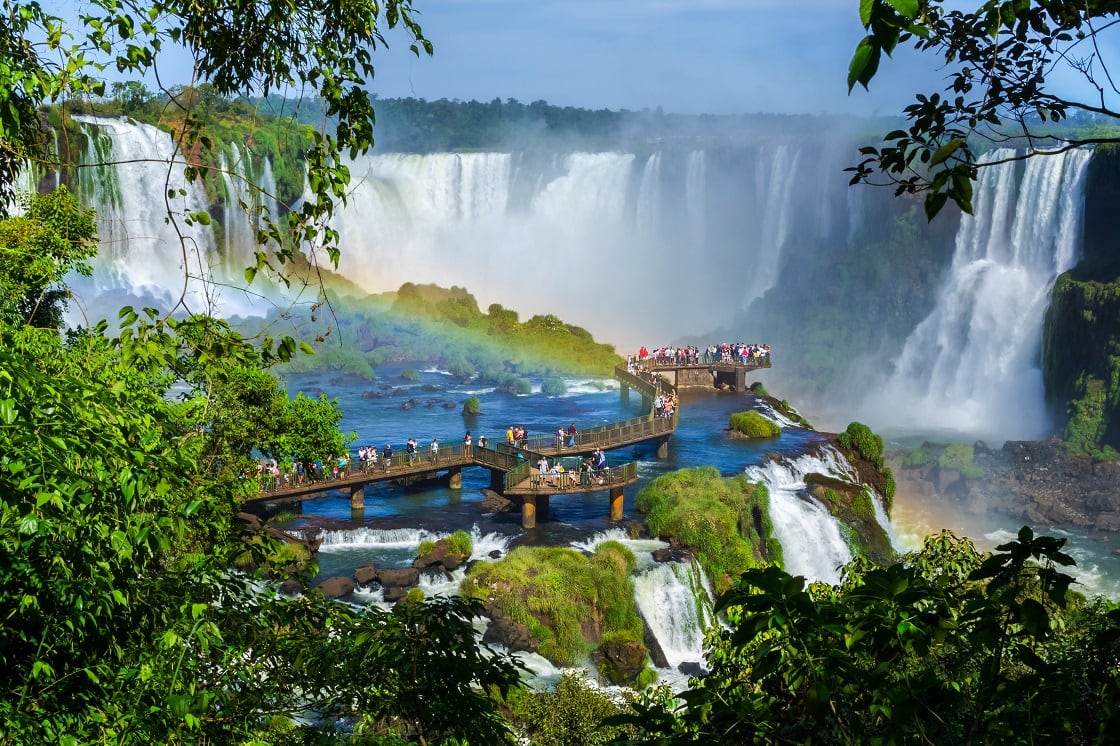
The name “Iguazu” itself, derived from the Guarani words “y” (water) and “guasu” (big), perfectly encapsulates the sheer scale of this colossal water feature. Situated on the border of Brazil’s Paraná state and Argentina’s Misiones province, the falls are formed by the Iguazu River, a significant tributary of the mighty Paraná River. The geological narrative of Iguazu Falls is one of ancient forces and immense timeframes, etched into the very fabric of the South American continent.
Millions of years ago, massive basaltic lava flows characterized the region, creating the sturdy, layered rock formations that define the Paraná Basin. Over eons, tectonic plate movements and subsequent erosion by the powerful Iguazu River began to sculpt what we see today. The falls are essentially a natural amphitheater of cascades, carved where the river plunges over a massive basaltic escarpment. This unique geological history has resulted in a series of over 275 individual falls and cataracts, varying in height and flow, culminating in the formidable U-shaped chasm known as the “Devil’s Throat” (Garganta del Diablo).
The first European to witness this breathtaking spectacle was Spanish conquistador Álvar Núñez Cabeza de Vaca in 1541, during his quest for a route to the legendary city of El Dorado. His accounts painted a picture of unparalleled grandeur, a sentiment echoed by every visitor since. Today, both the Brazilian (Iguaçu National Park) and Argentinian (Iguazú National Park) sides have been recognized as UNESCO World Heritage Sites, a testament to their universal natural value and the imperative to preserve them for future generations.
A Chronicle of Grandeur: The Timeline of Iguazu
- ~130-140 Million Years Ago: Formation of the vast Paraná Basin basaltic rock layers, setting the geological stage.
- ~600,000 Years Ago: The earliest formations of Iguazu Falls begin as the Iguazu River starts to erode the basaltic plateau.
- 1541: Spanish explorer Álvar Núñez Cabeza de Vaca becomes the first documented European to encounter the falls.
- 1934: Iguazú National Park is established on the Argentine side to protect the falls and surrounding ecosystem.
- 1939: Iguaçu National Park is established on the Brazilian side, mirroring Argentina’s conservation efforts.
- 1984: Iguazú National Park (Argentina) is designated a UNESCO World Heritage Site.
- 1986: Iguaçu National Park (Brazil) receives its UNESCO World Heritage designation, solidifying international recognition.
- 2011: Iguazu Falls is officially declared one of the New7Wonders of Nature, following a global voting campaign.
- Present Day: Ongoing international cooperation between Brazil and Argentina focuses on sustainable tourism, ecological preservation, and managing visitor impact.
Economic & Ecological Pillars: Industry Impact and Conservation
The immense appeal of Iguazu Falls has transformed the surrounding regions into thriving tourism hubs. Millions of visitors flock here annually, fueling a robust tourism industry that directly benefits local communities. The cities of Foz do Iguaçu in Brazil and Puerto Iguazú in Argentina serve as gateways, boasting a wide array of hotels, restaurants, tour operators, and supporting services. This influx of tourism has led to significant infrastructure development, including international airports and improved road networks, creating countless employment opportunities for local residents, from expert guides to hospitality staff and park rangers.
Beyond its economic impact, Iguazu Falls is a cornerstone of ecological conservation. The falls are embedded within the Atlantic Forest biome, one of the world’s most biodiverse and critically endangered ecosystems. The national parks serve as crucial refuges for a spectacular array of wildlife, including iconic species like jaguars, ocelots, tapirs, caimans, various monkey species, and over 400 bird species, prominently featuring toucans and macaws. The constant mist generated by the falls creates unique microclimates that support a specialized flora, making the region a living laboratory for scientific research into hydrology, geology, and ecology.
However, this natural splendor faces considerable challenges. Deforestation in surrounding unprotected areas, illegal poaching, and unsustainable agricultural practices pose constant threats to the delicate balance of the ecosystem. Both Brazil and Argentina, alongside international conservation organizations, are engaged in continuous efforts to mitigate these pressures, implement sustainable management practices, and educate visitors on the importance of preserving this irreplaceable natural heritage.
Navigating Borders: Market and Policy Implications
The shared stewardship of Iguazu Falls has fostered a unique spirit of cross-border cooperation between Brazil and Argentina. This collaboration extends beyond joint park management to include harmonized visa policies (where applicable) and integrated tourism initiatives designed to enhance the visitor experience while ensuring the long-term viability of the site. Such policies aim to balance economic benefits with the imperative of ecological preservation, often through strict visitor limits in sensitive areas and robust environmental education programs.
From an economic standpoint, the falls represent a significant regional asset. Investment in eco-tourism infrastructure, coupled with tax incentives for sustainable businesses, encourages responsible development. The Iguazu River itself, while creating the falls, is also part of the larger Paraná River basin, a vital waterway that hosts major hydroelectric projects like the Itaipu Dam, located further downstream. While the Itaipu Dam does not directly impact the flow over the falls, the broader water resource management policies of the basin countries have implications for regional ecology and the long-term health of the river system, necessitating careful diplomatic and scientific oversight.
Expert Analysis: A Geological and Biological Marvel Unveiled
From a geological perspective, the dynamic nature of Iguazu Falls is fascinating. The falls are not static; they are slowly retreating upstream at an estimated rate of a few millimeters per year due due to the continuous erosive power of the water on the softer sedimentary layers beneath the resistant basalt caps. The iconic “Devil’s Throat,” a deep, narrow canyon where approximately half of the river’s flow plunges, showcases the raw power of this geological process. Its U-shape is a testament to the varying resistance of the underlying rock strata and the concentrated erosive forces.
Biologically, the microclimates created by the incessant spray and mist are crucial. They support an incredible array of ferns, mosses, and epiphytes, contributing to the rich biodiversity. The Atlantic Forest, of which the Iguazu parks are a part, is recognized as a biodiversity hotspot, home to a high concentration of endemic species found nowhere else on Earth. Ornithologists marvel at the diverse birdlife, while entomologists study the myriad insect species. Protecting this complex web of life is paramount, especially as threats like climate change and habitat fragmentation loom large. Scientists continually monitor the health of the ecosystem, employing sophisticated techniques to track wildlife populations and assess environmental impacts.
Future Outlook: Sustaining the Spectacle
The future of Iguazu Falls hinges on a delicate balance of conservation, sustainable tourism, and international cooperation. Climate change presents a significant challenge, with potential shifts in rainfall patterns impacting the river’s flow, leading to both periods of drought and extreme flooding. Adapting management strategies to these variable conditions will be crucial. As global tourism continues to grow, managing increased visitor numbers without compromising the integrity of the natural environment will remain a priority. Innovative approaches, such as controlled access points, digital ticketing systems, and enhanced educational programs, are being explored to ensure a high-quality, low-impact experience.
Furthermore, technology could play a transformative role, from using drones for ecological monitoring to developing virtual reality tours for those unable to visit in person, expanding access while reducing physical strain on the parks. Critically, the involvement of local and indigenous communities in conservation and tourism initiatives will be vital, ensuring that development is equitable and culturally sensitive. Renewed and robust conservation efforts to protect the broader Atlantic Forest biome are not just for Iguazu, but for the ecological health of the entire region. The falls stand as a powerful symbol, reminding us of nature’s majesty and our collective responsibility to safeguard it for generations to come.
Iguazu Falls: A Comparative Glance
| Waterfall System | Location | Overall Width | Average Height of Drops | Average Flow Rate (m³/s) | Key Features |
|---|---|---|---|---|---|
| Iguazu Falls | Brazil/Argentina | 2.7 km (1.7 miles) | 60-82 meters (197-269 ft) | 1,750 (varies seasonally) | Widest waterfall system; over 275 individual falls; Devil’s Throat. |
| Victoria Falls | Zambia/Zimbabwe | 1.7 km (1.1 miles) | 108 meters (354 ft) | 1,088 (varies seasonally) | Largest single sheet of falling water; “The Smoke that Thunders.” |
| Niagara Falls | USA/Canada | 1.2 km (0.75 miles) | 51 meters (167 ft) | 2,400 (diverted for power) | North America’s most powerful; Horseshoe, American, Bridal Veil Falls. |
Iguazu Falls: Essential Facts & Figures
| Feature | Detail |
|---|---|
| Total Width | 2.7 kilometers (1.7 miles) |
| Number of Individual Falls | Between 275 and 300 (depending on water levels) |
| Highest Drop | 82 meters (269 feet) – Devil’s Throat |
| Average Flow Rate | 1,750 cubic meters per second |
| UNESCO World Heritage Status | 1984 (Argentina), 1986 (Brazil) |
| Biome | Atlantic Forest (Mata Atlântica) |
Frequently Asked Questions About Iguazu Falls
- How wide is Iguazu Falls, and why is it considered the world’s widest?
Iguazu Falls spans an impressive 2.7 kilometers (1.7 miles) in width, making it the widest waterfall system globally. This vastness comes from its composition of hundreds of individual cascades and drops along a crescent-shaped escarpment, rather than a single continuous sheet, creating an unparalleled panoramic spectacle between Brazil and Argentina. - Where exactly are the Iguazu Falls located?
Iguazu Falls are majestically situated on the border between Brazil and Argentina, specifically in the Brazilian state of Paraná and the Argentine province of Misiones. The nearest major cities are Foz do Iguaçu in Brazil and Puerto Iguazú in Argentina, serving as primary gateways for visitors. - What is the best time of year to visit Iguazu Falls?
The best time to visit Iguazu Falls is generally during the shoulder seasons—spring (September to November) and autumn (March to May). During these periods, the weather is pleasant, water levels are typically robust but not excessively high, and crowd numbers are more manageable than during peak summer or winter holidays. - How do Iguazu Falls compare to other famous waterfalls like Niagara or Victoria Falls?
Iguazu Falls is renowned for its immense width (2.7 km) and numerous individual cascades, making it a unique “system.” While Victoria Falls boasts the largest single sheet of falling water (1.7 km wide) and Niagara Falls is known for its sheer power and accessibility, Iguazu offers an unparalleled immersive experience due to its extensive network of falls and rainforest setting. - What kind of wildlife can be seen at Iguazu Falls?
The surrounding Iguazu National Parks are rich in biodiversity, part of the Atlantic Forest biome. Visitors can spot diverse wildlife including coatis (a type of raccoons), various monkey species, caimans, colorful toucans, parrots, and potentially even jaguars or ocelots, though these larger predators are rarer to see. - How many individual waterfalls make up the Iguazu system?
The Iguazu Falls system comprises between 275 and 300 individual waterfalls and cascades, depending on the river’s water levels. This multitude of drops creates a truly breathtaking, immersive, and dynamic experience, allowing visitors to witness the power of water from countless viewpoints. - Can you visit Iguazu Falls from both the Brazilian and Argentine sides? Which side is better?
Yes, you can and should visit from both sides to fully appreciate Iguazu Falls. The Brazilian side offers more panoramic views and wider vistas of the entire system, while the Argentine side provides intimate walking trails and catwalks that bring you incredibly close to the falls, including the mighty Devil’s Throat. - What is the “Devil’s Throat” at Iguazu Falls?
The “Devil’s Throat” (Garganta del Diablo) is the most iconic and powerful section of Iguazu Falls. It is a spectacular U-shaped chasm, approximately 150 meters (490 feet) wide and 82 meters (269 feet) high, where about half of the Iguazu River’s flow plunges with immense force, creating a deafening roar and a towering spray. - How were Iguazu Falls formed geologically?
Iguazu Falls were formed over millions of years through a process of geological uplift and erosion. The falls are located where the Iguazu River flows over a massive basaltic lava plateau, part of the ancient Paraná Basin. The river’s erosive power gradually carved out the escarpment and the numerous individual cascades we see today. - Is it safe to visit Iguazu Falls? What safety precautions should visitors take?
Visiting Iguazu Falls is generally very safe, with well-maintained trails and infrastructure. Visitors should stay on marked paths, remain hydrated, use sunscreen and insect repellent, and be mindful of wildlife (especially coatis, who can be bold). Always follow park regulations and guides’ instructions for a safe and enjoyable experience.
Conclusion: A Legacy of Roaring Waters and Enduring Beauty
Iguazu Falls stands not just as a geographical wonder but as a powerful symbol of nature’s awe-inspiring artistry. Its unparalleled width and mesmerizing network of cascades create an experience that transcends mere sightseeing, imprinting itself upon the soul of every visitor. As humanity navigates the complexities of the 21st century, the collaborative efforts of Brazil and Argentina to protect this shared treasure offer a beacon of hope for conservation worldwide. The future of Iguazu will undoubtedly be shaped by our commitment to sustainable tourism, rigorous ecological preservation, and a profound respect for the wild heart of our planet. May the thunderous roar of Iguazu continue to echo for millennia, a timeless reminder of Earth’s enduring beauty and our sacred duty to safeguard it.
Internal Linking Suggestions:
- Exploring South America’s Eco-Tourism Hotspots
- Ultimate Travel Guide to Brazil
- Adventure Travel Destinations in Argentina
External Authority Links:
- UNESCO World Heritage Centre: Iguaçu National Park (Brazil)
- UNESCO World Heritage Centre: Iguazú National Park (Argentina)
#IguazuFalls #NaturalWonders #BrazilTravel #ArgentinaTourism #SouthAmerica #Waterfalls