



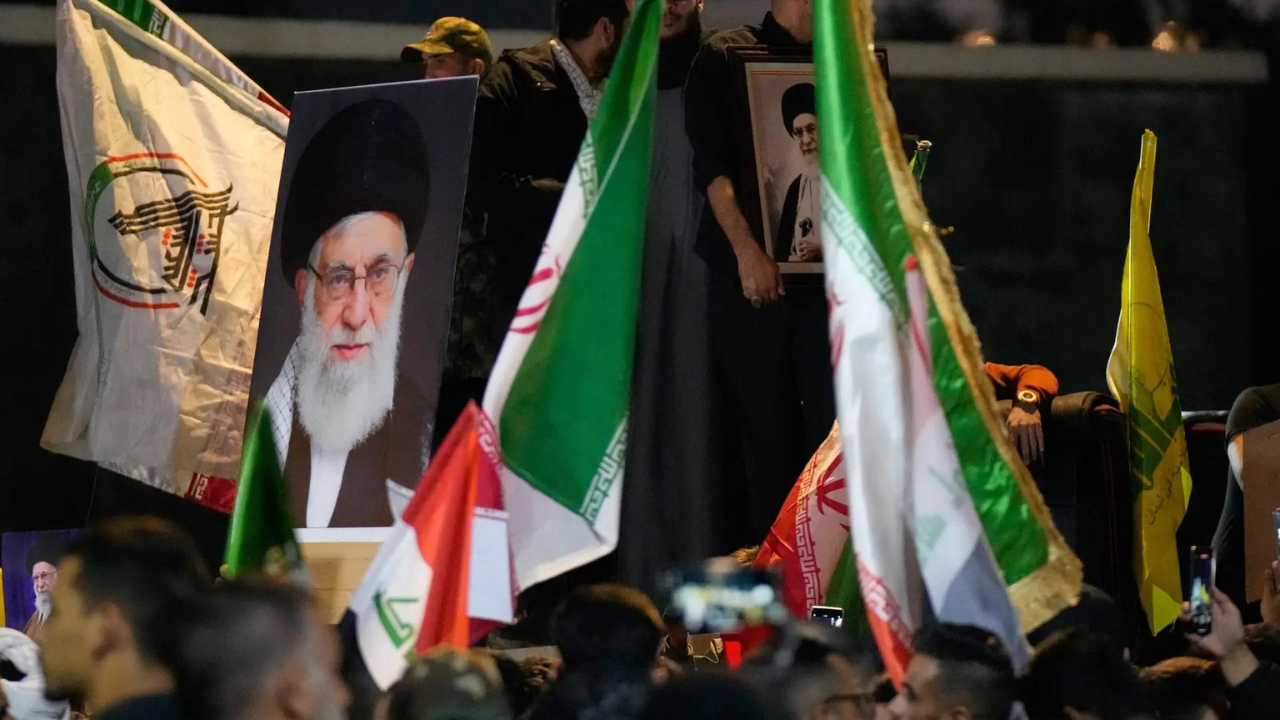
For several decades, Iran, under the unwavering leadership of Ayatollah Ali Khamenei, embarked on an ambitious and multifaceted journey. This profound endeavor aimed to solidify its position as a preeminent regional power, fundamentally reshaping the Middle Eastern geopolitical landscape.
This strategic imperative consistently shaped Iran’s intricate foreign policy, its robust defense doctrines, and its remarkable economic resilience against significant external pressures. It formed the cornerstone of its national development and international engagement.
The Vision of Regional Hegemony
Ayatollah Ali Khamenei consistently championed a vision of an indomitable, self-reliant Iran, fully capable of withstanding external pressures and actively sculpting the regional landscape. This overarching strategy aimed to reclaim Iran’s historical prominence and safeguard its national security alongside its revolutionary ideology.
The pursuit of regional dominance extended beyond mere territorial expansion; it encompassed the deliberate cultivation of a vast sphere of political, military, and cultural sway. This comprehensive approach sought to fundamentally challenge and reorder the prevailing regional structure, often perceived as unduly influenced by Western powers and antagonistic rivals. According to an Official Source, this strategic direction was a defining characteristic of Khamenei’s leadership and a central pillar of his long-term policy.
Ideological Foundations
At the very core of this expansive vision lay the revolutionary principles ignited by the momentous 1979 Islamic Revolution. These foundational tenets vehemently emphasized anti-imperialism, unwavering support for oppressed populations, and the profound concept of Islamic unity.
These deeply ingrained principles served as a compelling moral and religious justification for Iran’s various interventions and strategic alliances forged across the complex tapestry of the Middle East. They resonated powerfully with diverse non-state actors and communities actively seeking greater autonomy or robust resistance against perceived injustices and foreign domination.
Strategic Autonomy
A paramount objective within this grand strategy was the attainment of complete strategic autonomy, thereby liberating Iran from any dependence on foreign powers. This critical goal necessitated the vigorous development of indigenous defense capabilities and the meticulous forging of alliances based purely on mutual interests, rather than a posture of subservience.
This relentless pursuit of national independence represented a direct and resolute response to historical foreign interventions and the persistent perception of existential threats emanating from both Western nations and regional adversaries. It aimed to establish an unshakeable deterrent against any potential future aggression, safeguarding Iran’s sovereign decision-making.
Tools of Influence
To realize its ambitious regional aspirations, Iran meticulously developed a multifaceted toolkit of influence, combining conventional military strength with asymmetrical warfare tactics. These diverse instruments were deployed strategically to expand its reach and counter opposing forces, ensuring a flexible and adaptable foreign policy.
The state carefully nurtured both overt and covert capabilities, ensuring that its regional footprint could be expanded through various means. This layered approach allowed for flexibility and adaptation in a constantly evolving geopolitical environment, often turning challenges into opportunities for strategic gains.
Military and Defense Capabilities
Iran heavily invested in its indigenous defense industry, prioritizing self-sufficiency in weaponry and military technology development. This emphasis led to the creation of a sophisticated ballistic missile program, often cited as a cornerstone of its deterrent strategy against more powerful adversaries.
Beyond conventional forces, the Islamic Revolutionary Guard Corps (IRGC) emerged as a key instrument of both internal security and external power projection. Its elite Quds Force specialized in extraterritorial operations, fostering proxy relationships, and providing military advisory support to allied groups throughout the region.
Proxy Networks and Alliances
A defining feature of Iran’s regional strategy was its extensive network of proxy groups and allied non-state actors, strategically cultivated over decades. These formidable entities included Hezbollah in Lebanon, various Shiite militias in Iraq, and the Houthi movement in Yemen.
These proxies served as invaluable force multipliers, enabling Iran to exert significant influence without direct military intervention, often in areas beyond its immediate borders. They provided strategic depth and asymmetrical advantages against technologically superior adversaries, embodying a core aspect of Iran’s “resistance” doctrine.
Economic Leverage and Resistance Economy
Despite crippling international sanctions that targeted its vital economic sectors, Iran steadfastly implemented a “resistance economy” aimed at minimizing external vulnerability and maximizing self-reliance. This strategy sought to transform economic pressure into a catalyst for domestic innovation, resilience, and industrial growth.
Economic ties, even under duress, were strategically utilized to strengthen existing alliances and maintain regional influence, particularly with neighboring countries and partners in Asia. This included navigating complex trade agreements and energy partnerships with nations willing to bypass international restrictions, solidifying economic interdependence.
Key Regional Engagements
Iran’s quest for regional dominance consistently manifested through direct and indirect engagement in several critical conflict zones and political arenas. Each engagement served to expand its strategic depth, counter perceived threats, and advance its geopolitical objectives.
These interventions were often characterized by a sophisticated blend of ideological solidarity, pragmatic security concerns, and a long-term vision for fundamentally reshaping the Middle Eastern power balance. Understanding these complex dynamics is crucial for grasping the latest trends in Middle Eastern geopolitics and Iran’s enduring role within them.
Iraq: Post-Saddam Influence
Following the 2003 US invasion, Iran swiftly capitalized on the ensuing power vacuum in neighboring Iraq, strategically fostering deep ties with emerging Shiite political parties and militias. This astute maneuver significantly enhanced its influence across the border.
This influence manifested profoundly in political alliances, significant economic investments, and robust security cooperation, effectively making Iraq a vital corridor for Iranian influence towards the Levant. Its persistent presence helped to shape Iraqi governance, security structures, and national decision-making processes.
Syria: A Pivotal Alliance
Syria represented Iran’s most crucial Arab ally, providing an indispensable land bridge to Hezbollah in Lebanon and serving as a strategic outpost against Israel. The protracted civil war witnessed extensive and unwavering Iranian support for the embattled Assad regime, underscoring its strategic importance.
This comprehensive support included substantial financial aid, deployment of military advisors, and the mobilization of foreign Shiite fighters, effectively preserving a key component of Iran’s “Axis of Resistance.” Syria’s survival was paramount to the stability and integrity of Iran’s entire regional architecture and projection of power.
Lebanon and Hezbollah
Hezbollah, founded with Iranian backing in the 1980s, evolved into Iran’s most powerful non-state proxy, establishing itself as a formidable political and military force within Lebanon. It effectively served as a significant deterrent against Israeli aggression and a potent projection of Iranian power onto the Mediterranean coast.
Iran provided substantial financial, military, and ideological support, enabling Hezbollah to develop into a highly capable and influential actor deeply embedded in Lebanese society. This enduring and robust alliance cemented Iran’s reach and strategic depth in the Levant, profoundly impacting regional security dynamics.
Yemen and the Houthis
Iran’s support for the Houthi movement in Yemen emerged as a significant and escalating front in its fierce rivalry with Saudi Arabia. This calculated involvement allowed Iran to effectively challenge Saudi influence on its vital southern flank, creating a new axis of regional competition.
Providing varying degrees of logistical and technical assistance, Iran enabled the Houthis to launch sophisticated attacks against Saudi and Emirati targets, thereby dramatically escalating the regional proxy conflict. Yemen consequently became a crucial and hotly contested battleground for regional influence and strategic positioning.
Palestine and the Resistance Axis
Unwavering support for Palestinian resistance groups, including Hamas and Islamic Jihad, consistently remained a core and non-negotiable tenet of Iran’s foreign policy. This solidified its image as a staunch champion of the Palestinian cause and an unyielding opponent of Israel.
This consistent backing, though sometimes indirect, strategically positioned Iran centrally within the broader “Axis of Resistance” and garnered ideological legitimacy among certain Arab populations. It allowed Iran to maintain significant leverage and influence within the complex dynamics of the enduring Arab-Israeli conflict.
Confronting External Pressures
Iran’s determined pursuit of regional powerhouse status invariably brought it into direct and often intense confrontation with significant external pressures. These challenges primarily originated from the United States and its regional allies, seeking to curtail Tehran’s ambitions.
The nation’s leadership consistently framed these challenges as deliberate attempts to undermine its sovereignty, revolutionary ideals, and national dignity. This powerful narrative fueled a pervasive sense of national resilience and unwavering resolve against perceived foreign intervention and coercion.
Nuclear Ambitions and Diplomacy
Iran’s controversial nuclear program became an enduring focal point of international concern, viewed by many global powers as a potential pathway to nuclear weapons development. This led to intense diplomatic efforts, multilateral negotiations, and the imposition of severe international sanctions.
The Joint Comprehensive Plan of Action (JCPOA) represented a temporary easing of tensions and a framework for international cooperation, but its subsequent collapse under US withdrawal reignited widespread concerns and further complicated regional stability. The nuclear file remains a critical and sensitive component of Iran’s international standing and strategic calculus.
Sanctions and Resilience
For decades, Iran has endured extensive international sanctions, specifically targeting its vital oil industry, crucial financial sector, and indigenous military capabilities. These punitive measures were primarily designed to curtail its nuclear program and its extensive regional activities.
Despite the severe economic hardship and substantial impact on its population, Iran developed sophisticated strategies to circumvent sanctions and foster a robust “resistance economy.” This involved emphasizing domestic production, diversifying trade partners, and engaging in illicit financial networks to maintain economic viability and national morale.
US Relations and Regional Dynamics
The tumultuous and deeply adversarial relationship with the United States remained a defining feature of Iran’s foreign policy, marked by periods of intense confrontation and sporadic, limited engagement. Washington consistently viewed Iran as a primary destabilizing force in the broader Middle East.
This persistent adversarial dynamic fueled a regional arms race, intensified proxy conflicts, and significantly shaped alliances and security architectures across the Persian Gulf and beyond. Iran consistently aimed to diminish US military and political influence in the region, seeking to replace it with its own hegemonic vision.
Legacy and Future Implications
Khamenei’s strategic vision undeniably transformed Iran’s regional footprint, elevating its status from an isolated revolutionary state to a formidable and indispensable player. His extended tenure firmly established Iran’s enduring influence across multiple critical regional theaters.
The institutionalization of the “Axis of Resistance” and the meticulous development of robust indigenous military and technological capabilities represent significant and lasting achievements of this long-term strategy. These legacies will continue to profoundly shape Iranian foreign policy and regional engagement for many years to come.
A Mixed Record of Successes and Challenges
Iran successfully cultivated an extensive network of allies and proxies, thereby effectively extending its influence from the strategic Persian Gulf to the shores of the Mediterranean. It also demonstrated remarkable resilience in the face of severe economic pressure and persistent military threats from formidable adversaries.
However, this aggressive and often confrontational posture also led to increased regional polarization, intensified rivalries with powerful states like Saudi Arabia and Israel, and contributed significantly to widespread instability and conflict. The human and economic costs of these interventions and the resulting isolation were undoubtedly substantial and continue to impact the nation.
Enduring Regional Footprint
The intricate strategic architecture built under Khamenei’s protracted leadership ensures that Iran will remain a central, unavoidable, and highly influential actor in Middle Eastern affairs. Its pervasive influence is deeply embedded within the political and security landscapes of Iraq, Syria, Lebanon, and Yemen, making it an undeniable regional force.
Future Iranian leaders will undoubtedly inherit a powerful, though often internationally isolated, state equipped with established mechanisms for robust regional power projection. The continuing challenge will be to strategically balance this entrenched influence with the pressing demands of economic recovery, domestic stability, and potential international reintegration.
Frequently Asked Questions (FAQs)
What was Ayatollah Ali Khamenei’s primary objective for Iran in the region?
Khamenei’s paramount objective was to transform Iran into a dominant regional powerhouse, asserting its strategic autonomy and challenging what he perceived as foreign hegemony. He sought to create a vast sphere of influence that would safeguard Iran’s national security, promote its geopolitical interests, and propagate its revolutionary ideals across the entire Middle East.
How did Iran fund its regional ambitions despite international sanctions?
Despite crippling sanctions, Iran employed a “resistance economy” strategy focused on self-sufficiency, black market operations, and diversifying trade partners, particularly with Asian nations. It leveraged limited oil revenues, even if curtailed, and relied on internal financial mechanisms, including charitable foundations and illicit networks, to support its proxy networks and military development programs.
Which countries or groups formed Iran’s “Axis of Resistance”?
The “Axis of Resistance” typically refers to an informal anti-Western and anti-Israeli political and military alliance led by Iran. Key members include the Syrian government, Hezbollah in Lebanon, various Shiite militias in Iraq, and the Houthi movement in Yemen, alongside Palestinian factions like Hamas and Islamic Jihad. These entities often coordinate their actions and share ideological tenets.
What role did the Islamic Revolutionary Guard Corps (IRGC) play in this strategy?
The IRGC, particularly its elite Quds Force, was absolutely instrumental in executing Iran’s regional strategy. It was directly responsible for cultivating, training, equipping, and funding proxy forces, managing extraterritorial operations, and providing crucial military advisory support to allied governments and non-state actors, thereby extending Iran’s influence far beyond its national borders and safeguarding its strategic depth.
How did Iran’s nuclear program relate to its regional powerhouse ambitions?
Iran’s nuclear program was perceived by many as a powerful symbol of its technological prowess, national sovereignty, and a crucial component of its deterrent strategy, significantly bolstering its regional standing and leverage. While Iran maintains the program is for peaceful purposes, its development generated intense international concern and profoundly impacted its diplomatic relations and geopolitical bargaining power on the global stage.
What were the main challenges Iran faced in pursuing its regional goals?
Iran faced immense and persistent challenges, including severe international sanctions that crippled its economy, significant military threats from powerful adversaries like the US and Israel, and fierce regional rivalries, particularly with Saudi Arabia. These formidable factors led to sustained economic hardship, profound geopolitical isolation, and prolonged, costly proxy conflicts across the volatile Middle East.
How did Iran gain influence in Iraq after the 2003 invasion?
After the 2003 US invasion, Iran swiftly and strategically established deep ties with newly empowered Shiite political factions and armed militias in Iraq. It provided extensive political, financial, and military support, influencing the formation of successive governments and integrating allied groups into the Iraqi security apparatus. This comprehensive approach secured Iran a strong and enduring foothold in its crucial western neighbor.
What was the significance of Syria to Iran’s regional strategy?
Syria was considered Iran’s most vital Arab ally, serving as an absolutely critical land bridge for supplying Hezbollah in Lebanon and a forward operating base against Israel. Iranian support for the Assad regime during the devastating civil war was essential for maintaining this strategic corridor and ensuring the integrity of the “Axis of Resistance” against Sunni opposition and external interference.
How did Iran’s policy towards Palestine contribute to its regional influence?
By consistently and vociferously supporting Palestinian resistance groups, Iran strategically positioned itself as a leading defender of the Palestinian cause and an unyielding opponent of Israel. This narrative garnered significant ideological legitimacy among certain Arab and Muslim populations and allowed Iran to exert considerable leverage within the complex dynamics of the enduring Arab-Israeli conflict, often challenging the diplomatic status quo.
What is the enduring legacy of Khamenei’s regional strategy?
The enduring legacy of Khamenei’s regional strategy is a deeply entrenched Iranian influence across the Middle East, particularly in Iraq, Syria, Lebanon, and Yemen. It cemented Iran’s role as a major regional player with formidable proxy networks and robust indigenous military capabilities, ensuring its continued centrality in future regional dynamics, albeit often in a confrontational and polarizing manner that continues to shape the region.
SEO Keywords:
Iran regional powerhouse, Khamenei strategy, Middle East influence, Axis of Resistance, Iran foreign policy, IRGC Quds Force, Hezbollah, Houthi movement, Syria alliance, Iraq influence, Iran nuclear program, Iran sanctions, regional geopolitics, Persian Gulf, Islamic Revolution, Iran military power.
Source: Times of India