




Introduction: A Nation Built for Resilience
Switzerland stands uniquely poised as the world’s most prepared nation for civil emergencies, especially those involving widespread catastrophic events.
This deep-rooted readiness stems from a complex interplay of historical imperatives, legislative foresight, and a profound cultural commitment to national safety.
Historical Context: A Legacy Forged in Conflict
Neutrality’s Paradoxical Demand
Switzerland’s celebrated neutrality has never equated to passivity regarding national defense.
Instead, it fueled an imperative for robust self-protection, creating a credible deterrent against potential aggressors.
Lessons from Two World Wars
The early 20th century, particularly the two World Wars, profoundly shaped Swiss defense policy.
Witnessing the devastation across Europe, Swiss leaders understood the necessity of protecting their populace, even if military engagement was avoided.
The Cold War Imperative: Building for Survival
The dawn of the Cold War and the threat of nuclear annihilation intensified Switzerland’s defense strategies.
The “Reduit National” concept, focused on withdrawing to fortified alpine regions, evolved into a broader civil protection mandate.
Legislative Framework: The Mandate for Shelter
The Groundbreaking Civil Protection Law of 1963
A pivotal moment arrived with the 1963 Civil Protection Law, fundamentally altering Switzerland’s approach to national safety.
This legislation mandated that every citizen should have a protected place in case of an attack.
Compulsory Bunker Construction
The law stipulated that all new residential buildings must include an atomic blast-proof shelter, or property owners must contribute to public shelters.
This unprecedented requirement ensured a widespread network of protective infrastructure across the nation.
Rigorous Building Codes and Standards
Swiss engineers developed exacting standards for these shelters, covering everything from reinforced concrete thickness to sophisticated air filtration systems.
These regulations ensured the shelters could withstand significant blast pressures and filter out nuclear, biological, and chemical contaminants.
Engineering Marvels: Underground Sanctuaries
Ubiquitous Private Shelters
Today, almost every Swiss home, apartment building, and public institution contains a fully equipped bunker.
These private shelters are designed to house residents for weeks, complete with ventilation systems, basic sanitation, and emergency supplies.
Massive Public Shelters and Fortresses
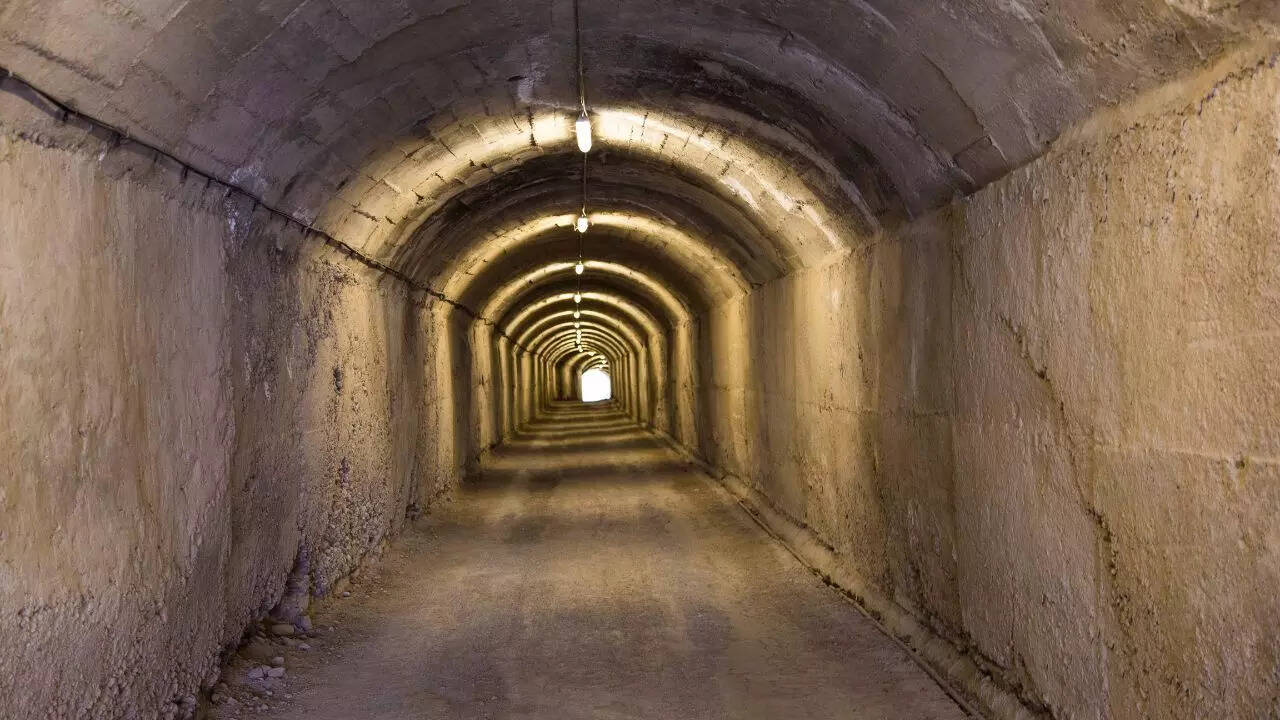
Beyond private dwellings, Switzerland boasts an extensive network of large public shelters, some capable of housing thousands of people.
Deep within the Alps, former military fortresses have also been repurposed or maintained for civilian protection, offering unparalleled security.
Self-Sufficiency and Operational Readiness
These underground facilities are not merely reinforced concrete boxes; they are self-sufficient ecosystems.
They feature independent power generators, water purification systems, and stores of non-perishable food, ensuring long-term habitability.
A Culture of Collective Preparedness
Citizen Awareness and Training
Swiss citizens are remarkably aware of their nation’s civil defense capabilities and their role within it.
Regular information campaigns and occasional drills reinforce emergency procedures and the importance of preparedness.
The Role of Civil Protection Organizations
Volunteer and conscripted civil protection organizations play a crucial role in maintaining the readiness of these shelters and coordinating emergency responses.
These groups undergo rigorous training in various scenarios, from disaster relief to managing shelter populations.
Psychological Impact: Peace of Mind
The widespread availability of shelters and a clear emergency plan contributes to a unique sense of security among the Swiss populace.
This preparedness offers a degree of psychological comfort in an unpredictable world, fostering national resilience.
Beyond Nuclear: An All-Hazards Approach
Adaptability to Diverse Threats
While originally conceived for nuclear threats, Swiss bunkers and civil defense strategies are versatile.
They are increasingly considered crucial for protection against natural disasters, pandemics, and other unforeseen catastrophes.
Responding to Modern Challenges
The infrastructure provides a robust framework for responding to various modern emergencies, from chemical spills to prolonged power outages.
This adaptability underscores the enduring relevance of Switzerland’s investment in civil protection.
Pandemic Readiness and Emergency Operations
During global health crises, these facilities can serve as command centers, isolation wards, or secure storage for essential supplies.
Their design allows for controlled environments, critical for managing highly infectious diseases or maintaining continuity of essential services.
Costs, Criticisms, and Ongoing Debates
Significant Financial Investment
Building and maintaining this extensive network of shelters has required, and continues to demand, substantial financial resources.
The cost per person for shelter provision is among the highest globally, reflecting the nation’s commitment.
Debates Over Efficacy and Necessity
Periodically, questions arise about the continued relevance and cost-effectiveness of maintaining so many shelters, particularly in a post-Cold War era.
Critics sometimes argue that resources could be better allocated to other forms of disaster preparedness or social programs.
The Enduring Value Proposition
However, proponents emphasize that the shelters represent a fundamental insurance policy, a tangible commitment to protecting lives, no matter the threat.
The peace of mind and strategic advantage they provide are often considered invaluable.
Lessons for Global Preparedness
A Model for Long-Term Vision
Switzerland’s journey offers crucial insights for other nations contemplating their own civil defense strategies.
It demonstrates the power of consistent, long-term legislative commitment paired with public engagement.
Integrating Preparedness into Daily Life
The Swiss approach shows how civil defense can be integrated not as an afterthought, but as an intrinsic part of national infrastructure and societal planning.
This pervasive readiness makes resilience a collective responsibility.
Importance of Public Education
Engaging citizens through clear communication and training is vital for any preparedness program to be effective.
In Switzerland, this fosters a shared understanding of roles and responsibilities during emergencies, leading to a more coordinated response.
The Future of Swiss Readiness
Adapting to Evolving Global Threats
As geopolitical landscapes shift and new threats emerge, Switzerland continually evaluates and updates its civil defense strategies.
The focus remains on versatile preparedness capable of addressing both conventional and unconventional challenges, including those related to latest trends in global security.
Technological Advancements and Modernization
Investment in smart technologies, advanced warning systems, and upgraded shelter components ensures the system remains state-of-the-art.
This includes enhancing communication networks and integrating artificial intelligence into disaster response protocols.
Maintaining a Legacy of Protection
The commitment to shelter construction and civil defense preparedness is now deeply woven into the national fabric.
It stands as a testament to a nation prioritizing the safety and survival of its people above all else, as detailed by an Official Source.
Conclusion: A Paradigm of Protection
Switzerland’s transformation into the world’s most bunker-ready nation is a unique story of foresight, collective action, and unwavering dedication.
It exemplifies how a determined nation can build a comprehensive protective shield for its citizens, securing their future against myriad potential dangers.
Frequently Asked Questions About Swiss Bunker Preparedness
1. Why did Switzerland decide to build so many bunkers?
Switzerland’s decision was primarily driven by its commitment to armed neutrality during the Cold War and the lessons learned from both World Wars. The threat of nuclear conflict spurred the 1963 Civil Protection Law, mandating shelters for its entire population.
2. Is it true that every Swiss citizen has access to a bunker?
Yes, the law aimed to ensure a protected space for every resident. This is largely achieved through private shelters in homes and apartments, complemented by extensive public shelters capable of housing thousands of people.
3. What kind of threats are these bunkers designed to protect against?
Originally, they were designed to withstand nuclear blasts, chemical, and biological attacks. Today, their utility extends to protection from natural disasters, industrial accidents, and even as secure facilities during pandemics or major power outages.
4. Are the bunkers actively maintained and regularly inspected?
Absolutely. Swiss law requires regular inspection and maintenance of all shelters to ensure they remain operational and meet current safety standards. This includes checking ventilation systems, blast doors, and emergency supplies.
5. What is the Civil Protection Law of 1963?
This landmark legislation made it mandatory for all new residential buildings to include a blast-proof shelter or for property owners to contribute to the construction and maintenance of public shelters. It was the cornerstone of Switzerland’s civil defense strategy.
6. Can foreigners residing in Switzerland also use these bunkers?
Yes, the shelters are intended for everyone residing in Switzerland, regardless of nationality. The overarching goal is to protect the entire population within its borders during an emergency.
7. What are the costs associated with this extensive bunker network?
The costs are substantial, covering initial construction, ongoing maintenance, and regular upgrades. While exact figures are complex, estimates suggest billions of francs have been invested over decades, funded through taxes and building contributions.
8. Are these bunkers only for short-term survival?
No, many shelters are equipped for long-term habitation, featuring independent air filtration, power generation, water purification, and stored provisions. They are designed to sustain occupants for weeks or even months, depending on their size and purpose.
9. How are citizens informed about their designated shelter in an emergency?
Local authorities provide information to residents about their nearest public shelter or the designated shelter within their building. Emergency broadcast systems and information campaigns also guide citizens during crisis situations.
10. Has Switzerland ever had to use its bunkers for a major emergency?
While the full network of bunkers has never been deployed for their primary purpose of war-time protection, some shelters have been utilized for other purposes. These include housing asylum seekers, providing temporary accommodation during local disasters, or as storage facilities.
SEO Keywords
Switzerland bunkers, nuclear shelter, civil defense, Swiss preparedness, Cold War bunkers, emergency readiness, blast-proof shelters, protective infrastructure, mandatory bunkers, Swiss neutrality, disaster resilience, civil protection law, underground facilities, emergency planning, national security.
Source: Times of India