




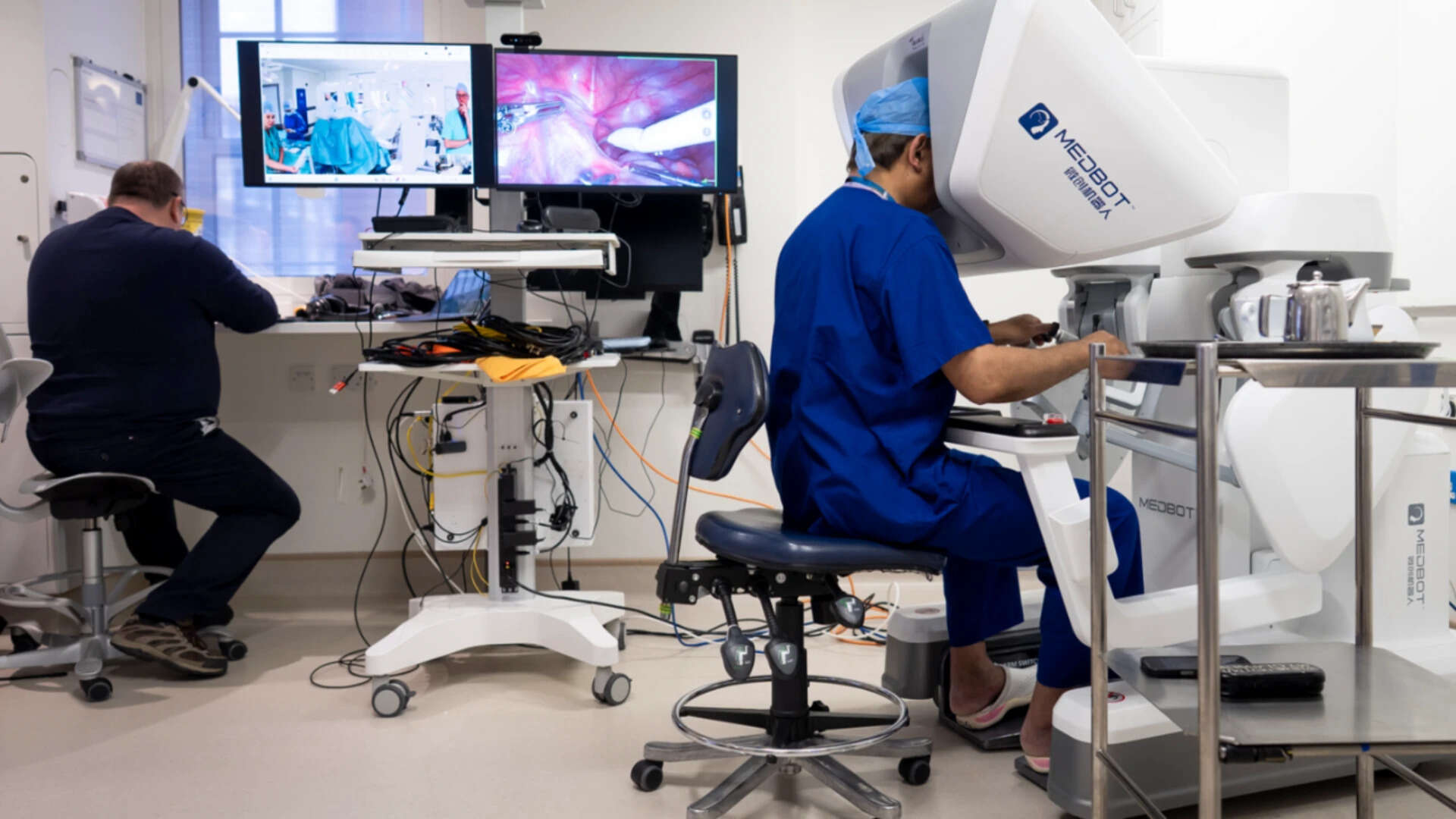
A remarkable medical breakthrough has recently captured global attention, signaling a new era in surgical innovation. An Indian-origin British surgeon successfully performed the UK’s first long-distance operation, utilizing advanced robotic equipment from a staggering 2,400 kilometers away.
This unprecedented feat represents a significant leap forward for telemedicine and surgical robotics, demonstrating the immense potential for specialized care to transcend geographical boundaries. It promises to redefine access to critical medical procedures for patients worldwide.
A New Era in Surgical Innovation
The Landmark Procedure Unveiled
The groundbreaking operation involved a highly skilled British surgeon of Indian origin controlling robotic instruments from a remote location. This complex procedure marked the first time such an extensive distance was bridged for a surgical intervention within the UK’s medical history.
The patient, whose identity remains private, received expert care despite the surgeon being thousands of kilometers away, highlighting the reliability and precision of the telepresence technology employed.
Bridging Distances with Precision
The successful execution of this surgery hinged on state-of-the-art robotic systems combined with robust high-speed network connectivity. These technologies allowed the surgeon’s intricate hand movements to be translated into precise actions by the surgical robot at the patient’s bedside.
Minimizing latency – the delay between the surgeon’s command and the robot’s response – was paramount. Advanced network infrastructure and sophisticated software algorithms were crucial in ensuring real-time control and feedback, critical for patient safety and surgical efficacy.
The Human Element Behind the Machine
While technology played a pivotal role, the success of the operation ultimately rested on the surgeon’s exceptional skill, experience, and decision-making capabilities. Their expertise in both traditional and robotic surgery was indispensable for navigating the complexities of the procedure.
A dedicated medical team was present with the patient, providing immediate support and monitoring. This collaborative approach underscores that remote surgery is not just about technology but also about integrated human oversight and teamwork.
Profound Implications for Global Healthcare
Expanding Access to Specialist Care
This pioneering surgery opens unprecedented avenues for delivering specialized medical care to remote and underserved populations. Patients in areas lacking access to specific surgical expertise can now potentially benefit from procedures performed by leading surgeons located anywhere in the world.
Such advancements could dramatically improve health outcomes in rural communities, conflict zones, or even during humanitarian crises where rapid deployment of surgical skills is vital but physically challenging.
Training and Knowledge Transfer
Remote surgery also holds immense promise for medical education and training. Expert surgeons can remotely mentor junior colleagues, guiding them through complex procedures in real-time without needing to be physically present in the operating theatre.
This capability could democratize access to high-quality surgical training, allowing specialized knowledge and techniques to disseminate more widely across different regions and healthcare systems.
Economic and Logistical Advantages
The ability to perform long-distance operations presents several logistical and economic benefits. It could reduce the need for patients to travel great distances for specialist treatment, thereby lowering travel costs and reducing patient burden.
Furthermore, it optimizes the utilization of highly specialized surgical teams and equipment, allowing them to serve a broader patient base more efficiently without the constraints of physical presence.
The Technology Powering Telepresence Surgery
Robotic Systems at the Forefront
The core of this innovation lies in advanced robotic surgical systems. These platforms typically consist of a surgeon’s console, a patient-side cart with robotic arms, and a high-definition 3D vision system.
The surgeon’s console provides an immersive view of the surgical field and allows the surgeon to manipulate tiny instruments with unparalleled precision, scaling down movements and filtering out tremors.
The Critical Role of Network Infrastructure
Reliable and ultra-low latency network connectivity is the backbone of successful remote surgery. Fiber optic networks, and increasingly 5G technology, provide the necessary bandwidth and speed to transmit data packets between the surgeon’s console and the robotic arms almost instantaneously.
Maintaining a stable, secure, and uninterrupted connection over vast distances is paramount. Any significant delay or disruption could have critical consequences, necessitating robust backup systems and stringent cybersecurity measures.
Challenges and Future Outlook
Addressing Ethical and Regulatory Frameworks
As remote surgery becomes more prevalent, establishing clear ethical guidelines and regulatory frameworks will be crucial. This includes addressing issues of licensing across different jurisdictions, liability in case of complications, and maintaining patient privacy and data security.
International collaborations will be essential to harmonize standards and ensure patient safety globally. A robust legal and ethical infrastructure must evolve alongside technological advancements.
The Road Ahead for Robotic Telepresence
The success of this operation paves the way for even more sophisticated advancements in robotic telepresence surgery. Future developments may include enhanced haptic feedback systems that allow surgeons to ‘feel’ tissues remotely, even greater autonomy for robotic assistants, and integration with artificial intelligence for predictive analytics and enhanced decision support.
Research and development continue to push boundaries, with new materials, miniaturization, and improved interface designs. To stay informed on these innovations, explore the latest trends in medical technology and healthcare delivery. This milestone is just the beginning of a transformative journey for global healthcare.
This groundbreaking achievement has been widely reported. For more details, refer to the Official Source.
Frequently Asked Questions About Remote Surgery
1. What exactly is remote surgery or telepresence surgery?
Remote surgery, also known as telepresence surgery or telesurgery, allows a surgeon to operate on a patient located at a different geographical site. The surgeon controls robotic instruments at the patient’s location through a specialized console and a high-speed, secure network connection, effectively extending their presence over distance.
2. How far was the surgeon from the patient in this landmark operation?
In this specific pioneering operation, the Indian-origin British surgeon was approximately 2,400 kilometers (around 1,500 miles) away from the patient. This significant distance highlights the robust capabilities of the robotic and network technologies employed.
3. What type of equipment is used for long-distance operations?
Long-distance operations utilize sophisticated robotic surgical systems, often consisting of a surgeon’s console, a patient-side robot with multi-articulated instruments, and advanced 3D vision systems. These systems are connected via ultra-low latency, high-bandwidth communication networks, often fiber optics or secure 5G links, to ensure precise real-time control.
4. What are the main benefits of remote surgery?
The primary benefits include expanding access to specialized surgical care for patients in remote or underserved areas, allowing expert surgeons to operate globally, facilitating remote surgical training and mentorship, and potentially reducing patient travel burdens and associated costs. It also optimizes the use of highly specialized surgical teams and equipment.
5. What are the biggest challenges in performing remote surgery?
Key challenges include managing network latency (the delay in data transmission) over long distances, ensuring unwavering network reliability and security, establishing robust ethical and regulatory frameworks across different jurisdictions, and addressing potential legal liabilities. The high cost of initial setup and maintenance of advanced robotic systems is also a factor.
6. Is remote surgery safe for patients?
Patient safety is the paramount concern in remote surgery. The technology is designed with multiple redundancies and safety protocols, including real-time monitoring by a local medical team. The low latency and high precision of robotic instruments, combined with the surgeon’s expertise, aim to make these procedures as safe as conventional robotic surgeries.
7. How does latency affect remote surgery, and how is it minimized?
Latency, the time delay between the surgeon’s action and the robot’s response, is critical. Even milliseconds of delay can impact precision. It is minimized through dedicated high-speed fiber optic networks, advanced data compression techniques, optimized communication protocols, and strategic placement of network infrastructure to reduce signal travel time.
8. What role does the local medical team play during a remote operation?
A trained local medical team is always present at the patient’s side during remote surgery. They are responsible for patient preparation, positioning the robotic system, assisting with instrument changes, monitoring vital signs, and being ready to intervene immediately if any unexpected issues arise, ensuring continuous patient safety.
9. Will remote surgery replace traditional in-person operations?
While remote surgery offers significant advantages, it is not expected to entirely replace traditional in-person operations. It is likely to complement existing surgical practices, particularly for specialized cases, in remote areas, or for certain types of interventions where its unique capabilities provide a distinct benefit. Many routine procedures will continue to be performed locally.
10. What does the future hold for remote robotic surgery?
The future of remote robotic surgery is promising, with advancements expected in enhanced haptic feedback (allowing surgeons to ‘feel’ tissue remotely), increased autonomy and AI integration in robotic assistants, miniaturization of instruments, and improved network capabilities like pervasive 5G connectivity. It aims towards more seamless, globally accessible, and sophisticated surgical care.
SEO Keywords:
Remote Surgery UK, Telepresence Operation, Robotic Surgery, Long-distance Surgery, Indian-origin Surgeon UK, Medical Breakthrough, Healthcare Innovation, Surgical Robotics, Telemedicine, UK Healthcare Technology, Minimally Invasive Surgery, Global Healthcare Access, Surgical Precision, Future of Surgery, Low Latency Surgery
Source: Times of India