





Middle East Tensions Escalate
Recent reports indicate a significant escalation in the Middle East, with claims of explosions in central Tehran and sirens blaring across Tel Aviv. This rapidly unfolding situation has prompted urgent global attention and concern. Initial details remain fluid, underscoring the volatile nature of the region.
Governments and international bodies are closely monitoring developments. The potential ramifications of such events are far-reaching, affecting regional stability and global markets. Clarity on specific incidents is still emerging.
Understanding the Immediate Reports
Initial Alarms and Global Reactions
Early morning reports across various news outlets signaled a critical shift in the Israeli-Iranian standoff. Social media platforms quickly became saturated with eyewitness accounts and speculative information. The speed of information dissemination highlighted the intense global interest in the crisis.
World leaders have called for calm and de-escalation. Diplomatic channels are reportedly active, aiming to prevent a wider conflict. The immediate priority is verifying details and safeguarding civilian populations.
Explosions Heard in Tehran
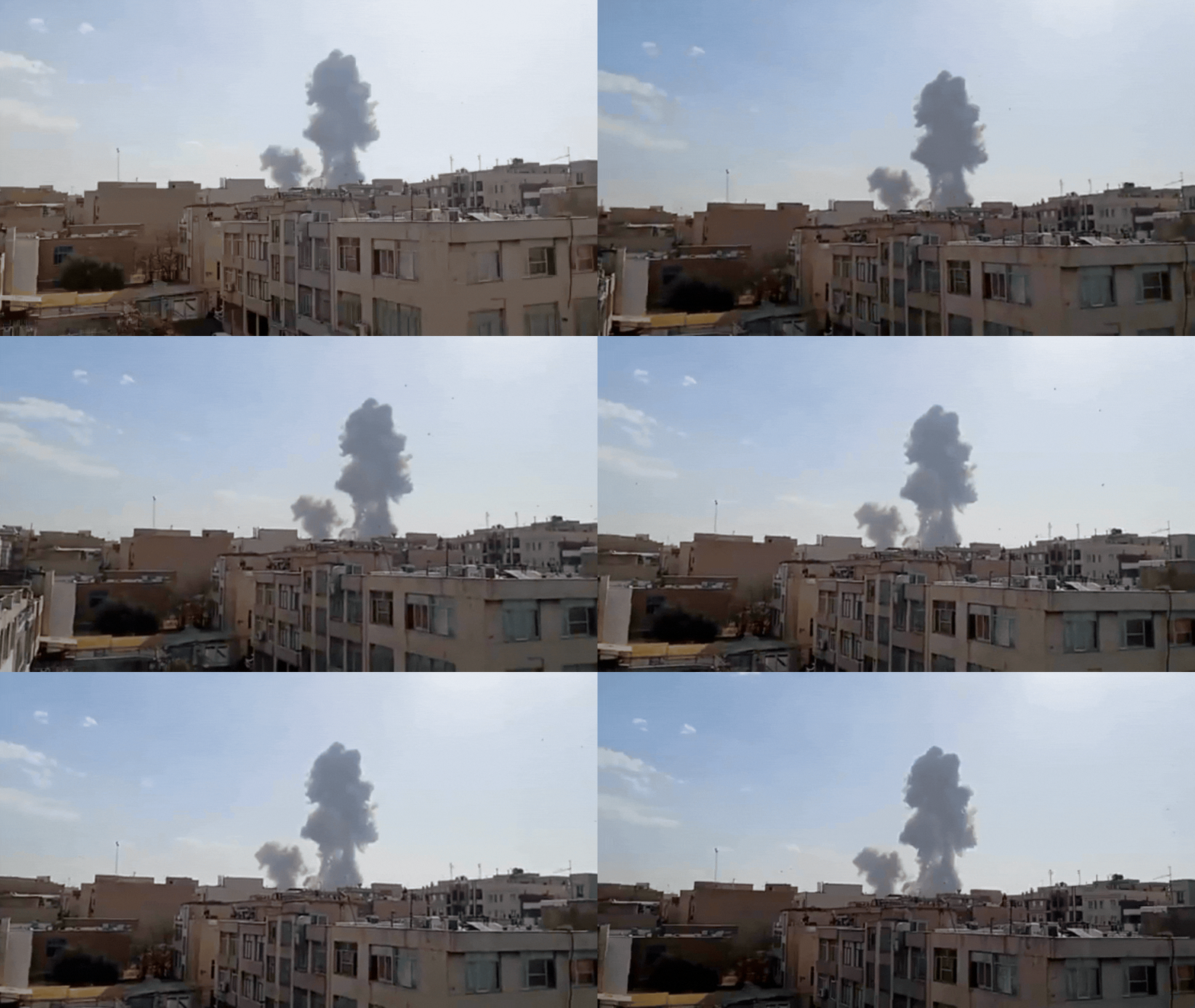
Multiple sources reported hearing explosions in central Tehran, specifically in areas close to key government facilities. The nature and origin of these blasts were not immediately clear. Iranian state media initially offered limited details, adding to the general uncertainty.
Speculation quickly pointed towards a retaliatory strike, though official confirmation was elusive. Residents described a tense atmosphere, with emergency services reportedly on high alert. The sound of explosions was a stark reminder of ongoing regional animosities.
Sirens Blare Across Tel Aviv
Concurrently, air raid sirens were activated across Tel Aviv and several other Israeli cities. This prompted residents to seek shelter, adhering to civil defense protocols. The cause of these sirens was not immediately identified.
Israeli defense officials confirmed the activation of warning systems, advising citizens to remain vigilant. The simultaneous nature of these events fueled concerns of a direct and immediate reciprocal attack. Public anxiety remained high throughout the morning hours.
The Evolving Narrative
Sources and Confirmations
While unverified reports circulated widely, few official confirmations emerged immediately from either side. International news agencies worked to corroborate information through their regional bureaus. The fog of war often makes immediate and accurate reporting challenging.
For more detailed and immediate reporting, an Official Source provides continuous updates on the situation. The initial hours of such events are always fraught with conflicting accounts. Establishing a clear timeline becomes paramount for analysts and policymakers.
Statements from Jerusalem
Israeli government officials largely maintained silence in the immediate aftermath of the alleged Tehran explosions. This posture is often adopted during sensitive security operations. Spokespersons indicated that updates would be provided as circumstances permitted.
There was no immediate claim of responsibility from Israel for any strikes in Iran. This ambiguity is a characteristic feature of shadow conflicts. The focus in Israel shifted to ensuring public safety amidst the siren activations.
Responses from Tehran
Iranian authorities initially downplayed the severity of any incidents within their borders. State media reported no major damage or casualties from the alleged explosions. This approach aimed to control the domestic narrative and project an image of resilience.
Some Iranian officials suggested the reports were exaggerated or part of psychological warfare. Others pointed fingers at foreign adversaries, without explicitly naming Israel. The dual narrative sought to minimize internal panic while signaling external defiance.
Historical Context of Escalation
A Deep-Rooted Rivalry
The current events are set against a backdrop of decades of animosity between Israel and Iran. Their rivalry encompasses regional hegemony, ideological differences, and the nuclear program issue. This long-standing tension has manifested in various forms, from proxy conflicts to cyber warfare.
Both nations view each other as existential threats, fueling a perpetual security dilemma. The absence of direct diplomatic relations only exacerbates mutual suspicion. Understanding this historical context is crucial for interpreting present actions.
The Nuclear Dimension
Iran’s nuclear ambitions have been a central point of contention for many years. Israel views a nuclear-armed Iran as an unacceptable threat to its security. International efforts to curb Iran’s program have had limited success, leading to heightened Israeli concerns.
Tehran maintains its nuclear program is for peaceful purposes, though many international observers remain skeptical. The nuclear issue consistently raises the stakes in any confrontation. It serves as a core driver of regional instability.
Proxy Conflicts and Regional Influence
Both nations support various non-state actors across the Middle East, effectively engaging in a proxy war. Iran backs groups like Hezbollah in Lebanon and various militias in Iraq and Syria. Israel, in turn, seeks to counter this expanding influence.
These proxy battles often lead to direct, albeit undeclared, military engagements between Israeli and Iranian forces. Syria has frequently been a battleground for such clashes. The intricate web of alliances and rivalries makes de-escalation incredibly complex.
Analyzing Potential Scenarios and Impact
Paths to De-escalation
The international community is actively working towards de-escalation, urging restraint from all parties. Diplomatic pressure from major global powers will be critical in the coming days. Calls for a ceasefire and a return to dialogue are widespread.
However, the deeply entrenched positions of Israel and Iran make quick resolutions challenging. Each side has strong internal and external pressures shaping its decisions. A gradual de-escalation might involve back-channel negotiations and mutual concessions.
Risk of Wider Regional Conflict
The most immediate concern following these reports is the potential for a full-scale regional war. Such a conflict would have devastating humanitarian and economic consequences. It could draw in other regional and international actors, creating an even larger conflagration.
Analysts are assessing the likelihood of further retaliatory cycles. The ‘rules of engagement’ in the shadow war may have shifted, increasing the risk of miscalculation. Every action carries significant weight in this delicate geopolitical balance.
Economic Ramifications
An escalation in the Middle East would have profound economic impacts globally. Oil prices would likely surge, disrupting supply chains and consumer markets. Investor confidence would plummet, affecting stock markets worldwide.
The stability of global trade routes, particularly those passing through the Strait of Hormuz, could be jeopardized. Businesses dependent on global stability are already feeling the tremors. The economic costs of prolonged conflict are immense and far-reaching.
Humanitarian Concerns
Any widespread conflict would lead to an immense humanitarian crisis. Civilian populations in both Israel and Iran, as well as neighboring countries, would suffer greatly. Displacement, casualties, and infrastructure damage would be inevitable.
International aid organizations are preparing for potential emergency responses. Protecting civilians and ensuring access to humanitarian assistance would become paramount. The human cost of war is always the most tragic outcome.
Media Coverage and Public Information
Global Media Response
International media outlets immediately shifted their focus to the unfolding events in the Middle East. News channels provided continuous updates, often relying on official statements and expert analysis. The urgency of the situation was reflected in the extensive coverage.
Journalists on the ground faced challenges in verifying information from conflict zones. The need for unbiased and factual reporting became more critical than ever. Media played a crucial role in informing a concerned global public.
Navigating Disinformation
In times of crisis, disinformation and propaganda often proliferate rapidly. Social media platforms, while providing instant updates, also serve as conduits for unverified claims. Citizens must exercise caution and seek information from credible sources.
Fact-checking initiatives and reputable news organizations are vital in combating false narratives. The battle for accurate information is as significant as the geopolitical struggle itself. It is crucial to identify and address misleading reports promptly.
Staying Informed on Latest Developments
For those looking to understand the dynamic shifts in global events and regional tensions, keeping an eye on the latest trends is essential. Reliable platforms aggregate information, helping to paint a clearer picture of complex situations. Continuous monitoring and critical assessment of information sources are key to staying truly informed.
Understanding the nuances requires more than just headlines. Deep dives into geopolitical analysis and historical context provide a comprehensive view. Informed citizens are better equipped to understand the broader implications of these events.
Expert Analysis and Future Outlook
Geopolitical Implications
Geopolitical analysts are working overtime to assess the long-term implications of this escalation. The balance of power in the Middle East is perpetually shifting, and such events can trigger significant realignments. Regional alliances might be tested or strengthened.
The role of external powers, particularly the United States, Russia, and China, will be under increased scrutiny. Their responses could heavily influence the trajectory of the conflict. The world stage is watching closely for strategic maneuvers.
Security Assessments
Security experts are re-evaluating threat assessments for the entire region and beyond. The potential for terrorist organizations to exploit the chaos is a serious concern. Cyber security threats are also expected to rise in correlation with physical attacks.
Governments worldwide are issuing updated travel advisories for the Middle East. Enhanced security measures at critical infrastructure points might be implemented. The ripple effects on global security architecture are considerable.
A Fragile Path Forward
The path forward remains fraught with uncertainty and danger. The immediate future hinges on the actions and reactions of both Israeli and Iranian leadership. International diplomacy represents the best, though challenging, hope for stability.
Preventing further loss of life and ensuring regional peace are paramount objectives. The events reported today underscore the urgent need for sustained diplomatic engagement. The world holds its breath, hoping for a return to calm.
Frequently Asked Questions
What exactly happened in Tehran?
Reports emerged of explosions heard in central Tehran, the capital of Iran, in the early morning hours. Initial accounts varied, with some suggesting drone or missile strikes, while Iranian state media initially downplayed the incidents, reporting no significant damage or casualties. The exact nature and origin of these blasts were not immediately confirmed by official Iranian sources, leading to widespread speculation about their cause and potential perpetrators. International observers continue to seek concrete evidence and official statements.
Were the explosions in Tehran confirmed as Israeli attacks?
As of the immediate aftermath, neither Israel nor Iran officially confirmed that the explosions in Tehran were Israeli attacks. Israeli officials generally maintain a policy of ambiguity regarding alleged operations in Iran, neither confirming nor denying involvement. Iranian state media, while acknowledging reports, refrained from explicitly blaming Israel, instead often referring to “foreign adversaries” or downplaying the scale of the incidents. This lack of direct attribution makes definitive confirmation challenging for external observers.
What caused the sirens in Tel Aviv?
Air raid sirens were activated across Tel Aviv and several other Israeli cities concurrently with the reports from Tehran. Israeli defense officials confirmed the activation of these warning systems. The cause was attributed to incoming aerial threats, likely missiles or drones, though specific details about the nature and origin of these threats were not immediately released. The sirens prompted residents to seek shelter in accordance with civil defense instructions, indicating a credible security concern.
How has Iran officially responded?
Iran’s official response has been cautious and somewhat restrained. State media initially focused on minimizing the impact of any alleged attacks, reporting no major damage or significant casualties. Officials reiterated Iran’s right to self-defense but avoided immediate threats of direct military retaliation against Israel. Some statements alluded to foreign interference or psychological warfare, aimed at managing internal public perception and external diplomatic pressure. The response indicated a calibrated approach to the escalation.
How has Israel officially responded?
Israel’s official response to the events in Tehran has been characterized by strategic silence. Government and military officials largely refrained from making direct statements about the reported explosions in Iran. This policy of non-attribution is consistent with Israel’s past approach to covert or overt operations against perceived threats. The focus of official Israeli communications was primarily on managing the domestic security situation following the sirens in Tel Aviv and advising citizens on safety protocols.
What is the current international reaction?
The international community reacted with immediate concern, with numerous countries and global organizations calling for de-escalation and restraint. The United Nations, the European Union, and several major powers urged both Israel and Iran to avoid further actions that could lead to a wider regional conflict. Diplomatic efforts are underway to mediate and prevent a full-scale war, with a strong emphasis on diplomatic solutions and protecting civilian lives. World leaders are closely monitoring the volatile situation.
What is the historical context of these tensions?
The current tensions are deeply rooted in a decades-long rivalry between Israel and Iran. This rivalry stems from ideological differences, Iran’s nuclear program, its support for regional proxy groups (like Hezbollah and various militias), and competition for regional influence. Both nations view each other as primary security threats, leading to a “shadow war” involving cyber-attacks, assassinations, and proxy conflicts across the Middle East, particularly in Syria. The current events represent a potential escalation of this long-standing animosity.
What are the immediate risks of further escalation?
The immediate risks of further escalation are significant, including the potential for a full-scale military conflict between Israel and Iran. This could involve direct missile and drone attacks, naval confrontations, and intensified proxy warfare across the region. Such an escalation risks drawing in other regional actors and potentially global powers, leading to a broader humanitarian crisis, severe economic disruptions (especially in global energy markets), and significant geopolitical instability in the Middle East and beyond. Miscalculation by either side remains a critical concern.
How might this impact global oil markets?
An escalation in the Middle East could severely impact global oil markets. The region is a major producer and exporter of oil, and any disruption to production or shipping routes, particularly through the Strait of Hormuz, could lead to a sharp increase in oil prices. Such a surge would have ripple effects across the global economy, increasing inflation, impacting consumer spending, and potentially triggering economic slowdowns or recessions worldwide. Energy security would become a paramount concern for many nations.
What role do international mediators play?
International mediators play a crucial role in de-escalating tensions between Israel and Iran. Countries like the United States, European nations, and regional powers often engage in back-channel diplomacy to communicate messages, facilitate negotiations, and encourage restraint. They can propose frameworks for de-escalation, sanctions relief, or security guarantees to help both sides step back from the brink of conflict. Their influence and ability to open lines of communication are vital in preventing further military action and fostering diplomatic solutions.
Conclusion
The reports of explosions in Tehran and sirens in Tel Aviv mark a dangerous moment in the already tense relationship between Israel and Iran. While details remain sparse, the global community is on high alert. The potential for wider regional conflict is a grave concern.
As the situation unfolds, accurate information and diplomatic efforts will be paramount. The world watches, hoping for a swift de-escalation and a return to stability in the volatile Middle East. The cost of continued conflict is one the region, and the world, can ill afford.
Israel Iran conflict, Middle East escalation, Tehran explosions, Tel Aviv sirens, geopolitical tensions, Israel Iran war, regional conflict, global oil markets impact, international diplomacy, Middle East security, Iran nuclear program, proxy wars, de-escalation efforts, world crisis, humanitarian impact.