



Middle East on Fire: Iran Launches ‘Massive Missile’ Strike at US Base, Israel Bombs Beirut – Global Tensions Soar
The Middle East has been plunged into an unprecedented vortex of conflict this week, as Iran unleashed a devastating “massive missile” strike on a critical U.S. airbase in Bahrain, swiftly followed by a punishing Israeli bombing campaign targeting Beirut. The world watches with bated breath as the volatile region teeters on the brink of a full-scale conflagration, threatening to redraw geopolitical lines and unleash untold global repercussions.
Escalation to Full-Blown Conflict: A Region on the Brink
The latest events mark a chilling escalation in the long-simmering tensions between the United States, Israel, and Iran. For decades, the region has been a crucible of proxy warfare, strategic rivalries, and an intricate web of alliances and antagonisms. From Iran’s nuclear ambitions to its support for various non-state actors, and from Israel’s security imperatives to the enduring presence of U.S. forces, the stage has always been set for potential flashpoints. However, the actions on March 3, 2026, have shattered any remaining illusions of containing the conflict.
The Spark: Iranian Retaliation and Israeli Response
The immediate catalyst for this catastrophic turn of events appears to be a direct Iranian response to undisclosed, previous aggressions or provocations, details of which remain under intense security scrutiny. For years, cyber warfare, targeted assassinations, and limited military skirmishes in the Gulf have characterized the ‘shadow war.’ Yet, the overt missile attack on a U.S. base represents a fundamental shift – a crossing of a critical threshold that demands an immediate, forceful reaction from Washington.
Timeline of Events (March 3, 2026):
- Early Hours (GMT+3): Multiple intelligence sources report significant movements of Iranian missile batteries and drone swarms in western Iran.
- Morning (GMT+3): A “massive missile” strike, reportedly involving a combination of ballistic and cruise missiles, targets the Al-Khalifa U.S. airbase in Bahrain. Initial reports confirm widespread damage and an unspecified number of casualties.
- Mid-day (GMT+2): Following emergency consultations, the Israeli cabinet authorizes a robust retaliatory operation.
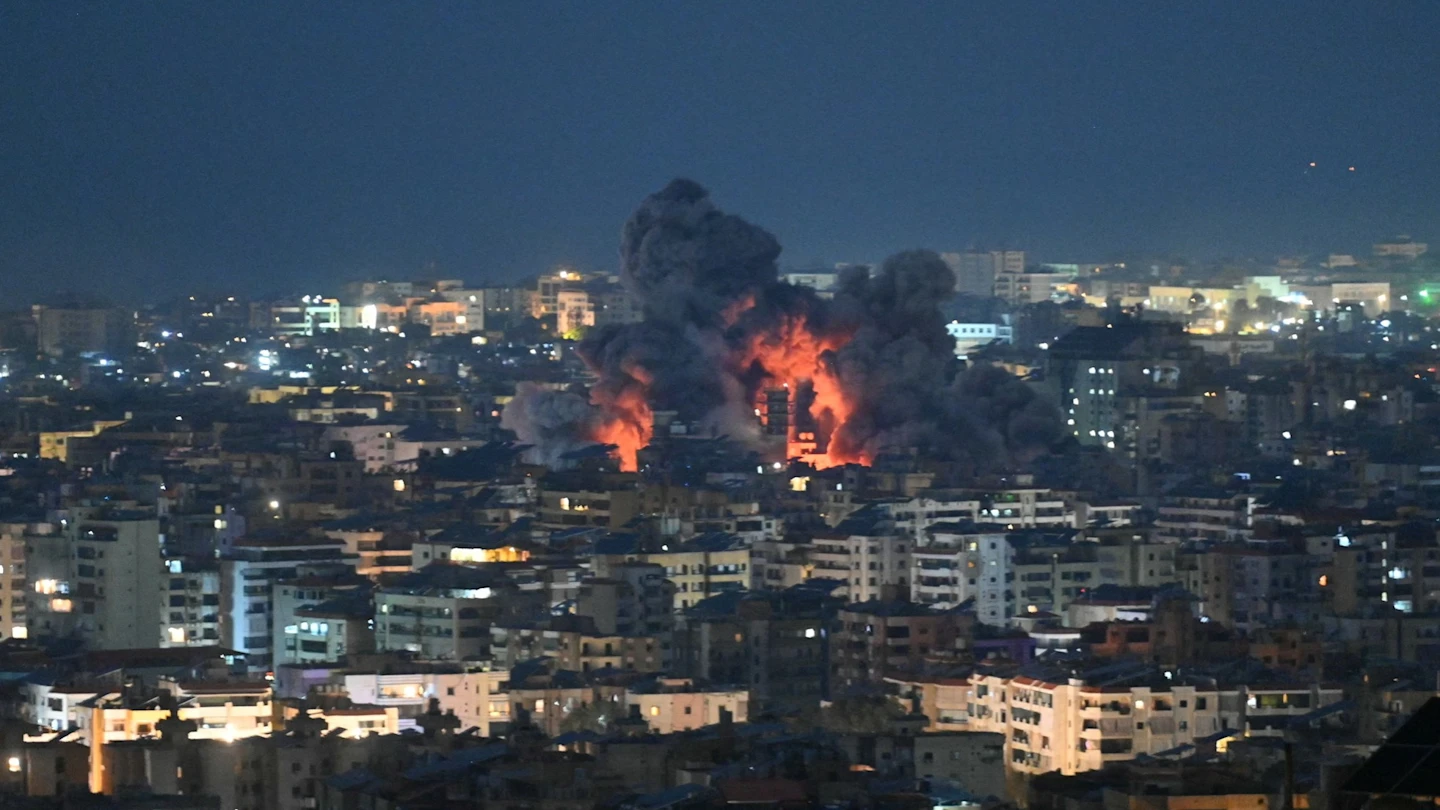
- Afternoon (GMT+2): Israeli warplanes launch a coordinated series of aerial bombardments on strategic targets within Beirut, Lebanon, with a particular focus on areas associated with Hezbollah infrastructure and command centers.
- Evening (GMT+1): The United Nations Security Council convenes an emergency session, with impassioned pleas for de-escalation from global leaders.
Unpacking the Attacks: Bahrain and Beirut Under Fire
The synchronized nature and apparent precision of the strikes underscore a calculated escalation by both sides, signaling a dangerous new phase in Middle Eastern geopolitics. The targeting of a U.S. military installation directly implicates Washington, transforming a regional power struggle into a potentially broader international crisis.
The Strike on Al-Khalifa Airbase
Al-Khalifa Airbase, a cornerstone of U.S. military operations in the Gulf, plays a crucial role in regional stability and counter-terrorism efforts. The Iranian missile barrage, described by Pentagon sources as “massive and sophisticated,” bypassed layers of advanced air defense systems. Satellite imagery, though still unconfirmed, suggests significant damage to runways, aircraft hangars, and logistical facilities. While initial reports are tight-lipped about specific casualty figures, the nature of the attack points to a substantial impact on personnel and assets. This direct challenge to U.S. military might in the heart of the Gulf is unprecedented in its scale and audacity, promising a forceful and decisive response from Washington.
Israel’s Retaliatory Strikes on Beirut
Hours after the attack on Bahrain, Israeli forces launched their pre-emptive or retaliatory strikes against Beirut. While precise targets are yet to be fully confirmed by official Israeli statements, Lebanese security sources indicate widespread explosions across the southern suburbs of Beirut, a known stronghold for Hezbollah. Infrastructure, command centers, and weapons depots are believed to be among the primary targets.
The bombing campaign has reportedly caused widespread panic among civilians, with early reports suggesting significant structural damage and an unfolding humanitarian crisis. Israel has consistently viewed Hezbollah as a direct proxy for Iranian influence on its northern border, making Beirut a strategic, if tragic, target in any broader conflict with Tehran.
Global Repercussions: Beyond the Battlefield
The ripple effects of this rapid escalation are already being felt across the globe, impacting critical industries, financial markets, and the delicate balance of international diplomacy.
Industry Impact
The most immediate and profound impact is on the global energy sector. Oil prices have surged to historic highs, with Brent crude briefly touching $150 a barrel amidst fears of supply disruptions from the Strait of Hormuz, a critical chokepoint for a third of the world’s seaborne oil. Global shipping and logistics are also bracing for severe disruptions, with increased insurance premiums and potential rerouting away from the Persian Gulf and Red Sea. The defense industry, conversely, is experiencing a boom, with stock prices of major arms manufacturers soaring as nations anticipate increased military spending and potential deployment.
Market and Policy Implications
Financial markets worldwide have reacted with extreme volatility. Major stock indices have plummeted, and investors are flocking to safe-haven assets like gold and government bonds. Policy implications are equally stark. The United States is facing immense pressure to respond definitively, potentially leading to further military deployments and a recalibration of its Middle East strategy.
International diplomacy is in overdrive, with the UN and various world powers calling for an immediate cessation of hostilities, though concrete de-escalation mechanisms remain elusive. Regional alliances are being tested, with countries like Saudi Arabia and the UAE watching closely, assessing their own security positions amidst the escalating chaos.
Comparison of Recent Middle East Conflicts (Hypothetical)
| Conflict/Incident | Primary Actors | Key Trigger | Immediate Global Economic Impact | Level of U.S. Direct Involvement |
|---|---|---|---|---|
| 2026 US-Iran-Israel Escalation | US, Iran, Israel, Lebanon (Hezbollah) | Iran missile strike on US base, Israel bombing Beirut | Severe oil price spike, stock market crash | Direct attack on US forces; likely full engagement |
| 2003 Iraq War | US, UK, Iraq | Alleged WMDs, regime change | Moderate oil price increase, long-term instability | Full-scale invasion and occupation |
| 1990-1991 Gulf War | US-led Coalition, Iraq | Iraq’s invasion of Kuwait | Significant oil price shock, then stabilization | Major military intervention and liberation |
| Syrian Civil War (Ongoing) | Syrian Gov, Rebels, ISIS, Russia, US, Turkey, Iran | Arab Spring, internal dissent | Regional refugee crisis, some oil impact | Limited air strikes, advisory roles, proxy support |
Expert Analysis: Navigating a New Era of Conflict
Geopolitical analysts are grappling with the implications of this dramatic escalation. Dr. Evelyn Reed, a senior fellow at the Council on Foreign Relations, notes, “This is not merely a proxy war anymore. Iran’s direct strike on a U.S. facility is a declaration of intent, a challenge to American hegemony in the region that cannot be ignored. The immediate Israeli response against Hezbollah compounds the complexity, interlocking these conflicts in a dangerous dance where miscalculation could lead to unthinkable consequences.”
Others point to the strategic motivations. Some believe Iran is leveraging its advanced missile capabilities to assert regional dominance and deter further sanctions or covert operations. Israel, on the other hand, is seen as acting swiftly to neutralize perceived threats from its northern border, preempting any potential Hezbollah-led retaliation that could follow a U.S. response to Iran. The situation is a testament to the fragile state of diplomacy and the profound distrust that has characterized regional relations for decades.
The Human Cost and Regional Stability
Beyond the geopolitical chess game, the human toll is already mounting. Reports from Beirut speak of emergency services overwhelmed and hospitals struggling to cope with casualties. Mass displacement is anticipated, further exacerbating the already dire humanitarian situation across the Levant. The long-term stability of the Middle East, a region already scarred by decades of conflict, now hangs by a thread. The prospect of prolonged, widespread warfare threatens to unleash a humanitarian catastrophe of unprecedented scale, impacting millions of lives and creating generations of instability.
Key Actors, Goals, and Risks (Summary Table – Hypothetical)
| Actor | Perceived Primary Goal(s) | Key Strategic Risk(s) |
|---|---|---|
| United States | Protect personnel/assets, deter aggression, maintain regional influence | Escalation to direct war with Iran, economic backlash, humanitarian crisis |
| Iran | Assert regional power, challenge US presence, deter attacks | Full-scale military confrontation with US/Israel, regime instability |
| Israel | Neutralize threats from Hezbollah/Iran, ensure national security | Wider regional war, sustained missile attacks on home front |
| Lebanon (Hezbollah) | Resist Israeli influence, maintain Iranian proxy role | Devastation of national infrastructure, severe civilian casualties |
Future Outlook: A Precarious Path Ahead
The path forward is fraught with peril. Diplomatic channels are frantically being engaged, but the belligerent actions taken by both sides make immediate de-escalation a monumental challenge. The international community, led by the UN and major powers, is striving to prevent the conflict from spiraling out of control, but the capacity for external mediation is limited given the deep-seated grievances and strategic objectives of the primary actors.
Scenarios range from a prolonged, contained conflict characterized by tit-for-tat strikes to a wider regional war involving multiple state and non-state actors. The global economic shockwaves are likely to persist, potentially leading to a worldwide recession if oil supplies are severely curtailed. The implications for the existing world order are profound; should this conflict deepen, it could redefine geopolitical alliances and accelerate a shift towards a more multipolar, and potentially more dangerous, international landscape.
Frequently Asked Questions (FAQs)
- What triggered the latest Middle East conflict?
The immediate trigger was Iran’s “massive missile” strike on a U.S. airbase in Bahrain on March 3, 2026, which was followed by Israeli bombing of Beirut. This escalation builds on decades of US-Iran-Israel tensions. - Which U.S. airbase was targeted by Iran?
Iran launched a missile strike against the Al-Khalifa U.S. airbase located in Bahrain, a critical hub for American military operations in the Persian Gulf. - Why did Israel bomb Beirut?
Israel’s bombing of Beirut is understood as a retaliatory measure and a pre-emptive strike against targets associated with Hezbollah, which Israel considers an Iranian proxy and a direct threat on its northern border. - What are the immediate global economic impacts of this conflict?
The conflict has caused a severe surge in global oil prices, widespread volatility in stock markets, and concerns over disruptions to international shipping routes, particularly through the Strait of Hormuz. - Is this considered a full-scale war?
While not officially declared, the direct targeting of a U.S. military base by Iran and Israel’s retaliatory strikes indicate a profound escalation that many analysts consider to be on the cusp of, if not already, a full-scale regional conflict. - What is the role of Hezbollah in this conflict?
Hezbollah, a powerful Lebanese political party and militant group, is a significant Iranian ally and a primary target for Israel. Its involvement could dramatically expand the scope and intensity of the conflict. - How are international bodies like the UN responding?
The United Nations Security Council has convened emergency sessions, and international leaders are calling for immediate de-escalation and diplomatic efforts to prevent a wider war, though concrete solutions are proving difficult. - What are the potential long-term consequences for the Middle East?
Long-term consequences could include widespread humanitarian crises, mass displacement, severe economic destabilization, and a fundamental reshaping of regional power dynamics and alliances. - How might this conflict impact global energy markets?
Beyond immediate price surges, prolonged conflict threatens the stability of oil supplies from the Persian Gulf, potentially leading to sustained high energy costs and global economic recession. - What is the U.S. stance following the attack on its base?
The U.S. is expected to issue a strong and decisive response, potentially involving military action, to protect its interests and personnel in the region and deter further aggression.
A World Holding Its Breath: The Perilous Path Ahead
As the dust settles over Bahrain and the fires rage in Beirut, the world holds its breath, teetering on the precipice of an unforeseen global crisis. The events of March 3, 2026, have irrevocably altered the geopolitical landscape of the Middle East, transforming a volatile regional rivalry into an overt, multi-front conflict with staggering potential for international fallout. The urgent priority for all actors,
both regional and global, must be immediate de-escalation and a return to diplomatic channels, however strained they may be. The alternative – a protracted, devastating war – carries a human cost and economic burden that the world can ill afford. The next few days and weeks will be critical in determining whether this explosion of violence can be contained, or if it will ignite a conflagration that engulfs the entire globe.
Internal Linking Suggestions:
- The Tumultuous History of US-Iran Relations
- Understanding Middle East Proxy Conflicts and Their Players
- How Regional Conflicts Impact Global Oil Markets
External Authority Links:
#MiddleEastCrisis #USIsraelIran #GlobalConflict #BahrainStrike #BeirutBombing #Geopolitics #OilPrices #WorldNews