






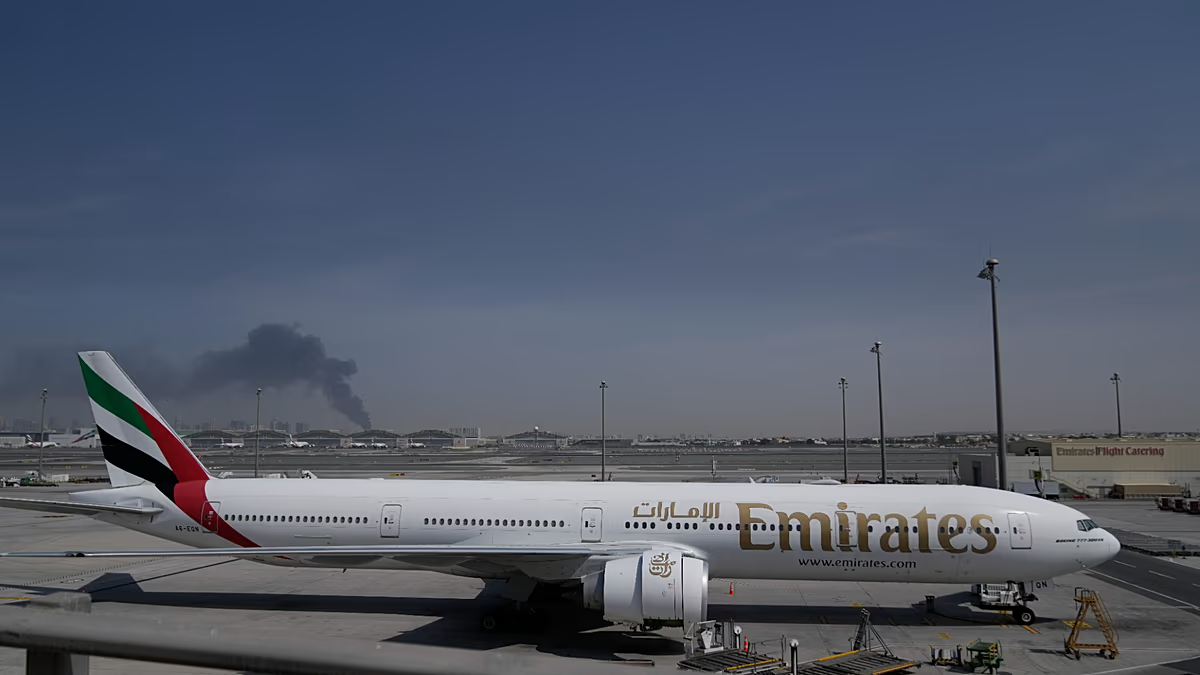
UAE Flights Middle East Airspace Turmoil: Navigating Refunds and Rebooking for UAE Flights Amid Escalating Regional Tensions
The skies over the Middle East, a pivotal crossroads for global aviation, are once again experiencing turbulence as heightened geopolitical tensions cast a long shadow over air travel. For thousands of passengers holding tickets with major UAE-based carriers like Emirates, Etihad, Air Arabia, and flydubai, understanding their options for refunds and rebooking has become a pressing concern. This comprehensive guide delves into the specifics, offering crucial advice and a broader look at the implications for the region’s vibrant aviation sector.
Understanding the Current Geopolitical Landscape and its Impact on Air Travel
The Middle East has long been a region of strategic importance, and recent developments have intensified an already complex geopolitical environment. While not a direct, declared global conflict, the ongoing friction between the US, Israel, and Iran, and their respective allies and proxies, has created a volatile operational climate that directly impacts commercial aviation. Airlines are forced to reroute, adjust schedules, and in some cases, cancel flights to ensure passenger and crew safety, leading to widespread disruptions.
Background Context: A Region on Edge
For decades, the Middle East has been a crucible of political and military dynamics, often involving major global powers. The current period is characterized by a delicate balance of power, with various state and non-state actors engaged in a complex web of alliances and rivalries. The stated objective of preventing further regional destabilization has, paradoxically, led to heightened military postures and a pervasive sense of uncertainty. This environment directly threatens civil aviation, which relies heavily on predictable and secure air corridors.
The aviation industry, a cornerstone of global connectivity and economic activity, is particularly vulnerable to geopolitical shocks. Airlines operating in or through the Middle East are continually assessing risk, often making difficult decisions to prioritize safety above all else. This translates into longer flight times due to rerouting, increased operational costs, and significant inconvenience for travelers and cargo operations alike.
Timeline of Events Impacting Aviation
- Early 2026: Initial reports of escalating military rhetoric and increased naval presence in the Arabian Gulf and Red Sea.
- February 2026: Several nations issue updated travel advisories for the region, cautioning against non-essential travel to certain areas and advising increased vigilance.
- March 2026 (Early): Isolated incidents, not directly involving commercial aircraft, lead to a heightened sense of alert among aviation authorities.
- March 6, 2026: Major UAE airlines, including Emirates, Etihad, Air Arabia, and flydubai, begin to issue official statements regarding flight adjustments, offering flexible rebooking and refund options in response to the evolving security situation and airspace restrictions.
- Ongoing: Continuous monitoring of airspace security by international and national aviation bodies, with frequent updates to Notice to Airmen (NOTAMs) and flight plans.
Navigating Flight Disruptions: Your Options with UAE Carriers
In response to the volatile situation, UAE-based airlines have activated flexible policies to assist affected passengers. Understanding the specific terms and conditions for each carrier is crucial for those needing to alter their travel plans.
Emirates: A Global Giant’s Response
As one of the world’s largest international airlines, Emirates has a vast network that heavily relies on secure airspace. Passengers affected by flight cancellations or significant schedule changes due to the geopolitical situation are typically offered:
- Free Rebooking: The option to change their flight dates or destinations (within specific parameters) without incurring a change fee, subject to availability. Fare differences may apply if changing to a higher class or different route.
- Full Refunds: Eligible for a full refund if their flight is cancelled or significantly delayed and they choose not to travel. Refunds can usually be requested through the airline’s website or customer service.
- Vouchers: In some cases, passengers may be offered travel vouchers for future use, often with added value, as an alternative to cash refunds.
Etihad Airways: Abu Dhabi’s Flag Carrier Flexibility
Etihad, the national airline of the UAE, is similarly focused on passenger safety and flexibility. Their policy adjustments generally include:
- Waiver of Change Fees: Passengers can typically amend their travel dates or destinations without a penalty, particularly if their original flight is directly impacted by the crisis.
- Refund Options: Full refunds are usually provided for cancelled flights or flights with substantial schedule changes if the passenger declines alternative arrangements.
- Alternative Routing: Where possible, Etihad may offer alternative routes to reach the final destination, though this might involve longer travel times or additional layovers.
Air Arabia: Budget Travel with Assurance
For passengers flying with Air Arabia, a leading low-cost carrier, the procedures for changes are also adapted:
- Flight Modifications: Passengers affected by operational changes are often allowed to modify their flight dates or destination to a later date without change fees. Fare differences may still apply.
- Credit for Future Travel: Instead of immediate cash refunds, Air Arabia frequently offers the option to convert the booking value into credit for future travel, valid for a specified period. Cash refunds for cancelled flights are typically processed according to their terms and conditions for significant disruptions.
flydubai: Connecting Regionally with Caution
As a key player in regional connectivity, flydubai’s policies reflect the need for agile responses to regional disruptions:
- Rebooking without Fees: Affected passengers can typically rebook their flights to a new date or destination within flydubai’s network, often without change fees.
- Refund Process: For cancelled flights, passengers are generally entitled to a full refund to their original form of payment, or the option for a travel voucher.
Summary of Airline Flexibility Policies (Indicative)
| Airline | Free Rebooking/Change Fees | Refund Options | Additional Notes |
|---|---|---|---|
| Emirates | Yes, often for impacted flights (fare difference may apply) | Full refund for cancellations/significant changes | May offer travel vouchers with added value. |
| Etihad Airways | Yes, for impacted flights (fare difference may apply) | Full refund for cancellations/significant changes | Prioritizes alternative routing where feasible. |
| Air Arabia | Yes, for impacted flights (fare difference may apply) | Credit for future travel; cash refund for cancellations per T&C | Focus on providing travel credit. |
| flydubai | Yes, for impacted flights (fare difference may apply) | Full refund or travel voucher for cancellations | Agile response to regional disruptions. |
Note: Specific terms can vary based on ticket type, exact nature of disruption, and date of booking. Always check the airline’s official website or contact their customer service for the most up-to-date information regarding your specific booking.
Broader Industry Impact and Market Implications
The ripple effects of sustained geopolitical tension extend far beyond individual flight cancellations, touching upon the entire aviation ecosystem, tourism sectors, and global supply chains.
Industry Impact: Aviation and Tourism on Alert
The Middle East serves as a critical aviation hub, linking East and West. Disruptions here have a cascading effect globally. Airlines face increased operational costs due to longer flight paths avoiding restricted airspaces, leading to higher fuel consumption and crew hours. This can strain profitability, especially for carriers already recovering from previous global shocks. Furthermore, the perception of instability can deter leisure and business travelers, directly impacting the thriving tourism industries in destinations like Dubai and Abu Dhabi.
Ground handling services, airport operations, and ancillary aviation businesses also feel the pinch from reduced flight volumes. The cargo sector, which often relies on belly hold capacity of passenger flights, experiences delays and increased costs, affecting global supply chains for everything from electronics to perishable goods.
Comparison of Flight Activity (Illustrative – Pre-Crisis vs. Current)
| Metric | Pre-Crisis (Jan 2026) | Current (March 2026) | Impact |
|---|---|---|---|
| Average Daily Flights (MEA Region) | ~3,500 | ~3,000 | ~14% reduction due to reroutes/cancellations |
| Average Flight Time (Europe-Asia via ME) | ~8-10 hours | ~9-12 hours | Increased by 1-2 hours due to rerouting |
| Fuel Consumption (per flight, estimated) | X Liters | X + 10-15% Liters | Significant increase in operational costs |
| Passenger Confidence (Survey Index) | High (7.5/10) | Moderate (5.0/10) | Decline in willingness to travel through/to the region |
Data is illustrative and reflects typical impacts of regional airspace restrictions and perceived risk, not necessarily exact figures for the specific conflict referenced.
Market and Policy Implications: Economic Fallout and Regulatory Responses
Beyond aviation, the geopolitical tensions reverberate through financial markets. Oil prices typically react sensitively to instability in the Middle East, leading to higher costs for airlines and consumers. Insurance premiums for aircraft operating in or near conflict zones also escalate, adding another layer of financial burden.
Policy-wise, governments and international aviation bodies like ICAO and IATA are likely to intensify coordination to enhance airspace safety protocols and real-time intelligence sharing. There might be increased pressure for standardized compensation and refund policies across airlines during periods of geopolitical disruption. Additionally, there could be shifts in global aviation strategies, with some carriers exploring alternative long-term routes that bypass perceived high-risk areas, even if they are less direct.
Expert-Style Analysis: Navigating the New Normal
“The current environment demands an unparalleled level of agility and collaboration from airlines, regulators, and governments,” notes Dr. Anya Sharma, a geopolitical risk analyst specializing in transportation. “While airlines have become adept at managing operational disruptions, the prolonged nature of geopolitical tensions presents a systemic challenge. It’s not just about a single event, but a sustained period of elevated risk that necessitates fundamental shifts in route planning, crew management, and passenger communication.”
Aviation security expert, John Davies, emphasizes the psychological aspect: “Public perception of safety is paramount. When travelers perceive a region as unstable, even if specific routes are deemed safe by authorities, it impacts booking confidence. Airlines must go above and beyond to reassure passengers, not just with flexible policies, but with transparent communication about safety measures and route choices.”
Economists are also weighing in on the broader economic implications. “The Middle East’s role as a transit hub is economically vital. Any sustained disruption impacts not just regional economies but global trade and tourism,” explains Sarah Chen, an economist focused on international markets. “The increased costs for airlines will inevitably be passed on to consumers or absorbed, impacting profitability. This could also accelerate investments in alternative transit hubs outside the immediate conflict zones, potentially reshaping future global aviation patterns.”
Future Outlook: Adaptability and Resilience
The immediate future for air travel in the Middle East remains closely tied to the broader geopolitical trajectory. While a complete cessation of hostilities would rapidly de-escalate the situation, sustained tensions will necessitate continued vigilance and adaptive strategies from all stakeholders. Airlines are likely to maintain flexible policies, refining their contingency plans for airspace management and passenger support. Innovation in predictive analytics for risk assessment will become even more critical.
For travelers, this ‘new normal’ might involve booking with greater awareness of geopolitical developments, considering travel insurance that covers political unrest, and being prepared for potential schedule changes. The resilience of the aviation industry, demonstrated repeatedly through various crises, will be tested once again, but its fundamental role in connecting the world ensures its eventual adaptation and recovery.
10 SEO-Rich FAQs for Travelers
- How do I check if my flight to/from UAE is affected by the regional tensions?Always check your airline’s official website, app, or their dedicated travel advisory pages for the most up-to-date information on flight status and operational changes. You can also sign up for flight alerts.
- What are my rights if my UAE flight is cancelled due to geopolitical unrest?Typically, if your flight is cancelled by the airline due to such circumstances, you are entitled to a full refund, rebooking on an alternative flight at no extra cost, or sometimes a travel voucher, depending on the airline’s specific policy.
- Can I get a refund if I voluntarily cancel my UAE flight due to safety concerns?Voluntary cancellations may be subject to the original ticket rules. However, many airlines are offering greater flexibility during periods of geopolitical instability, so check your airline’s specific policy for waivers or credit options.
- Are all UAE airlines offering the same refund and rebooking options?While generally similar, the specific terms and conditions can vary slightly between Emirates, Etihad, Air Arabia, and flydubai. It’s crucial to review the policy details on each airline’s respective website.
- How long will it take to process a refund for a cancelled UAE flight?Refund processing times can vary, but airlines typically aim to process them within a few weeks. The exact timeframe may depend on the volume of requests and the original payment method.
- What happens if my flight is rerouted and takes significantly longer?Airlines reroute for safety. If the reroute results in a significant delay (often defined as 5+ hours), you might be entitled to compensation or the option to rebook/refund, depending on the airline’s policy and applicable passenger rights regulations.
- Should I still travel to the UAE for tourism amidst these tensions?Travel advisories are issued by governments to inform citizens. Always consult your country’s official travel advisories (e.g., US Department of State, UK FCDO) for the latest guidance before planning or undertaking travel to the region.
- Will travel insurance cover flight disruptions due to regional conflict?This depends entirely on your specific travel insurance policy. Many standard policies exclude claims arising from acts of war, terrorism, or civil unrest. Always read the fine print or contact your insurance provider directly.
- What if I booked my flight through a travel agent or third-party website?If you booked through an agent, you should first contact them regarding changes, refunds, or rebooking. They will liaise with the airline on your behalf, though processes might take slightly longer.
- Are airlines communicating proactive updates about the situation?Yes, major airlines are generally proactive in issuing travel waivers and updates via their official websites, email notifications, and social media channels. It’s recommended to monitor these sources regularly.
Conclusion: Charting a Course Through Uncertainty
The current geopolitical currents underscore the inherent vulnerabilities of global air travel to regional instability. While the skies over the Middle East present significant challenges, the resilience and adaptability of UAE carriers, coupled with their commitment to passenger safety and flexibility, offer a guiding light for affected travelers. As the situation continues to evolve, staying informed, proactive engagement with airlines, and adherence to official advisories will be paramount. The aviation industry, a testament to human ingenuity and interconnectedness, will undoubtedly navigate these turbulent times, continually striving to connect the world safely and efficiently, even as geopolitical headwinds persist.
Internal Linking Suggestions:
Understanding Global Travel Advisories: What You Need to Know
The Future of Aviation: How Technology is Enhancing Safety and Efficiency
Economic Ripple Effects: How Global Events Impact Market Stability
External Authority Links:
International Air Transport Association (IATA)
International Civil Aviation Organization (ICAO)
#UAEFlights #MiddleEastTravel #FlightRefunds #AviationNews #TravelAdvisory #Emirates #Etihad #AirArabia #Flydubai #GeopoliticsImpact