


Iran’s ‘Unseen Weapons’ Threat: Middle East Tensions Soar as US-Israel Strikes Intensify
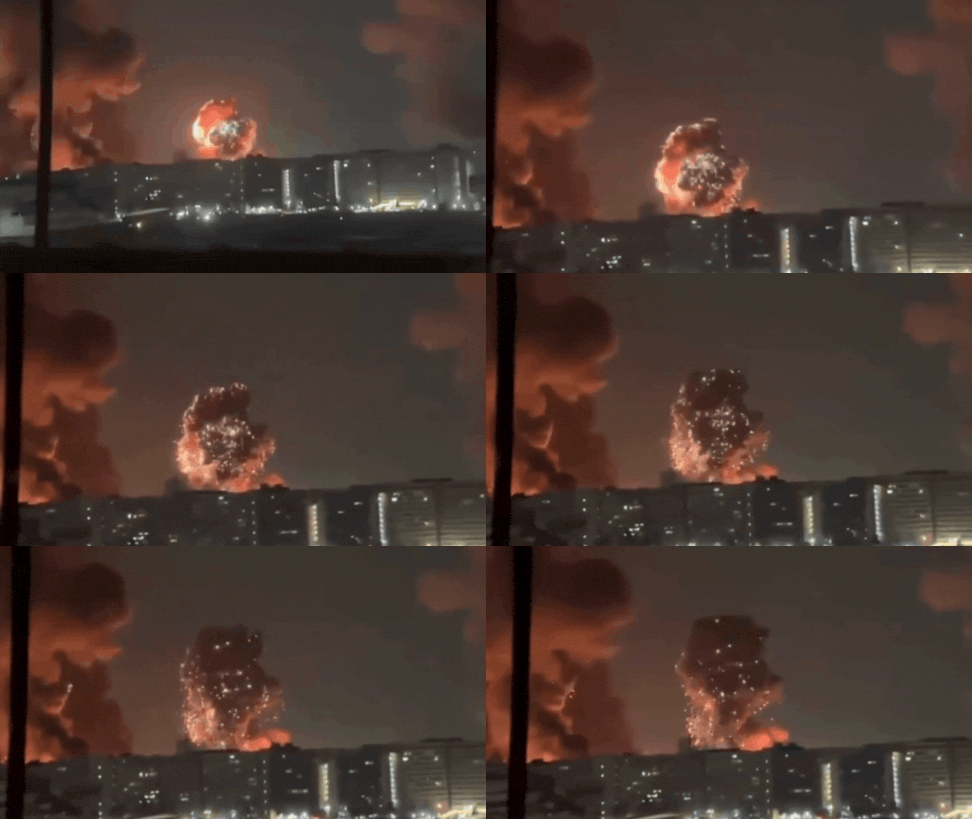
The Middle East stands on a precipice as a week of intense conflict culminates in alarming pronouncements and escalated military actions. Iran’s cryptic warning of “unseen weapons” introduces a perilous new dimension to a regional crisis already marked by intensified US-Israel strikes. The world watches with bated breath as the seventh day of this burgeoning war ushers in a new era of uncertainty and potential global ramifications.
A Region Ablaze: Understanding the Precursors to Conflict
The current conflagration did not ignite in a vacuum; it is the culmination of decades of simmering geopolitical rivalries, proxy confrontations, and deeply entrenched historical grievances. Tensions between Iran and its regional adversaries, particularly Israel and its Western allies, have long defined the strategic landscape of the Middle East. At the heart of this enduring friction lie fundamental disagreements over regional hegemony, nuclear ambitions, and the influence of non-state actors.
For years, a delicate, albeit often violent, balance has been maintained through various mechanisms of deterrence and covert operations. However, recent shifts in regional power dynamics, coupled with a series of provocations and retaliatory actions, have eroded this fragile stability. The withdrawal from international agreements, the pursuit of advanced military capabilities, and the unwavering support for proxy groups across Lebanon, Syria, Iraq, and Yemen have all contributed to a volatile environment.
The immediate antecedents to the current seven-day conflict involved a series of strategic military exercises, heightened naval presence in critical waterways, and cross-border skirmishes that escalated beyond their usual containment. Intelligence reports had for months indicated an uptick in rhetoric and a consolidation of military assets by various players, suggesting an impending showdown. This created a powder keg, needing only a spark to ignite a full-blown regional crisis. The current situation, therefore, is not merely an isolated incident but the latest, and arguably most dangerous, chapter in a long-running geopolitical saga.
The Escalation: A Week of Mounting Tensions and Strikes
The past seven days have witnessed a dramatic acceleration of military activity and rhetorical posturing, transforming a tense standoff into an active conflict with far-reaching implications. Each day brought new developments, pushing the region closer to a broader confrontation.
Day-by-Day Escalation: Key Moments
- Day 1: Initial Flare-Up – Reports emerge of significant cross-border attacks, attributed to Iran-backed militias targeting US interests and Israeli border towns. Air defense systems are activated across multiple fronts.
- Day 2: Israeli Retaliation – Israel launches intensive airstrikes against suspected militia strongholds and infrastructure in neighboring territories, citing immediate threats to national security.
- Day 3: US Involvement Deepens – The United States deploys additional naval assets to the region and conducts targeted strikes against facilities deemed to be supporting hostile non-state actors, reaffirming its commitment to regional stability and allies.
- Day 4: Diplomatic Efforts Falter – International calls for de-escalation grow, but emergency diplomatic meetings fail to yield a ceasefire, as both sides reaffirm their resolve.
- Day 5: Cyber Warfare Heightens – Reports of widespread cyberattacks on critical infrastructure in both Iran and its adversaries surface, adding a new, covert dimension to the conflict.
- Day 6: Iranian Warning – A senior Iranian military official issues a stark warning, hinting at the potential deployment of “unseen weapons” if the “aggression” continues, sending shockwaves through international capitals.
- Day 7: Intensified US-Israel Strikes – In response to Iran’s warning and continued aggressions, US and Israeli forces intensify their coordinated strikes, signaling a hardening stance and a readiness to counter any escalation.
This rapid succession of events underscores the volatile nature of the Middle East, where local skirmishes can swiftly spiral into regional conflicts with global repercussions. The rhetoric from all sides suggests a deep-seated determination, making de-escalation a monumental challenge.
Iran’s Cryptic Warning: The Shadow of ‘Unseen Weapons’
On the sixth day of the escalating conflict, a chilling pronouncement from a senior Iranian official introduced a new, terrifying variable: the threat of “unseen weapons.” This cryptic statement, delivered with an air of ominous certainty, has sparked intense speculation and heightened anxieties across the globe. While the exact nature of these “unseen weapons” remains deliberately vague, experts are analyzing a range of possibilities, each with dire implications.
Decoding the ‘Unseen’: Potential Scenarios
The term “unseen weapons” could encompass several categories of strategic capabilities that Iran has either developed covertly or is prepared to deploy in unconventional ways:
- Advanced Cyber Warfare Capabilities: Iran has a well-documented and sophisticated cyber military unit. “Unseen weapons” could refer to potent new cyber offensives capable of crippling critical infrastructure, financial systems, or military command and control networks with unprecedented efficacy and stealth.
- Asymmetric Warfare Tools: This might include sophisticated drone swarms, advanced anti-ship missiles deployed from concealed coastal batteries, or even novel forms of maritime mines that could severely disrupt shipping lanes in vital choke points like the Strait of Hormuz.
- Chemical, Biological, or Radiological (CBR) Agents: Although subject to international prohibitions, the fear exists that Iran might possess undeclared CBR capabilities. The “unseen” nature could refer to their clandestine development and potential for deployment in a manner that avoids clear attribution.
- Proxy Network Activation: Iran’s extensive network of proxy forces across the region, including Hezbollah, Houthi rebels, and various Iraqi and Syrian militias, could be considered “unseen” in their coordinated, decentralized, and often deniable operational methods. A synchronized activation on an unprecedented scale could overwhelm adversaries.
- Domestic Unrest Incitation: Less conventional, but equally potent, could be a strategy to destabilize adversaries from within by exploiting ethnic, religious, or political fault lines through sophisticated information warfare and covert support for internal dissent.
The ambiguity serves a dual purpose: it aims to create psychological deterrence, making adversaries second-guess their actions, while also preserving tactical surprise. However, it also significantly raises the stakes, as any perceived deployment of such “unseen” capabilities could trigger an unpredictable and disproportionate response.
The United States and Israel: Intensifying the Pressure
In direct response to Iran’s escalating rhetoric and the continued hostilities, the United States and Israel have intensified their coordinated military operations. This united front signals a clear message: any threat, whether overt or “unseen,” will be met with decisive force.
A Coordinated Strategic Response
The intensified strikes are characterized by several key aspects:
- Precision Airstrikes: Both nations have increased the tempo and scope of their aerial bombardments, targeting suspected weapons depots, command centers, and launch sites deep within territories controlled by Iran-backed groups.
- Naval Deployments: The US has further bolstered its naval presence in the Persian Gulf and surrounding waters, sending a powerful deterrent signal and enhancing its capacity for rapid response. This includes aircraft carrier strike groups and guided-missile destroyers.
- Intelligence Sharing: A seamless flow of intelligence between Washington and Jerusalem is facilitating highly targeted operations, aiming to dismantle the infrastructure supporting Iran’s regional military ambitions.
- Cyber Countermeasures: Alongside kinetic strikes, a robust cyber defense and offense strategy is likely being employed to neutralize any potential “unseen” cyber threats from Iran, creating a digital battleground.
The intensification of these strikes represents a calculated risk. While designed to degrade enemy capabilities and restore deterrence, it also increases the likelihood of miscalculation and further escalation. The stated objective is to protect regional allies, safeguard vital shipping lanes, and prevent Iran from achieving nuclear weapons capabilities or regional dominance. However, the shadow of Iran’s “unseen weapons” looms large, adding an unprecedented layer of complexity to an already perilous conflict.
Economic Ripple Effects: Industry Impact of Escalating Conflict
The escalating tensions in the Middle East, particularly the specter of “unseen weapons” and intensified military action, are sending shockwaves through global markets and various critical industries. The region’s pivotal role in global energy supply chains means that any significant disruption carries immediate and widespread economic consequences.
Global Industries on Edge
- Oil & Gas: The most immediate and significant impact is felt in the energy sector. The Middle East accounts for a substantial portion of the world’s oil and natural gas production and reserves. Threats to shipping lanes, particularly the Strait of Hormuz through which a fifth of the world’s oil transits, cause crude oil prices to surge. Increased geopolitical risk premiums are now baked into energy futures, directly affecting consumer prices globally and squeezing manufacturing costs.
- Shipping & Logistics: The maritime industry faces immense challenges. Rerouting vessels to avoid perceived high-risk zones incurs higher fuel costs, longer transit times, and increased insurance premiums. This translates to higher costs for virtually all goods transported internationally, impacting supply chains already strained by previous global events.
- Defense & Aerospace: Conversely, the defense sector often sees a surge in demand during periods of heightened conflict. Defense contractors anticipate increased orders for munitions, surveillance technology, and advanced military hardware. Aerospace, particularly commercial aviation, faces reduced passenger traffic in affected regions and higher operational costs due to rerouting and increased security measures.
- Technology & Cyber Security: With the explicit mention of “unseen weapons,” the cyber security industry is on high alert. Governments and corporations are investing heavily in bolstering their digital defenses, leading to a boom for cybersecurity firms. However, successful cyberattacks could have devastating cross-industry effects, disrupting critical infrastructure and financial markets.
- Financial Markets: Global stock markets typically react negatively to geopolitical instability. Investors often flee risky assets for safe havens like gold and government bonds. Currency markets can also experience volatility as capital flows shift in response to perceived threats and economic uncertainty.
The ripple effect of this conflict extends far beyond the immediate combatants, touching the everyday lives of consumers through inflated prices and adding layers of complexity to global business operations.
Beyond the Battlefield: Market and Policy Implications
The protracted conflict and the looming threat of unconventional warfare have profound market and policy implications, compelling governments and international bodies to reassess their strategies for regional stability and global economic resilience.
Navigating a New Geopolitical Landscape
The current crisis is catalyzing shifts in international relations and domestic policies:
- Energy Policy Revisions: Nations heavily reliant on Middle Eastern oil and gas are accelerating efforts to diversify their energy sources and invest in renewables, aiming to reduce strategic vulnerability. Emergency oil reserves may be tapped to stabilize prices, though this offers only a temporary reprieve.
- Defense Spending & Alliances: Expect significant increases in defense budgets across Western nations and allied states in the Middle East. There will be renewed focus on intelligence gathering, counter-hybrid warfare capabilities, and joint military exercises to strengthen alliances and deterrence postures.
- Sanctions Regime Expansion: If Iran proceeds with actions deemed escalatory, particularly involving “unseen weapons,” a new round of stringent international sanctions is highly probable. These could target key sectors of Iran’s economy, further isolating it but also potentially exacerbating regional instability.
- Diplomatic Realignments: The conflict is forcing countries to reconsider their diplomatic stances. Some nations may lean closer to the US-Israel axis, while others might seek to maintain neutrality or even tacitly support Iran, leading to a complex web of shifting allegiances and new power blocs.
- Cybersecurity Legislation: The credible threat of sophisticated cyberattacks is likely to spur new national and international legislation aimed at enhancing cybersecurity infrastructure, regulating digital warfare, and improving international cooperation on cyber defense.
The political landscape is undergoing a significant transformation, with policy makers facing difficult choices between de-escalation through diplomacy and decisive military action, all while balancing national interests with the imperative of global stability.
Expert Analysis: The Perilous Path Ahead
Geopolitical analysts and defense strategists are grappling with the implications of Iran’s “unseen weapons” threat and the intensified US-Israel response. The consensus is clear: the risk of miscalculation has never been higher, and the pathways to de-escalation appear increasingly narrow.
Navigating the Strategic Quagmire
“The term ‘unseen weapons’ isn’t just about military capabilities; it’s a psychological weapon designed to create ambiguity and fear,” notes Dr. Eleanor Vance, a senior fellow at the Institute for Global Security Studies. “It compels adversaries to prepare for the unknown, diverting resources and attention. The danger is that if such a threat is perceived to materialize, the response could be overwhelmingly disproportionate, simply because of the inherent uncertainty.”
Regional dynamics specialist, Professor David Chen, from the Middle East Policy Center, emphasizes the challenge for international diplomacy. “Every party believes they are acting defensively, but their actions are perceived as escalatory by the other side. Breaking this cycle requires a level of trust and communication that simply doesn’t exist right now. The UN and other multilateral organizations are trying, but their leverage is limited when core national security interests are at stake.”
The strategic calculus for both the US-Israel alliance and Iran is incredibly complex. For the US and Israel, the objective is to deter further aggression, protect their interests and allies, and degrade Iran’s ability to project power. However, pushing too hard risks triggering the very “unseen weapons” or widespread proxy activation they seek to prevent. For Iran, the strategy appears to be one of resilient defiance, aiming to demonstrate its capacity for retaliation and its willingness to endure pressure, forcing a diplomatic solution on its terms.
The involvement of cyber warfare further complicates analysis. “Cyberattacks blur the lines of engagement and attribution,” explains digital security expert Sarah Khan. “A major cyber event could be seen as an act of war, but proving who launched it conclusively, and what their intent was, is incredibly difficult, leading to a higher potential for unintended escalation.”
The experts largely agree that the international community must urgently press for de-escalation, but the current trajectory suggests a hardening of positions, making the prospect of a peaceful resolution increasingly remote in the short term. The long-term implications for global security and economic stability could be profound, reshaping alliances and power structures for decades to come.
Future Outlook: A Crossroads for the Middle East and Beyond
As the conflict enters its second week, the future remains fraught with peril and uncertainty. The immediate outlook suggests a continuation of intensified military engagements, punctuated by diplomatic efforts that are struggling to gain traction. However, several potential pathways could unfold, each carrying significant global consequences.
Potential Scenarios and Long-Term Implications
- Continued Escalation: The most concerning scenario involves a further intensification of the conflict, possibly triggered by the deployment of Iran’s “unseen weapons” or a significant miscalculation by any party. This could draw in additional regional and international actors, leading to a full-scale regional war with devastating humanitarian and economic consequences, potentially involving major global powers.
- Stalemate and Protracted Conflict: The conflict could settle into a prolonged period of low-intensity engagements, characterized by proxy warfare, cyberattacks, and intermittent conventional strikes. This “managed chaos” would maintain high levels of instability, perpetuate human suffering, and continue to disrupt global markets, preventing any genuine recovery or return to normalcy.
- Diplomatic Breakthrough: Despite the current challenges, a diplomatic solution remains the ultimate goal. Pressure from international powers, potentially coupled with a realization by all parties of the immense costs of continued warfare, could lead to renewed negotiations. Any breakthrough would likely involve significant concessions from all sides, potentially including new security guarantees for regional states and a renegotiation of Iran’s nuclear program.
- Shift in Regional Power Dynamics: Regardless of the immediate outcome, this conflict is likely to reshape the Middle East’s geopolitical landscape. It could strengthen existing alliances, forge new ones, or even lead to the collapse of fragile states. The long-term balance of power between Iran, its neighbors, and global powers will be fundamentally altered.
The world stands at a critical juncture, watching the unfolding drama in the Middle East with a profound sense of apprehension. The choices made in the coming days and weeks will not only determine the fate of millions in the region but will also cast a long shadow over global peace and prosperity for years to come. The imperative for de-escalation and a sustainable political resolution has never been more urgent.
Analysis in Focus: Key Strategic Elements
Comparative Threat Assessment: Conventional vs. ‘Unseen’ Capabilities
| Capability Type | Description | Strategic Impact | Attribution Difficulty |
|---|---|---|---|
| Conventional Military (e.g., missiles, air power) | Declared forces, established weapons systems. | Direct kinetic damage, territorial control, clear deterrent. | High (easy to identify origin). |
| Iran’s ‘Unseen Weapons’ (Hypothetical) | Advanced cyber tools, sophisticated asymmetric tactics, clandestine WMDs, covert proxy activation. | Systemic disruption, psychological warfare, deniable aggression, widespread chaos. | Variable (low to medium, often ambiguous). |
Summary of Conflict Impact by Sector
| Sector | Immediate Impact | Long-Term Implications |
|---|---|---|
| Energy (Oil & Gas) | Price surges, supply chain volatility, increased insurance. | Accelerated energy diversification, strategic reserve policy shifts. |
| Shipping & Logistics | Rerouting, higher costs, delivery delays, security concerns. | Redesign of global supply routes, investment in secure transport. |
| Defense & Security | Increased demand for military hardware, cybersecurity services. | Higher defense budgets, focus on anti-hybrid warfare, tech innovation. |
| Financial Markets | Stock market volatility, flight to safe havens, currency fluctuations. | Investor caution, reassessment of emerging market risks. |
| Diplomacy & Policy | Failed de-escalation attempts, shifts in alliances, new sanctions. | Redefined international security architecture, new legislative pushes. |
Frequently Asked Questions About the Middle East Conflict
- What triggered the latest escalation in the Middle East conflict?
The current escalation stems from decades of geopolitical rivalry, proxy confrontations, and recent cross-border skirmishes that grew into significant military exchanges between Iran-backed groups, Israel, and the United States. - What does Iran mean by “unseen weapons”?
Iran’s statement about “unseen weapons” is deliberately vague but could refer to advanced cyber warfare capabilities, sophisticated asymmetric tactics, chemical or biological agents, or an unprecedented activation of its regional proxy network. - How are the US and Israel responding to Iran’s threats?
The US and Israel have intensified their coordinated precision airstrikes, bolstered naval deployments, enhanced intelligence sharing, and are likely employing robust cyber countermeasures to degrade enemy capabilities and deter further aggression. - What is the impact of this conflict on global oil prices?
The conflict has caused significant surges in global crude oil prices due to threats to major shipping lanes like the Strait of Hormuz, increasing geopolitical risk premiums, and impacting consumer and manufacturing costs worldwide. - Are there any diplomatic efforts underway to de-escalate the situation?
Yes, international bodies and various governments are attempting diplomatic interventions, but these efforts have largely failed to achieve a ceasefire or de-escalation due to deep-seated mistrust and conflicting national interests. - What are the potential long-term consequences for the Middle East?
Long-term consequences could include a reshaping of regional power dynamics, strengthened alliances, continued instability, increased military spending, and a persistent threat of broader conflict, impacting economic development and human security. - How does cyber warfare factor into the current conflict?
Cyber warfare is a critical, often “unseen,” dimension of the conflict, with reports of attacks on critical infrastructure. It blurs lines of engagement and attribution, increasing the potential for unintended escalation through digital means. - Which industries are most affected by the Middle East crisis?
The energy (oil & gas), shipping & logistics, defense & aerospace, technology (cybersecurity), and global financial markets are among the most significantly affected industries due to supply chain disruptions, increased risk, and shifted investment. - What role do proxy groups play in the conflict?
Iran’s extensive network of proxy groups (e.g., Hezbollah, Houthis) plays a crucial role in its asymmetric warfare strategy, enabling deniable attacks and projecting power across the region without direct state-on-state confrontation. - Is there a risk of this conflict expanding into a global war?
While direct global war is not certain, the risk of the conflict drawing in additional regional and international actors is high. A major miscalculation or the deployment of highly destructive “unseen weapons” could potentially lead to a broader, more devastating confrontation with global ramifications.
Conclusion: The Urgent Imperative for Peace and Stability
As the Middle East grapples with the escalating seventh day of conflict, marked by Iran’s disquieting threat of “unseen weapons” and intensified US-Israel retaliatory strikes, the region stands at a perilous inflection point. The trajectory of this conflict carries immense weight, not only for the millions directly affected but for the delicate balance of global peace and economic stability. The path ahead is fraught with challenges, demanding unprecedented diplomatic resolve and a clear-eyed understanding of the profound risks of continued escalation. While the immediate future appears dominated by military posturing and strategic maneuvering, the ultimate imperative remains the pursuit of a sustainable resolution that addresses the underlying grievances and establishes a framework for lasting security. The world watches, hoping that wisdom and restraint will prevail over the destructive pull of warfare, steering the Middle East and indeed the global community towards a future of stability rather than chaos.
Further Reading and Resources
Internal Links:
- Understanding Geopolitical Tensions in the 21st Century
- The Growing Impact of Cyberwarfare on Global Security
- Middle East Energy Market Analysis: Challenges and Opportunities
External Authority Links:
#Hashtags:
#MiddleEastConflict #IranUnseenWeapons #USIsraelStrikes #Geopolitics #GlobalSecurity