



Iran Leadership Delay: Security Fears Fuel Succession Uncertainty
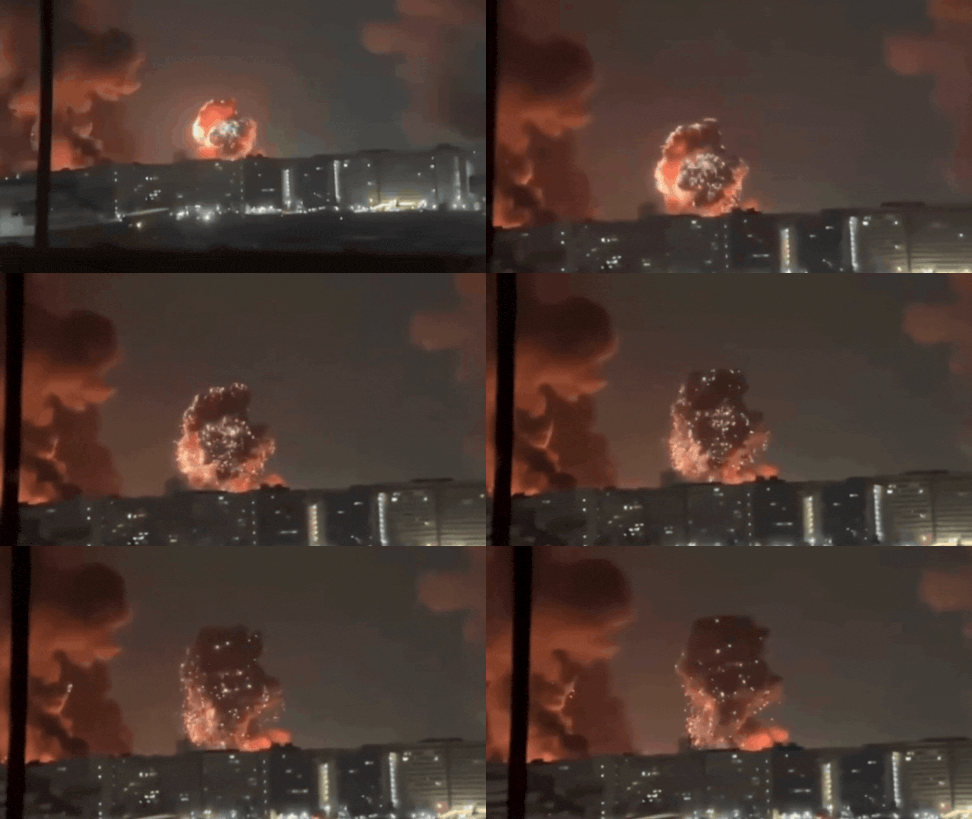
In a development sending ripples through the geopolitical landscape, officials within Iran have confirmed a significant delay in the naming of the country’s next Supreme Leader. Citing profound security concerns, this unprecedented postponement underscores the intricate web of internal pressures and external threats facing the Islamic Republic at a critical juncture. The decision raises pressing questions about the stability of Iran’s unique political system and the potential for a prolonged period of leadership vacuum that could redefine its regional and international standing. This is not merely a procedural delay; it is a profound signal of a nation grappling with its future amidst escalating complexities.
The Uncharted Waters of Succession
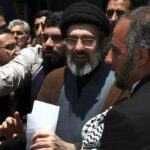
The role of the Supreme Leader in Iran is paramount, a position of ultimate spiritual and political authority that shapes every aspect of the nation’s domestic and foreign policy. Unlike elected positions, the Supreme Leader is chosen by the Assembly of Experts, a body of 88 clerics, typically for life. The current Supreme Leader, Ayatollah Ali Khamenei, has held the position since 1989. His eventual successor, whose identity has long been a subject of intense speculation, carries the immense weight of guiding the Islamic Republic through an increasingly volatile era. The official acknowledgment of a delay due to security concerns suggests that the process is far more fraught than previously assumed, pointing to deep-seated anxieties within the establishment.
Historical Context: Iran’s Leadership Transitions
Iran has experienced only two Supreme Leaders since the 1979 Islamic Revolution. The transition from Ayatollah Ruhollah Khomeini to Ayatollah Ali Khamenei in 1989 was a pivotal moment, occurring swiftly after Khomeini’s passing. That period, while a moment of profound national mourning and adjustment, was characterized by a relatively quick and decisive decision by the Assembly of Experts to ensure continuity and stability. The current situation, however, deviates sharply from this historical precedent. The explicit mention of “security concerns” introduces a new dimension, suggesting either significant internal disagreements over candidates, credible threats to the succession process itself, or perhaps a calculated move to consolidate power amidst external pressures. This delay signals a departure from the perceived seamlessness of past transitions, placing the nation into an unpredictable phase.
Timeline of Developments and Growing Tensions
- Late 2025: Mounting speculation regarding the health and eventual succession of the current Supreme Leader intensifies within Iranian political circles and international media.
- Early 2026: Unconfirmed reports begin to surface about internal deliberations within the Assembly of Experts facing unexpected hurdles.
- March 5, 2026: Iranian state media offers vague references to “complex considerations” impacting sensitive national processes.
- March 7, 2026: High-ranking officials confirm the delay in naming the next Supreme Leader, explicitly citing “security concerns” as the primary reason.
- Immediate Aftermath: Global analysts and intelligence agencies begin to dissect the implications, focusing on potential internal power struggles and regional destabilization.
Industry Impact and Geopolitical Ripples
While “industry” typically refers to economic sectors, in the context of a nation-state’s leadership transition, the term expands to encompass the global geopolitical “industry”—the intricate web of diplomatic relations, energy markets, and regional security dynamics. A delayed and uncertain succession in Iran sends tremors through this delicate system.
- Energy Markets: Iran is a major global oil producer. Any hint of political instability directly impacts crude oil prices, potentially leading to volatility in international markets as traders react to perceived supply risks from the Middle East. Geopolitical uncertainty in a key oil-producing nation can drive up premiums.
- Regional Security: Iran’s regional influence, particularly through its proxies and alliances, is undeniable. A leadership vacuum or perceived weakness at the top could embolden regional adversaries, trigger proxy conflicts, or lead to a recalibration of alliances across the Middle East. Nations like Saudi Arabia, Israel, and the UAE will be closely monitoring developments for shifts in power balance.
- Diplomacy and Sanctions: International negotiations concerning Iran’s nuclear program and various sanctions regimes are highly sensitive to leadership stability. A prolonged delay could stall diplomatic efforts, complicate potential agreements, or lead to increased international pressure if the succession process appears to compromise regional stability.
Market and Policy Implications: A Global Perspective
The implications of this delay extend far beyond Iran’s borders, influencing global financial markets and international policy decisions. Governments worldwide, particularly those with significant interests in the Middle East, are undoubtedly re-evaluating their strategies.
For financial markets, the uncertainty translates into a “risk-off” sentiment. Investors may gravitate towards safer assets, while equities linked to the energy sector could experience either speculative gains or losses depending on the perceived outcome of the instability. Policy-makers, especially in Washington, Brussels, and Beijing, face a delicate balancing act. They must prepare for various scenarios ranging from a smooth, albeit delayed, transition to a period of protracted internal struggle that could spill over regionally.
The current situation could also empower hardline factions if the security concerns stem from internal dissent, potentially leading to a more confrontational foreign policy stance. Conversely, a desire to project stability could see the leadership attempt to reassure the international community, though actions would speak louder than words.
Expert-Style Analysis: Dissecting the Delay
Regional analysts and Iran watchers are dissecting the implications of this unprecedented delay. Dr. Elara Vance, a senior fellow at the Institute for Middle Eastern Studies, suggests, “The ‘security concerns’ cited are likely multifaceted. They could range from fears of internal dissent or challenges from rival clerical factions to external threats aiming to exploit a moment of transition. It’s also possible that the delay is a deliberate tactic to consolidate support around a particular candidate or to manage dissent before making an announcement that could prove divisive.”
Another perspective, offered by geopolitical strategist Marcus Thorne, posits, “The timing is crucial. With ongoing regional tensions and a complex economic climate exacerbated by sanctions, the Iranian establishment cannot afford any misstep in succession. A premature or contested announcement could invite destabilization both domestically and internationally. The delay, while unsettling, might be a calculated move to ensure maximum internal consensus and control before revealing the next leader.”
The prevailing sentiment among experts is that this delay is a strong indicator of profound power dynamics at play, potentially signaling a more complex and contentious succession than the relatively smooth transition of 1989. The opacity surrounding the Assembly of Experts’ deliberations further fuels speculation, making definitive predictions challenging.
Comparison of Leadership Succession Models
To better understand the uniqueness and potential vulnerabilities of Iran’s system, it’s helpful to compare its succession model with other political structures:
| System Type | Succession Mechanism | Key Features | Stability Implication |
|---|---|---|---|
| Islamic Republic (Iran) | Appointed by Assembly of Experts (clerical body) | Life tenure, supreme religious and political authority, non-electoral | Potential for power struggles, limited public input, high risk during transition |
| Parliamentary Democracy | Electoral (party leader becomes PM) | Regular elections, party-based, checks and balances | Relatively stable, public mandate, predictable transitions |
| Presidential Republic | Electoral (direct popular vote) | Fixed terms, executive and legislative separation, public mandate | Predictable transitions, potential for gridlock, public accountability |
| Constitutional Monarchy | Hereditary (royal family) | Symbolic head of state, political power with elected government | Inherently stable, low risk of power struggles for head of state |
Key Factors Influencing Iran’s Succession Delay
The decision to delay the announcement of the next Supreme Leader is undoubtedly influenced by a confluence of critical factors:
| Factor | Description | Potential Impact |
|---|---|---|
| Internal Power Struggles | Disagreements among powerful clerical factions and political elites over candidates. | Prolonged instability, potential for a divisive selection, weakening of central authority. |
| Regional Geopolitics | Escalating tensions with regional rivals (e.g., Saudi Arabia, Israel) and global powers. | Increased caution to avoid perceived weakness, potential for external interference. |
| Economic Sanctions | Persistent international sanctions straining the economy and potentially fueling public unrest. | Pressure to choose a leader who can navigate economic challenges, risk of exacerbating discontent. |
| Assembly of Experts’ Role | The 88-member body responsible for selection may be facing unprecedented challenges in reaching consensus. | Slower, more contested decision-making process, highlighting internal divisions. |
| Public Dissent | Underlying domestic discontent over governance, economic conditions, and social freedoms. | Need for a unifying figure, fear of protests during a sensitive transition. |
Future Outlook: Scenarios for the Islamic Republic
The path forward for Iran remains shrouded in uncertainty. Several scenarios could unfold, each with profound consequences for the nation and the broader Middle East.
- Controlled Transition: The establishment manages to resolve internal disagreements and eventually announces a successor who maintains the existing power structure, albeit after a significant delay. This scenario would aim to project stability and minimize internal dissent.
- Prolonged Instability: The delay extends further, leading to a visible power vacuum or infighting among factions. This could weaken the regime internally and invite greater external pressure or even intervention from regional rivals seeking to exploit the instability.
- Shift in Foreign Policy: The eventual successor, regardless of when they are named, might usher in a new era of foreign policy, either more conciliatory to address economic woes or more confrontational to rally nationalist support.
- Increased Public Dissent: A prolonged period of leadership uncertainty could embolden domestic opposition movements, potentially leading to renewed widespread protests if the perception of a failing state apparatus takes root.
Ultimately, the coming months will be crucial in determining Iran’s trajectory. The world watches anxiously, understanding that the choices made during this delicate succession will reverberate for decades.
Frequently Asked Questions About Iran’s Supreme Leader Succession
- Who is the current Supreme Leader of Iran? The current Supreme Leader of Iran is Ayatollah Ali Khamenei, who has held the position since 1989.
- What is the role of the Supreme Leader in Iran? The Supreme Leader is the highest political and religious authority in Iran, holding ultimate say over major domestic and foreign policies, the military, and the judiciary.
- How is a new Supreme Leader chosen in Iran? A new Supreme Leader is chosen by the Assembly of Experts, an 88-member clerical body elected by the people.
- Why has Iran delayed naming its next Supreme Leader? Iranian officials have cited “security concerns” as the primary reason for the delay, suggesting internal disagreements, external threats, or a strategic move to consolidate power.
- What are the potential internal implications of this delay? The delay could indicate internal power struggles, disagreements among powerful factions, and potential for increased domestic instability or dissent.
- What are the potential international implications of this delay? Internationally, the delay could impact energy markets, regional security, diplomatic relations, and ongoing negotiations regarding Iran’s nuclear program and sanctions.
- Who are the likely candidates for Supreme Leader? While no official candidates are named, speculation often centers on high-ranking clerics and influential figures within the establishment, such as the current President or the Head of the Judiciary.
- What is the Assembly of Experts? The Assembly of Experts is a deliberative body of high-ranking clerics responsible for appointing and overseeing the Supreme Leader.
- Has a Supreme Leader succession ever been delayed before? The explicit acknowledgment of a delay due to “security concerns” is largely unprecedented in the Islamic Republic’s history, marking a significant departure from past transitions.
- How will this delay affect Iran’s regional foreign policy? A period of leadership uncertainty could lead to either increased caution in regional engagements or, conversely, a more assertive stance to project strength amidst internal vulnerabilities.
Conclusion: A Nation at a Crossroads
The delay in naming Iran’s next Supreme Leader, driven by unstated yet profound security concerns, marks a pivotal moment in the nation’s contemporary history. It is a testament to the immense pressures, both internal and external, that are shaping the future of the Islamic Republic. As the world watches, the outcome of this intricate succession process will not only determine the trajectory of Iran but also significantly influence the stability and geopolitical dynamics of the entire Middle East. The challenges are formidable, the stakes are exceptionally high, and the period ahead promises to be one of intense scrutiny and potential transformation. Whatever the ultimate resolution, this moment underscores the complex realities of power and transition in one of the world’s most strategically vital regions.
Further Reading:
- Understanding Iranian Politics and Succession
- Middle East Geopolitics: Challenges and Opportunities
- The Role of the Assembly of Experts in Iran
External Authority Links: