


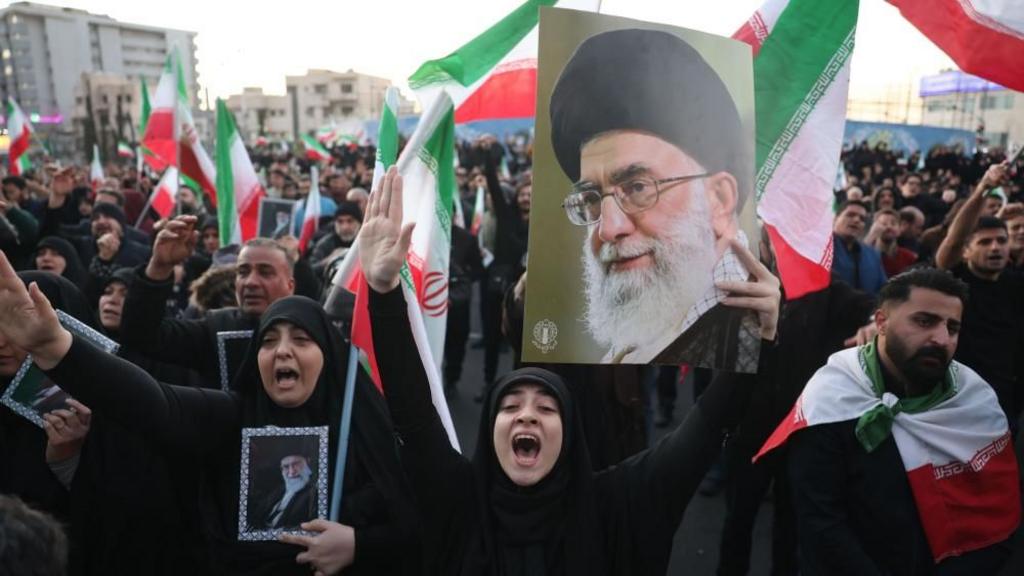
Iran in Turmoil: IDF Confirms Khamenei’s Death in Tehran Leadership Compound
A seismic shift has rippled through the geopolitical landscape following an unprecedented statement from the Israel Defense Forces (IDF), confirming the death of Iran’s Supreme Leader, Ayatollah Ali Khamenei. The startling revelation places him within the central leadership compound in the heart of Tehran at the time of the event, igniting a firestorm of speculation and immediate concern across the Middle East and beyond. This development promises to reshape regional power dynamics and global strategic alliances in profound and unforeseen ways.
The Unfolding Crisis: IDF Statement Shakes the World
The news broke with a chilling clarity on March 1, 2026, when the IDF issued a statement that sent shockwaves globally. For decades, Ayatollah Ali Khamenei has been the undisputed spiritual and political leader of Iran, his authority unchallenged since 1989. His passing, particularly under such reported circumstances, marks not merely the end of an era but potentially the beginning of a deeply volatile period for the Islamic Republic and its neighbors.
Background: A Legacy of Power and Confrontation
Ayatollah Ali Khamenei’s tenure as Supreme Leader was characterized by unwavering adherence to revolutionary principles, a confrontational stance towards the West, and the meticulous cultivation of Iran’s regional influence through proxies and strategic alliances. His passing removes a central figure who held together a complex web of political, military, and religious factions within Iran. His leadership saw Iran develop its nuclear program, navigate crippling sanctions, and engage in proxy conflicts that have destabilized the Middle East. Understanding his pivotal role is crucial to grasping the magnitude of this event.
Timeline of Events
- March 1, 2026, Early Morning (Tehran Time): Unconfirmed reports begin to circulate on social media regarding unusual activity around the central leadership compound in Tehran.
- March 1, 2026, Mid-Morning (Tehran Time): Iranian state media remains silent, fueling further speculation and concern among international observers.
- March 1, 2026, 14:39:11 +05:30 (IDF Statement Released): The Israel Defense Forces issues a highly unusual and concise statement, explicitly confirming the death of Ayatollah Ali Khamenei, noting his presence “in central leadership compound in heart of Tehran.”
- Immediate Aftermath: Global news agencies pick up the IDF statement, leading to widespread reporting and a surge in geopolitical analysis. Iranian state media eventually acknowledges the reports but without full confirmation, leading to a period of intense uncertainty.
- Ongoing: International leaders call for calm and stability while closely monitoring the situation.
Industry Impact: Ripples Through Global Markets
The immediate aftermath of such a significant geopolitical event is bound to send ripples through various global industries. The energy sector, in particular, is bracing for potential volatility. Iran, a major oil producer, plays a crucial role in global energy markets. Any uncertainty regarding its future leadership or internal stability could lead to significant price fluctuations. Furthermore, the defense industry could see increased activity as nations in the region and beyond reassess their security postures and strategic alliances.
Other sectors, such as international shipping and trade, particularly through vital waterways like the Strait of Hormuz, face potential disruptions. Investors in emerging markets and those with significant exposure to the Middle East are likely to exercise extreme caution, leading to capital flight from perceived high-risk regions.
Market and Policy Implications: A New Geopolitical Chessboard
The death of Khamenei opens a Pandora’s Box of market and policy implications. On the policy front, the succession process in Iran is paramount. The Assembly of Experts, a body of 88 clerics, is constitutionally tasked with choosing the next Supreme Leader. The process is typically shrouded in secrecy, and the potential for infighting or a prolonged selection period could lead to internal instability. This instability could dramatically alter Iran’s foreign policy stance, potentially impacting its nuclear ambitions, its support for regional proxies, and its relationship with global powers.
For the United States and its allies, this event presents both challenges and potential opportunities. A more moderate successor could pave the way for renewed diplomatic engagement, while a hardline choice might escalate existing tensions. Israel, having issued the confirming statement, is now at the forefront of the international response, and its security policy will undoubtedly adapt to the evolving situation in Iran.
Key Regional Players’ Potential Responses
| Country/Entity | Pre-Event Stance (Towards Iran) | Potential Immediate Response | Long-term Policy Shift |
|---|---|---|---|
| United States | Sanctions, diplomatic pressure, containment | Calls for stability, monitoring succession | Re-evaluation of Iran policy, potential for engagement/escalation |
| Israel | Existential threat, intelligence gathering, deterrence | Heightened security alert, strategic consultations | Adjusted regional security strategy, focus on border defense |
| Saudi Arabia | Regional rival, proxy conflicts | Cautious observation, regional consultations | Potential for de-escalation or heightened proxy competition |
| European Union | Nuclear deal proponent, human rights concerns | Calls for peaceful transition, humanitarian focus | Emphasis on diplomatic solutions, energy security review |
Expert Analysis: Navigating the Void
Political analysts and Middle East experts are grappling with the unprecedented nature of this event. “Khamenei’s death, especially if confirmed to have occurred within the leadership compound, signifies a potential power vacuum that could be exploited by various internal and external actors,” notes Dr. Sarah Khan, a senior fellow at the Institute for Geopolitical Studies. “The immediate focus will be on the succession process and whether it can be managed without significant internal strife. The Revolutionary Guard Corps (IRGC) will play a critical role in maintaining order and influencing the choice of the next Supreme Leader.”
Others highlight the broader regional implications. “The Middle East is already a tinderbox,” states Professor David Miller, a renowned expert on international relations. “The removal of a figure as central as Khamenei could either lead to a dangerous power struggle or, in a less likely scenario, open a window for a fundamental reorientation of Iranian foreign policy. The IDF’s direct statement is also highly significant; it suggests a level of intelligence and a willingness to assert information that will not go unnoticed by regional adversaries.” The coming weeks will be critical in determining whether Iran embraces continuity or undergoes a more radical transformation.
Future Outlook: A Region on the Brink
The future outlook for Iran and the wider Middle East is fraught with uncertainty. The immediate challenge is ensuring a stable transition of power within Iran. The potential for street protests, factional clashes, or even a military crackdown cannot be discounted. Regionally, neighboring countries and global powers will be closely watching for any signs of instability that could spill over borders or impact international shipping lanes. The nuclear program, a cornerstone of Khamenei’s legacy, will also be a critical point of focus. Will a new leader adhere to the current trajectory, or will there be a shift towards either greater compliance or further escalation?
The geopolitical ramifications extend beyond the Middle East, influencing global energy prices, defense strategies, and diplomatic priorities. The world watches with bated breath as Iran, a nation at a critical juncture, navigates the void left by its long-serving Supreme Leader.
Summary of Immediate Challenges and Opportunities
| Category | Challenges | Opportunities |
|---|---|---|
| Internal Iran | Power vacuum, factional infighting, potential unrest, economic instability | Potential for reform, new political alignments, greater public participation |
| Regional Security | Increased tensions, proxy conflict escalation, refugee crisis | De-escalation of conflicts, new diplomatic initiatives, improved regional stability |
| International Relations | Nuclear proliferation concerns, global energy market volatility | Renewed diplomatic engagement, potential for international cooperation on security |
10 SEO-Rich FAQs on Khamenei’s Death and Iran’s Future
- What is the significance of the IDF statement regarding Khamenei’s death?The IDF’s direct confirmation of Ayatollah Khamenei’s death, especially specifying his location, is highly significant as it bypasses official Iranian channels and suggests high-level intelligence, adding immense credibility and urgency to the news while raising questions about the circumstances.
- Who was Ayatollah Ali Khamenei and what was his role in Iran?Ayatollah Ali Khamenei served as Iran’s Supreme Leader since 1989, holding ultimate authority over religious, political, and military affairs. He guided Iran’s policies, including its nuclear program and regional foreign policy.
- How is the Supreme Leader of Iran typically chosen?The Supreme Leader is chosen by the Assembly of Experts, a deliberative body of high-ranking clerics, based on their religious qualifications and leadership abilities. The process is often opaque and involves extensive deliberations.
- What are the immediate implications for Iran’s stability?Immediate implications include a potential power vacuum, increased internal factional struggles, and the possibility of public unrest as the country navigates a complex leadership transition.
- How might Khamenei’s death affect Iran’s nuclear program?The future of Iran’s nuclear program will depend heavily on the next Supreme Leader’s stance. It could lead to a continuation of current policies, a more aggressive approach, or potentially a willingness for new negotiations with international powers.
- What impact could this event have on oil prices and global energy markets?As a major oil producer, any instability in Iran following Khamenei’s death could lead to supply concerns, driving up crude oil prices and introducing significant volatility into global energy markets.
- Will Iran’s regional proxy groups be affected by a leadership change?Iran’s regional proxy groups (e.g., Hezbollah, Houthis) depend on Iranian support and strategic guidance. A new Supreme Leader might alter the level or nature of this support, impacting regional conflicts and power balances.
- What is the international community’s response to this development?The international community is likely to respond with calls for calm, statements urging a peaceful transition, and heightened diplomatic efforts to monitor the situation and prevent further escalation in the Middle East.
- Could Khamenei’s death lead to a shift in US-Iran relations?A new leader could potentially usher in a new era for US-Iran relations. Depending on the successor’s ideology, there could be opportunities for renewed dialogue or a deepening of existing hostilities and sanctions.
- What role will the Iranian Revolutionary Guard Corps (IRGC) play in the transition?The IRGC is a powerful military and economic force in Iran and is expected to play a crucial role in maintaining internal security, influencing the succession process, and potentially safeguarding the continuity of the Islamic Republic’s core principles.
Conclusion: A New Chapter for the Middle East
The confirmation of Ayatollah Ali Khamenei’s death by the IDF marks an undeniable turning point for Iran and the entire Middle East. As the dust settles on this monumental announcement, the world watches intently, understanding that the choices made in Tehran in the coming days and weeks will reverberate for years to come. From the intricate politics of succession within Iran to the broader geopolitical chessboard of the region, every move will be scrutinized.
While the path ahead is uncertain, one thing is clear: a new chapter has begun, demanding cautious diplomacy, strategic foresight, and a profound commitment to stability from all international actors. The potential for both profound disruption and unprecedented opportunity hangs in the balance, defining the dawn of a transformed Middle Eastern landscape.
Further Reading:
- The Future of the Iran Nuclear Deal: Prospects and Challenges
- Analyzing Middle East Proxy Wars: Regional Power Struggles
- Israel-Iran Tensions: A History of Escalation and Diplomacy
External Sources:
#Iran #KhameneiDeath #Geopolitics #MiddleEast #IDFStatement #IranSuccession #GlobalSecurity #OilMarkets #Tehran