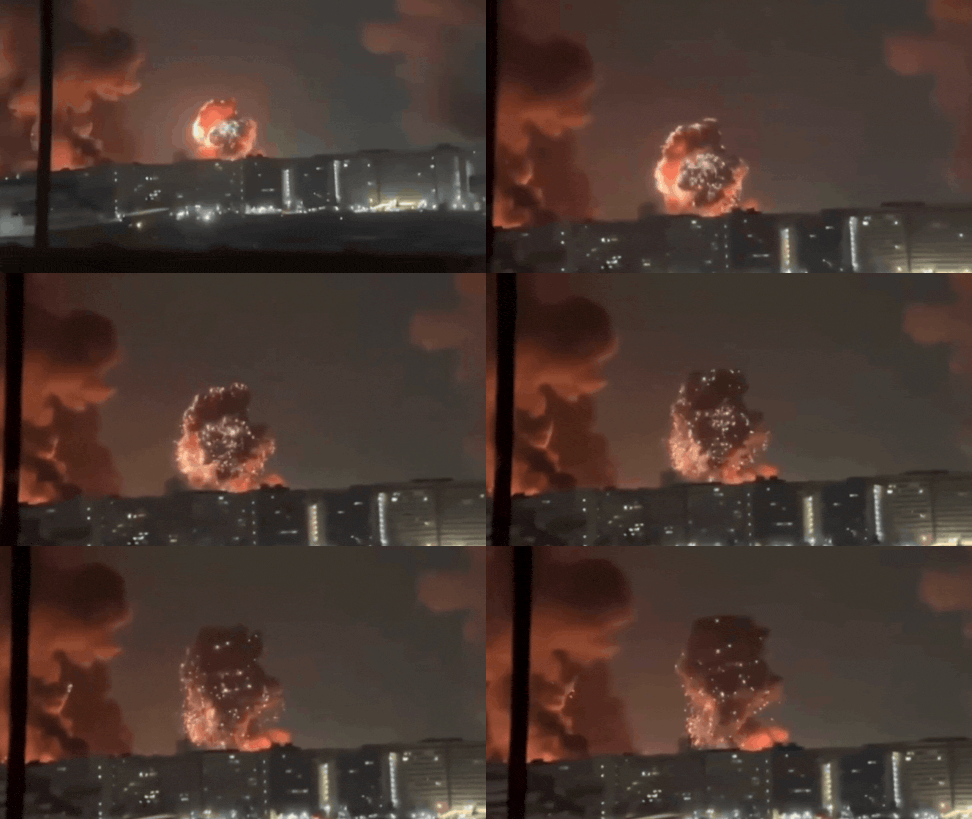



The geopolitical chessboard of the Middle East is once again ablaze, with a potential US-Israel conflict with Iran casting long, ominous shadows. Amidst this escalating crisis, an unexpected and significant diplomatic fallout is unfolding, drawing the United Kingdom, and specifically Labour leader Keir Starmer, into a storm of condemnation from various influential Gulf nations. This mounting anger threatens to reshape long-standing alliances and redefine regional dynamics at a critical juncture.
As tensions simmer and the world watches with bated breath, understanding the deep-seated resentments and strategic calculations behind the Gulf countries’ indignation is paramount. The stakes are incredibly high, not just for the immediate stability of the region, but for global energy markets, international diplomacy, and the future of Western influence in the Middle East.
Understanding the Brewing Storm: A New Era of Gulf Dissatisfaction
The relationship between the UK and Gulf Cooperation Council (GCC) states has historically been robust, built on shared economic interests, security cooperation, and a pragmatic approach to regional challenges. However, the prospect of a direct military confrontation between the US, Israel, and Iran, coupled with perceived Anglo-American alignment, has exposed deep fissures. Gulf nations, many of whom share long borders and complex histories with Iran, view such a conflict not as a distant event but as an existential threat to their stability and economic prosperity.
Their anger stems from a combination of factors: a feeling of being sidelined in crucial decision-making, a fear of regional destabilization, and a strong conviction that a military escalation would unleash unpredictable and devastating consequences. The UK’s unwavering support for the US and Israel, without what is perceived as sufficient consideration for regional sensitivities or alternative diplomatic paths, has ignited a wave of diplomatic protests and public criticism.
The UK’s Stance and Keir Starmer’s Role
For decades, the UK has largely mirrored US foreign policy in the Middle East, albeit with its own diplomatic nuances. In the context of the potential US-Israel war with Iran, the current UK government has reiterated its commitment to its allies and regional security. However, it is the stance of Labour Party leader Keir Starmer that has particularly drawn the ire of Gulf states.
Starmer, aiming to project a strong and decisive image on foreign policy, has seemingly adopted a robust pro-Israel and pro-Western security posture, echoing sentiments that prioritize containment of Iran through strong deterrence, potentially including military action. While this approach might appeal to certain domestic constituencies or align with traditional Western security doctrines, it has been interpreted by Gulf nations as a tacit endorsement of policies that could plunge the region into chaos. Their frustration highlights a disconnect: what the UK perceives as legitimate security concerns, Gulf states view as a dangerous disregard for their immediate security interests and a fueling of regional proxy conflicts.
Timeline of Mounting Tensions and Diplomatic Fallout
The road to this current diplomatic crisis has been paved by a series of events and statements that have progressively strained relations:
- Early 2024: Increased rhetoric from US and Israeli officials regarding Iran’s nuclear program and regional activities.
- Mid-2024: UK government reaffirms strong security ties with US and Israel, signaling alignment on Iran policy.
- Late 2024: Keir Starmer makes public statements interpreted by many as endorsing a hardline approach towards Iran, emphasizing Israel’s right to defend itself without substantial public calls for de-escalation or diplomatic alternatives.
- Early 2025: Gulf media outlets begin to heavily criticize the UK and Starmer, highlighting perceived hypocrisy and a lack of empathy for regional stability.
- Mid-2025: Diplomatic envoys from several Gulf nations express “grave concerns” to UK counterparts regarding the potential for conflict and the UK’s perceived role in escalating tensions.
- Late 2025: Unofficial boycotts and re-evaluation of economic partnerships with UK companies are reported in some Gulf states.
- March 2026: The Times of India reports widespread anger, culminating in this current focus on the UK and Keir Starmer.
Industry Impact: Energy, Trade, and Investment on the Brink
The Middle East remains the lifeblood of global energy supplies, and any conflict involving Iran has immediate and profound implications. Gulf countries, while rich in oil and gas, are acutely aware that a war would disrupt shipping lanes, drive oil prices to unprecedented levels, and severely damage global economic stability, including their own long-term investment strategies.
The anger directed at the UK and Starmer isn’t just diplomatic; it carries economic weight. Gulf nations are significant investors in the UK economy, from real estate to financial services and infrastructure. A prolonged diplomatic chill could lead to a redirection of these investments. Furthermore, the UK’s lucrative trade relationships with the Gulf, particularly in defense and luxury goods, could face significant headwinds. Supply chains for various industries, already fragile, would likely be severed or severely impacted, leading to global inflation and economic recession.
Market and Policy Implications: Shifting Alliances and New Priorities
The unfolding scenario forces Gulf nations to re-evaluate their foreign policy priorities. Traditionally reliant on Western security guarantees, particularly from the US, they are now increasingly looking for alternative partnerships. China and Russia have been eager to fill any void, offering economic cooperation and security alternatives without the same historical baggage or demands regarding human rights and internal governance.
From a policy standpoint, the UK faces a significant dilemma. Aligning closely with US and Israeli objectives might strengthen those bilateral ties, but it risks alienating a crucial bloc of wealthy and strategically vital partners in the Gulf. A potential Labour government under Keir Starmer would inherit this complex diplomatic challenge, needing to recalibrate its approach to the Middle East to balance Western alliance commitments with the imperative of regional stability and preserving economic ties with the Gulf.
Expert Analysis: The Peril of Miscalculation and Eroding Trust
Geopolitical analysts universally agree that the situation is fraught with peril. “The Gulf states are not seeking conflict; they are seeking stability,” notes Dr. Fatima Al-Hassan, a regional security expert. “Their anger stems from a perception that their concerns are being ignored by Western powers, particularly the UK, who they expect to play a more nuanced, de-escalatory role given its historical ties and diplomatic influence.”
The risk of miscalculation is immense. A limited conflict could quickly spiral out of control, drawing in other regional actors and leading to a broader conflagration. The lack of open communication and trust, exacerbated by statements perceived as confrontational rather than conciliatory, only increases this risk. The UK, in particular, is seen by some experts as having failed to leverage its unique diplomatic position to advocate for a more inclusive and less militaristic approach to Iran, instead falling into lockstep with more aggressive postures.
Comparison of UK and Gulf Perspectives on Iran Conflict
| Factor | UK (Keir Starmer’s Implied Stance) | Gulf Cooperation Council (GCC) Nations |
|---|---|---|
| Primary Concern Regarding Iran | Nuclear proliferation, regional destabilization through proxies, security of Israel. | Regional destabilization, direct military conflict on their borders, economic disruption, impact on shipping. |
| Preferred Resolution | Strong deterrence, sanctions, potential military action as a last resort; firm support for allies. | De-escalation, diplomatic solutions, regional dialogue, prevention of direct military conflict. |
| UK’s Role | Align with US/Israel, support Western security objectives, project strength. | Mediator, advocate for de-escalation, consider regional impact, protect Gulf interests. |
| Risk Assessment | Containment failure, threat to Western interests. | Regional war, economic collapse, humanitarian crisis, direct threat to sovereignty. |
Summary of Key Gulf Grievances Against the UK and Starmer
| Grievance | Description |
|---|---|
| Perceived Disregard for Regional Stability | UK policy is seen as prioritizing Western security interests over the immediate dangers a war would pose to Gulf nations. |
| Lack of Diplomatic Engagement | Insufficient UK efforts to foster dialogue and de-escalation, opting instead for a confrontational stance. |
| Economic Vulnerability | Fear that a conflict would devastate oil markets, shipping, and their economies, with little UK consideration. |
| Support for Hardline Positions | Keir Starmer’s rhetoric is interpreted as endorsing aggressive postures, alienating states seeking peace. |
| Erosion of Trust | Historic alliances are being strained by perceived abandonment of Gulf interests in a crisis. |
Future Outlook: A Shifting Sands of Alliances
The current anger from Gulf countries towards the UK and Keir Starmer signals a critical juncture in international relations. Should a conflict with Iran escalate, the diplomatic chasm will deepen, potentially leading to a significant re-alignment of power in the Middle East. Gulf nations may accelerate their diversification of alliances, drawing closer to non-Western powers and reducing their dependency on the US and UK.
For the UK, regardless of which party is in power, the challenge will be immense. Rebuilding trust and demonstrating a more balanced, stability-oriented approach to the Middle East will be crucial. This might involve a more vocal advocacy for diplomatic solutions, a deeper engagement with Gulf security concerns, and a clear articulation of how UK policy contributes to regional de-escalation rather than confrontation.
The shadow of this potential conflict could redefine regional power dynamics for decades to come, with the UK’s influence and strategic partnerships in the Middle East facing an unprecedented test.
Frequently Asked Questions (FAQs)
- What is the core reason for Gulf countries’ anger towards the UK and Keir Starmer?
The core reason is their perception that the UK, and particularly Keir Starmer, is aligned with aggressive US-Israeli policies towards Iran that threaten to destabilize the entire region and trigger a devastating war, without adequately considering Gulf nations’ security and economic interests. - Which specific Gulf countries are most vocal in their criticism?
While specific public statements vary, countries like Saudi Arabia, UAE, Qatar, and Kuwait have all expressed concerns, through official or unofficial channels, regarding potential regional escalation and external influence. - How does Keir Starmer’s stance differ from the current UK government’s?
While both maintain strong ties with the US and Israel, Starmer’s rhetoric has been interpreted by some Gulf nations as particularly robust and less nuanced on Iran, potentially signaling a more direct endorsement of confrontational policies. - What are the economic implications for the UK if this anger persists?
The UK could face reduced Gulf investment, diminished trade relationships, and a potential impact on its financial and defense sectors, which rely significantly on Gulf partnerships. - How might a US-Israel war with Iran impact global oil prices?
A conflict would likely disrupt major shipping lanes in the Gulf, such as the Strait of Hormuz, leading to massive surges in global oil prices and severe economic instability worldwide. - Are Gulf countries seeking new alliances due to these tensions?
Yes, there’s growing evidence that Gulf nations are diversifying their partnerships, strengthening ties with non-Western powers like China and Russia to reduce their reliance on traditional Western security providers. - What role do historical ties play in this current diplomatic spat?
Historical ties between the UK and Gulf nations create an expectation for the UK to act as a more balanced and stabilizing force. The current perception of misalignment fuels deeper disappointment and anger. - What is the potential humanitarian cost of a regional conflict?
A regional conflict involving Iran would have catastrophic humanitarian consequences, including mass displacement, refugee crises, destruction of infrastructure, and widespread civilian casualties across the Middle East. - What steps could the UK take to repair relations with Gulf countries?
The UK could emphasize diplomatic solutions, engage in more direct and empathetic dialogue with Gulf leaders, clearly articulate its commitment to regional stability, and potentially advocate for de-escalation in international forums. - How does this situation impact the UK’s global standing?
The diplomatic fallout risks undermining the UK’s traditional influence in the Middle East, challenging its reputation as a reliable and thoughtful international actor, and potentially weakening its leverage in broader global security discussions.
Conclusion: A Crossroads for UK Foreign Policy and Regional Stability
The anger reverberating from various Gulf countries towards the UK and Keir Starmer is a potent warning sign, signaling a profound dissatisfaction with the trajectory of Western foreign policy in the Middle East. As the specter of a US-Israel war with Iran looms, the stability of the entire region hangs in a delicate balance. The UK stands at a critical crossroads, needing to navigate its enduring alliances while acknowledging the legitimate concerns of its long-standing partners in the Gulf. Failure to address these grievances with genuine diplomatic engagement and a renewed commitment to de-escalation risks not only alienating vital allies but also exacerbating a volatile situation with catastrophic consequences. The path forward demands nuance, empathy, and a clear vision for a stable, secure Middle East, one that listens to all voices, especially those most directly impacted by the specter of war.
Internal Linking Suggestions:
- The Future of Middle East Energy: Navigating Geopolitical Shifts
- Global Diplomacy: Addressing the New Era of International Challenges
- UK Trade Relations with the MENA Region: Opportunities and Obstacles
External Authority Links:
- Council on Foreign Relations: Middle East and North Africa
- Chatham House: Middle East and North Africa Programme
#MiddleEastCrisis #UKForeignPolicy #KeirStarmer #IranConflict #GulfRelations #Geopolitics