




Middle East Escalation
In an unprecedented move reflecting escalating geopolitical tensions, Abu Dhabi Airports has issued a critical advisory for passengers utilizing Zayed International Airport (AUH). The urgent warning comes as the precarious situation involving Iran, the United States, and Israel intensifies, creating a ripple effect that significantly disrupts air travel across the volatile Middle East corridor. Travelers planning journeys through one of the region’s busiest hubs are now urged to exercise extreme caution, stay updated on flight statuses, and prepare for potential delays or cancellations as regional stability hangs in a delicate balance.
Understanding the Unfolding Crisis: A Deeper Dive into Regional Instability
The Middle East, a historically complex and strategically vital region, is once again at the epicenter of international concern. Recent developments, primarily driven by heightened tensions between Iran, the US, and Israel, have cast a long shadow over global stability, with immediate and tangible consequences for international commerce and travel. The advisory from Abu Dhabi Airports is not merely a logistical update but a stark indicator of how swiftly geopolitical disagreements can translate into widespread disruption, impacting thousands of innocent travelers and the broader aviation industry.
For years, the intricate dance of power in the Middle East has involved numerous state and non-state actors, often leading to proxy conflicts and periods of elevated alert. However, the current confluence of factors—including recent military actions, cyber warfare, and diplomatic breakdowns—suggests a particularly perilous phase. The region’s airspace, a critical nexus for East-West travel, becomes an immediate casualty when these tensions boil over, necessitating swift action from aviation authorities to ensure passenger safety and operational integrity.
Background Context: The Roots of the Current Turmoil
The current advisory from Zayed International Airport is intrinsically linked to a long-standing, multi-faceted geopolitical struggle. At its core are the historical animosities and strategic rivalries between Iran and Israel, further complicated by the significant presence and strategic interests of the United States in the region. These tensions often manifest through various flashpoints, including:
- Nuclear Ambitions: Iran’s nuclear program remains a persistent concern for Israel and the West, fueling fears of regional proliferation and preemptive actions.
- Proxy Conflicts: Both Iran and Israel support various non-state actors in neighboring countries, leading to proxy wars in Yemen, Syria, Lebanon, and Gaza, each capable of igniting broader regional instability.
- Maritime Security: The Strait of Hormuz, a critical chokepoint for global oil supplies, has been a frequent site of confrontations, underscoring the potential for economic disruption.
- Cyber Warfare: A growing domain of conflict, with both state and non-state actors engaging in cyber-attacks targeting critical infrastructure, including aviation systems.
The immediate trigger for the latest advisory, while not explicitly detailed in the public statement, is understood to be a direct consequence of escalating rhetoric and potential or actual military engagements that have prompted a re-evaluation of airspace safety and operational protocols by regional aviation authorities.
Timeline of Escalating Events
While specific incidents are often shrouded in classified intelligence, a general timeline leading to the current state of heightened alert includes:
- Early 2026: Reports of increased military exercises and deployments by regional powers.
- Mid-February 2026: Heightened diplomatic warnings from the US regarding potential retaliatory actions in the region.
- Late February 2026: Unconfirmed reports of targeted strikes or significant cyber intrusions impacting regional infrastructure.
- March 1, 2026: Abu Dhabi Airports officially issues an urgent advisory for Zayed International Airport, citing the “Iran, US-Israel conflict” as the primary reason for potential flight disruptions.
- Ongoing: Continuous monitoring and reassessment of airspace safety and operational feasibility.
Industry Impact: Navigating Turbulence in the Skies
The aviation industry is arguably one of the most sensitive to geopolitical fluctuations. Flight paths are meticulously planned, factoring in political stability, security risks, and operational efficiency. When a major region like the Middle East faces instability, the ramifications are immediate and far-reaching.
Airlines Brace for Significant Challenges
For airlines operating through or to Zayed International Airport and the broader Middle East, the advisory translates into a cascade of operational challenges:
- Route Diversions: Carriers are forced to re-route flights around conflict zones, often leading to longer flight times, increased fuel consumption, and higher operational costs.
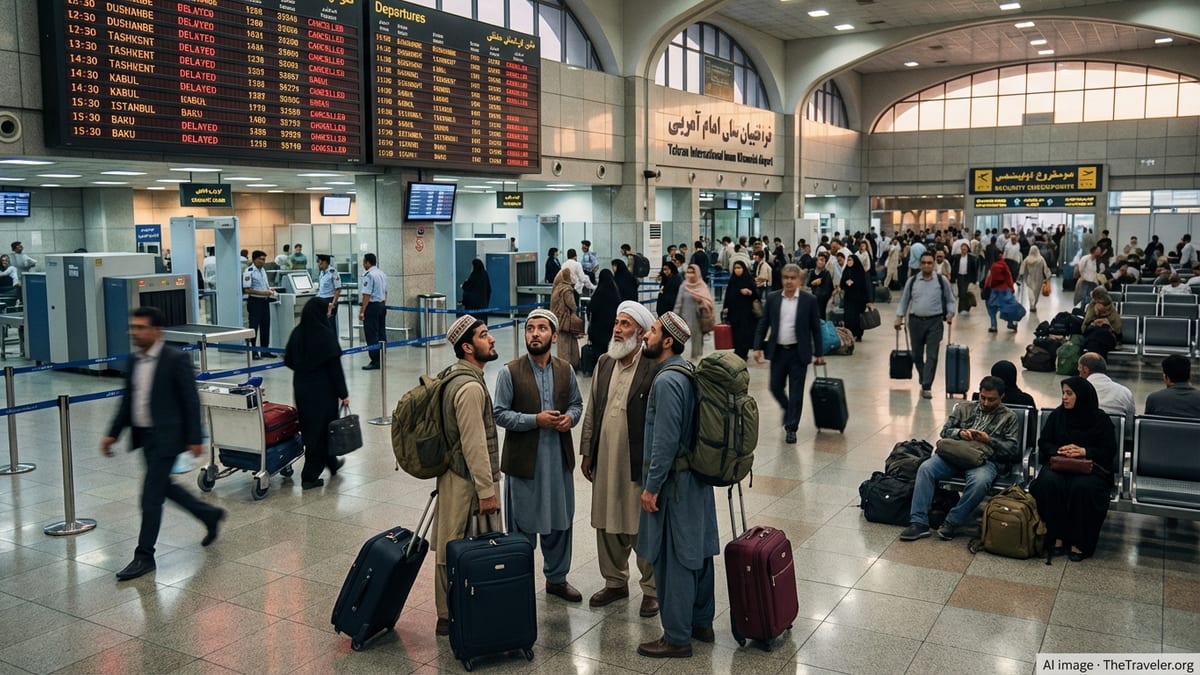
- Cancellations and Delays: Safety is paramount. If airspace is deemed unsafe, flights are immediately canceled or significantly delayed, causing massive disruptions to passenger itineraries.
- Crew Management: Managing flight crews becomes more complex with altered schedules and potential overnight stays in unexpected locations.
- Passenger Confidence: Persistent advisories and disruptions can erode passenger confidence, potentially leading to a drop in bookings for flights traversing the affected regions.
The financial toll on airlines can be substantial, impacting quarterly earnings and long-term investment strategies. Furthermore, the interconnectedness of global aviation means that delays in one hub can have a domino effect across international networks.
Logistical and Economic Repercussions
Beyond airlines, the entire logistical chain is affected. Cargo operations, which rely heavily on air freight for time-sensitive deliveries, face similar challenges. Industries dependent on rapid international shipping, from high-tech manufacturing to perishable goods, experience delays and increased costs. The economic ripple effect extends globally, underscoring the interconnectedness of modern economies and the fragility of supply chains in the face of geopolitical instability.
Market and Policy Implications: A Broader Spectrum of Concerns
The aviation advisory at Zayed International Airport serves as a potent reminder of the wider market and policy implications of the Iran-US-Israel conflict. Beyond air travel, these tensions invariably affect global energy markets, defense spending, and international diplomacy.
Energy Market Volatility
The Middle East is the world’s most significant oil-producing region. Any hint of instability immediately sends shockwaves through global energy markets, leading to volatile oil prices. Increased oil prices can, in turn, drive up operational costs for airlines and other industries, creating inflationary pressures worldwide. This airport advisory, while focused on travel, is a clear signal that the broader economic landscape is under pressure.
Defense and Geopolitical Policy Shifts
The ongoing conflict also forces nations to re-evaluate their defense postures and foreign policy strategies. Allied nations may increase military aid or adjust their troop deployments. Sanctions regimes against Iran may be tightened or reviewed. The incident underscores the urgent need for diplomatic solutions and de-escalation efforts from major global powers, particularly the US, which plays a pivotal role in mediating or influencing regional dynamics.
Expert-Style Analysis: Navigating the Complexities
Aviation security experts and geopolitical analysts are closely monitoring the situation. “This isn’t just about a few canceled flights; it’s about the fundamental safety and predictability of international air travel through a critical region,” states Dr. Anya Sharma, a senior analyst specializing in Middle Eastern security at the Global Policy Institute. “The advisory from Abu Dhabi Airports is a pragmatic and necessary step, but it also highlights the persistent vulnerability of civilian infrastructure to state-level conflicts.”
Analysts suggest that while direct military confrontation across major population centers might be avoided, the threat of localized attacks, missile strikes on shipping, or cyber-attacks on critical infrastructure remains high. This ‘grey zone’ conflict keeps all actors on edge and mandates a conservative approach to civilian operations, especially in high-traffic zones like international airports.
The long-term implications for regional tourism and investment are also significant. A perception of instability can deter both leisure and business travelers, impacting the UAE’s broader economic diversification efforts which rely heavily on its status as a safe and accessible global hub.
Future Outlook: Uncertainty on the Horizon
The immediate future for air travel through Zayed International Airport and the broader Middle East remains uncertain. The duration and intensity of the current advisory are directly tied to the trajectory of the Iran-US-Israel conflict. De-escalation would quickly lead to a return to normal operations, but further intensification could result in prolonged disruptions.
Aviation authorities, in coordination with international bodies like ICAO, will continue to assess risk levels and adjust advisories as needed. Passengers should anticipate that this situation could evolve rapidly, necessitating continuous vigilance and flexibility in their travel plans. The current advisory serves as a stark reminder that in an interconnected world, regional conflicts cast a long shadow, affecting everything from global markets to individual travel itineraries.
Passenger Advisory Summary
| Key Advisory Point | Action Recommended |
|---|---|
| Check Flight Status | Before heading to the airport, verify your flight’s status with your airline. |
| Contact Your Airline | For rebooking or refund queries, contact your specific airline directly. |
| Arrive Early | Allow extra time for check-in and security due to potential operational adjustments. |
| Stay Informed | Monitor official announcements from Abu Dhabi Airports and your airline. |
| Travel Insurance | Review your travel insurance policy for coverage related to disruptions. |
Comparison: Air Travel Stability Pre vs. Post Advisory
| Factor | Pre-Advisory (Stable Period) | Post-Advisory (Current Period) |
|---|---|---|
| Flight Schedule Predictability | High; minimal delays/cancellations due to geopolitical reasons. | Low; high potential for delays, diversions, and cancellations. |
| Airspace Restrictions | Minimal; standard flight paths widely open. | Increased; potential for restricted or closed air corridors. |
| Operational Costs for Airlines | Standard; optimized routes and fuel consumption. | Elevated; due to re-routing, longer flight times, and fuel. |
| Passenger Travel Experience | Generally smooth; focus on efficiency. | Stressful; emphasis on safety and adaptability. |
| Regional Security Assessment | Green/Yellow; routine monitoring. | Orange/Red; heightened alert and constant reassessment. |
Frequently Asked Questions About Zayed International Airport Disruptions
- Why is Abu Dhabi Airports issuing this advisory?The advisory is a direct response to escalating geopolitical tensions involving Iran, the United States, and Israel, which have created safety concerns and potential disruptions to air travel in the Middle East.
- Which flights are most affected by this advisory?Flights transiting through or originating from regions deemed high-risk due to the conflict are most likely to be affected. Passengers are advised to check with their specific airline.
- What should I do if my flight from Zayed International Airport is delayed or canceled?Contact your airline directly for information on rebooking, refunds, or alternative travel arrangements. Do not proceed to the airport without a confirmed flight status.
- Is Zayed International Airport safe for passengers?Abu Dhabi Airports prioritize passenger safety. The advisory is a precautionary measure to manage potential operational impacts and ensure traveler well-being by communicating potential risks.
- How long is this flight disruption expected to last?The duration of the disruptions is tied directly to the evolving geopolitical situation. Passengers should monitor official channels for continuous updates, as the situation can change rapidly.
- Can I get a refund if I decide not to travel due to the advisory?Refund policies vary by airline and ticket type. It is essential to contact your airline directly to understand your options, especially if your flight is impacted by cancellations or significant delays.
- Are other airports in the UAE or the region also affected?While this advisory specifically pertains to Zayed International Airport, it is plausible that other airports in the region could experience similar impacts. Travelers should verify the status of their specific departure or arrival airports.
- What measures are airlines taking to mitigate risks?Airlines are likely implementing route diversions, adjusting flight schedules, and enhancing communication with passengers to ensure safety and minimize inconvenience where possible.
- Should I consider purchasing travel insurance before my trip?In times of geopolitical instability, comprehensive travel insurance can provide crucial coverage for flight delays, cancellations, and other unforeseen circumstances. Review policies carefully for coverage related to political unrest.
- Where can I find the most up-to-date information regarding my travel?For the latest information, refer to the official website of Abu Dhabi Airports, your specific airline’s website or app, and reputable news sources.
Conclusion: Navigating a New Era of Air Travel Vigilance
The urgent advisory from Abu Dhabi Airports regarding Zayed International Airport serves as a potent microcosm of broader global instability. It underscores the profound impact that geopolitical tensions, particularly those involving major regional and global powers, can have on seemingly disparate sectors like international air travel. As the world grapples with a new era of complex conflicts and interconnected risks, the aviation industry, passengers, and governments alike are forced to adapt to an environment where vigilance, flexibility, and robust communication are not just desirable but absolutely essential.
While the immediate future holds uncertainty, the emphasis remains on safety, preparedness, and continuous monitoring. This incident reminds us that peace in one corner of the globe has direct implications for the smooth functioning of interconnected systems everywhere. The ability to navigate these turbulent skies—both literally and metaphorically—will define the resilience of international travel and trade in the years to come.
For more insights into regional developments and their global impact, consider these resources:
- Middle East Conflict: An In-Depth Analysis
- Global Aviation Security: Latest Updates
- Travel Advisories: What Every Traveler Needs to Know
External Authority Links:
International Civil Aviation Organization (ICAO)
International Air Transport Association (IATA)
#ZayedAirport #AbuDhabiTravel #MiddleEastConflict #FlightDisruptions #TravelAdvisory