
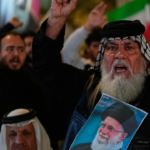





From Shadows to Strike: Unveiling the Covert US-Israel Intelligence Build-Up Targeting Khamenei
A chilling new report has sent shockwaves through the geopolitical landscape, peeling back the layers on an alleged, clandestine intelligence and operational build-up by the United States and Israel. The purported objective? A precision strike targeting Iran’s Supreme Leader, Ayatollah Ali Khamenei. This explosive revelation, detailed from ‘pattern of life’ surveillance to sophisticated strike preparations, suggests a high-stakes escalation in the enduring shadow war, carrying profound implications for global stability.
The Unseen Escalation: A Deep Dive into the Covert Operation
For decades, the strategic rivalry between Iran on one side and the US and Israel on the other has simmered beneath the surface, occasionally erupting into overt conflict or proxy engagements. However, the recent intelligence surfacing points to an unprecedented level of covert preparation, far beyond traditional espionage. The alleged operation against Khamenei represents a significant departure, hinting at a willingness to cross previously observed red lines in the name of national security objectives.
Background: A Tense History
The animosity between Iran and the Western powers, particularly the US and Israel, is deeply rooted in historical grievances, ideological clashes, and conflicting regional ambitions. From the 1979 Iranian Revolution and the subsequent hostage crisis to Iran’s nuclear program and its expansive regional influence through proxies, the relationship has been defined by mistrust and confrontation. Israel, viewing Iran’s nuclear ambitions and support for groups like Hezbollah and Hamas as an existential threat, has consistently advocated for a more aggressive stance, often diverging from the US approach. This report suggests a confluence of intelligence efforts and strategic alignment, pushing the boundaries of traditional deterrence and containment policies.
The ‘Pattern of Life’ Doctrine: Intelligence Gathering Unveiled
Central to the alleged build-up is the sophisticated application of ‘pattern of life’ intelligence. This highly advanced form of surveillance involves meticulously tracking an individual’s routines, habits, associates, and movements over extended periods to establish a predictable matrix of their daily existence. Far from simple observation, ‘pattern of life’ analysis integrates data from multiple sources – satellite imagery, electronic intercepts, human intelligence, and cyber reconnaissance – to construct an incredibly detailed profile. For a figure as insulated and protected as Ayatollah Khamenei, such an operation would require immense resources, technological prowess, and an unparalleled network of assets.
The goal is to identify vulnerabilities, predict presence in specific locations, and ultimately create a ‘kill chain’ – a sequence of actions from target identification to engagement – with minimal risk of collateral damage and maximum probability of success. This level of granular intelligence gathering underscores the gravity and meticulous planning involved in such an alleged undertaking.
A Strategic Alliance: US-Israeli Coordination
The report highlights significant coordination between US and Israeli intelligence and military apparatuses. While both nations share common concerns regarding Iranian regional hegemony and its nuclear program, the specifics of their collaborative efforts in such a high-stakes scenario reveal a deepening strategic partnership. This alleged cooperation would involve sharing critical intelligence, synchronizing reconnaissance efforts, and potentially integrating operational planning for a precision strike. Such an alliance in a covert action against a sovereign head of state is fraught with immense geopolitical peril, requiring extraordinary trust and alignment of objectives between Washington and Jerusalem.
Unraveling the Timeline: Key Moments in the Covert Build-Up
While the full scope of such an alleged covert operation remains shrouded in secrecy, the report pieces together a potential timeline of critical developments and intelligence milestones:
- Early 2020s: Initial intelligence gathering intensified, driven by concerns over Iran’s nuclear program acceleration and increased regional aggression. Focus shifts to high-value targets.
- Mid-2020s: Development and deployment of advanced surveillance technologies to monitor Khamenei’s inner circle and daily routines. Increased ‘pattern of life’ data collection.
- Late 2024 – Early 2025: Alleged enhanced coordination between US and Israeli special operations and intelligence units, including joint training exercises and intelligence sharing protocols specifically related to high-profile target interdiction.
- Mid-2025: Refinement of precision strike options and validation of intelligence streams, establishing potential windows of opportunity and contingency plans.
- Late 2025 – Early 2026: Finalization of ‘kill chain’ procedures and validation of logistical support, indicating operational readiness in the event of a political green light.
Geopolitical Tremors: Industry, Market, and Policy Implications
The mere revelation of such an alleged plot, irrespective of its execution, carries monumental implications across various sectors.
Regional Stability and Energy Markets
The potential targeting of Iran’s Supreme Leader would undoubtedly plunge the Middle East into an unprecedented crisis. Oil prices would skyrocket, potentially destabilizing global energy markets. The Strait of Hormuz, a critical chokepoint for global oil shipments, would likely become a flashpoint for military confrontation, severely disrupting trade. Beyond oil, the broader implications for international shipping and supply chains, already fragile, could be catastrophic. Regional states, caught between a vengeful Iran and an emboldened US-Israel axis, would face impossible choices, potentially leading to a broader regional conflict.
International Diplomacy and Sanctions Regimes
An operation of this magnitude would shatter existing diplomatic frameworks and likely lead to a complete breakdown in international relations with Iran. Efforts to revive the JCPOA (Joint Comprehensive Plan of Action) or negotiate any form of de-escalation would become futile. Furthermore, global sanctions regimes against Iran would likely intensify, but also face significant international pushback from nations wary of extraterritorial actions and potential destabilization. The legality and morality of targeting a head of state would be debated intensely on the world stage, potentially undermining international law.
The comparison below highlights the strategic shift in intelligence focus:
| Aspect | Traditional Intelligence Gathering | ‘Pattern of Life’ Analysis (Alleged) |
|---|---|---|
| Primary Goal | Information acquisition, threat assessment | Vulnerability identification, operational planning for interdiction |
| Data Sources | HUMINT, SIGINT, open-source intelligence | Multi-source fusion: satellite, cyber, HUMINT, SIGINT, social media analysis |
| Target Focus | Broad range of state and non-state actors | High-value individual, specific behavioral and movement patterns |
| Resolution | Strategic and tactical insights | Micro-level behavioral predictions, precise targeting coordinates |
| Resource Intensity | High, but distributed | Extremely high, highly concentrated on specific target |
Expert Perspectives: Analyzing the High-Stakes Strategy
Security analysts and geopolitical strategists are weighing in on the profound implications of such an alleged operation. The consensus among many is that while the strategic rationale might be rooted in a perceived necessity to neutralize a critical adversary, the risks involved are staggering.
The Calculated Risk vs. Reward
From a purely strategic standpoint, neutralizing a figure like Khamenei could be seen by some as decapitating Iran’s ideological and operational leadership, potentially leading to regime collapse or a significant reorientation of its foreign policy. The perceived reward is a weakened Iran, less capable of threatening regional allies or developing nuclear weapons. However, the risks are immense: a potential retaliatory spiral, a galvanization of anti-Western sentiment, and the emergence of an even more radicalized successor. Experts suggest that any such planning would involve an excruciating cost-benefit analysis, weighing short-term gains against long-term instability.
The Morality and Legality of Targeted Killings
The international legal framework regarding targeted killings of state leaders is complex and highly contentious. While some argue such actions can be justified under extreme circumstances of self-defense against imminent threats, others contend they violate principles of sovereignty, proportionality, and international humanitarian law. The ethical dilemmas are equally profound: does the removal of one leader justify the potential for widespread civilian casualties, regional war, or a cycle of endless vengeance? These are questions that policy makers would grapple with intensely, should such an operation move beyond planning.
Summary of Alleged Operational Build-Up Phases:
| Phase | Description | Key Activities Reported |
|---|---|---|
| Phase 1: Intelligence Deep Dive | Intensive multi-source data collection on Khamenei’s routines and network. | Satellite imagery analysis, SIGINT, HUMINT recruitment, cyber surveillance. |
| Phase 2: Target Profiling & Vulnerability Assessment | Analysis of ‘pattern of life’ data to identify predictable behaviors and security gaps. | Behavioral modeling, route mapping, security vulnerability reports. |
| Phase 3: Operational Planning & Readiness | Development of precision strike options and contingency plans. | Weapon system selection, team training, logistical support finalization. |
| Phase 4: Political Authorization (Hypothetical) | High-level decision-making process for executive approval. | Interagency reviews, presidential/prime ministerial directives. |
The Path Ahead: Future Outlook and Potential Ramifications
The mere existence of such a report transforms the geopolitical calculus. Even if the alleged operation never materializes, the underlying tension and the demonstrated capability and willingness to plan such an action will undoubtedly shape future interactions.
Iran’s Succession and Regional Power Dynamics
Should Khamenei be removed, either through natural causes or external action, Iran faces a complex succession challenge. The power vacuum could trigger internal struggles among hardliners and reformers, potentially leading to instability or a more radicalized leadership. Regionally, Iran’s allies and proxies would react strongly, potentially escalating conflicts across the Levant and Yemen. The entire regional power dynamic would be irrevocably altered, with unpredictable consequences for Saudi Arabia, the UAE, and other Gulf states.
The Future of US-Israeli Security Cooperation
The alleged depth of collaboration revealed by this report signifies a robust, albeit dangerous, evolution in US-Israeli security cooperation. Moving forward, this level of trust and shared operational intent could become a blueprint for addressing other perceived threats. However, it also raises questions about accountability, oversight, and the potential for such cooperation to inadvertently draw the US into conflicts that may not directly serve its broader strategic interests. The transparency and democratic legitimacy of such covert actions will remain a critical point of debate.
Frequently Asked Questions (FAQs)
- What is ‘pattern of life’ intelligence?
It’s a detailed surveillance method that tracks an individual’s routines, habits, and movements over time using multiple data sources to predict their behavior and identify vulnerabilities. - Why would the US and Israel allegedly target Khamenei?
The primary motivation would likely be to neutralize a perceived existential threat from Iran, stemming from its nuclear program, regional proxy network, and anti-Western stance. - Is such an operation legal under international law?
The legality of targeting a head of state is highly contentious, often debated under principles of self-defense, sovereignty, and international humanitarian law, with no clear global consensus. - What are the potential consequences of such a strike?
Massive regional destabilization, soaring oil prices, potential full-scale war, breakdown of international diplomacy, and widespread condemnation. - How does this report impact US-Iran relations?
It would likely push relations to an unprecedented low, obliterating any chance of diplomatic engagement or nuclear deal revival for the foreseeable future. - What role would Israel play in such an operation?
Israel would allegedly contribute significant intelligence, technological capabilities, and potentially operational assets, reflecting its acute security concerns regarding Iran. - Could this lead to a wider Middle East conflict?
Yes, the likelihood of a wider regional conflict, involving various state and non-state actors, would be exceptionally high due to Iranian retaliation and proxy activation. - How is ‘precision strike’ defined in this context?
A precision strike refers to a military attack designed to hit a specific target with extreme accuracy, minimizing collateral damage, often using advanced guided munitions. - What is the significance of the “hidden build-up”?
It implies a prolonged, clandestine intelligence and operational preparation, demonstrating a calculated and strategic approach rather than a reactive measure. - What are the long-term implications for Iran’s leadership?
Such an event could trigger a tumultuous succession crisis, potentially leading to internal power struggles or even a more radicalized future leadership in Iran.
A Precarious Horizon: Navigating the Geopolitical Tightrope
The report detailing an alleged US-Israel build-up to target Iran’s Supreme Leader, Ayatollah Ali Khamenei, casts a long, ominous shadow over the global security landscape. It serves as a stark reminder of the escalating tensions and the increasingly dangerous stakes in the protracted confrontation with Iran. While the immediate future remains uncertain, one thing is clear: the revelation of such clandestine preparations has irrevocably altered the geopolitical calculus. World leaders and international bodies must now grapple with the implications of an intelligence infrastructure allegedly poised for such a dramatic intervention. The path forward is fraught with peril, demanding cautious diplomacy, clear communication, and an unwavering commitment to de-escalation from all parties, lest the shadows of covert operations plunge the region, and perhaps the world, into an unimaginable conflict.
Understanding Middle East Proxy Conflicts
The Future of the Iran Nuclear Deal
The Evolving Landscape of Geopolitical Intelligence
External Authority Links:
Council on Foreign Relations – Iran
Atlantic Council – IranSource
#IranCrisis #USIsrael #Khamenei #Geopolitics #CovertOperations