




Escalation in the Middle East
The geopolitical landscape of the Middle East has entered a new phase of intense volatility, with reports emerging of a significant escalation in ongoing regional conflicts. Tensions have reached a critical point following alleged aggressive actions from major regional powers.
International observers are closely monitoring these developments, which threaten to destabilize an already fragile region. The immediate aftermath has seen urgent calls for de-escalation from global leaders.
Latest Developments: Strikes and Counter-Strikes
Iran’s Alleged Missile Strike on US Airbase
Reports indicate that Iran has launched a ‘massive missile’ strike targeting a US airbase located in Bahrain. This alleged attack, if confirmed, marks a severe escalation in direct hostilities between Iran and US forces in the region.
Details regarding the extent of damage or potential casualties remain scarce, with official statements still pending. Military analysts are assessing the strategic implications of such an assertive move by Tehran.
Israel’s Bombing of Beirut
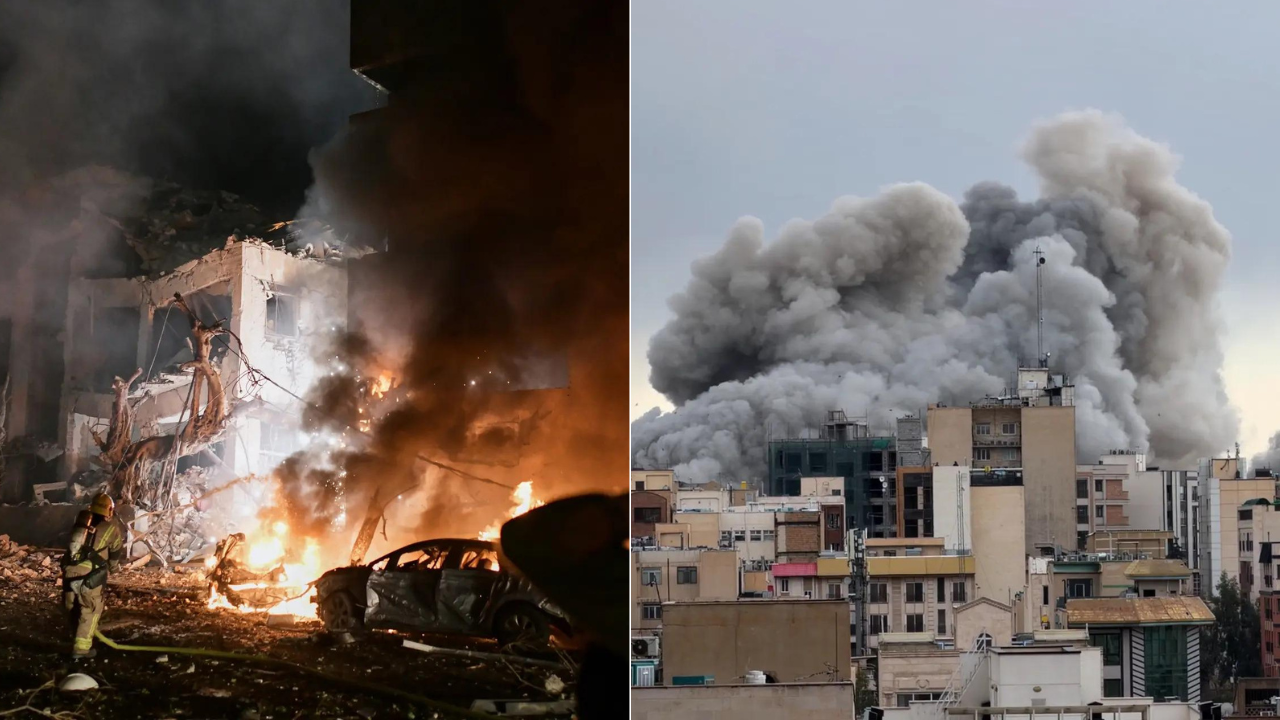
Simultaneously, news channels are reporting that Israel has carried out bombing operations in Beirut, the capital of Lebanon. This action appears to be a retaliatory measure or a pre-emptive strike amidst the heightened regional unrest.
The strikes in Beirut have reportedly caused significant damage and raised fears of a broader conflict involving multiple actors. Lebanese authorities have condemned the bombings and called for international intervention.
Regional Impact and Immediate Fallout
Bahrain’s Response and US Posture
Following the alleged missile attack, Bahraini authorities have reportedly initiated emergency protocols and are coordinating with US forces stationed in the country. The US Fifth Fleet, headquartered in Bahrain, is on high alert.
The Pentagon has yet to issue a comprehensive statement but has confirmed awareness of the unfolding situation. US assets in the region are reportedly being repositioned and enhanced for defensive purposes.
Lebanon’s Humanitarian Crisis and Political Instability
The bombing of Beirut compounds an already dire humanitarian and economic crisis in Lebanon. Residents are grappling with the immediate aftermath, including widespread power outages and damaged infrastructure.
Political leaders in Lebanon have denounced the Israeli actions as a violation of sovereignty and an act of aggression. International aid organizations are preparing for potential increased displacement and medical emergencies.
Broader Middle East Security Implications
The simultaneous nature of these alleged attacks indicates a potential coordinated or reactive spiral of violence across the Middle East. Neighboring countries are raising their security alerts and issuing travel advisories.
Oil markets have reacted sharply, with crude prices surging amid fears of supply disruptions from the crucial Persian Gulf region. Global economies are bracing for potential ripple effects.
International Reactions and Diplomatic Efforts
United Nations and Global Appeals for De-escalation
The United Nations Security Council is expected to convene an emergency session to address the rapidly deteriorating situation. UN Secretary-General has issued a strong appeal for all parties to exercise maximum restraint.
Numerous nations have called for an immediate cessation of hostilities and a return to diplomatic channels. Concerns are mounting that the conflict could draw in more regional and international powers.
Statements from Major World Powers
Key global players, including the European Union, China, and Russia, have released statements urging de-escalation. There is a unified international chorus advocating for a diplomatic resolution to prevent further bloodshed.
The international community fears a full-scale regional war that would have devastating consequences for global peace and stability. Efforts are underway to engage all involved parties in dialogue.
The Role of Alliances and Pacts
Existing defense alliances and security pacts in the region are under immense strain. The events highlight the intricate web of relationships and potential triggers that could rapidly expand the conflict.
Nations with military bases or citizens in the affected areas are taking precautionary measures and reassessing their security postures. The situation remains fluid and highly unpredictable.
Expert Analysis and Future Outlook
Analyzing the Strategic Motivations
Military strategists are dissecting the motivations behind these alleged strikes, considering them either as direct responses to previous provocations or as attempts to alter the regional balance of power. The timing is particularly significant.
Analysts are also examining the capabilities demonstrated by the alleged attacks, particularly Iran’s reported use of ‘massive missiles,’ which could signal an advanced arsenal.
Potential Paths to Escalation or De-escalation
The immediate future holds two stark possibilities: a rapid escalation into a full-blown regional conflict or a swift return to diplomatic efforts to de-escalate. The choices made by key leaders in the coming hours will be critical.
International mediators are reportedly working behind the scenes to establish communication channels and prevent further retaliatory actions. The stakes could not be higher for regional and global security.
Long-Term Geopolitical Consequences
Regardless of the immediate outcome, these events are expected to have profound long-term geopolitical consequences for the Middle East and beyond. The regional power dynamics may be irrevocably altered.
The security architecture of the region, including various peace agreements and military cooperation initiatives, faces an unprecedented test. The pursuit of peace will require sustained and concerted international effort.
For a detailed look at the latest trends in geopolitical developments, stay tuned to our continuous coverage. You can find more information and live updates from an Official Source.
Frequently Asked Questions (FAQs)
1. What triggered the current escalation in the Middle East?
The immediate triggers appear to be alleged direct military actions: Iran’s reported missile strike on a US airbase in Bahrain and Israel’s bombing of Beirut. These events follow a period of heightened tensions and proxy conflicts throughout the region, though the specific provocation for these particular attacks is still under investigation and debate by international observers. The intricate web of alliances and historical grievances often means that even seemingly isolated incidents can rapidly escalate into broader confrontations.
2. Where is the US airbase located in Bahrain that was allegedly targeted?
The US maintains a significant military presence in Bahrain, primarily at Naval Support Activity Bahrain, which is the home of the US Fifth Fleet. While specific details of the alleged target are not yet fully confirmed, reports suggest the missile strike was aimed at a US military installation within Bahraini territory. This location is strategically vital for US operations in the Persian Gulf and surrounding areas, making it a high-value target for any adversary.
3. What is the extent of the damage or casualties from the alleged attacks?
As of now, official reports on the extent of damage or casualties from both the alleged Iranian missile strike in Bahrain and Israel’s bombing of Beirut are limited and unconfirmed. Early reports suggest significant destruction in Beirut, impacting civilian infrastructure, while details regarding the US airbase remain highly classified. Verification of these details is crucial for understanding the true humanitarian and material cost of these escalations.
4. What is the international community’s response to these developments?
The international community has overwhelmingly called for immediate de-escalation and a return to diplomatic solutions. The United Nations Security Council is expected to convene an emergency session, and leaders from the European Union, China, and Russia have issued strong statements urging restraint from all parties. There is a widespread concern that these events could ignite a devastating regional war with global implications, prompting urgent diplomatic efforts to avert further conflict.
5. How might these events affect global oil prices and the world economy?
The Middle East is a critical region for global oil production and transit, and any significant conflict there invariably impacts global energy markets. Following reports of the attacks, oil prices have already shown a sharp increase, reflecting fears of supply disruptions. A prolonged or expanded conflict could lead to sustained high oil prices, potentially triggering inflationary pressures, supply chain disruptions, and a slowdown in global economic growth, impacting consumers and businesses worldwide.
6. What are the potential next steps for the US and Israel?
The potential next steps for the US and Israel are highly complex and contingent on further intelligence and strategic assessments. The US is likely to reinforce its military presence in the region, evaluate retaliatory options, and prioritize the protection of its personnel and assets. Israel’s actions will likely be guided by its national security doctrine, potentially involving further defensive or pre-emptive strikes against perceived threats. Both nations will also weigh diplomatic responses and coordination with allies.
7. What role does Bahrain play in this conflict?
Bahrain, as the host nation for a significant US military presence, particularly the US Fifth Fleet, finds itself directly impacted by these escalations. Its security and sovereignty are directly challenged by the alleged missile strike on its territory. Bahrain will likely work closely with the US to assess the situation, enhance its defenses, and navigate the complex diplomatic landscape, aiming to protect its national interests while maintaining its strategic alliances.
8. How is Lebanon responding to the bombings in Beirut?
Lebanon’s government and various political factions have strongly condemned the bombings in Beirut, viewing them as a violation of its sovereignty and an act of aggression. Lebanese authorities are focused on addressing the immediate humanitarian crisis, coordinating rescue efforts, and assessing the damage. Diplomatically, Lebanon is expected to appeal to the international community for support, protection, and a robust condemnation of the attacks, emphasizing the civilian impact.
9. Is there a risk of a broader regional war involving more countries?
Yes, there is a significant risk of a broader regional war. The intricate network of alliances, proxy groups, and long-standing rivalries in the Middle East means that direct attacks between major powers like Iran, the US, and Israel could easily draw in other nations. Countries like Saudi Arabia, UAE, Qatar, and Iraq, each with their own geopolitical interests and security concerns, are closely monitoring the situation and could become involved, either directly or indirectly, if the conflict escalates further.
10. What is the historical context of US-Israel-Iran tensions?
Tensions between the US, Israel, and Iran have deep historical roots, stemming from the 1979 Iranian Revolution and the subsequent establishment of an Islamic Republic hostile to US and Israeli interests. Key flashpoints include Iran’s nuclear program, its support for various proxy groups (like Hezbollah in Lebanon and Hamas in Gaza), and the US military presence in the region. Israel views Iran as its primary existential threat
while the US has consistently sought to contain Iran’s regional influence, leading to a decades-long cycle of geopolitical maneuvering, sanctions, and proxy conflicts that now threaten direct confrontation.
Middle East War, US Iran Conflict, Israel Lebanon Bombing, Bahrain Airbase Attack, Regional Escalation, Geopolitical Tensions, Live War Updates, Missile Strike News, Beirut Bombing, Middle East Crisis, International Relations, Global Security, Oil Market Impact, Diplomatic Efforts, Iran Military Action