




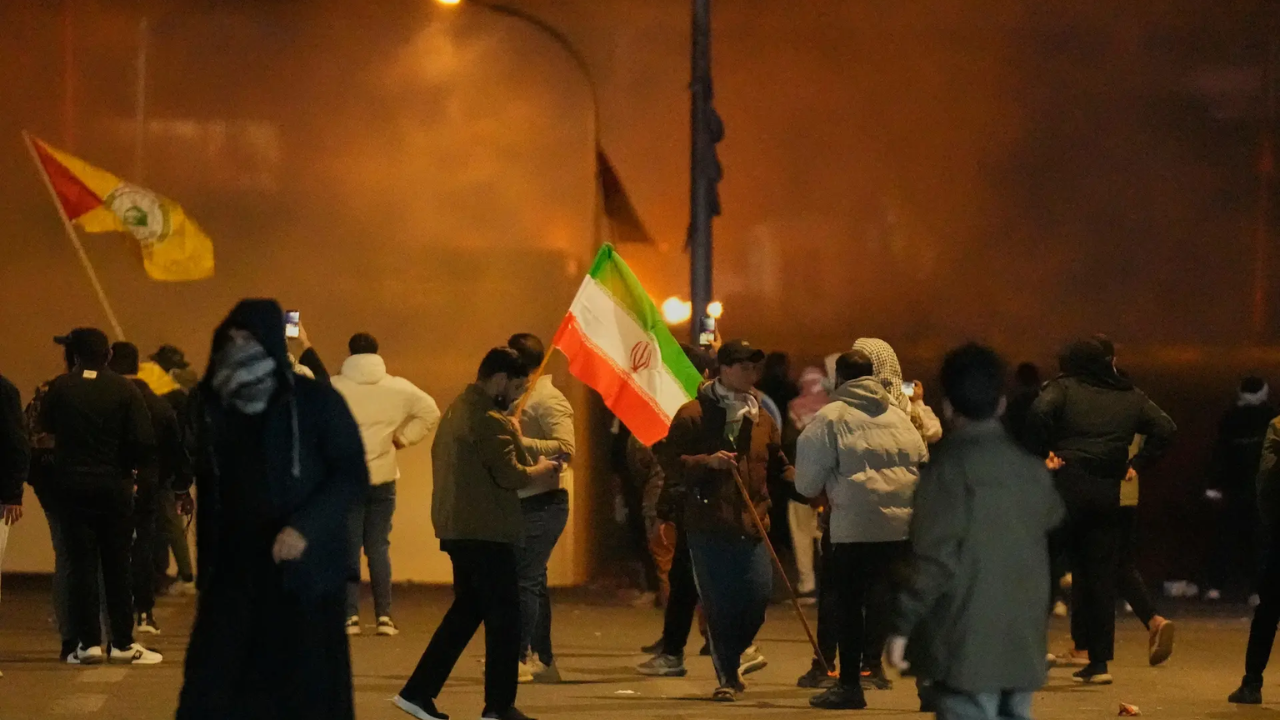
The Middle East continues to grapple with escalating tensions, marking a critical fifth day of heightened military activities. Recent reports detail significant attacks on United States assets across the region. Concurrently, Israel has launched renewed strikes against targets in both Iran and Lebanon, signalling a widening of the conflict’s geographical scope.
This period has witnessed a complex interplay of retaliatory actions and strategic maneuvers. The implications for regional stability and international security are profound and rapidly evolving.
Unfolding Crisis Across the Region
Day five of the intensified conflict has seen a dramatic increase in military engagements. Multiple reports indicate a concerted effort by various actors to exert pressure across several fronts. The situation remains highly volatile, with calls for de-escalation from global leaders.
The intricate web of alliances and rivalries in the Middle East is now more strained than ever. Each new development carries significant weight, potentially altering the geopolitical landscape for years to come.
Attacks on US Interests and Assets
US military bases and personnel have been targeted in a series of coordinated attacks. These incidents have occurred in several strategic locations throughout the Middle East. The precise nature and full extent of the damage are still being assessed by defense officials.
Groups identified as hostile to US presence in the region have claimed responsibility for some of these assaults. These actions represent a direct challenge to American security interests and its regional allies.
Specific Targets and Perpetrators
Reports specify incidents in Iraq, Syria, and other locations where US forces are stationed. Drones and rockets were reportedly used in these assaults. Such attacks highlight the persistent threat faced by American military personnel abroad.
Attributions for these attacks often point to proxy groups supported by regional powers. This complex attribution makes a direct response challenging, risking broader regional conflict.
US Response and Strategic Posture
The United States Department of Defense has confirmed the attacks and stated its commitment to protecting its forces. Countermeasures and defensive enhancements have been implemented at various installations. Washington has reiterated its right to self-defense against any aggression.
The Pentagon is closely monitoring the situation, weighing various response options. Any escalation from the US side would carry significant geopolitical ramifications.
Israel’s Renewed Strikes Against Iran and Lebanon
Simultaneously, Israel has intensified its military operations, conducting fresh strikes into both Iranian and Lebanese territory. These actions are framed as responses to perceived threats and ongoing aggression. The targets reportedly included military infrastructure and suspected weapons depots.
The decision to strike directly at Iran marks a significant escalation from previous indirect engagements. This move signals a more assertive stance in Israel’s defense strategy.
Operations in Iran
Israeli strikes on Iranian soil have been confirmed by multiple intelligence sources. These operations targeted specific sites believed to be linked to military capabilities. The extent of the damage and the full strategic impact are still under evaluation.
Iran has condemned these strikes as acts of aggression and a violation of its sovereignty. Tehran has vowed to respond, further fueling fears of a wider conflict.
Engagements in Lebanon
Lebanon has also seen renewed Israeli military action, primarily targeting areas associated with Hezbollah. These strikes aim to degrade the group’s operational capacity and prevent cross-border attacks. Civilian safety remains a paramount concern amid these intensified operations.
Hezbollah has reportedly retaliated with its own barrages, adding to the cycle of violence. The situation along the Israel-Lebanon border remains extremely tense, threatening a broader conflict.
Regional Reactions and International Concerns
The intensified conflict has drawn sharp reactions from various regional powers and the international community. Calls for restraint and immediate de-escalation are growing louder. The humanitarian consequences of continued fighting are a major worry for global organizations.
Many nations fear that the current trajectory could lead to an uncontrollable regional war. Diplomatic efforts are underway to de-escalate the situation, but progress remains uncertain.
Iran’s Stance and Potential Retaliation
Iran has vehemently denounced the Israeli strikes as unprovoked aggression. Tehran has warned of a “decisive response” to any further attacks on its territory or assets. The Revolutionary Guard Corps remains on high alert, indicating readiness for military action.
The Iranian government has called for an emergency meeting of the UN Security Council. They seek international condemnation of Israel’s actions, further polarizing global opinion.
Lebanon’s Predicament and Hezbollah’s Role
Lebanon finds itself increasingly caught in the crossfire, exacerbating its existing internal crises. The government has appealed to the international community for intervention and protection. The presence and actions of Hezbollah continue to complicate its national sovereignty.
Hezbollah, a powerful political and military force in Lebanon, has reaffirmed its commitment to resisting Israeli aggression. Their continued involvement risks drawing Lebanon deeper into the conflict, with devastating consequences for its populace.
International Appeals for De-escalation
The United Nations, European Union, and several major powers have issued strong statements urging all parties to exercise maximum restraint. They emphasize the need for a diplomatic resolution to the crisis. Special envoys are reportedly engaging in back-channel negotiations to avert further escalation.
Concerns are particularly high regarding the safety of civilians and the potential for a humanitarian catastrophe. International aid organizations are preparing for a significant increase in displaced populations.
Economic Fallout and Global Implications
The escalating conflict carries significant economic ramifications, both regionally and globally. Energy markets have already shown volatility, reflecting investor unease. The security of vital shipping lanes, particularly through the Strait of Hormuz, is a pressing concern.
Disruptions to global supply chains are a distinct possibility, potentially impacting trade and consumer prices worldwide. The stability of the global economy is intrinsically linked to peace in the Middle East.
Impact on Oil Prices and Energy Security
Oil prices have surged in response to the increased instability, reflecting fears of supply disruptions. The Middle East remains a crucial source of global oil and gas. Any threat to its production or transportation could have severe worldwide consequences.
Nations reliant on Middle Eastern energy imports are closely monitoring the situation. Strategic reserves might be tapped to stabilize markets if the conflict intensifies further. For the latest trends in energy markets, continuous analysis is essential.
Disruption to Trade Routes and Maritime Security
Major international shipping routes traverse the Middle East, making maritime security paramount. Incidents of naval confrontation or attacks on commercial vessels could severely disrupt global trade. Insurance premiums for shipping in the region have already begun to climb.
The Strait of Hormuz, a critical chokepoint, remains a significant vulnerability. Its closure or severe disruption would have an immediate and dramatic impact on global commerce.
Humanitarian Concerns and Civilian Safety
Amidst the military maneuvers and strategic strikes, the human cost of the conflict is mounting. Civilians in affected areas face immense danger, displacement, and a severe lack of essential services. Humanitarian agencies are struggling to provide aid in volatile conditions.
The protection of non-combatants and adherence to international humanitarian law are critical concerns. The potential for a large-scale refugee crisis looms large, demanding urgent international attention.
Displacement and Refugee Crisis
Thousands of people have already been forced to flee their homes in search of safety. Neighboring countries are bracing for a potential influx of refugees. Providing adequate shelter, food, and medical care to displaced populations presents an enormous challenge.
The long-term psychological impact on those affected by conflict is also a major concern. Children are particularly vulnerable to the trauma of war and displacement, requiring specialized support.
Access to Aid and Basic Services
Delivering humanitarian aid to conflict zones is becoming increasingly difficult and dangerous. Essential services like water, electricity, and healthcare are often disrupted. This leaves vulnerable populations exposed to disease and further suffering.
International organizations are calling for safe corridors and guarantees for aid delivery. Ensuring unimpeded access to those in need is a moral imperative during times of conflict.
Looking Ahead: Pathways and Perils
The current trajectory of events suggests a high risk of further escalation unless diplomatic breakthroughs occur. The cycle of retaliation between various actors is deeply entrenched. Navigating these complex dynamics requires exceptional leadership and global cooperation.
Understanding the historical context and the aspirations of all parties involved is crucial for any lasting resolution. The international community faces a daunting task in mediating a peaceful end to the hostilities.
The Role of Diplomacy and De-escalation Efforts
Intensive diplomatic efforts are the only viable path to de-escalation. Secret negotiations and public condemnations both play a role in shaping the conflict’s direction. The immediate goal is to establish a ceasefire and open channels for dialogue.
Regional leaders must be brought to the table to discuss long-term security arrangements. Without a comprehensive diplomatic strategy, the region risks continuous cycles of violence, affecting generations.
Potential for Wider Regional Conflict
The current situation carries a grave risk of spiraling into a wider regional war, drawing in more actors. The interconnectivity of the conflicts means that local skirmishes can quickly escalate. Global powers must exert their influence to prevent such a catastrophic outcome.
The ramifications of a full-scale regional conflict would be devastating, extending far beyond the Middle East. It could trigger economic crises, mass migration, and profound political instability across the globe.
For more details on the unfolding situation, refer to the Official Source.
Frequently Asked Questions (FAQs)
1. What triggered the recent escalation on “Day 5” in the Middle East?
The specific triggers for the “Day 5” escalation are complex, emerging from pre-existing regional tensions and a recent series of retaliatory actions. This includes reported attacks on US assets, which likely provoked renewed Israeli strikes on Iran and Lebanon, deepening the cycle of conflict. The underlying dynamics involve geopolitical rivalries, territorial disputes, and the activities of various state and non-state actors vying for influence.
2. Where exactly were US assets targeted, and by whom?
US assets were reportedly targeted in multiple locations across the Middle East, including military bases and installations in Iraq and Syria. While specific groups often claim responsibility, they are frequently described as proxy militias with varying degrees of affiliation to regional state powers. These groups often employ tactics like drone strikes and rocket attacks to challenge the US presence.
3. What were the targets of Israel’s fresh strikes in Iran and Lebanon?
Israel’s strikes in Iran reportedly targeted military infrastructure and facilities suspected of contributing to regional destabilization. In Lebanon, the strikes primarily focused on areas associated with Hezbollah, aiming to degrade their operational capabilities and prevent cross-border aggressions. These operations are typically presented by Israel as defensive measures against imminent threats.
4. How has Iran reacted to the Israeli strikes on its territory?
Iran has vehemently condemned the Israeli strikes as a blatant act of aggression and a violation of its national sovereignty. Tehran has publicly warned of a “decisive response” to any future attacks, indicating a readiness to retaliate. The Iranian government has also sought international condemnation of Israel’s actions, appealing to global bodies for intervention and diplomatic pressure.
5. What is the humanitarian impact of the intensified conflict?
The humanitarian impact is severe, leading to increased civilian casualties, widespread displacement, and a growing refugee crisis. Essential services like healthcare, water, and electricity are often disrupted, exacerbating suffering. Aid organizations face immense challenges in delivering vital assistance due to the volatile security situation, raising fears of a large-scale humanitarian catastrophe across affected areas.
6. How are global energy markets responding to the escalation?
Global energy markets have shown significant volatility, with oil prices notably increasing due to fears of supply disruptions from the Middle East. The region is a critical source of oil and gas, and any threat to its production or shipping lanes, particularly through strategic chokepoints like the Strait of Hormuz, causes immediate investor concern. This market instability has ripple effects on global economies.
7. What role do proxy groups play in this conflict?
Proxy groups play a significant and complicating role, often acting as extensions of state powers without direct attribution. These non-state actors engage in asymmetric warfare, allowing their sponsors to exert influence and conduct operations while maintaining a degree of plausible deniability. Their involvement makes direct conflict resolution more challenging and broadens the scope of regional instability.
8. What is the international community’s stance on the recent events?
The international community, including the United Nations and major world powers, has largely expressed grave concern and called for immediate de-escalation and maximum restraint from all parties. There is a strong emphasis on diplomatic solutions and the protection of civilians. However, consensus on specific actions remains challenging due to differing geopolitical interests and allegiances.
9. What are the potential long-term consequences if the conflict continues to escalate?
Continued escalation risks a full-scale regional war, with devastating consequences extending beyond the Middle East. This could include widespread humanitarian crises, massive refugee flows, severe global economic disruptions, and increased international political instability. The prolonged conflict could also lead to a breakdown of existing regional security architectures, paving the way for further prolonged instability and new geopolitical alignments.
10. What diplomatic efforts are currently underway to de-escalate the situation?
Various diplomatic efforts are reportedly underway, though often conducted through back channels due to the sensitive nature of the conflict. These efforts include calls for ceasefires, bilateral and multilateral discussions between concerned nations, and mediation attempts by international bodies like the UN. The primary goal is to open lines of communication, reduce tensions, and find a pathway to a peaceful resolution, preventing further loss of life and regional destabilization.
SEO Keywords
Middle East conflict, US assets targeted, Israel strikes Iran, Lebanon attacks, regional escalation, geopolitical tensions, humanitarian crisis, oil market impact, proxy groups, international diplomacy, de-escalation efforts, global security, conflict analysis, war implications, Middle East news.
Source: Times of India