



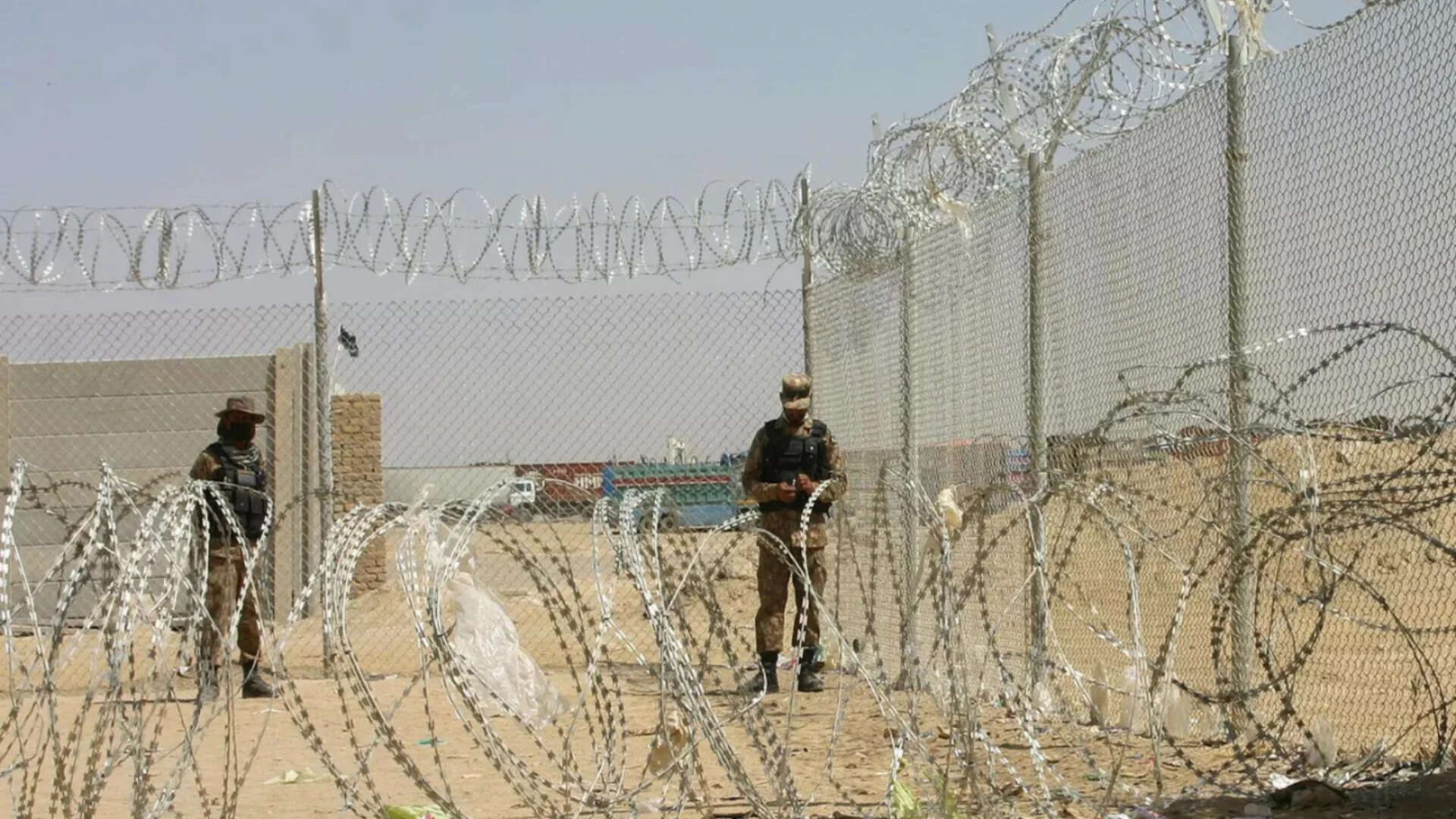
Recent reports highlight significant unrest along the Afghanistan-Pakistan border. These areas have long been flashpoints for regional instability.
Heavy clashes have been reported, involving elements identified as Afghan Taliban forces targeting Pakistani military outposts. Such incidents underscore a deeply complex and volatile security situation.
Understanding the Contours of the Conflict
The shared border between Afghanistan and Pakistan, known as the Durand Line, spans over 2,600 kilometers. Its porous nature has historically presented immense challenges for border control.
This contested demarcation has been a source of ongoing tension for decades. Both nations have struggled with cross-border movements of militants and conflicting territorial claims.
Recent Intensification of Hostilities
Accounts indicate a surge in aggressive actions from the Afghan side in specific border regions. These attacks reportedly target Pakistani security forces stationed at various outposts.
The exact triggers for these recent confrontations remain subject to differing interpretations from both Kabul and Islamabad. Each side often presents a narrative that justifies its actions and condemns the other.
Key Border Regions Affected
Incidents are frequently concentrated in provinces bordering Afghanistan, such as Khyber Pakhtunkhwa and Balochistan. These regions are geographically challenging and difficult to secure.
The rugged mountainous terrain provides cover for militant groups, complicating efforts to establish lasting peace and order. Local populations often bear the brunt of the escalating violence.
Background and Historical Context of Border Disputes
The Durand Line, established in 1893, has never been fully recognized by successive Afghan governments. This lack of acceptance forms the bedrock of many bilateral disputes.
Afghanistan historically views the line as an imposed colonial boundary, dividing Pashtun communities. This sentiment fuels nationalist narratives within Afghanistan.
The Rise of the Afghan Taliban
Since their takeover in August 2021, the Afghan Taliban have solidified their control within Afghanistan. Their internal policies have largely focused on consolidating power.
However, their presence near the border has coincided with an increase in cross-border incidents. This raises concerns about their capacity or willingness to control militant elements.
Pakistan’s Security Concerns
Pakistan has consistently voiced worries about militant groups operating from Afghan soil. These groups allegedly launch attacks into Pakistan, posing a significant national security threat.
The Tehrik-i-Taliban Pakistan (TTP), also known as the Pakistani Taliban, is a prime concern. Pakistan asserts that TTP leaders and fighters find sanctuary within Afghanistan.
Statements and Allegations from Both Sides
Following reports of heavy clashes, both the Afghan Taliban administration and Pakistani authorities have issued statements. These declarations often paint conflicting pictures of events.
Pakistani officials typically accuse the Afghan Taliban of failing to curb militant activity. They demand decisive action against groups like the TTP.
Afghan Taliban’s Position
The Afghan Taliban often deny providing sanctuary to anti-Pakistan militant groups. They assert their commitment to preventing Afghanistan from being used against any nation.
Conversely, reports from an Official Source detail instances where Afghanistan claimed retaliatory strikes following Pakistani air raids, indicating a reciprocal cycle of violence and claims.
The Cycle of Accusations and Denial
This pattern of accusation and denial complicates efforts to de-escalate tensions. Trust between the two nations remains exceptionally low.
Diplomatic channels often struggle to achieve breakthroughs amidst persistent violence. Each incident risks spiraling into a wider confrontation.
Implications for Regional Stability
The ongoing clashes threaten the fragile stability of the South Asian region. Escalation could have far-reaching consequences beyond the immediate border areas.
International observers are closely monitoring the situation, concerned about the potential for broader conflict. The region is already grappling with numerous geopolitical challenges.
Humanitarian Impact of Conflict
Border communities frequently face displacement and disruption due to the fighting. Lives are lost, and livelihoods are shattered, creating a humanitarian crisis.
Access to essential services, including healthcare and education, becomes severely hampered. The long-term effects on these populations are devastating.
Impact on Trade and Economy
Cross-border trade, a vital component of regional economies, is frequently interrupted. Supply chains are disrupted, affecting goods and services.
This instability deters foreign investment and hinders economic development in both countries. The economic costs of conflict are substantial and enduring.
International Reactions and Diplomacy
Global powers and regional organizations have expressed concern over the escalating tensions. Calls for restraint and dialogue are common from international bodies.
However, direct intervention or mediation efforts have seen limited success. The internal dynamics of both nations present significant obstacles to external influence.
The Role of Regional Powers
Neighboring countries are keenly aware of the implications of prolonged instability. Some maintain cautious engagement with both Kabul and Islamabad.
Their primary interest lies in preventing a wider conflict that could destabilize their own borders and regional trade routes. Stability is a shared priority.
Challenges to Effective Diplomacy
The absence of a formally recognized Afghan government by many international bodies complicates diplomatic efforts. Engagement remains largely informal and unofficial.
Establishing clear lines of communication and building trust are fundamental challenges. These factors hinder any meaningful de-escalation of hostilities.
Future Outlook and Potential Scenarios
The situation along the Afghanistan-Pakistan border remains highly unpredictable. Several potential scenarios could unfold in the coming months.
Continued low-intensity conflict is a strong possibility, characterized by sporadic clashes and accusations. This ‘new normal’ risks further entrenching animosity.
Scenario 1: Escalation
A significant incident, perhaps involving higher casualties or a more direct military confrontation, could trigger a dangerous escalation. This would be a dire outcome.
Such a scenario would severely test the diplomatic capabilities of both nations and international actors. The risk of a wider regional conflict would increase substantially.
Scenario 2: Diplomatic De-escalation
A concerted effort from both sides, perhaps spurred by international pressure, could lead to a de-escalation. This would require substantial political will and compromise.
Dialogue focused on border management and counter-terrorism cooperation would be crucial. Building mechanisms for sustained communication is essential.
Scenario 3: Status Quo Ante
The current pattern of clashes and intermittent calm might persist without significant change. This maintains a state of unresolved tension and latent conflict.
Such a ‘muddle-through’ approach avoids immediate full-scale war but perpetuates instability. It also allows extremist groups to potentially regroup and thrive.
Monitoring Latest Trends and Developments
Staying informed about the dynamic situation is crucial for understanding its trajectory. Analysts are continuously examining new intelligence and reports.
For insights into broader regional and global events, you can explore the latest trends. These insights can provide context to the evolving security landscape.
Frequently Asked Questions (FAQs)
1. What is the Durand Line and why is it a point of contention?
The Durand Line is the 2,640-kilometer (1,640-mile) border between Afghanistan and Pakistan, established in 1893 by British colonial administrator Mortimer Durand. Afghanistan has historically refused to recognize it as an international border, viewing it as an imposed colonial boundary that divided Pashtun tribes, leading to ongoing territorial disputes and sovereignty issues.
2. Who are the primary actors involved in these border clashes?
The primary actors are the Afghan Taliban, who are now the de facto rulers of Afghanistan, and the Pakistan Army, Pakistan’s military forces. Additionally, various militant groups, particularly the Tehrik-i-Taliban Pakistan (TTP), often operate from Afghan soil and target Pakistani security forces, further complicating the situation.
3. What are Pakistan’s main grievances regarding the Afghan border?
Pakistan’s main grievances center on the alleged sanctuary provided by the Afghan Taliban to anti-Pakistan militant groups, especially the TTP. Pakistan accuses the Afghan Taliban of not taking adequate action against these groups, which it claims launch cross-border attacks into Pakistan, threatening its national security and internal stability.
4. How has the Afghan Taliban’s return to power impacted border security?
The Afghan Taliban’s return to power in August 2021 initially raised hopes for better border management due to their control over Afghanistan. However, incidents of cross-border clashes and militant attacks into Pakistan have reportedly increased, suggesting that the Afghan Taliban either lack the capacity or the political will to fully control all militant groups operating within Afghanistan, including those targeting Pakistan.
5. What is the role of the Tehrik-i-Taliban Pakistan (TTP) in these conflicts?
The Tehrik-i-Taliban Pakistan (TTP), a separate but ideologically aligned group to the Afghan Taliban, is a major source of concern for Pakistan. The TTP aims to overthrow the Pakistani government and establish its own strict interpretation of Islamic law. Pakistan claims the TTP leadership and fighters find refuge in Afghanistan and use it as a base to plan and execute attacks within Pakistan, contributing significantly to border tensions.
6. What kind of humanitarian impact do these clashes have on local populations?
The clashes have a severe humanitarian impact, leading to displacement of thousands of people from border areas, loss of life, and destruction of property. Access to essential services such as healthcare, education, and food supply is often disrupted, exacerbating poverty and creating a challenging environment for vulnerable communities living along the contested border.
7. What are the economic consequences of ongoing border instability?
The ongoing border instability significantly disrupts cross-border trade, which is a vital economic lifeline for both landlocked Afghanistan and parts of Pakistan. Supply chains are frequently interrupted, and businesses face uncertainty, leading to reduced economic activity, hindering regional development, and deterring foreign investment that is crucial for growth in both nations.
8. How do international bodies and regional powers typically react to these events?
International bodies like the UN and regional powers usually express deep concern over the escalating tensions, calling for restraint, dialogue, and diplomatic resolution. However, direct intervention or effective mediation is often hampered by the complex political landscape, including the lack of formal recognition for the Afghan Taliban government by many international entities, limiting formal diplomatic channels.
9. What are the main obstacles to achieving a lasting peace along the border?
Key obstacles include Afghanistan’s non-recognition of the Durand Line, the alleged presence of anti-Pakistan militant groups on Afghan soil, a profound lack of trust between the two governments, and conflicting national interests. The absence of a strong, internationally recognized government in Afghanistan also complicates formal security agreements and cooperation efforts, making sustainable peace elusive.
10. What are the potential long-term implications for South Asia if these clashes continue?
If these clashes continue unabated, the long-term implications for South Asia could include increased regional instability, a potential humanitarian crisis, and economic setbacks for all involved. It could also lead to a dangerous arms race, further militarization of the border, and potentially draw in other regional actors, escalating into a broader conflict that would destabilize an already sensitive part of the world.
The security situation along the Afghanistan-Pakistan border remains a critical challenge for regional stability. Continuous monitoring and diplomatic engagement are essential for navigating these complex dynamics.
SEO Keywords
Afghanistan-Pakistan border, Afghan Taliban, Pakistan military outposts, cross-border clashes, Durand Line, TTP, Tehrik-i-Taliban Pakistan, regional security, border tensions, South Asia conflict, militant groups, humanitarian crisis, diplomatic efforts, geopolitical stability, Pashtun tribes
Source: Times of India