







A Rare Cosmic Event During Ramazan
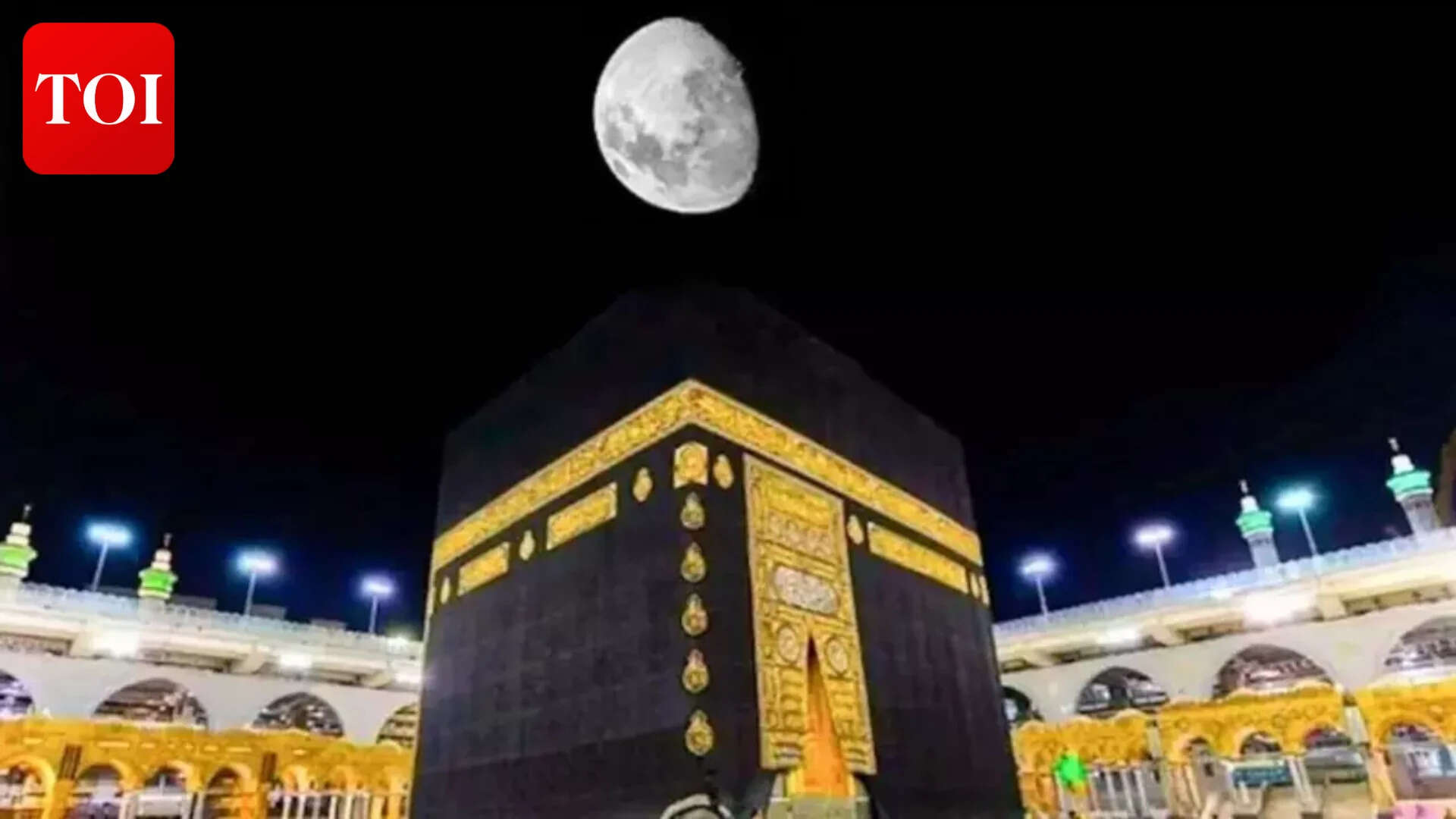
Tonight marks a truly unique astronomical occurrence, set to captivate millions across the globe. The sacred Ramazan moon is expected to achieve a precise alignment, hovering directly above the revered Kaaba in Mecca.
This celestial spectacle offers an ancient yet profound method for finding the Qibla, the direction of prayer, for Muslims worldwide. It is a moment where natural wonder deeply converges with spiritual practice.
Understanding the Astronomical Phenomenon
The Mechanics of Lunar Alignment
A lunar alignment directly above a specific point on Earth is a rare and captivating event. It occurs when the moon’s orbital path brings it precisely overhead relative to a particular geographic coordinate on the planet’s surface.
For the Kaaba, located in Mecca, Saudi Arabia, such direct overhead alignments are infrequent due to the moon’s varying declination and the Earth’s rotation. This specific convergence during the holy month of Ramazan makes it particularly special and meaningful.
Geographical and Celestial Coordinates
The Kaaba stands at approximately 21.4225° N latitude and 39.8262° E longitude, a precise point on the Earth’s surface. The moon’s path, known as the lunar declination, typically ranges between 18.2 and 28.7 degrees north or south of the celestial equator as it orbits.
When the moon’s declination precisely matches the Kaaba’s latitude, and its position aligns with the local meridian, it appears directly overhead. This exact synchronization allows for the unique alignment we anticipate tonight, creating a direct visual marker.
Rarity and Significance
While the moon passes over various parts of the Earth regularly, its exact alignment with a specific, significant landmark like the Kaaba is much less common. Such occurrences are often heralded as moments of profound spiritual or divine sign across cultures.
During the holy month of Ramazan, this alignment deepens the spiritual resonance for observers worldwide. It eloquently connects the natural world with religious devotion in a tangible and visually compelling way, inspiring awe and reflection.
The Kaaba: Focal Point of Islamic Prayer
The Heart of Islamic Worship
The Kaaba, a cubic building in the center of the Grand Mosque in Mecca, holds unparalleled significance in Islam. It serves as the single most sacred site, towards which all Muslims direct their prayers five times a day.
Often referred to as the “House of Allah,” its construction is traditionally attributed to Prophet Ibrahim (Abraham) and his son Ismail. It symbolizes unity, humility, and submission for billions of Muslims across continents.
Defining the Qibla
The Qibla is the specific direction that Muslims face during their five daily prayers, known as Salat. This universal orientation ensures uniformity in worship, symbolically connecting every individual prayer to a central, sacred point.
Historically, determining the Qibla involved various methods, ranging from observing celestial bodies like the sun and stars to using early navigational tools and mathematical calculations. Its accuracy remains crucial for daily spiritual practice and adherence to Islamic rituals.
The Moon as a Natural Compass
For centuries, humanity has instinctively looked to the heavens for navigation and orientation, long before the advent of modern technology. Celestial bodies such as the sun, moon, and stars served as fundamental guides for ancient travelers, mariners, and worshippers alike.
Tonight’s lunar alignment above the Kaaba revives this ancient tradition, offering a direct, unmistakable, and observable indicator of the Qibla. Anywhere the moon is visible, its position directly overhead will serve as an accurate guide towards Mecca’s sacred site.
Spiritual Resonance and Global Unity
A Shared Moment of Devotion
This unique celestial event transcends geographical boundaries, spiritually uniting Muslims globally in a shared moment of reflection and prayer. Observing the moon in this special alignment offers a powerful communal experience, even for those observing individually.
It profoundly reinforces the sense of belonging to a global Ummah, a community bound by unwavering faith and shared spiritual practices. The alignment visually connects distant lands and diverse peoples to the spiritual heartland of Islam, fostering a deep sense of collective identity.
Deepening Ramazan’s Spirit
Ramazan is a holy month dedicated to heightened devotion, intense introspection, and a stronger connection with the divine. The moon’s alignment serves as a poignant reminder of Allah’s magnificent creation and the meticulous cosmic order He has established.
This spectacle encourages a deeper appreciation for the numerous signs of creation mentioned throughout the Quran, prompting believers to reflect on the universe’s grandeur. It inspires awe, humility, and gratitude, significantly enriching the spiritual journey of fasting believers during this blessed month.
Connecting Ancient Wisdom with Modern Practice
While modern technology provides instant and precise Qibla directions via smartphone apps and digital compasses, this natural phenomenon offers a different, more primal and profound connection. It harks back to simpler times when humanity relied on direct observation of the natural world for guidance.
It serves as a powerful reminder that the universe itself provides guidance, a testament to timeless principles and the divine design. This beautiful blend of ancient wisdom and contemporary observation offers a rich and deeply satisfying spiritual tapestry for all who witness it.
Observing the Celestial Guide
When and Where to Look
The alignment is expected to occur tonight, typically during the peak nocturnal hours when the moon is highest in the sky. Specific timings will vary slightly based on local time zones and the precise moment of culmination at your location.
To witness this remarkable event, observers should simply step outside and look upwards in an unobstructed area, ideally away from bright city lights. The moon will appear directly overhead, symbolically indicating the Kaaba’s direction on Earth.
No Special Equipment Needed
One of the most beautiful and accessible aspects of this natural guide is its simplicity; no special equipment is necessary. There’s absolutely no need for telescopes, binoculars, or any other specialized optical instruments to observe the alignment.
Clear skies are the primary prerequisite for optimal viewing. Observers can simply use their naked eye to witness the moon’s perfect position, appreciating its direct alignment relative to the Earth below and its sacred point.
Implications for Qibla Determination
For anyone who might be unsure of the precise Qibla direction, especially individuals in new, unfamiliar locations, or those traveling, this alignment offers an unmistakable visual cue. It functions as an incredibly reliable and intuitive natural compass.
Facing the direction directly beneath the aligned moon will point accurately towards the Kaaba, simplifying an essential aspect of daily Muslim prayer. This method offers a profound, celestial confirmation of the correct prayer direction.
The Broader Significance
Celestial Wonders in Islamic Thought
The Quran frequently references the sun, moon, and stars as profound signs of Allah’s power, wisdom, and magnificent creation. Astronomical phenomena are often presented as opportunities for deep reflection, spiritual contemplation, and faith reinforcement among believers.
This alignment serves as a vivid and tangible manifestation of these divine signs, explicitly encouraging believers to ponder the vastness, precision, and intricate order of creation. It is a powerful testament to the inherent design embedded within the cosmos.
Reinforcing Faith Through Observation
Witnessing such a precise and beautiful alignment can profoundly strengthen faith and deepen conviction for many individuals. It creates a tangible link between the celestial realm and the spiritual journey, providing a powerful sense of reassurance, wonder, and connection.
The event eloquently underscores the Islamic concept of a universe designed with ultimate purpose and intelligent order, where even the movements of distant celestial bodies hold deep meaning and guidance for human devotion and worship.
Staying Informed on Latest Trends
For those interested in how such significant events are discussed and analyzed within the broader context of current affairs, global interests, and societal impacts, keeping up with latest trends can offer invaluable insights.
Understanding the cultural, social, and even scientific discourse surrounding celestial occurrences provides a richer, more comprehensive perspective on humanity’s enduring connection to the cosmos and its profound spiritual dimensions.
Official Confirmation and Details
This significant astronomical and spiritual event has been widely reported and meticulously confirmed by various astronomical observatories and reputable news sources globally. For specific details, precise timings, and further verification, you can refer to an Official Source on the matter.
These authoritative reports provide accurate logistical information and additional background, ensuring that observers can fully appreciate both the scientific precision and the deep spiritual dimensions of this rare and blessed alignment.
Frequently Asked Questions (FAQs)
1. What exactly is the Ramazan moon alignment above the Kaaba?
This rare event occurs when the moon’s position in its orbit brings it directly overhead the Kaaba in Mecca, Saudi Arabia. It signifies that if an observer were hypothetically standing at the Kaaba, the moon would be precisely at their zenith.
For observers anywhere else in the world, when they sight the moon at its highest point in the sky tonight, its direction essentially points towards the Kaaba on the Earth’s surface, acting as a profound natural guide for the Qibla.
2. Why is this alignment considered significant for Muslims?
Its significance is multifaceted, encompassing both astronomical wonder and deep spiritual guidance. Occurring during Ramazan, a month of heightened devotion, it visually connects all worshippers to the central, sacred point of their faith, the Kaaba.
It serves as a natural, observable sign of divine order and cosmic precision, offering a direct, visible means to orient oneself towards the Kaaba. This fosters a powerful sense of global unity and reinforces individual and collective faith.
3. How does this alignment help in finding the Qibla?
When the moon aligns directly above the Kaaba, any observer who can clearly see the moon understands that the direction directly beneath it, relative to their own geographical location, points towards Mecca. It effectively functions as a celestial compass.
By observing the moon at its zenith (its highest point) in their local sky, individuals can accurately deduce the general direction of the Kaaba without needing any instruments. This dramatically simplifies the essential daily task of Qibla determination for prayer.
4. Is this a common occurrence, or is it rare?
A precise alignment of the moon directly over a specific point on Earth, such as the Kaaba, is a relatively rare astronomical event. The moon’s orbital path and declination vary, making such exact overhead transits infrequent and notable.
While the moon passes over various latitudes regularly, its exact overhead alignment with the Kaaba, combined with its occurrence specifically during the holy month of Ramazan, makes it particularly special, blessed, and widely observed.
5. When is the best time to observe the Ramazan moon alignment?
The alignment typically occurs during the nighttime hours when the moon is prominently visible and reaches its highest point in the sky for a given location. The exact peak time will vary based on your specific geographical coordinates and local time zone.
It is generally best observed around midnight or the late evening, assuming clear skies and an unobstructed view of the moon. Consulting local astronomical forecasts or reliable news reports can provide more precise culmination times for your region.
6. Do I need any special equipment to view this phenomenon?
No, special equipment like powerful telescopes or high-magnification binoculars are absolutely not required to observe this alignment. The moon is a large and prominent celestial object, easily visible to the naked eye under clear conditions.
All that is primarily needed is a clear and unobstructed view of the night sky, ideally away from significant light pollution that might dim the moon’s brilliance. Simply stepping outside and looking upwards is sufficient to appreciate the moon’s position.
7. What is the Kaaba and why is it important in Islam?
The Kaaba is a cuboid building centrally located within the Grand Mosque in Mecca, Saudi Arabia. It is revered as the most sacred site in Islam, traditionally believed to have been built by Prophet Ibrahim (Abraham) and his son Ismail.
It serves as the singular direction (Qibla) towards which all Muslims face during their five daily prayers, symbolizing unity, spiritual focus, and the collective submission of the global Muslim community to Allah. It is a profound spiritual focal point for billions.
8. What is the Qibla, and why do Muslims face it during prayer?
The Qibla is the specific geographical direction of the Kaaba in Mecca, Saudi Arabia. Muslims face the Qibla during their five daily prayers (Salat) to ensure uniformity and symbolize a profound spiritual unity in their worship.
Facing a common, sacred direction creates a powerful physical and spiritual connection among the diverse global Muslim community. It signifies their shared devotion and submission to Allah, irrespective of their varied geographical locations around the world.
9. Can this lunar Qibla guide be used by Muslims all over the world?
Yes, the fundamental principle of using the moon’s alignment above the Kaaba as a Qibla guide applies globally to all Muslims. For anyone who can visibly see the moon, its position can help determine the general direction of Mecca with remarkable accuracy.
However, the specific orientation relative to the moon will vary based on your location: if you are west of Mecca, you would face east towards the moon’s projection; if east, you would face west, and so on. Its direct overhead alignment acts as a universal reference point for calculating the correct prayer direction.
10. How accurate is this natural guide compared to modern digital tools?
While modern digital tools like smartphone applications utilize GPS and sophisticated algorithms to provide highly precise Qibla determinations, the lunar alignment offers a remarkably accurate and profoundly resonant natural guide.
For general prayer purposes and spiritual orientation, observing the moon directly above the Kaaba provides a reliable and deeply meaningful method. It leverages direct observation of celestial mechanics, offering a degree of accuracy more than sufficient for sincere devotional practice, though perhaps not to the minute fractional degree that advanced digital tools provide.
Conclusion: A Celestial Blessing
The Ramazan moon’s alignment above the Kaaba is far more than just a fleeting astronomical event; it represents a profound spiritual moment for Muslims worldwide. It offers a tangible, celestial connection to the Kaaba and a truly natural, universally accessible guide for prayer.
This beautiful celestial blessing, occurring during the holy month of Ramazan, significantly enriches the experience of fasting and devotion. It powerfully unites hearts and minds in shared spiritual focus, gently reminding us of the intricate beauty, precise design, and ultimate purpose embedded within the vast cosmos.
SEO Keywords
Ramazan moon, Kaaba alignment, Qibla guide, Mecca direction, celestial navigation, Islamic prayer, lunar phenomenon, Ramazan spirituality, Muslim unity, astronomical event, celestial Qibla, lunar alignment Mecca, natural compass, worship direction, spiritual guide.
Source: Times of India