






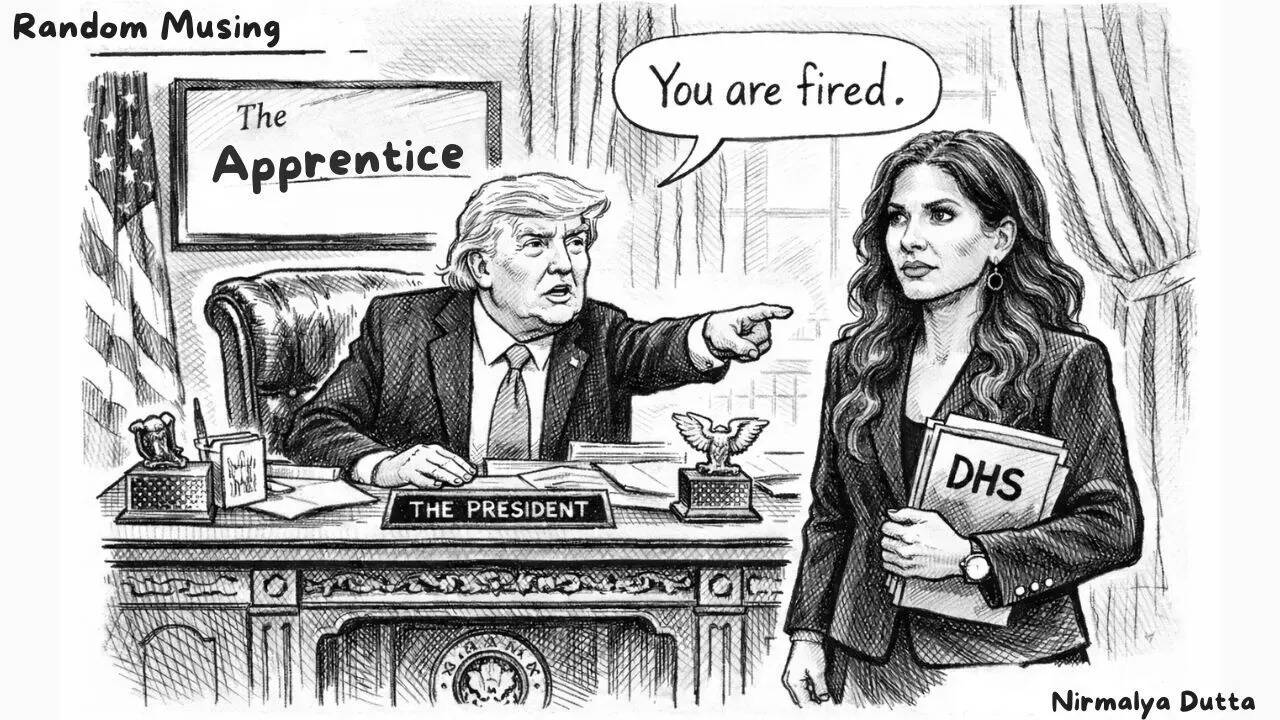
In the relentlessly competitive arena of American politics, a career’s trajectory often hinges on navigating intricate, unspoken rules. These unwritten codes profoundly influence alliances and the very pathways to power.
Understanding these subtle yet critical boundaries is paramount for any politician with national aspirations. Breaching them can lead to swift, often irreversible, consequences, dramatically reshaping one’s political future.
Decoding the “Red Line” in High-Stakes Politics
Every influential political figure maintains a distinct set of expectations regarding loyalty, public image, and strategic alignment. For many, this forms an absolute “red line” that, once violated, can irreparably damage relationships and opportunities.
This boundary frequently centers on self-preservation, unwavering narrative control, and the meticulous protection of one’s political “brand.” Any perceived challenge to these core tenets can provoke an immediate and forceful response.
The Paramountcy of Unwavering Loyalty and Image Control
Loyalty is universally recognized as the bedrock of successful political alliances, especially within high-stakes campaigns and administrations. It signifies steadfast support and a deep commitment to the leader’s overarching vision and agenda.
Furthermore, maintaining an unblemished and positive public image is vital for any political heavyweight. Any scandal or perceived misstep by a close ally could potentially reflect negatively on the principal figure, rendering image control an absolute necessity.
Control of Narrative: A Non-Negotiable Imperative for Leadership
In the rapid-fire digital era, absolute control over the political narrative represents an invaluable strategic asset. Leaders meticulously construct their public stories and anticipate their allies will consistently reinforce, rather than undermine, this carefully curated reality.
Deviating from the established narrative or generating unwelcome distractions that redirect focus from the leader’s central message can be interpreted as a direct challenge. Such actions often lead to severe and immediate political repercussions.
Kristi Noem: Navigating the Perilous Political Minefield
Kristi Noem, the Republican Governor of South Dakota, has consistently been considered a rising star within conservative circles. Her strong conservative bona fides and adept media presence frequently positioned her at the center of Vice Presidential speculation.
However, recent revelations stemming from her memoir, “No Going Back: The Truth on What’s Wrong with Politics and How to Fix It,” ignited a profound and widespread controversy. These specific details rapidly dominated national headlines and political discourse.
The Unforeseen Controversy: A Canine Conundrum and Its Aftermath
Among the most globally discussed passages was Noem’s explicit account of shooting her 14-month-old dog, Cricket, due to its perceived unmanageable behavioral issues. This stark admission instantly drew intense and bipartisan condemnation from across the political spectrum.
The highly detailed description of the event, perhaps intended to project an image of unyielding toughness, instead triggered an unforeseen firestorm of negative publicity. This singular incident swiftly overshadowed her meticulously cultivated image as a tough-on-crime, authentic rancher-politician.
Broader Implications for the Vice Presidential Selection Process
This escalating controversy erupted at an exceptionally critical juncture in the political calendar. Noem was, at the time, widely perceived as a leading contender for a potential running mate for the presumptive Republican presidential nominee.
Her inclusion on a highly visible national ticket would inevitably face an unprecedented level of intense public and media scrutiny. The Cricket incident immediately raised profound questions about her judgment, her capacity to handle adverse media attention, and her potential to become a significant political liability for the campaign.
The Fallout: A Rapid Shift in the Political Landscape
The immediate aftermath of her memoir’s release witnessed a dramatic and swift shift in Governor Noem’s political standing. Her once robust position as a top-tier Vice Presidential contender appeared to rapidly diminish amid the overwhelming public outcry.
Prominent political analysts and seasoned strategists openly began to question her fundamental viability for any national role. The controversy became an inescapable and dominant topic, effectively eclipsing her long-standing policy positions and conservative achievements.
Repercussions and the Rigorous Standards for Potential Running Mates
The incident served as an exceptionally stark and powerful reminder of the rigorous vetting process. It underscored the absolute necessity of an impeccable public image required for any aspiring Vice Presidential nominee.
A running mate is unequivocally expected to serve as a net political asset, not an incessant source of distraction or negative press. The primary objective is to strategically complement the ticket, not to burden it with easily avoidable and politically damaging scandals.
The Undeniable and Overpowering Force of Public Perception
This particular episode powerfully illustrated precisely how swiftly and decisively public perception can turn against even a popular political figure. Even a seemingly authentic display, when misjudged, can spectacularly backfire if it fundamentally misreads prevailing public sentiment.
In the unforgiving realm of politics, optics frequently carry as much weight, if not more, than substantive policy, and adeptly managing public reaction is a highly refined art form. The consequences of such a misjudgment can prove to be both severe and enduring.
Understanding the Trump Political Orbit and Its Unique Demands
The distinctive political universe surrounding a figure of Donald Trump’s magnitude operates with its own specific gravitational pull and immutable rules. Unwavering loyalty and a profound understanding of his core strategic objectives are absolutely paramount for anyone operating within his direct influence.
His stringent expectations for allies frequently encompass an unshakeable defense of his extensive record and a deliberate reluctance to draw any negative attention that could divert crucial focus from his primary campaign goals.
The Imperative of Undivided and Unquestioning Support
For individuals earnestly seeking to align themselves with a formidable political movement centered around a charismatic and powerful leader, undivided support is consistently non-negotiable. Any perceived deviation can be swiftly interpreted as profound disloyalty.
This intricate dynamic ensures that the leader’s central message remains consistently coherent and, critically, unchallenged from within. It firmly solidifies the crucial perception of a unified and unyielding front against all political adversaries.
The Critical Importance of Avoiding Unnecessary Distractions
A fundamental and critical aspect of any sound political strategy, particularly within a presidential campaign, involves meticulously controlling the overarching narrative and aggressively minimizing all potential distractions. Every single news cycle represents an intense battle for public attention and absolute message supremacy.
Actions that inadvertently create avoidable controversies or generate negative media attention are fundamentally antithetical to this core objective. Such missteps can severely impede the campaign’s crucial ability to focus intently on its core issues and strategically directed attacks against opponents.
Keeping meticulously abreast of the latest trends in political narratives and public sentiment is absolutely essential for any aspiring leader. Profoundly misjudging public reactions can prove to be politically fatal.
Conclusion: The Enduring Lessons of Political Red Lines
The high-profile case involving Kristi Noem and the extensive controversy that subsequently ensued serves as an exceptionally powerful and contemporary example of political “red lines.” It vividly highlights the inherently unforgiving nature of national-level politics and the intense scrutiny invariably faced by all potential running mates.
For aspiring politicians, a profound and nuanced understanding of these often unspoken, yet critical, boundaries—especially within specific and complex political ecosystems—is absolutely vital for achieving long-term success. A singular, ill-judged misstep can, with astonishing rapidity, completely derail years of meticulous political maneuvering and career building.
This compelling narrative is further extensively explored and contextualized by the Official Source, which meticulously details the immediate reactions and significant implications of the controversy. The political landscape unequivocally remains unforgiving to those who fail to adequately anticipate and skillfully navigate such challenging political obstacles.
Frequently Asked Questions (FAQs)
What is generally considered a “red line” in politics for influential figures like Donald Trump?
A political “red line” typically refers to an unspoken but absolutely critical boundary that, if crossed, can severely damage a politician’s standing or their relationship with a key leader. For influential figures like Donald Trump, these often encompass perceived disloyalty, actions that fundamentally undermine their public image or carefully constructed narrative, or the generation of significant negative publicity that could reflect poorly on them. It is ultimately about protecting their invaluable political capital, personal reputation, and overall brand at all costs, ensuring no perceived betrayal or weakness is tolerated from allies.
Why was Kristi Noem’s dog incident considered such a significant political misstep?
Kristi Noem’s controversial admission of shooting her young dog, Cricket, as detailed in her memoir, generated an immediate, widespread, and intense public outcry, leading to considerable negative media attention. It was widely perceived by many as a severe lapse in judgment, clearly demonstrating poor political instincts, especially at a time when she was actively being vetted for a prominent national role. The graphic and unapologetic nature of the account, intended perhaps to project an image of unyielding toughness, instead alienated a broad and diverse segment of the public, surprisingly including many staunch conservatives and independent voters, indicating a profound miscalculation of public sentiment.
How did this specific controversy impact Kristi Noem’s chances of becoming a Vice Presidential candidate?
The Cricket incident severely and perhaps irreparably diminished Kristi Noem’s previously strong prospects as a Vice Presidential candidate. A running mate is unequivocally expected to be a net political asset, effectively bringing positive attention and additional support to the national ticket. The widespread controversy, however, quickly rendered her a significant political liability, raising serious and immediate concerns about her judgment, her ability to withstand intense national media scrutiny without creating damaging distractions for the top of the ticket, and her overall electability. Consequently, her name very rapidly faded from serious consideration among political strategists and observers alike.
What fundamental role does loyalty play in the arduous selection of a running mate for a figure like Donald Trump?
Loyalty is consistently paramount for Donald Trump when it comes to the crucial selection of a running mate. He actively seeks individuals who are unequivocally and demonstrably supportive of his agenda, his extensive past record, and his overarching vision for the country. Any perceived deviation from this absolute loyalty, or actions that could be interpreted as independently minded to his potential detriment, can be immediately disqualifying. A running mate is firmly expected to be a cooperative team player who consistently amplifies his central message, rather than an independent voice that could potentially clash or create dissent, thus ensuring a unified front.
How absolutely important is narrative control for a successful presidential campaign?
Narrative control is absolutely critical and indispensable for any successful presidential campaign in the modern era. Campaigns invest colossal amounts of resources and effort into meticulously crafting and aggressively disseminating their preferred message, strategically focusing on key policy points and launching targeted attacks against opponents. Any external event or internal misstep that inadvertently creates an unwanted narrative or a significant, unforeseen distraction can completely derail their meticulously planned messaging strategy, consume valuable time and finite resources, and disastrously shift public focus away from their core strategic objectives. It is a constant, high-stakes battle for public attention and message supremacy, where even small errors can have massive consequences.
Were there any other factors beyond the notorious dog incident that contributed to Noem’s perceived missteps?
While the highly publicized dog incident was undoubtedly the most prominent and damaging, some political analysts also highlighted other aspects of her memoir, such as unverified anecdotes or controversial factual claims, as contributing significantly to her broader political challenges. The cumulative effect of these various revelations, combined with a perceived lack of genuine self-awareness in their public presentation and defense, substantially amplified the existing negative perceptions. This totality of circumstances indicated a potential and concerning pattern of poor judgment and strategic miscalculation under intense public and political pressure, making her a riskier choice for a national role.
How do seasoned political strategists typically vet potential Vice Presidential candidates?
Experienced political strategists conduct an extremely thorough and exhaustive vetting process for all potential Vice Presidential candidates. This rigorous process includes deep dives into every aspect of their public and private lives, meticulously scrutinizing financial records, past public statements, controversial legislative votes, and any potential or pre-existing scandals or liabilities. The overarching goal is to identify and proactively mitigate any and all risks that could possibly emerge during a grueling national campaign, as even seemingly minor issues can be grossly magnified and weaponized on the national stage. Their entire social media presence, personal histories, and past writings are scrutinized with microscopic precision to uncover any potential vulnerabilities.
What enduring lessons can other aspiring politicians effectively learn from this specific episode?
Aspiring politicians can glean several key and enduring lessons from this high-profile episode: the paramount importance of exercising impeccable judgment, particularly when publishing memoirs or making expansive public statements; the absolute necessity of profoundly understanding the specific political ecosystem and the implicit “red lines” of key influential leaders; and the critical, often decisive, role of public perception. This incident powerfully underscores that even an intended display of authenticity must be very carefully balanced with astute strategic communication, and that any perceived liability, no matter how small, can with astonishing speed completely derail years of meticulous political maneuvering and painstakingly built national aspirations. Acute self-awareness and foresight are unequivocally crucial for political survival.
How does the modern media environment exacerbate or, conversely, mitigate such politically sensitive controversies?
The modern media environment, particularly with the ubiquitous presence of social media platforms, almost invariably tends to exacerbate politically sensitive controversies. News spreads instantaneously and globally, and damaging narratives can rapidly spiral entirely out of control before a candidate can even formulate or offer a comprehensive and effective response. While traditional mainstream media outlets still play a significant role, the viral and often unchecked nature of platforms like X (formerly Twitter) means a single controversial passage or statement can dominate global conversations within mere hours, rendering traditional crisis management exceptionally challenging and often too slow. The sheer speed of information sharing is fundamentally unforgiving to those who falter.
What does this incident reveal about the current state and dynamics of the Republican party?
This specific incident vividly reveals the enduring and significant power of personality and perceived unwavering loyalty within the contemporary Republican Party, especially in relation to its most influential and charismatic figures. It strongly suggests that aligning oneself with a powerful leader demands an intricate understanding of their precise demands for support, their need for absolute image protection, and their strategic objectives. It also underscores the party’s pervasive sensitivity to any controversies that could potentially undermine broader electoral goals, indicating a pragmatic and overriding concern for overall winnability and political efficacy above all else, even for otherwise popular conservative figures. Loyalty and electability are paramount.
SEO Keywords
Political Red Lines, Kristi Noem Controversy, Donald Trump Loyalty, Vice Presidential Selection, Political Missteps, Republican Party Dynamics, Narrative Control, Public Perception, Political Strategy, Campaign Vetting, Running Mate Risks, Self-Inflicted Wounds, Modern Politics, Conservative Figures, Political Brand Protection
Source: Times of India