






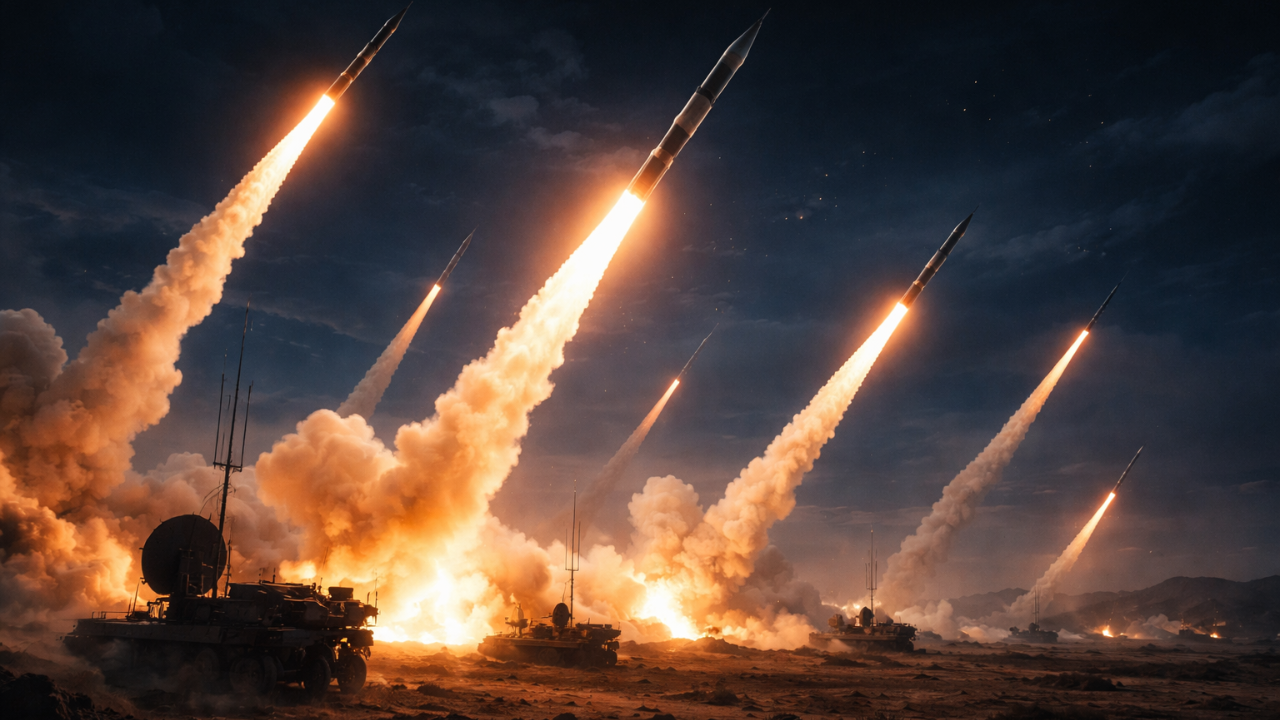
Introduction to a Volatile Equation
The Middle East remains a crucible of geopolitical tension, constantly evolving with strategic shifts and complex power dynamics. Iran’s ballistic missile program stands at the very heart of many regional and international concerns. Its trajectory directly influences the delicate balance of power across the broader region.
This article delves into the persistent and critical question of whether sustained US-Israel strikes are effectively depleting Iran’s formidable and expanding missile arsenal. We will explore the complexity of accurately assessing such claims amid a highly opaque and secretive operational environment. The broader implications for regional security and potential future escalations will also be examined in detail.
Iran’s Missile Arsenal: A Formidable and Evolving Threat
Iran has invested heavily and consistently in developing a diverse and increasingly sophisticated missile arsenal over several decades. This program is not merely a defensive mechanism but a cornerstone of its strategic depth and regional power projection ambitions. It represents a critical component of Iran’s asymmetric warfare doctrine and national security posture.
Development and Proliferation
For many decades, Iran has pursued a rigorous and determined path towards self-sufficiency in missile technology, primarily driven by past conflicts and profound perceived external threats. Its indigenous program has dramatically evolved from reverse-engineered imported designs to robust in-house research, development, and advanced production capabilities. This evolution includes a wide array of propulsion systems, sophisticated guidance technologies, and diverse warhead designs.
These advancements now encompass short-range tactical ballistic missiles, medium-range ballistic missiles (MRBMs), and intermediate-range ballistic missiles (IRBMs). Iran frequently and openly showcases its ability to design, manufacture, and test these complex weapons systems. Furthermore, Iran has actively shared missile technology, critical components, and operational expertise with various non-state proxy groups across the Middle East, extending its influence significantly.
This proliferation significantly extends Iran’s reach and influence, creating a network of missile-capable actors throughout volatile regions. Such transfers enable proxies to pose substantial threats to regional adversaries, complicating conflict resolution efforts and adding layers of risk. The transfer of such sensitive military technology often bypasses traditional state-on-state confrontation, fostering asymmetric warfare.
Strategic Deterrence
Iran explicitly frames its extensive missile capabilities as a crucial and non-negotiable deterrent against potential large-scale military aggression from its adversaries. It aims to prevent overwhelming conventional attacks by demonstrating a credible and potentially devastating retaliatory strike capability. This posture is absolutely central to Iran’s national security doctrine and strategic thinking.
This strategy is viewed as vital for maintaining Iran’s sovereign integrity and its ability to exert influence within the complex regional power dynamics. Without a formidable missile force, Iran believes it would be significantly more vulnerable to external coercion and military pressure. The missile program thus underpins its perceived self-reliance in defense and regional standing.
The constant threat of missile retaliation forces potential aggressors, particularly the United States and Israel, to carefully consider the severe costs and unpredictable outcomes of any potential military intervention. This adds a significant layer of complexity to strategic planning for all actors involved. It introduces an element of profound unpredictability into any potential conflict scenario, raising the stakes considerably.
The Impact of US-Israel Strikes: A Campaign of Disruption
The United States and Israel have long expressed profound and escalating concerns regarding the scope, intent, and potential trajectory of Iran’s ballistic missile program. Consequently, they have undertaken various overt and covert measures to actively counter its development, production, and deployment. These measures are meticulously designed to degrade Iranian capabilities and impose significant costs.
These efforts span a broad spectrum from stringent economic sanctions and concerted diplomatic isolation to highly sophisticated cyberattacks and targeted military operations. The overarching goal is to slow down, if not entirely halt, the advancement of Iran’s missile technology and its proliferation. Each action is carefully calibrated to achieve specific strategic objectives within a complex geopolitical landscape.
Targeting Infrastructure
Recent intelligence reports and public statements from US and Israeli officials suggest a focused and persistent campaign aimed at disrupting Iran’s core missile infrastructure. Strikes have reportedly targeted critical missile production facilities, clandestine underground storage sites, and suspected launch platforms. These operations are often conducted with precision and rely on advanced intelligence gathering.
The primary objective of these targeted strikes is to directly degrade Iran’s immediate ability to manufacture new missiles and maintain its vast existing arsenal. By hitting key components of the supply chain and operational facilities, the overall operational readiness of the missile force is severely compromised. This strategy aims to create tangible setbacks and delays for the program’s development cycle.
Additionally, strikes sometimes target command and control centers or key personnel intimately involved in the missile program, including scientists and engineers. Such actions seek to disrupt the operational coherence, leadership structure, and technological advancement of Iran’s defense industries. This multi-pronged approach aims for maximum systemic impact and long-term degradation.
Disrupting Supply Chains
Beyond direct military strikes on physical infrastructure, a significant and ongoing emphasis is placed on systematically disrupting Iran’s complex and often illicit supply chains for critical missile components. This involves intensive intelligence-led efforts to interdict shipments of raw materials and advanced dual-use technologies. These materials are absolutely essential for the continuous development of sophisticated missile designs.
Such interdiction efforts are frequently conducted on international waters, through collaborations with global partners, or via cyber means. They aim to deny Iran access to specialized metals, advanced propulsion systems, precision guidance components, and sophisticated electronics required for its most advanced missile designs. This creates significant delays, increased costs, and technological bottlenecks for the program.
The constant pressure on supply chains forces Iran to seek alternative, often more costly and less reliable, sources or to accelerate indigenous production capabilities. This constant cat-and-mouse game adds immense friction to Iran’s missile development cycle. It illustrates the ingenuity required by Iran to bypass these stringent international restrictions and maintain momentum.
Assessing Iran’s Current Stockpiles: A Challenging Enigma
The exact state and precise size of Iran’s current ballistic missile stockpiles remain one of the most closely guarded national secrets and intelligence puzzles. Analysts and intelligence agencies globally grapple with the immense challenge of accurately assessing this critical and highly sensitive information. Transparency is deliberately and strategically avoided by Tehran.
This pervasive lack of verifiable and independent data significantly complicates efforts to determine the true effectiveness of counter-proliferation efforts and military strikes. The ambiguity itself serves as a powerful strategic asset for Iran, fostering uncertainty for its adversaries. It enhances its deterrent posture by keeping opponents guessing about its true capabilities.
Intelligence Assessments
Western intelligence agencies, primarily from the United States and Israel, continuously devote substantial resources and advanced capabilities to monitoring Iran’s missile activities. Their comprehensive and often classified reports synthesize various intelligence sources, including high-resolution satellite imagery, signals intelligence (SIGINT), and human intelligence (HUMINT) networks. These reports offer crucial, though often incomplete and contested, insights into Iran’s program.
These assessments generally indicate that while Iran’s program faces significant external pressure and occasional setbacks, it also demonstrates remarkable resilience, strategic redundancy, and an ability to adapt. Intelligence points to ongoing indigenous production and a diversified, decentralized infrastructure that is difficult to completely cripple. This makes outright destruction a formidable task.
However, these same reports often highlight the cumulative impact of persistent sanctions, covert operations, and interdiction efforts on specific aspects of the program, particularly the acquisition of advanced foreign components. While outright depletion of its overall arsenal is widely considered unlikely, a slowdown in advanced capabilities or a strain on existing inventories could very well occur. The long-term effects are harder to definitively quantify.
Challenges in Verification
Verifying the actual depletion, expansion, or even the precise composition of Iran’s sprawling and complex missile arsenal is an incredibly challenging and resource-intensive undertaking. Iran has deliberately constructed a deeply entrenched and highly redundant defense industrial base, making external scrutiny extremely difficult and unreliable. This operational secrecy is a key part of its defense strategy.
Much of Iran’s critical missile-related infrastructure, including numerous manufacturing plants, testing facilities, and extensive storage bunkers, is located deep underground in heavily fortified facilities. These subterranean sites are meticulously designed to withstand significant conventional military strikes and are often hardened against air attacks. This extensive underground network provides substantial protection for its assets.
Furthermore, Iran employs sophisticated deception tactics, robust operational security measures, and strategic obfuscation to deliberately obscure its activities from foreign surveillance and intelligence gathering. This formidable combination of physical hardening and strategic obfuscation makes definitive verification of its true missile stockpiles exceptionally difficult for external observers. The actual state of its arsenal therefore remains largely speculative.
Regional Implications and Escalation Risks: A Precarious Balance
The continuous debate and concerted actions surrounding the status of Iran’s ballistic missile program carry profound and far-reaching regional and international implications. The perceived strength or weakening of this arsenal directly impacts the security calculus of neighboring states and international actors alike. A delicate and often dangerous balance hangs precariously in the air across the Middle East.
The potential for significant regional escalation remains a constant and deeply troubling concern for policymakers and strategists worldwide. Any miscalculation, misinterpretation, or overreach by any party could swiftly trigger a wider and potentially devastating conflict. This precarious situation demands exceptionally careful diplomatic handling and strategic restraint from all parties involved to prevent catastrophe.
Proxy Warfare Dynamics
Iran strategically leverages its advanced missile technology and extensive military expertise to actively support and empower various non-state proxy groups across the Middle East. This influential network includes Hezbollah in Lebanon, Houthi rebels in Yemen, and numerous Shiite militias operating in Iraq and Syria. This is a core and highly effective tenet of its regional foreign policy and power projection strategy.
This approach enables Iran to project significant power and exert considerable influence throughout the region without necessarily engaging in direct military confrontation with major powers. It provides a crucial layer of plausible deniability while still achieving critical strategic objectives. The proxies effectively act as formidable force multipliers, extending Iran’s reach far beyond its borders.
Any perceived significant degradation or extensive depletion of Iran’s core missile arsenal could dramatically alter these complex proxy warfare dynamics and regional power balances. It might either reduce Iran’s ability to arm and equip its allies or compel it to adopt new, potentially more aggressive and unconventional, asymmetric tactics. The ripple effects of such a shift would be considerable and far-reaching.
Future Scenarios
Multiple plausible scenarios exist concerning the future trajectory of Iran’s ballistic missile program and its profound regional impact. A sustained and intensified campaign of international pressure, coupled with continued targeted strikes, could, over an extended period, degrade its capabilities and slow its advancements. This could potentially force Iran to scale back certain ambitious missile development projects.
Alternatively, confronted with increasing external pressure and perceived threats, Iran might choose to accelerate its indigenous missile development efforts even further, potentially prioritizing specific advanced capabilities. This could involve focusing on hypersonic glide vehicles, more maneuverable re-entry vehicles, or even more advanced propulsion systems. Such a determined response could lead to even greater regional instability and an intensified arms race. For understanding the dynamic landscape of global security and related latest trends, consistent analytical updates from diverse sources are crucial.
The evolving geopolitical landscape, including potential shifts in US foreign policy, the formation of new regional alliances, and the ongoing Israel-Hamas conflict, will also heavily influence Iran’s strategic decisions. Predicting the precise future path requires careful consideration of numerous interacting and often unpredictable variables. The situation remains highly fluid and extremely challenging to forecast definitively.
The Broader Geopolitical Landscape: Beyond Missiles
The ongoing debate and the associated actions surrounding Iran’s ballistic missile capabilities are inextricably intertwined with a much broader and more complex set of geopolitical considerations. The missile issue is not merely an isolated problem but rather a significant symptom of deeper regional rivalries, historical grievances, and international power struggles. It fundamentally cannot be viewed in isolation from these larger contexts.
International efforts aimed at preventing the proliferation of advanced weapons technologies and capabilities remain a top global security priority for numerous nations. This complex interplay of deeply entrenched regional alliances, historical animosities, and emerging rivalries further complicates any potential resolution to the missile conundrum. Each actor involved has distinct and often conflicting interests and security concerns.
International Diplomacy
Despite the heightened tensions and frequent military actions, diplomatic efforts continue to play a crucial, albeit often challenging and frustrating, role in attempting to de-escalate the volatile situation and find peaceful resolutions. Major world powers and influential regional actors frequently engage in intricate discussions centered on both Iran’s nuclear and its missile programs. These discussions are often fraught with difficulty and distrust.
Past nuclear negotiations, such as those leading to the Joint Comprehensive Plan of Action (JCPOA), often included intense debates and various proposals regarding potential limitations on Iran’s ballistic missile development. These talks aim to impose verifiable limits, ensure greater transparency, and reduce the regional threat. However, a comprehensive and mutually acceptable agreement on missiles remains largely elusive.
The success of future diplomatic endeavors will ultimately hinge on the genuine willingness of all parties to make significant and verifiable concessions and to build a minimum level of mutual trust. Without genuine political will and a spirit of compromise from all sides, the path to a lasting peaceful solution regarding Iran’s missile program will remain arduous and potentially unattainable. This requires sustained and patient international commitment.
Technological Evolution
Iran consistently demonstrates an unwavering commitment to continuously innovating and significantly upgrading its missile technology, despite external pressures. This includes vigorously enhancing precision guidance systems, improving maneuverability during atmospheric re-entry, and substantially increasing its missiles’ range capabilities. This ongoing and relentless technological evolution presents persistent new challenges for existing and developing defensive systems across the region.
The relentless pace of Iran’s technological advancements contributes significantly to an intensifying and dangerous arms race dynamic across the entire Middle East. Neighboring states, particularly those feeling directly threatened, are compelled to invest heavily in advanced missile defense systems, early warning networks, and retaliatory strike capabilities. This creates a dangerous and costly cycle of military buildup and escalation.
This technological evolution also has profound implications for international non-proliferation regimes, as advanced missile capabilities become potentially more accessible to other actors. The constant push for innovation complicates efforts to control the spread of these highly destabilizing weapons. It requires continuous adaptation and strategic foresight from all concerned parties, both regionally and globally.
Conclusion: A Resilient and Persistent Challenge
The fundamental question of whether Iran’s ballistic missiles are running out amid sustained US-Israel strikes remains complex, multifaceted, and without a simple, definitive answer. While there is undeniable evidence that these strikes inflict significant damage, create considerable disruption, and impose substantial costs, Iran’s missile program has consistently demonstrated remarkable resilience, strategic depth, and an impressive capacity to adapt and rebuild. It has proven its ability to withstand considerable pressure.
The ultimate long-term impact on Iran’s overall missile capabilities will undoubtedly depend on a complex combination of interacting factors. These include the sustained intensity and coordination of international pressure, Iran’s adaptive and often defiant strategic responses, and the dynamic evolution of the broader geopolitical realities in the region. The situation is a constantly moving target, requiring continuous assessment.
For an authoritative and continuously updated perspective on this highly critical and evolving matter, consulting an Official Source from reputable international news outlets and defense analyses is highly recommended. The inherent complexities of this issue demand ongoing vigilance, expert analysis from diverse perspectives, and a nuanced understanding of all contributing factors.
Frequently Asked Questions (FAQs)
1.
What is Iran’s ballistic missile program, and what are its primary objectives?
Iran’s ballistic missile program involves the comprehensive development, indigenous production, and strategic deployment of a wide array of missile types. These range from short-range tactical battlefield weapons to more potent intermediate-range ballistic missiles (IRBMs), capable of striking distant targets with increasing precision. The program’s primary objective is to serve as a cornerstone of Iran’s national defense strategy, providing a crucial deterrent against potential external military aggression and safeguarding its sovereignty.
Additionally, the program aims to significantly enhance Iran’s regional influence by offering a credible means of power projection and asymmetric response capabilities. It enables Iran to exert pressure on adversaries and support its regional allies, thereby shaping the geopolitical landscape. The self-sufficiency of the program is also a profound point of national pride and a key aspect of its strategic autonomy.
2.
Why do the United States and Israel view Iran’s missile program with such significant concern?
Both the United States and Israel perceive Iran’s growing and sophisticated missile program as a severe and immediate threat to regional stability and their respective national security interests. Their concerns are deeply multifaceted, encompassing the increasing range, accuracy, and potential payload capacity of Iranian missiles, which could conceivably carry conventional or, in a hypothetical future scenario, non-conventional warheads. This capability fundamentally alters the strategic balance in the Middle East.
Moreover, a major point of contention is Iran’s continued proliferation of missile technology, critical components, and operational know-how to various proxy groups throughout the Middle East. These include organizations like Hezbollah in Lebanon, Houthi rebels in Yemen, and various Shiite militias in Iraq and Syria. This directly enables these non-state actors to launch attacks against US and Israeli interests, as well as against their regional allies, thereby escalating regional conflicts and making de-escalation far more difficult.
3.
What specific types of ballistic missiles are known to be in Iran’s arsenal?
Iran possesses a diverse and continually evolving arsenal of ballistic missiles, demonstrating a sustained commitment to missile research and development. Notable examples include the Shahab series (Shahab-1, -2, -3), which were among its earlier developments derived from Scud technology, along with more advanced indigenous missiles such as the Emad, Ghadr, Sejjil, and Khorramshahr. These missiles exhibit varying ranges, from several hundred kilometers to over 2,000 kilometers, placing substantial portions of the Middle East and even parts of Eastern Europe within their strike envelopes.
While many of Iran’s initial long-range missiles were liquid-fueled, requiring longer preparation times and making them more vulnerable, there has been a significant strategic shift towards developing more advanced solid-fueled variants. Solid-fueled missiles offer distinct advantages in terms of quicker deployment, enhanced mobility, and reduced detectability prior to launch, making them more survivable. This diversification and continuous technological advancement highlight Iran’s unwavering determination to improve its missile capabilities and overcome defensive measures.
4.
How do US and Israeli military and intelligence operations target Iran’s missile capabilities?
US and Israeli efforts to counter Iran’s missile capabilities involve a multifaceted and persistent strategy employing both overt military actions and sophisticated covert operations. These operations are meticulously planned and executed to degrade various aspects of Iran’s extensive missile ecosystem. Targets often include critical missile production facilities, clandestine underground storage depots, advanced research and development centers, and transport infrastructure essential for missile deployment and mobility.
The overarching objective of these targeted actions is not merely to destroy existing assets but to significantly disrupt Iran’s ability to develop, manufacture, and ultimately deploy its ballistic missiles on an ongoing basis. This is achieved by impacting the integrity of its complex supply chains, hindering technological advancements through sanctions and cyberattacks, and compromising its overall operational readiness. Furthermore, these operations often aim to deter future missile development and proliferation, signaling firm international resolve against Iran’s illicit program.
5.
Are these ongoing strikes truly effective in depleting Iran’s overall missile stockpiles?
The question of whether the ongoing US and Israeli strikes are truly effective in extensively depleting Iran’s overall missile stockpiles remains a complex and frequently debated topic among intelligence analysts and defense experts. While there is broad consensus that these strikes undoubtedly inflict damage, cause disruptions, and impose significant financial and operational costs on the program, Iran has consistently demonstrated a remarkable capacity for resilience, redundancy, and rapid rebuilding. Many of its critical missile-related facilities are strategically dispersed and deeply buried underground, making comprehensive and sustained destruction incredibly challenging through conventional military means.
Therefore, while individual strikes might temporarily reduce specific capabilities, destroy certain assets, or delay production cycles, the overall impact on the vastness and depth of Iran’s entire missile arsenal is difficult to definitively ascertain. Iran’s long-term strategic commitment to its program, coupled with its advanced indigenous production capabilities and layered defenses, suggests that while it may suffer setbacks, outright depletion of its extensive stockpiles is highly unlikely in the short to medium term. The program is specifically designed to be robust and survivable against such attacks.
6.
What is Iran’s typical response strategy to direct military or covert strikes against its missile assets?
Iran typically responds to direct military or covert strikes against its missile infrastructure with a strategy characterized by strategic patience, calibrated retaliation, and often indirect means. Direct, overt military confrontation with the United States or Israel is generally avoided due to the overwhelming conventional military superiority of its adversaries and the potential for a devastating full-scale war. Instead, Iran often chooses asymmetric responses designed to avoid direct escalation while still signaling its unwavering resolve and imposing costs on its opponents.
These responses can include accelerating its indigenous missile development and production efforts, enhancing its air defense systems to better protect its remaining assets, or instructing its extensive network of regional proxies to launch retaliatory attacks against US, Israeli, or allied interests. Such proxy actions allow Iran to maintain plausible deniability while still projecting power and retaliating indirectly. This approach aims to impose costs on its adversaries without provoking a full-scale, direct military conflict.
7.
How do international sanctions contribute to efforts to curb Iran’s missile program?
International sanctions, particularly those imposed unilaterally by the United States, play a crucial and continuous role in the broader strategy to curb Iran’s ballistic missile program. These sanctions specifically target entities, individuals, and financial networks directly involved in missile research, development, and production. The primary objective is to severely restrict Iran’s access to vital foreign technology, critical dual-use components, and essential financing necessary for the continued advancement and maintenance of its missile capabilities.
While sanctions undoubtedly create significant hurdles, increase the cost of doing business, and slow the pace of development for Iran’s defense industry, Iran has historically demonstrated considerable ingenuity in adapting to these restrictions. It has invested heavily in developing indigenous alternatives, fostering a self-reliant defense sector, and has also relied on complex illicit procurement networks to bypass international controls. This remarkable resilience means that while sanctions slow progress and complicate operations, they have not fully halted the program’s overall trajectory.
8.
In what ways does Iran utilize its missiles and missile technology in regional proxy warfare?
Iran strategically employs its missiles and missile technology as a critical and integral tool in its regional proxy warfare strategy, enabling it to project power and extend its influence across the Middle East. It actively supplies complete missile systems, critical components, advanced technical expertise, and extensive training to various non-state actors, including Hezbollah in Lebanon, Houthi rebels in Yemen, and an array of Shiite militias operating in Iraq and Syria. This strategic assistance transforms these groups into formidable regional threats capable of striking Iran’s adversaries.
This approach allows Iran to launch attacks against its adversaries, such as Saudi Arabia, the United Arab Emirates, and Israel, without directly engaging its own conventional military forces. By empowering proxies, Iran effectively extends its strategic reach, complicates regional conflicts, and creates crucial layers of plausible deniability, making attribution and retaliation more complex. It effectively leverages asymmetric warfare to challenge its rivals and achieve its geopolitical objectives, making these conflicts harder to contain or resolve through traditional means.
9.
What are the long-term implications of Iran’s missile program for overall regional stability?
The long-term implications of Iran’s sustained and developing missile program for overall regional stability are profoundly concerning and point towards an increased risk of widespread and dangerous escalation. This program, combined with Iran’s active support for proxy groups and its broader regional ambitions, significantly fuels an intense and costly arms race across the entire Middle East. Neighboring countries, particularly those feeling directly threatened like Saudi Arabia and the UAE, feel compelled to acquire or develop their own advanced defensive and offensive capabilities in response, leading to a dangerous cycle of military buildup and heightened tensions.
This situation fosters a pervasive climate of deep mistrust, heightened insecurity, and encourages potentially destabilizing pre-emptive actions by various regional players. It significantly complicates international and regional efforts to achieve peaceful resolutions to ongoing conflicts and crises, as all parties operate under a constant shadow of missile threat. The persistent threat of missile attacks creates an environment where even minor incidents could rapidly spiral into larger, more devastating confrontations, threatening global energy supplies and economic stability.
10.
What are the current prospects for a comprehensive diplomatic resolution concerning Iran’s missile program?
The prospects for achieving a comprehensive diplomatic resolution specifically addressing Iran’s ballistic missile program are currently quite challenging and appear largely dim. A primary and persistent obstacle is Iran’s steadfast position that its missile program is entirely defensive in nature, non-negotiable, and absolutely essential for its national security and sovereignty. Iran views any attempts to limit or dismantle its missile capabilities as an unacceptable infringement on its fundamental right to self-defense and strategic autonomy.
While past international efforts, particularly during the negotiations for the Joint Comprehensive Plan of Action (JCPOA) concerning Iran’s nuclear program, have attempted to link missile limitations to broader agreements, achieving consensus among all involved parties remains exceptionally difficult. The complexity stems from the deeply divergent security interests and strategic priorities of Iran, various regional states, the United States, and other global powers. A truly comprehensive agreement would necessitate substantial and verifiable concessions from all sides, including security guarantees for Iran and stringent, verifiable limitations on its program, which currently seems a distant political possibility.
Iran ballistic missiles, Middle East crisis, US-Israel strikes, Iran missile program, regional stability, missile stockpiles, geopolitical tensions, Iran defense, proxy warfare, ballistic missile technology, proliferation concerns, Iran military capability, strategic deterrence, escalation risks, missile sanctions.
Source: Times of India