



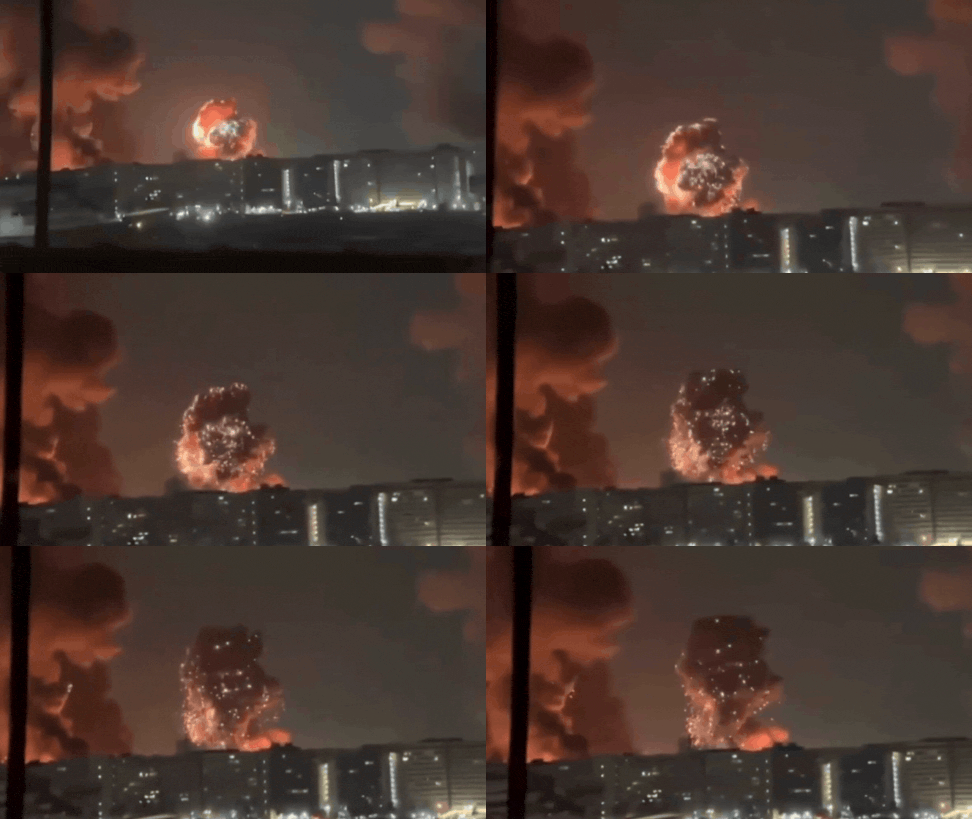
In a dramatic escalation of regional tensions, reports emerged of Israeli airstrikes targeting Mehrabad International Airport in Tehran. The attack reportedly ignited several planes and caused multiple explosions, although initial assessments indicate no casualties were reported.
This incident marks a significant development in the long-standing shadow war between Israel and Iran, bringing the conflict into a more overt and potentially dangerous phase. The international community watches closely as the implications of this strike unfold across the volatile Middle East.
The Unfolding Event: A Chronology of Reports
The early hours brought an abrupt and jarring shift in the regional security landscape. Witnesses and initial reports detailed a series of powerful blasts originating from the vicinity of Tehran’s Mehrabad International Airport.
Social media quickly became awash with unverified footage and accounts, depicting plumes of thick smoke rising into the night sky, indicating a significant incident was underway.
Initial Reports and Witness Accounts
Initial confirmations trickled in from various sources, describing multiple explosions within the airport complex. Residents living near the airport reported hearing loud booms and seeing flashes of light before the smoke became visible.
These early observations were critical in piecing together the immediate aftermath of the strike, even before official statements were released. The speed of information dissemination highlighted the intense public and media interest in the developing situation.
Local emergency services were quickly mobilized, responding to the visible fires and reports of explosions. Their rapid deployment helped contain the immediate chaos and assess the extent of the damage.
The scale of the attack became clearer as more images and satellite data became available. It suggested a coordinated effort targeting specific assets within the expansive airport grounds.
Targeted Infrastructure and Damage Assessment
According to preliminary information, the strikes appeared to target specific areas within Mehrabad Airport’s eastern section. Sources suggested that military or cargo planes, potentially even derelict aircraft or maintenance hangars, were among the primary targets hit.
The explosions led to fires that engulfed several aircraft, contributing to the dramatic visual of smoke and flames against the backdrop of the city. These aircraft were likely older models or those designated for specific military support roles.
While the extent of structural damage to airport buildings was not immediately clear, the impact on the tarmac and specific aircraft appeared substantial. Runways and operational areas seemed largely unaffected, suggesting a focused attack rather than widespread disablement.
The precise identification of targeted assets is crucial for understanding the attack’s strategic goals. Damage assessments will continue to refine the picture of what was hit and its functional importance.
Immediate Aftermath and Emergency Response
Emergency services, including fire brigades and rescue teams from across Tehran, were immediately dispatched to the scene. Their rapid response was crucial in containing the blazes and preventing further escalation of the damage, especially concerning fuel storage areas.
Firefighters battled intense flames for several hours, working tirelessly to bring the situation under control. Their efforts prevented the fires from spreading to other parts of the airport or nearby residential zones, which are densely populated.
Despite the severity of the fires and explosions, official Iranian media and emergency services quickly confirmed that there were no reported casualties, a detail that provided a measure of relief amidst the alarming news. This initial report focused on preventing human loss amidst the chaos.
The coordinated response demonstrated Iran’s capability to manage such emergencies. However, the psychological impact on the responders and the wider public remained significant given the scale of the incident.
The Nature of the Attack: Precision and Impact
The precision with which the strikes were carried out raises critical questions about the capabilities and intent behind the operation. The apparent targeting of specific aircraft or facilities within a bustling civilian airport complex suggests advanced intelligence and weaponry.
Analysts are examining the remnants and patterns of destruction to deduce the types of munitions used and the overall strategy employed by the attacking forces. This forensic analysis is key to understanding the attack’s sophistication.
Weaponry Employed and Delivery Methods
Speculation immediately turned to the nature of the weaponry utilized in the strikes. Israeli forces are known for their advanced capabilities, including sophisticated air-launched cruise missiles and precision-guided munitions.
These weapons often employ stealth technology and highly accurate guidance systems. They are capable of striking specific targets with minimal collateral damage, even in densely populated or sensitive areas like an airport.
Such precision suggests a sophisticated operation, likely employing reconnaissance from drones or satellites beforehand. The goal is to maximize impact on the target while minimizing unintended consequences in a highly visible location.
Older generation missiles or long-range drones could also be implicated in such an attack. Their deployment would require careful planning to bypass Iran’s layered air defense systems and avoid detection.
The range of such weapons typically allows for strikes from considerable distances, reducing direct risk to Israeli assets. This method also provides plausible deniability, complicating direct attribution and avoiding immediate full-scale confrontation.
Analyzing the debris and impact craters will be crucial for intelligence agencies to confirm the exact type of munitions used. This forensic examination can help identify the precise origin and capabilities of the attacking force.
Strategic Intent and Target Selection
The selection of Mehrabad Airport as a target, despite its civilian designation, suggests a strategic message. It is often used for military flights and houses facilities that could be deemed relevant to Iran’s military logistics or research programs.
Targeting derelict or older aircraft might be a tactic to inflict damage without escalating to an all-out confrontation. This carefully balances impact with a desire to avoid outright war, aiming for a warning rather than widespread destruction.
The attack could be aimed at degrading Iran’s capacity to transport equipment or personnel to regional proxies. It could also disrupt specific military aviation projects or maintenance capabilities.
This visible strike inside Iranian territory represents a clear signal of Israel’s reach and determination. It indicates a willingness to cross previous red lines in response to perceived threats, forcing Iran to re-evaluate its posture.
Attribution, Denials, and Ambiguity
True to form, there was no immediate official claim of responsibility from Israel, adhering to its policy of strategic ambiguity regarding operations in Iran. This deliberate silence often leaves room for various interpretations and helps manage potential retaliatory cycles.
Iranian officials, while confirming the attacks, were initially cautious in their direct attribution, though the circumstantial evidence strongly pointed towards Israel. The diplomatic dance of accusations and denials is a common feature in this ongoing conflict, creating a complex communication environment.
This ambiguity allows both sides a degree of flexibility in their responses, preventing an immediate and unavoidable escalation. It enables a calibrated approach to the continuous tit-for-tat exchanges.
International observers often rely on intelligence leaks and expert analysis to infer attribution in such covert operations. The lack of official claims, however, makes it harder for international bodies to formally condemn or mediate.
Impact on Mehrabad International Airport and Civilian Life
The strike on Mehrabad International Airport, a key hub for domestic flights and a secondary international gateway, had immediate repercussions for its operations and the broader civilian population. The sight of burning planes at a familiar landmark undoubtedly caused alarm across the capital.
The disruption extended beyond the physical damage, affecting thousands of travelers and local residents who rely on the airport’s services and its proximity. The incident served as a stark reminder of the vulnerability of urban infrastructure.
Operational Disruptions and Flight Status
Following the explosions and subsequent fires, Mehrabad Airport experienced significant operational disruptions. Flights were either diverted, delayed, or outright cancelled, leading to travel chaos for thousands of passengers hoping to traverse Iran.
Airport authorities worked to assess the damage and determine when normal operations could resume, prioritizing safety and security above all else. This process involves thorough inspections of runways, control towers, and navigation systems to ensure structural integrity and operational reliability.
Domestic air travel within Iran relies heavily on Mehrabad, making its disruption a major logistical challenge. The closure of airspace around the airport further complicated air traffic management for neighboring regions.
The ripple effect of cancellations and delays impacted other Iranian airports, which had to absorb diverted flights. This placed additional strain on an already stretched aviation infrastructure.
Damage to Aircraft and Infrastructure
Reports confirmed that several aircraft were engulfed in flames, likely resulting in their total destruction or severe damage beyond repair. These could include older planes used for domestic routes, cargo operations, or even stored military aircraft.
While the immediate focus was on the aircraft, broader infrastructure, such as adjacent hangars, maintenance facilities, or even localized sections of fuel depots, could also have sustained damage. Such damage would require extensive repairs and safety checks before full functionality is restored.
The economic cost of replacing destroyed aircraft and repairing damaged infrastructure will be substantial. This adds to the financial strain on Iran’s already struggling aviation sector, which faces international sanctions.
Investigators will meticulously examine the type and extent of damage to determine the precise targeting capabilities of the attacking force. This forensic investigation can reveal much about the mission’s objectives and execution.
Emergency Response and Restoration Efforts
The swift and coordinated response of Tehran’s emergency services was critical in mitigating the disaster. Firefighters battled the blazes for hours, working diligently to prevent them from spreading to other parts of the airport or nearby residential areas, which are densely populated.
Their bravery and professionalism under extreme pressure minimized further destruction and saved lives. The initial containment of the fires was a significant achievement given the volatile nature of burning aircraft fuel.
Restoration efforts will likely be extensive and prolonged, involving debris clearance, comprehensive damage assessment, and rigorous security reviews. The incident serves as a stark reminder of the challenges faced by emergency responders in high-stakes, politically charged situations.
The airport will likely undergo enhanced security measures and stricter access controls in the aftermath. This could include updated surveillance systems and revised operational protocols to prevent future attacks.
Regional Context and Geopolitical Implications
The airstrike on Tehran Airport cannot be viewed in isolation; it is deeply embedded in the complex and volatile geopolitical landscape of the Middle East. This incident represents a significant escalation in the decades-long rivalry between Israel and Iran, a rivalry often fought through proxies and covert operations.
Understanding the broader context is crucial to comprehending the potential repercussions and future trajectory of this simmering conflict, which consistently keeps the international community on edge and global markets sensitive.
Escalating Tensions Between Israel and Iran
The core of the conflict stems from Iran’s nuclear program, its unwavering support for regional proxy groups like Hezbollah, Hamas, and various militias in Iraq and Syria, and its declared aim to challenge Israeli existence. Israel, in turn, views Iran’s actions as an existential threat to its national security and regional stability.
Past incidents have included numerous cyberattacks targeting critical infrastructure, assassinations of prominent Iranian nuclear scientists and military commanders, and frequent missile or air strikes on Iranian-linked targets in Syria and Iraq. These actions have gradually eroded the tacit rules of engagement.
This direct strike on Iranian soil marks a considerable shift in the rules of engagement, signaling a more aggressive and overt stance from Israel. It demonstrates a willingness to take the fight directly to the adversary’s heartland, bypassing traditional proxy battlegrounds.
The move also comes at a time of heightened regional instability, with various conflicts simmering in Gaza, Lebanon, and Yemen. These pre-existing tensions create a powder keg environment where any spark can lead to a wider conflagration.
The Shadow War and Proxy Conflicts
For years, Israel and Iran have engaged in a “shadow war,” employing clandestine operations, intelligence gathering, and indirect confrontations through a network of proxies. This includes fighting proxy battles in Syria, Lebanon, and Yemen, where both nations support opposing factions, creating continuous low-intensity conflicts.
The use of proxy forces allows both countries to exert influence and inflict damage on their rival without engaging in direct, all-out warfare, which carries immense risks. However, this strategy often leads to protracted and devastating conflicts for the nations caught in the middle.
The attack on Mehrabad pushes this shadow war further into the light, potentially forcing both sides to reconsider their strategies and risk calculations for direct military action. It challenges the established understanding of where and how the conflict is fought.
Experts fear that this directness might signal a new phase where covert actions are replaced by more open military confrontations. This could destabilize the entire region, drawing in other global and regional powers.
International Reactions and Calls for De-escalation
Immediately following the reports, international bodies and major world powers issued statements, many expressing concern and urging de-escalation. The United Nations called for restraint, highlighting the extreme fragility of regional peace and the potential for a catastrophic wider conflict.
Countries like the United States, traditionally a staunch ally of Israel, found themselves in a delicate diplomatic position. They balanced public support for their ally’s right to self-defense with urgent calls for stability and preventing further escalation, especially as domestic politics play a role.
The European Union also emphasized the need for all parties to avoid further provocative actions, fearing the consequences for global trade, energy security, and refugee flows. Their concerns often center on maintaining stability and upholding international law in a volatile area.
Regional powers, including Gulf Arab states, expressed varying degrees of concern. Many fear being drawn into a wider conflict between the two regional heavyweights, and their statements often reflect a desire for calm and dialogue. The global community is keenly aware that any misstep could have devastating consequences for energy markets and international security, prompting urgent diplomatic efforts.
Potential Economic Repercussions
The Middle East is a critical region for global energy supplies, and any instability immediately impacts oil prices and market confidence. The strike on a major Iranian airport could send jitters through financial markets, potentially leading to increased volatility and higher crude oil benchmarks worldwide.
Disruptions to key shipping lanes in the Persian Gulf, particularly the Strait of Hormuz, or broader regional trade routes could also emerge if tensions continue to mount. This would affect global supply chains and increase insurance premiums for maritime transport, impacting consumer goods.
Beyond energy, regional tourism and investment could also suffer significantly. Businesses often shy away from investing in areas perceived as unstable, leading to long-term economic stagnation and job losses across multiple sectors.
The economic fallout, therefore, extends far beyond the immediate damage to Mehrabad Airport. It could reverberate through interconnected global economies, highlighting the interconnectedness of international security and economic stability.
Humanitarian Aspect and Casualty Reports
Amidst the chaos and destruction, one crucial detail provided a measure of relief: the absence of reported casualties. This outcome is significant and suggests several possibilities regarding the timing and nature of the strike, or effective evacuation procedures that were in place or swiftly enacted.
The immediate concern in any such attack is always the potential for human loss, and its absence here shapes the narrative and subsequent responses. This detail heavily influences how both domestic and international audiences perceive the attack.
No Casualties Confirmed: A Critical Detail
Iranian authorities were quick to emphasize that despite the extensive fires and explosions, no human casualties were reported. This information was reiterated by multiple official channels, providing a consistent narrative to both domestic and international audiences.
The lack of casualties could be attributed to the timing of the strike, perhaps occurring during a period of low activity, or to deliberate targeting of non-populated areas within the airport complex. It might also suggest a pre-emptive evacuation or sophisticated intelligence warning systems.
This critical detail serves to de-escalate some immediate humanitarian concerns, preventing a potentially much more tragic outcome. It also influences the international community’s response, as attacks with civilian casualties typically draw stronger condemnation.
However, the absence of casualties does not diminish the severity of the attack itself, nor does it mitigate the heightened state of alert and fear among the populace. The threat of future attacks remains a profound worry for residents.
Civilian Safety Measures and Timing
The question arises whether the timing of the strike was intentionally chosen to minimize civilian harm, or if sheer luck played a role. Attacks on airports, even military sections, carry a high risk for civilian populations due to proximity and shared infrastructure.
It’s plausible that intelligence gathering indicated specific times when the targeted areas would be less populated, perhaps late at night or during off-peak operational hours. This careful timing suggests a calculated effort to avoid innocent lives.
Airports generally have extensive emergency protocols, including evacuation plans for various scenarios. The swift response of emergency teams might have helped clear the area quickly, further contributing to the lack of casualties.
The nature of the targets—older or derelict aircraft—also suggests an aim to damage military assets rather than maximize destruction or human loss. This calculated approach differentiates it from indiscriminate bombing campaigns.
Psychological Impact on Residents
Even without physical casualties, the psychological toll on Tehran’s residents cannot be understated. The sight of their capital’s airport under attack, with plumes of smoke visible across the city, creates widespread fear, anxiety, and a profound sense of insecurity.
Such events can lead to feelings of vulnerability and uncertainty about the future, impacting daily life, economic activity, and mental well-being across the population. The trauma extends beyond the immediate vicinity of the explosions, affecting the entire urban fabric.
The incident disrupts the sense of normalcy and safety, fostering a climate of apprehension. This can manifest in increased stress, vigilance, and a general unease about public spaces, particularly transport hubs.
The experience serves as a stark reminder of the ongoing geopolitical tensions, making residents feel more directly exposed to the long-standing conflict between their nation and its adversaries. This constant state of alert can lead to chronic stress.
Analysis and Expert Commentary
Military strategists and geopolitical analysts are actively dissecting the details of the Tehran airport strike, attempting to understand its short-term objectives and long-term ramifications. The incident is a complex tapestry woven with threads of deterrence, provocation, and strategic messaging, demanding careful interpretation.
Understanding the potential motivations and anticipated responses is crucial for predicting the next steps in this high-stakes regional chess game, which holds significant global implications for stability and international relations.
Strategic Objectives Behind the Attack
Experts suggest several strategic objectives Israel might have pursued with this audacious strike. One possibility is to degrade Iran’s military capabilities, particularly those related to its aerial assets, logistics, or command and control infrastructure at a key transport hub like Mehrabad.
Another objective could be to send a strong message of deterrence, signaling Israel’s unwavering willingness to strike directly inside Iran if its security red lines are crossed. This could be a direct response to perceived Iranian provocations, advancements in its nuclear program, or increased support for regional destabilization efforts.
The attack could also serve as a pre-emptive measure, aimed at disrupting an alleged upcoming Iranian operation or the transfer of advanced weaponry to proxy groups. Such a move would be based on real-time intelligence gathering and assessment of immediate threats.
Furthermore, the strike might be a demonstration of force designed to restore deterrence credibility. This is particularly relevant after periods where Israel feels its warnings have not been sufficiently heeded by Tehran, aiming to re-establish a clear boundary.
Iran’s Response Options and Dilemmas
Iran faces a complex dilemma in formulating its response to a direct attack on its soil. A direct military retaliation against Israel risks triggering a full-scale conventional war, a catastrophic scenario both sides have historically claimed they wish to avoid due to its unpredictable nature and immense costs.
Alternative responses could include increasing support for its network of regional proxy groups, orchestrating covert cyberattacks against Israeli infrastructure, or diplomatic maneuvers aimed at garnering international sympathy and condemnation of Israel. The choice will be heavily influenced by domestic political pressures and regional alliances.
The Iranian leadership must balance the need to demonstrate strength and uphold national dignity with the imperative to prevent a wider, more devastating conflict. This delicate balancing act demands careful calculation and strategic foresight to avoid unintended escalation.
Any Iranian response will likely be calibrated to send a message without provoking an uncontrollable reaction, reflecting the long history of measured escalation between the two adversaries. They will aim to regain deterrence without fully engaging in open warfare.
Future Outlook for Regional Stability
The immediate future for regional stability appears increasingly precarious following this strike. The attack has undeniably raised the temperature in an already volatile region, setting a dangerous precedent for direct strikes on sovereign territory, potentially inviting reciprocal actions.
Further escalation cannot be ruled out, and the international community’s ability to mediate and de-escalate will be severely tested. Diplomatic channels will need to work overtime to prevent a downward spiral into wider conflict, emphasizing restraint from all parties.
The incident also highlights the urgent need for diplomatic solutions to long-standing grievances and conflicts in the region. Without a broader framework for peace and security, such events are likely to recur, leading to perpetual instability.
The attack could also galvanize regional alliances, potentially leading to a more polarized Middle East with heightened military postures. This could draw in other global powers, complicating the geopolitical chessboard even further and affecting global security.
The Role of Information and Disinformation
In the aftermath of such a high-impact event, the flow of information becomes critical, yet also highly susceptible to manipulation and misinformation. Media outlets, social platforms, and official channels all play a crucial part in shaping public understanding and international perceptions.
Verifying facts and relying on credible sources is paramount to avoid panic and ensure an accurate portrayal of events, especially when geopolitical tensions are running high and propaganda efforts intensify from all sides.
Media Coverage and Narrative Shaping
Global media outlets immediately launched into extensive coverage, disseminating details as they emerged from various sources, official and unofficial. The narrative often varied depending on the source’s geographic location and political leanings, highlighting the challenge of unbiased reporting.
Journalists worked diligently to confirm details from multiple sources, relying on satellite imagery, official statements, and expert analysis to paint a clearer picture of the incident. This involved cross-referencing conflicting reports and assessing the credibility of witnesses.
The framing of the story, including the choice of language and emphasis, significantly shapes public opinion and international reactions. Media outlets play a critical role in informing, but also in potentially influencing, the perception of guilt and victimhood in such a conflict.
For insights into current events and the broader implications of global incidents, you can explore the latest trends as they unfold. Keeping up with diverse perspectives is essential for a comprehensive understanding of complex geopolitical situations.
Social Media’s Double-Edged Sword
Social media platforms like X (formerly Twitter) and Telegram were instrumental in the initial rapid spread of information, including unverified videos and images from the scene. However, these platforms also became hotbeds for speculation, unverified claims, and outright disinformation, creating a confusing landscape.
The speed at which rumors can spread online poses a significant challenge for official communication and accurate public understanding. This necessitates a cautious approach to information consumption, urging users to verify sources before sharing.
State-backed actors and various interest groups often leverage social media to push their own narratives, amplifying certain perspectives while suppressing others. This makes discerning truth from propaganda incredibly difficult for the average user.
The immediate visual impact of grainy videos and dramatic images often overshadows the critical process of fact-checking and source verification. This emotional resonance can lead to rapid spread of misleading content, further complicating crisis management.
Challenges in Verification and Official Statements
The fog of war makes independent verification exceptionally difficult, especially when access to conflict zones is restricted. Governments often control access to information, and conflicting reports from various agencies can muddy the waters, creating an environment of mistrust and uncertainty.
The international press relies heavily on official statements, which themselves can be strategically vague, incomplete, or even deliberately misleading in times of conflict. This necessitates a critical analysis of all pronouncements, seeking corroboration from independent sources.
Intelligence agencies and open-source investigators work tirelessly to piece together evidence, but their conclusions often remain unconfirmed or subject to debate. This ongoing challenge underscores the importance of critical media literacy in a crisis, urging audiences to question and cross-reference information.
For more details and official statements regarding the incident, you can refer to an Official Source, which provides comprehensive coverage from a respected international news organization. This type of trusted source is invaluable for understanding the evolving situation.
Frequently Asked Questions (FAQs)
SEO Keywords
Israeli airstrikes, Tehran airport, Mehrabad International Airport, Iran Israel conflict, Middle East escalation, airstrike damage, no casualties, regional tensions, geopolitical implications, Iran military, air defense, precision strike, shadow war, international reactions, airport explosions, Iran security, Middle East stability, Israeli defense, Tehran news, military targets
Source: Times of India