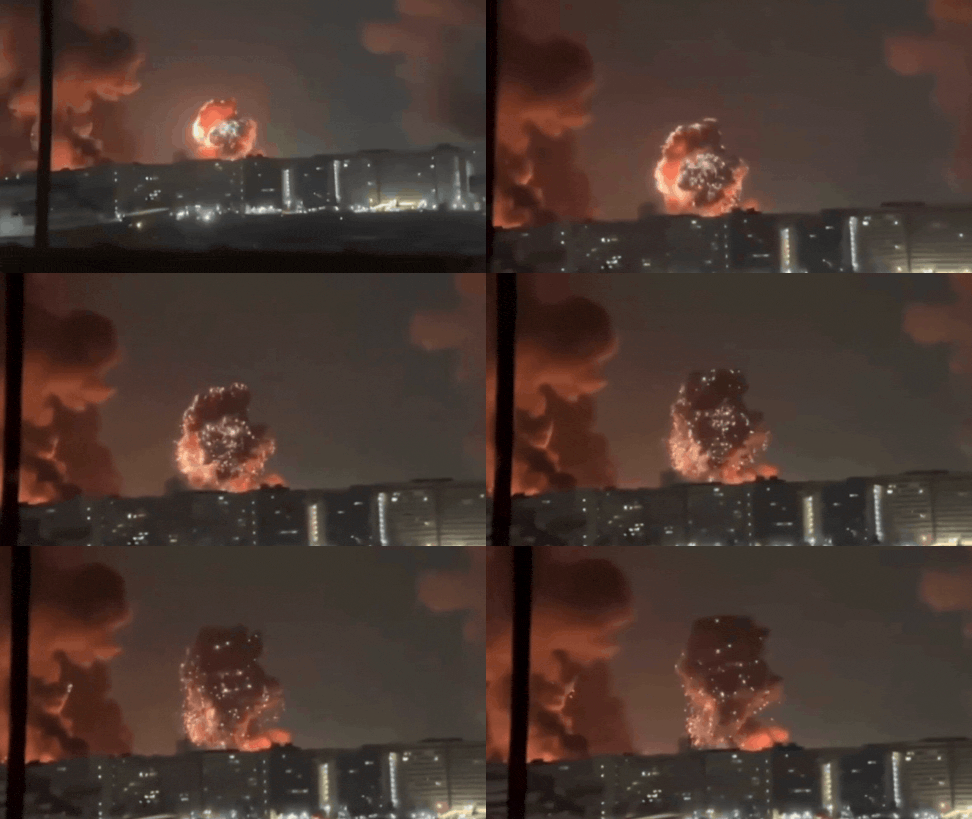



The Middle East, a vibrant hub for international sports, is now grappling with unprecedented uncertainty. The escalating US-Israel war on Iran has sent seismic waves through the region’s sporting calendar, forcing athlete withdrawals, triggering event cancellations, and casting a long shadow over prestigious tournaments like Formula One and major football friendlies. This unfolding geopolitical drama threatens not only the immediate future of sports but also the broader economic and cultural ties that have made the Middle East a critical player on the global athletic stage.
Geopolitical Storm Brews: The Conflict’s Shadow Over Sports
The intensifying geopolitical tensions between the United States, Israel, and Iran have reached a critical juncture, spilling over from diplomatic channels and military posturing into the realm of international sports. What began as targeted sanctions and proxy confrontations has escalated into a direct conflict, creating a volatile environment that is fundamentally reshaping travel and event planning across the Middle East. For athletes, organizers, and fans alike, the region, once a promising frontier for sporting spectacle and investment, has become a landscape fraught with risk and sudden disruption.
A Region on Edge: Background to the Crisis
The roots of the current instability are deeply embedded in decades of complex relationships and strategic rivalries. Iran’s nuclear ambitions, its regional influence through various non-state actors, and persistent tensions with Israel have long been flashpoints. The United States, committed to its strategic alliances in the region and to containing Iranian influence, has found itself increasingly drawn into the conflict. Recent escalations, including direct military engagements and cyber warfare, have transformed these long-standing rivalries into an active warzone, making safe passage and large-scale gatherings incredibly precarious.
Timeline of Disruption: How Events Unfolded
- Early 2026: Increased rhetoric and minor skirmishes between US/Israel and Iran.
- February 2026: Significant escalation, including missile exchanges and cyberattacks. Travel advisories issued for several Middle Eastern nations.
- March 1, 2026: Initial reports of athletes reconsidering travel to the region.
- March 5, 2026: ATP Challenger event in Bahrain officially canceled due to security concerns.
- March 6, 2026: Indian badminton star PV Sindhu announces withdrawal from a major tournament in the UAE, citing security and logistical challenges.
- March 7, 2026: Rumors intensify about the potential postponement or relocation of the Formula One Bahrain Grand Prix and numerous international football friendlies scheduled in Gulf states.
- Ongoing: International sports federations begin emergency meetings to assess risks and contingency plans for upcoming events.
Industry Impact: Shifting Sands for Global Sports
The ripple effects of this conflict are profound, reaching far beyond the immediate cancellation of events. The sports industry, a global behemoth worth billions, relies heavily on stability, predictable travel, and secure venues. The Middle East, with its state-of-the-art facilities and significant investment in sporting infrastructure, has been a key growth market. Now, that growth is under severe threat.
Logistical Nightmares and Financial Fallout
Logistical challenges are paramount. Flight paths are being altered or canceled, insurance premiums for events in the region are skyrocketing, and the ability to guarantee the safety of athletes, support staff, and spectators has become an insurmountable hurdle for many organizers. The financial fallout is equally severe. Broadcast rights, sponsorship deals, ticket sales, and hospitality revenues, all painstakingly built over years, are now evaporating. Local economies that benefit from sports tourism are facing a sharp downturn, impacting hotels, restaurants, and ancillary services.
Athlete Safety and Morale
Beyond the economic aspect, the human element is critical. Athletes, whose careers depend on consistent competition, face difficult choices. The decision by PV Sindhu, a globally recognized badminton star, to withdraw is indicative of the broader sentiment among professionals prioritizing personal safety over competition. This affects athlete morale, training regimes, and even potential Olympic qualifications, creating a wave of anxiety throughout the professional sporting community.
Major Events Under Threat: A Summary
| Event Category | Specific Event/Series | Status/Impact | Reason |
|---|---|---|---|
| Badminton | Unnamed Tournament (UAE) | PV Sindhu withdrawn | Security/Logistical concerns |
| Tennis | ATP Challenger (Bahrain) | Canceled | Escalating regional conflict |
| Motorsport | Formula One Bahrain GP | Under severe threat/Review | Regional instability, travel advisories |
| Football | International Friendlies (Gulf states) | Postponed/Relocated | Safety of teams and fans |
| Other Sports | Various regional championships | Uncertainty, potential delays | Widespread travel and security risks |
Market and Policy Implications: A Broader Canvas
The current crisis extends its reach into broader market and policy implications, compelling governments, sports federations, and international bodies to re-evaluate their strategies in the region.
Re-evaluating Investment and Geopolitical Risk
For years, Middle Eastern nations have strategically invested billions in sports, not just for domestic entertainment but as a soft power tool, aiming to diversify economies and enhance global standing. The current conflict forces a brutal reassessment of this strategy. International investors will now factor in higher geopolitical risk premiums, potentially diverting future investments to more stable regions. This could have long-term implications for the Middle East’s ambition to be a global sporting powerhouse.
Policy Shifts and Contingency Planning
Sports governing bodies, typically focused on sporting integrity and competition, are now thrust into the role of geopolitical risk assessors. New policies around athlete safety, event insurance, and contingency planning for major global tournaments will undoubtedly emerge. There will be increased pressure to develop robust frameworks for rapid event relocation or cancellation, taking into account the complex web of broadcast rights, sponsor commitments, and athlete schedules. This could lead to a decentralization of major events, moving away from politically volatile zones.
Expert Analysis: Navigating Uncharted Waters
According to Dr. Aliyah Khan, a geopolitical analyst specializing in the Middle East, “The current conflict represents a critical juncture for the region’s sports ambitions. While the Gulf states have successfully positioned themselves as major hosts, the unpredictability of warfare undermines decades of investment. The primary concern is not just the immediate cancellations but the lasting perception of instability that could deter future high-profile events for years to come.”
Sports economist Mark Jensen adds, “The economic impact will be substantial, especially for countries heavily reliant on sports tourism. The loss of a single F1 Grand Prix or major football tournament can cost a host nation hundreds of millions in direct and indirect revenue. More importantly, it erodes confidence – a much harder asset to rebuild.”
Comparing Regional Event Risks: Before and After Conflict
| Risk Factor | Pre-Conflict Assessment (e.g., 2025) | Post-Conflict Assessment (2026 and Beyond) |
|---|---|---|
| Geopolitical Instability | Low-Moderate (localized tensions) | High (active war zone, widespread risk) |
| Travel Safety | Generally High | Significantly Reduced (advisories, flight path changes) |
| Event Insurance Costs | Standard | Extremely High/Unavailable |
| Sponsor Confidence | High | Low-Moderate (re-evaluating ROI and brand risk) |
| Athlete Willingness to Travel | High | Low (personal safety concerns paramount) |
Future Outlook: A Long Road to Recovery
The immediate future for Middle Eastern sports is undeniably bleak. The ongoing conflict means more cancellations and withdrawals are likely, and the prospect of hosting any major international events in the short to medium term remains highly uncertain. The long-term outlook hinges entirely on the de-escalation of the war and the restoration of regional stability. Even then, rebuilding trust and re-attracting investment will be a gradual and challenging process.
Sports bodies may explore ‘bubble’ environments or significantly increased security measures for essential events, but these are costly and often only partially effective. There may also be a pivot towards virtual sports or events hosted in less volatile regions, further diminishing the Middle East’s role as a sports destination. The dream of becoming a central hub for global sports faces its most formidable challenge yet.
Frequently Asked Questions About the Conflict’s Impact on Sports
- What specific sports events have been most affected by the US-Israel-Iran war?
Major events like the ATP Challenger series, potential Formula One Grand Prix, and international football friendlies have been directly impacted, with athlete withdrawals and cancellations already occurring. - Why did PV Sindhu withdraw from her tournament in the UAE?
PV Sindhu withdrew citing escalating security concerns and logistical difficulties stemming from the ongoing conflict in the Middle East, prioritizing her safety. - Are major events like the Formula One Bahrain Grand Prix definitely canceled?
While not officially canceled at the time of this report, the F1 Bahrain Grand Prix is under severe threat and review due to regional instability and travel advisories. A decision is pending. - How does the conflict impact event organizers financially?
Organizers face significant financial losses from canceled broadcast rights, sponsorships, ticket sales, and rising insurance costs, impacting their viability. - What are the main concerns for athletes traveling to the Middle East now?
Athlete concerns primarily revolve around personal safety, logistical complexities with travel, and the potential for disruptions to their training and competition schedules. - Will other major sports like cricket or basketball be affected?
Yes, any international sporting event requiring significant travel and large gatherings in the affected region is likely to face similar threats of cancellation or postponement. - What are the long-term implications for the Middle East as a sports hub?
The conflict could severely damage the region’s reputation as a stable host for major events, potentially deterring future investments and global sporting spectacles for years. - Are there any contingency plans being made by sports federations?
Yes, international sports federations are holding emergency meetings to assess risks and develop contingency plans, which may include event relocation or enhanced security protocols. - How does this conflict compare to previous regional crises affecting sports?
This conflict is particularly impactful due to its scale and the direct involvement of major global powers, creating a higher level of widespread insecurity compared to previous localized tensions. - What can be done to mitigate the impact on sports in the region?
Mitigation primarily depends on a swift de-escalation of the conflict. In the interim, organizers may look at virtual events, relocating tournaments, or implementing unprecedented security measures, though these are imperfect solutions.
Conclusion: The Unfolding Chapter of Sports and Conflict
The US-Israel war on Iran has tragically underscored the vulnerability of global sports to geopolitical currents. What was once seen as an arena for unity and competition has become a casualty of conflict, demonstrating how quickly years of investment and planning can unravel in the face of instability. The repercussions will echo through the sporting world for years, prompting a necessary re-evaluation of how major events are planned, insured, and hosted in an increasingly volatile global landscape. For the Middle East, the path to regaining its stature as a premier sports destination will be arduous, requiring not just peace, but a sustained period of trust-building and renewed confidence from athletes, federations, and fans worldwide. The game, for now, is paused, waiting for the geopolitical storm to pass.
Relevant Resources:
- Understanding Geopolitical Impact on Global Markets
- New Safety Protocols for International Athletes
- Economic Fallout: Analyzing the Middle East’s Shifting Fortunes
External Authority Links:
#MiddleEastConflict #SportsUnderThreat #GeopoliticalImpact #F1 #PVSindhu #SportsTravel #WarAndSport #InternationalEvents #GlobalSecurity