





Indian Embassy Issues Urgent Qatar Advisory Amid Escalating US-Israel-Iran Conflict
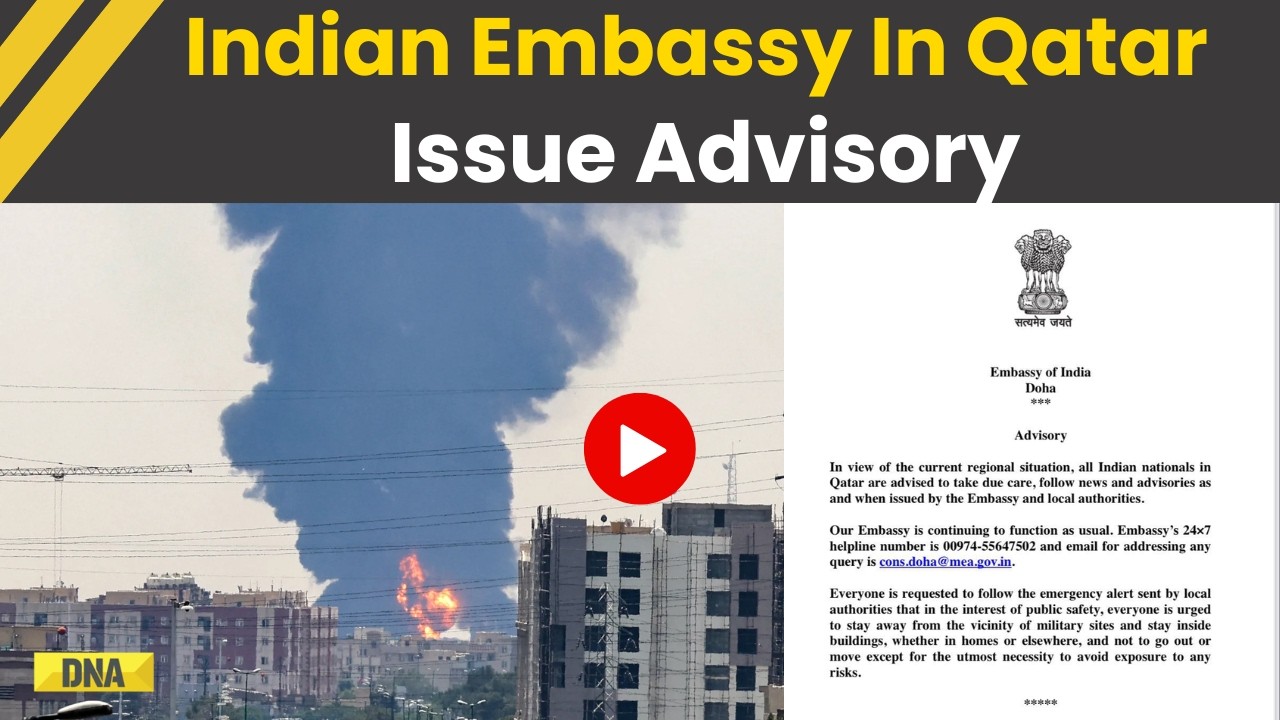
The Middle East simmers on the precipice of a wider confrontation. As geopolitical tensions reach a fever pitch with the escalating US-Israel war against Iran, the Indian Embassy in Doha, Qatar, has issued an urgent and stark advisory for its citizens: remain indoors. This unprecedented directive underscores the severe security alert gripping the region, sending ripples of concern through the international community and highlighting the fragile balance of power in one of the world’s most critical strategic zones.
Millions of expatriates, global energy markets, and the intricate web of international diplomacy now brace for potential fallout. This report delves into the intricate layers of this escalating crisis, examining its origins, immediate impacts, and the far-reaching implications for regional stability and global security.
Understanding the Geopolitical Crucible: Background to the Crisis
The current state of heightened alert in Qatar is not an isolated incident but rather a direct consequence of a deeply entrenched and rapidly deteriorating geopolitical landscape. For years, the region has been a hotbed of proxy conflicts and strategic rivalries, primarily between the United States and its allies, including Israel, and Iran and its network of regional partners.
The seeds of the current escalation were sown in a complex interplay of historical grievances, ideological differences, and clashing national interests. Iran’s nuclear program, its support for various non-state actors, and its influence across the Levant have long been sources of contention. The United States, committed to preventing Iran from developing nuclear weapons and challenging its regional hegemony, has maintained a robust military presence and enforced stringent sanctions. Israel, viewing Iran as an existential threat, has pursued an aggressive policy of pre-emptive actions and covert operations.
The “escalating US-Israel war against Iran” referenced in the advisory suggests a shift from proxy skirmishes and targeted strikes to a more direct and overt confrontation. This transition likely involves a combination of intensified military engagements, cyber warfare, economic pressure, and a heightened risk of miscalculation. Qatar, despite its efforts to maintain neutrality and facilitate dialogue, finds itself geographically proximate to the potential flashpoints and host to significant US military assets, making it vulnerable to the ripple effects of any widespread conflict.
A Dire Timeline of Mounting Tensions
The path to the current security alert has been paved with a series of alarming developments:
- Early 2020s: Persistent skirmishes and cyberattacks escalate between Israel and Iranian-backed forces, often spilling over into neighboring territories. Diplomatic efforts to revive the Iran nuclear deal consistently fail.
- Mid-2020s: Increased reports of maritime incidents in the Persian Gulf and Red Sea, attributed to both Iranian and US/allied forces, disrupt shipping lanes and raise insurance premiums.
- Late 2025: Significant military buildups observed in the region by both US and Iranian forces. Rhetoric from all sides becomes increasingly bellicose, indicating a breakdown of traditional deterrence mechanisms.
- Early 2026: A series of targeted strikes and counter-strikes between Israel and Iran, possibly involving direct missile exchanges or significant drone attacks, push the conflict into a more overt phase. US assets in the region are reportedly targeted, leading to direct US military involvement.
- March 6, 2026: Unspecified intelligence triggers a “security alert” in Qatar, leading to enhanced security measures around critical infrastructure and foreign embassies.
- March 7, 2026: The Indian Embassy in Doha issues an urgent advisory, instructing its citizens to “remain indoors” and avoid non-essential travel, signaling a tangible and immediate threat to civilian safety.
Industry Impact: Shocks to Global Energy and Trade
The Middle East is the lifeblood of global energy, and any significant instability inevitably sends shockwaves through international markets. An escalating US-Israel-Iran conflict, particularly one centered near major shipping chokepoints like the Strait of Hormuz, would have profound consequences:
- Oil and Gas Markets: Expect immediate and drastic spikes in crude oil prices. Supply disruptions, whether due to direct attacks on oil infrastructure, mining of shipping lanes, or retaliatory measures, could cripple global energy supplies. Qatar, a major liquefied natural gas (LNG) exporter, would find its crucial shipping routes threatened, impacting energy security for nations across Asia and Europe.
- Global Shipping and Logistics: The Persian Gulf is a critical artery for international trade. Escalating conflict would lead to soaring insurance premiums, rerouting of vessels, and potential halts in shipping, impacting supply chains worldwide.
- Aviation Industry: Airspace over the conflict zone and neighboring areas would become high-risk, leading to extensive flight diversions, increased operational costs for airlines, and potential travel advisories affecting regional hubs like Doha International Airport.
- Construction and Expatriate Labor: Nations like Qatar rely heavily on expatriate labor, particularly from South Asia, for their ambitious development projects. A severe security deterioration would prompt mass evacuations, halt projects, and trigger an exodus of skilled and unskilled workers, leading to long-term economic repercussions.
Market and Policy Implications: A World on Edge
Beyond immediate market volatility, the escalating conflict carries substantial long-term market and policy implications:
- Global Inflation: Higher energy costs would fuel inflation across consumer goods and services, straining economies already grappling with post-pandemic recovery challenges.
- Investment Flight: The entire Middle East could see a significant downturn in foreign direct investment as investors seek safer havens, impacting diversified economies like Saudi Arabia and the UAE.
- Diplomatic Realignment: The crisis could force nations to choose sides, further polarizing international relations. The role of mediating powers like China and Russia would come under intense scrutiny.
- Defense Spending Boost: Nations globally, particularly those reliant on Middle Eastern energy, may significantly increase defense budgets to secure supply lines and enhance national security.
- Migration Crisis: A large-scale conflict could trigger significant humanitarian crises and refugee flows, putting immense pressure on neighboring countries and international aid organizations.
Expert-Style Analysis: Navigating the Perilous Waters
Geopolitical analysts widely agree that the current trajectory is fraught with danger. Dr. Elena Petrova, a Senior Fellow at the Global Security Institute, notes, “What we are witnessing is a dangerous game of brinkmanship where red lines have blurred. The direct engagement between a regional power and two global heavyweights dramatically escalates the potential for miscalculation. Qatar, with its strategic location and US military presence at Al Udeid Air Base, becomes an unwilling focal point for these tensions.”
The “remain indoors” advisory from the Indian Embassy underscores the intelligence community’s assessment of an immediate and tangible threat. It suggests that the conflict is no longer confined to specific military targets but poses a broader risk to civilian populations. This also reflects the increasing concern among nations for the safety of their diasporas, particularly in regions prone to sudden security shifts.
Some experts argue that the escalation could be a deliberate attempt by one or more parties to reshape the regional order. Others caution against underestimating the potential for unintended consequences, where a localized incident could rapidly spiral out of control. The complex web of alliances and rivalries means that a kinetic action against Iran could easily draw in other actors, transforming a bilateral conflict into a multi-front regional war.
Regional Security Postures Comparison
| Country/Region | Current Security Posture | Primary Concerns | Notable Advisories/Actions |
|---|---|---|---|
| Qatar | High Alert, Enhanced Security | Spillover from US-Israel-Iran conflict, stability of US military assets | Indian Embassy “remain indoors” advisory, increased domestic security presence |
| Saudi Arabia | Elevated Vigilance | Direct attacks from Iranian proxies, oil infrastructure security, maritime threats | Increased border patrols, anti-drone defense systems on high alert |
| United Arab Emirates | Heightened Awareness | Economic disruption, maritime security, potential for missile/drone attacks | Reinforced critical infrastructure defenses, travel warnings for citizens abroad |
| Oman | Monitoring & Diplomatic Engagement | Maintaining neutrality, Strait of Hormuz security, humanitarian concerns | Increased naval patrols, active diplomatic channels to de-escalate |
| Iraq | Extreme Volatility | Internal proxy conflicts, potential for renewed US-Iran clashes on its soil | Curfews, heightened military presence, warnings for international workers |
Summary of Key Developments Leading to Advisory
| Date (Approx.) | Event Description | Impact/Significance |
|---|---|---|
| Late 2025 | Intensified US-Israel-Iran confrontations | Shift towards direct, overt military engagements |
| Early 2026 | Reports of US assets targeted in region | Direct US involvement, heightened regional military posture |
| March 6, 2026 | Qatar issues security alert | Indicates specific, actionable intelligence of an imminent threat |
| March 7, 2026 | Indian Embassy advisory for citizens in Doha | Confirms immediate threat to civilian safety, “remain indoors” directive |
The Future Outlook: Navigating Uncertainty
The immediate future for Qatar and the broader Middle East remains deeply uncertain. The “remain indoors” advisory is likely a precursor to further security enhancements and potentially, if the situation deteriorates, calls for partial or full evacuations of non-essential personnel. The stability of Qatar, a crucial US ally and economic hub, is now directly linked to the trajectory of the US-Israel-Iran conflict.
International efforts for de-escalation are paramount, but their efficacy will depend on the willingness of all parties to pull back from the brink. The global community watches anxiously, fully aware that a full-blown regional war could have catastrophic consequences for energy prices, global trade, and human lives. The onus is now on diplomacy, coupled with firm deterrence, to prevent a regional crisis from spiraling into a global catastrophe.
For individuals and businesses in the region, preparedness is key. Staying informed through official channels, reviewing emergency plans, and adhering to all security directives will be crucial in navigating these perilous times. The world holds its breath, hoping that reason prevails over escalating aggression.
Frequently Asked Questions (FAQs)
- What specifically prompted the Indian Embassy’s “remain indoors” advisory in Qatar?
The advisory was issued amid a heightened security alert in Qatar and in response to the escalating US-Israel war against Iran, indicating credible intelligence of a potential threat to civilian safety. - How does the escalating US-Israel-Iran conflict directly impact Qatar?
Qatar hosts significant US military assets, including Al Udeid Air Base, making it a potential target or a region susceptible to spillover effects from the ongoing conflict. - Are other embassies issuing similar advisories in Qatar or the region?
While the Indian Embassy’s advisory is particularly urgent, many nations are likely reviewing or updating their travel advisories for the region in response to the heightened tensions. - What are the main risks for expatriates in Qatar during this security alert?
Risks include potential for missile/drone attacks, disruptions to essential services, travel restrictions, and general instability. Adhering to advisories is crucial for safety. - How might this conflict affect global oil and gas prices?
An escalation could severely disrupt shipping in the Persian Gulf, leading to significant spikes in crude oil and natural gas prices due as supply routes are threatened or infrastructure is damaged. - What are the potential long-term economic consequences for Qatar and the Gulf region?
Long-term impacts could include reduced foreign investment, disruption to major development projects, and a potential exodus of expatriate labor, hindering economic growth and diversification efforts. - Is there a diplomatic solution being pursued to de-escalate the US-Israel-Iran conflict?
Diplomatic efforts are continuously underway by various international actors, though their effectiveness is challenged by the current direct military engagements and deep-seated mistrust between the parties. - What should Indian citizens in Qatar do if they need emergency assistance?
They should immediately contact the Indian Embassy in Doha through their official emergency hotlines and follow all instructions provided. - How can individuals stay informed about the evolving security situation in Qatar?
It is crucial to monitor official embassy advisories, reputable international news sources, and local government announcements. - Could this conflict lead to a broader regional war involving more countries?
Yes, geopolitical analysts warn that the complex web of alliances and rivalries in the Middle East significantly raises the risk of a wider regional conflict if de-escalation efforts fail.
A Precarious Balance: A Call for Restraint and Diplomacy
The urgent advisory from the Indian Embassy in Qatar serves as a stark reminder of the volatile state of the Middle East, caught in the crosshairs of an escalating US-Israel-Iran conflict. The directive to “remain indoors” is not merely a bureaucratic announcement but a grave signal of immediate danger, forcing hundreds of thousands of expatriates and the global community to confront the sobering realities of a region on the brink.
The ramifications, from immediate threats to civilian safety to profound disruptions in global energy and trade, demand urgent and sustained international attention. While the future remains shrouded in uncertainty, the imperative for de-escalation and a return to principled diplomacy has never been more critical. The world holds its breath, hoping that leaders can navigate these perilous waters with wisdom and restraint, averting a catastrophe whose echoes would be felt for generations.
Internal Linking Suggestions:
- The Future of Middle East Energy: Navigating Geopolitical Risks
- Global Supply Chains Under Threat: How Regional Conflicts Affect International Trade
- Diplomacy in Crisis: The UN’s Role in De-escalating Middle East Tensions
External Authority Links:
#SEO Hashtags:
#QatarSecurity #MiddleEastConflict #USIsraelIranWar #IndianExpatriates #GlobalStability