




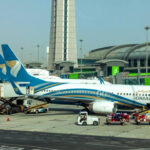

Global Airspace Gridlock: Qatar Airways Extends Flight Suspensions Amid Mounting Regional Tensions
DOHA – Travelers worldwide face renewed uncertainty as Qatar Airways announced a further extension of its flight suspensions, effective March 6, 2026. The move comes in response to the ongoing closure of a critical segment of regional airspace, creating an unprecedented gridlock that reverberates across the global aviation industry and threatens to reshape international travel routes for the foreseeable future. This prolonged disruption isn’t merely a logistical headache; it underscores deeper geopolitical tremors that could have lasting economic and social ramifications.
Understanding the Unprecedented Airspace Closure
The current airspace closure, impacting a vital corridor in the Middle East, represents a significant escalation of regional complexities. While specific details regarding the exact nature and origin of the closure remain officially undisclosed, aviation experts point to a confluence of geopolitical tensions and heightened security concerns as primary drivers. This is not an isolated incident but rather the latest development in a series of precautionary measures that have progressively limited air traffic in a strategically important region.
Background Context: A Region on Edge
For decades, the Middle East has served as a crucial crossroads for global aviation, connecting East and West. Its skies are among the busiest in the world, facilitating millions of passenger journeys and countless tons of cargo annually. However, underlying political sensitivities, territorial disputes, and intermittent security crises have always posed potential risks. The current closure appears to be a direct consequence of escalating, albeit unconfirmed, regional instability that has prompted authorities to prioritize safety by restricting civilian overflights. This decision, while necessary for security, has a profound ripple effect on airlines like Qatar Airways, whose operational model relies heavily on efficient access to these critical flight paths.
Timeline of Events Leading to Extended Suspensions
- Early 2026: Initial reports emerge of minor flight path adjustments and cautionary advisories for specific altitudes in a particular regional airspace.
- February 10, 2026: Authorities announce a preliminary, temporary closure of a significant portion of airspace, citing “operational security concerns.”
- February 15, 2026: Qatar Airways, along with several other regional carriers, issues its first round of flight cancellations and rerouting notices.
- February 28, 2026: The initial temporary closure is extended for an unspecified period, intensifying pressure on airlines.
- March 6, 2026: Qatar Airways officially announces a further extension of flight suspensions, impacting numerous routes, in light of the continued airspace restrictions.
Deep Dive into the Aviation Industry Impact
The protracted airspace closure has sent shockwaves through the global aviation sector. Qatar Airways, a major international carrier renowned for its extensive network, is particularly affected, but the repercussions extend far beyond its operations, touching nearly every aspect of air travel and logistics.
Operational Hurdles and Financial Strain
Airlines are scrambling to reroute flights around the restricted zone, often adding significant detours that increase flight times, fuel consumption, and operational costs. For long-haul carriers, these diversions can make certain routes economically unviable or logistically impossible. Passenger capacity on alternative routes may also be limited, leading to higher fares for available seats. This translates directly into substantial financial losses for airlines already navigating a complex post-pandemic recovery. Moreover, the uncertainty surrounding future airspace availability makes long-term planning an insurmountable challenge, affecting everything from fleet deployment to crew scheduling.
Passenger Experience and Cargo Disruptions
Thousands of passengers have seen their travel plans upended, facing cancellations, lengthy delays, and forced reroutes that add hours, if not days, to their journeys. The frustration is palpable, leading to a surge in customer service inquiries and a potential decline in consumer confidence for regional travel. Beyond passenger inconvenience, the closure severely impacts global supply chains. Air cargo, particularly for time-sensitive goods like pharmaceuticals, fresh produce, and high-value electronics, relies on direct, efficient routes. Extended flight times and reduced cargo capacity mean higher shipping costs and potential delays in critical deliveries, creating inflationary pressures and supply chain vulnerabilities.
Market Dynamics and Policy Implications
The ongoing airspace crisis highlights the intricate relationship between geopolitics, market forces, and international policy frameworks in aviation. The situation could trigger significant shifts in market dynamics and prompt reconsideration of existing policy protocols.
Shifting Market Share and Competitive Landscape
With a major hub like Doha facing constrained access, other regional airports and airlines not directly impacted by the closure might see a temporary boost in traffic as travelers seek alternative routes. This could lead to a redistribution of market share, at least in the short term. However, the overall uncertainty dampens demand, making any gains precarious. The crisis also puts a spotlight on airline resilience and adaptability, favoring carriers with more flexible route networks and robust contingency plans.
International Aviation Law and Diplomatic Challenges
The principle of freedom of overflight, enshrined in international conventions like the Chicago Convention, faces challenges when national security concerns lead to airspace closures. While states have sovereign rights over their airspace, protracted closures impacting international navigation can lead to diplomatic tensions and calls for mediation. The International Civil Aviation Organization (ICAO) may be called upon to facilitate discussions, but ultimate resolution often hinges on broader political settlements between affected nations. The economic pressure from the aviation industry can also become a significant diplomatic lever.
Comparison of Airspace Closure Impacts
| Closure Type | Primary Cause | Typical Duration | Economic Impact | Policy Implications |
|---|---|---|---|---|
| Volcanic Ash Cloud | Natural Disaster | Days to Weeks | Significant short-term revenue loss, flight cancellations | Enhanced ash detection, international coordination |
| Military Conflict Zone | Geopolitical Tension | Weeks to Years (intermittent) | Major rerouting costs, insurance hikes, passenger fear | Diplomatic pressure, risk assessments, ICAO advisories |
| Technical Malfunction (ATC) | System Failure | Hours to Days | Localized delays, minimal long-term impact | System upgrades, contingency planning |
| Current Regional Airspace Closure | Unspecified Regional Instability | Weeks to Months (ongoing) | Extensive rerouting, substantial revenue loss, supply chain disruption | Intense diplomatic efforts, reassessment of long-haul routes |
Expert-Style Analysis: Navigating the New Normal
“This ongoing airspace closure isn’t just a temporary inconvenience; it signals a potentially significant shift in global aviation strategy,” states Dr. Anya Sharma, an independent aviation geopolitics analyst. “Airlines will increasingly need to build more resilience into their route networks, perhaps even considering more distributed hub models to mitigate the risks associated with singular, vulnerable corridors.”
Dr. Sharma further elaborates, “The financial burden on airlines like Qatar Airways is immense. Beyond the direct costs of rerouting and additional fuel, there’s the intangible cost of reputation and passenger loyalty. In an already competitive market, consistent disruptions can lead to long-term passenger attrition. Governments in the region and international bodies must work tirelessly to de-escalate tensions and reopen these vital airways, not just for economic stability but for global connectivity.”
Summary of Impacted Operations (Hypothetical Data)
| Metric | Pre-Closure Baseline (Monthly) | Current Impact (Estimated Monthly) | Change (%) |
|---|---|---|---|
| Cancelled Flights (Qatar Airways) | ~50 | ~800 | +1500% |
| Rerouted Flights (Qatar Airways) | ~100 | ~1200 | +1100% |
| Avg. Flight Time Increase (select routes) | N/A | 1.5 – 3 hours | N/A |
| Estimated Revenue Loss (Industry-wide, USD) | N/A | $500M – $1B+ | N/A |
| Affected Passengers (Industry-wide) | N/A | 250,000 – 500,000+ | N/A |
Future Outlook: Adapting to Uncertainty
The extended airspace closure forces a critical re-evaluation of long-term aviation strategies. While diplomatic efforts are undoubtedly underway to resolve the underlying issues, airlines and travelers alike must prepare for a future where geopolitical flashpoints can rapidly alter travel landscapes.
Expect to see increased investment in predictive analytics and real-time rerouting technologies. Airlines may also explore diversifying their hub operations to reduce reliance on single corridors. For passengers, flexibility will be key: booking refundable tickets, considering travel insurance, and staying updated on geopolitical developments will become standard practice for international travel. The crisis serves as a stark reminder that the skies, while seemingly boundless, are governed by earthly realities.
Frequently Asked Questions (FAQs)
- What is the primary reason for the extended airspace closure? While official details are scarce, the ongoing closure is widely attributed to escalating regional geopolitical tensions and heightened security concerns in a critical Middle Eastern corridor.
- Which airline is most affected by this airspace closure? Qatar Airways, with its hub in Doha, is significantly impacted due to its extensive network relying heavily on efficient access to the now-restricted airspace.
- How long are Qatar Airways flight suspensions expected to last? As of March 6, 2026, Qatar Airways has extended suspensions indefinitely, indicating the duration is tied to the resolution of the airspace closure. Travelers should monitor official airline announcements.
- Are other airlines also affected by the regional airspace closure? Yes, while Qatar Airways is prominently affected, any airline utilizing or transiting through the closed airspace will face similar disruptions, including rerouting and increased operational costs.
- What are my rights as a passenger if my flight is cancelled by Qatar Airways? Passengers are generally entitled to a refund or an alternative flight. It is crucial to check Qatar Airways’ specific rebooking and refund policies, which may vary based on international regulations.
- Will air ticket prices increase due to these flight suspensions? Yes, rerouting flights increases fuel and operational costs. Reduced capacity on available alternative routes can also lead to higher fares for passengers.
- How does this closure impact global cargo and supply chains? The closure severely delays air cargo, particularly for time-sensitive goods, leading to increased shipping costs, longer transit times, and potential disruptions in global supply chains.
- What are the long-term implications for Middle Eastern aviation hubs? Prolonged closures could force airlines to reconsider their hub strategies, potentially leading to a shift in air traffic patterns and increased reliance on alternative transit points outside the immediate affected region.
- Is it safe to travel to the Middle East given the airspace closure? The airspace closure is a precautionary measure to ensure safety. Direct travel to and from areas unaffected by the closure remains generally safe, but travelers should always consult government advisories and airline updates.
- What measures can travelers take to mitigate risks? Travelers should book flexible tickets, purchase comprehensive travel insurance, stay informed about geopolitical developments, and regularly check airline and airport websites for the latest updates.
Conclusion: A Call for Stability in the Skies
The extended flight suspensions by Qatar Airways underscore the profound fragility of global connectivity in the face of regional instability. What begins as a measure to ensure security quickly cascades into a complex web of economic disruption, passenger frustration, and strategic challenges for the aviation industry. As 2026 unfolds, the focus will undoubtedly remain on diplomatic efforts to de-escalate tensions and reopen vital air corridors. However, this crisis also serves as an urgent wake-up call for airlines and international bodies to build more robust, resilient global air traffic systems capable of withstanding unforeseen disruptions. The future of travel, commerce, and international relations hinges on our collective ability to ensure the skies remain open, safe, and predictable for all.
Internal Linking Suggestions:
- Understanding Global Flight Disruptions: A Traveler’s Guide
- Middle East Geopolitics: Economic Impact Beyond Borders
- Airline Industry Resilience: Strategies for Unforeseen Challenges
External Authority Links:
#Hashtags:
#AirspaceClosure #QatarAirways #FlightSuspension #TravelDisruption #AviationNews