





The intricate geopolitical landscape of the Middle East is witnessing a profound shift in military strategy. A stark asymmetry is emerging between the proliferation of inexpensive unmanned aerial vehicles (UAVs) and the sophisticated, costly defensive systems designed to counter them.
This dynamic challenges traditional military doctrines, forcing a re-evaluation of defense spending and operational tactics in a volatile region.
The New Asymmetry: Cost-Effective Threats vs. High-Tech Defenses
The Rise of Unmanned Aerial Vehicles (UAVs)
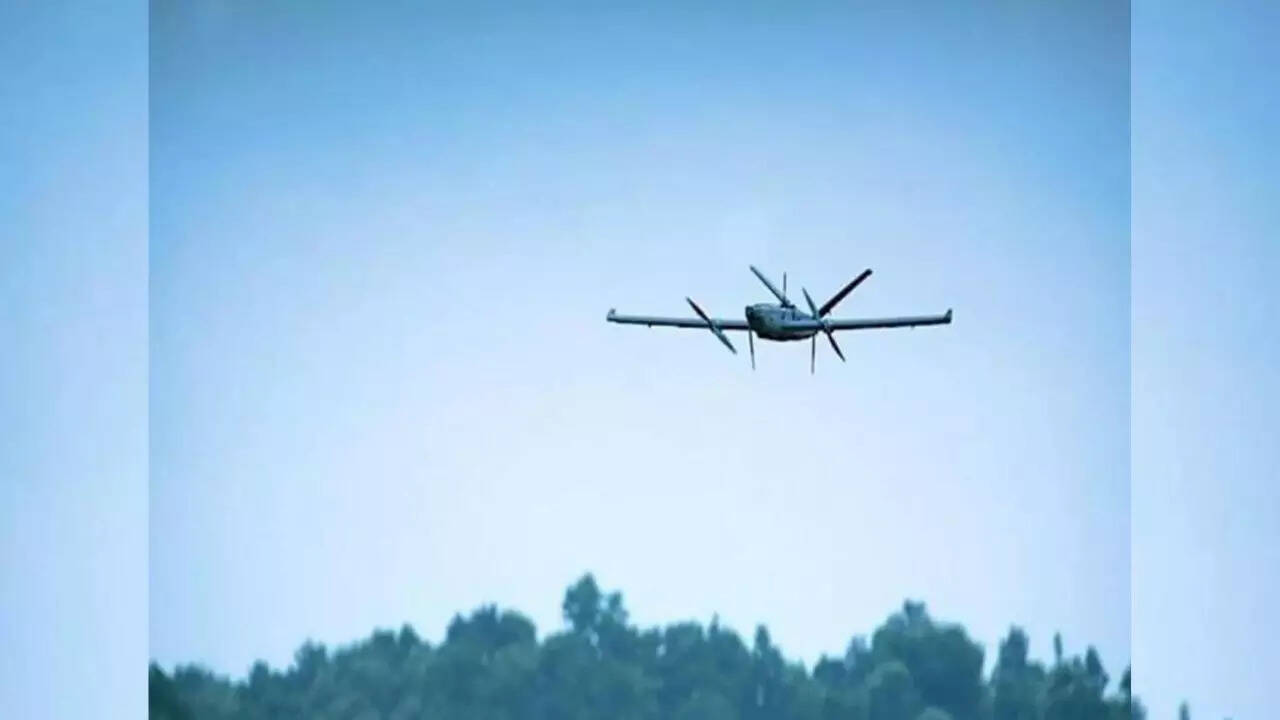
Iran has become a significant player in the development and deployment of low-cost drones, such as the Shahed-136. These ‘kamikaze’ drones are produced at an estimated cost of around $20,000 each, making them highly economical for large-scale deployment.
Their design focuses on simplicity, range, and a destructive payload, often employed in swarms to overwhelm targets.
The strategic value of these drones lies in their ability to project power and harass adversaries without risking human pilots. They offer a potent tool for asymmetric warfare, enabling actors with limited conventional air power to inflict damage and create persistent threats.
This approach bypasses the need for expensive manned aircraft, leveling the playing field in certain operational contexts. The widespread availability and relatively low technological barrier for these systems have democratized access to air attack capabilities for various state and non-state actors.
The effectiveness of these drones is not solely in their individual destructive potential but in their cumulative impact when launched in large numbers. This strategy seeks to saturate enemy defenses and exploit weaknesses.
Western Defensive Posture and Its Costs
In contrast, the United States and its allies deploy advanced air defense systems renowned for their precision and effectiveness. Systems like the Patriot missile, Aegis combat system, and Iron Dome are designed to intercept a wide range of aerial threats, from ballistic missiles to rockets and, increasingly, drones.
While exceptionally capable, the cost of intercepting a single drone with these high-tech systems is staggering. A single Patriot missile interceptor can cost upwards of $4 million, creating an unsustainable cost-exchange ratio when facing $20,000 drones.
This disparity means that even successful interceptions can lead to an economic victory for the aggressor. The continuous deployment and replenishment of these defensive assets place immense financial strain on defense budgets, diverting funds from other critical areas.
The challenge extends beyond pure cost, encompassing the logistical complexities of maintaining and operating such advanced systems. Their operational footprint requires highly trained personnel and extensive maintenance infrastructure, further adding to the overall expense.
Defenders face the difficult choice between letting threats through or incurring prohibitive costs to neutralize every incoming drone. This dilemma highlights a fundamental vulnerability in high-cost defense strategies against low-cost swarming attacks.
Strategic Implications and Escalation Risks
The Economic Burden of Defense
The sustained use of low-cost drones against high-value targets creates a significant economic burden for the defending forces. Each successful interception, while preventing damage, represents a substantial financial loss for the defender.
This ‘war of attrition’ on finances is a deliberate strategy, designed to drain resources and test the resolve of adversaries over time. It shifts the economic disadvantage from the attacker to the defender, challenging long-term defense sustainability.
Furthermore, the need to protect numerous assets simultaneously demands an expansive and redundant defense network. This widespread deployment of expensive interceptors stretches resources thin, potentially creating vulnerabilities in less defended areas.
The economic strain can also influence political decisions, potentially making a protracted defensive posture untenable. Decision-makers are faced with balancing security needs against the ever-increasing cost of maintaining a robust defense against ubiquitous threats.
This economic pressure can compel nations to seek alternative, less costly defensive measures or to pursue diplomatic solutions more aggressively to avoid prolonged financial drainage.
Tactical Challenges and Countermeasures
Small, slow, and low-flying drones present unique tactical challenges for traditional air defense systems. Their radar signatures can be minimal, making them difficult to detect and track using systems primarily designed for larger, faster targets.
The sheer volume of potential drone attacks, often deployed in swarms, can also overwhelm existing air defense capabilities. This saturation tactic forces defenders to expend multiple interceptors, exacerbating the cost-exchange problem.
In response, significant investment is being made into developing new counter-drone technologies. Directed energy weapons, such as lasers, offer the potential for low-cost, high-volume intercepts, addressing the economic imbalance.
Electronic warfare systems capable of jamming drone navigation and control signals are also vital. Additionally, advanced sensor fusion and artificial intelligence are being explored to improve detection and threat assessment against swarming UAVs, representing the latest trends in defense innovation.
Other countermeasures include kinetic solutions like drone-specific interceptors or even net-firing systems. The development of layered defenses, combining multiple technologies, is crucial to mitigating the multi-faceted drone threat effectively.
These emerging technologies aim to restore a favorable cost-exchange ratio and provide more effective protection against evolving drone threats. The race for technological superiority in counter-UAS capabilities is intensifying globally.
Regional Dynamics and Global Ramifications
Proxy Warfare and Influence
The proliferation of inexpensive drones empowers state and non-state actors alike, fundamentally altering the dynamics of proxy warfare. Groups supported by state sponsors can now wield significant destructive power without direct state attribution.
This allows for plausible deniability, complicates international responses, and increases regional instability. It facilitates a new form of conflict where traditional lines between state and non-state actors blur, making conflict resolution more complex.
The use of drones by proxy forces extends the reach and influence of their patrons across vast geographical areas. This capability enables targeted strikes, surveillance, and harassment, effectively projecting power without direct military engagement, thereby altering regional balances.
Such tactics can provoke retaliatory actions, leading to cycles of escalation that are difficult to control. The low threshold for deploying these weapons contributes to a more volatile security environment, impacting shipping lanes, energy infrastructure, and civilian populations.
The increased frequency of drone attacks by non-state actors in critical maritime zones further disrupts global trade and highlights the widespread implications of this new form of warfare.
International Response and Future of Warfare
The international community grapples with how to regulate and respond to the widespread availability and use of these drones. Calls for stricter controls on drone technology transfer and export are growing, yet their relatively simple manufacturing makes regulation challenging.
The ongoing situation highlights the urgent need for diplomatic solutions to de-escalate tensions and establish norms for drone warfare. Without such frameworks, the risk of miscalculation and broader conflict increases significantly.
The evolution of drone technology points towards a future of increasingly autonomous and AI-driven warfare. This raises profound ethical and strategic questions about human control over lethal systems and the potential for rapid, unconstrained escalation.
The lessons learned from current conflicts in the Middle East will undoubtedly shape defense strategies and international security policies for decades to come. Understanding this asymmetric challenge is crucial for peace and stability, as detailed by an Official Source on the matter.
The global community must collectively address the dual-use nature of drone technology to prevent its weaponization by malign actors. International cooperation in intelligence sharing and counter-proliferation efforts is becoming indispensable.
Frequently Asked Questions (FAQs)
1. What are the primary types of drones Iran is deploying in the Middle East?
Iran primarily deploys various models of Unmanned Aerial Vehicles (UAVs), with the Shahed-136 “kamikaze” or “loitering munition” being among the most prominent. These drones are designed to fly towards a target and detonate upon impact, often carrying a substantial explosive payload.
Other models include reconnaissance drones and attack drones like the Ababil series, which have varying ranges, payloads, and capabilities, suitable for different tactical objectives. These different types allow for a flexible and layered drone strategy against diverse targets.
2. How much do these Iranian drones typically cost to produce?
Estimates suggest that drones like the Shahed-136 can be produced for approximately $20,000 each. This low cost is attributed to their relatively simple design, reliance on commercially available components where possible, and efficient manufacturing processes focused on mass production.
This low unit cost is a critical factor in their strategic utility, enabling their deployment in large numbers without significant financial strain on the operators, making them highly attractive for asymmetric engagements.
3. What are the main defensive systems used by the US and its allies to counter drone threats?
The US and its allies employ a sophisticated array of air defense systems, including the Patriot missile system, designed to intercept aircraft, cruise missiles, and ballistic missiles. The Aegis combat system, primarily ship-borne, provides similar capabilities for naval assets.
Additionally, systems like the C-RAM (Counter-Rocket, Artillery, and Mortar) are used for point defense, and the Iron Dome system, developed by Israel, specifically counters short-range rockets and mortars, and has shown adaptability against some drones. More recently, focus has shifted to developing specific counter-UAS (C-UAS) technologies to address the evolving drone threat directly.
4. What is the approximate cost of intercepting a drone with a high-tech missile system?
The cost of intercepting a single drone with a sophisticated missile system like the Patriot can be incredibly high, often exceeding $4 million per interceptor. This figure highlights the significant economic imbalance when countering a $20,000 drone.
This cost-exchange ratio is a major strategic concern, as defenders can quickly deplete their financial resources even while successfully mitigating threats, making sustained defense financially challenging and potentially unsustainable in prolonged conflicts.
5. What is “asymmetric warfare” in the context of drones and air defense?
Asymmetric warfare refers to a conflict between belligerents whose military power, resources, or strategies differ significantly. In this context, it describes the disparity between a low-cost, high-volume drone threat and an expensive, technologically advanced defensive response.
The goal of the aggressor in asymmetric warfare is to leverage their strengths (e.g., low-cost attrition) against the defender’s vulnerabilities (e.g., high defense costs), aiming to exhaust or deter the superior force without direct conventional confrontation.
6. How do these low-cost drones challenge traditional air defense strategies?
These drones challenge traditional air defense strategies by presenting a threat that is difficult to detect, track, and cost-effectively intercept. Their small radar cross-section, slow speed, and low altitude flying make them hard for systems designed for faster, larger targets.
Furthermore, their deployment in swarms can overwhelm the capacity of even advanced air defense systems, forcing them to expend multiple expensive interceptors for each engagement, leading to a problematic cost-exchange ratio that prioritizes quantity over quality of defense.
7. What are the economic consequences for countries defending against such drone attacks?
The economic consequences are substantial, primarily due to the unsustainable cost-exchange ratio. Defending nations incur massive costs in interceptor missiles and maintaining expensive defense systems.
This continuous expenditure can strain national budgets, divert funds from other essential sectors, and create a long-term financial burden. It also necessitates constant replenishment of munitions, which can be logistically complex and costly, impacting overall military readiness.
8. What new counter-drone technologies are being developed to address this challenge?
Significant research and development are underway for new counter-drone technologies. These include directed energy weapons like lasers, which offer very low per-shot costs and high volumes of engagement, providing a more economically viable solution.
Electronic warfare systems are also being enhanced to jam drone communications and GPS signals, while advanced sensors (acoustic, thermal, radar) and AI-driven command and control systems are improving detection and identification capabilities against swarming threats. Kinetic solutions like specialized anti-drone missiles and drone-killing drones are also in development, forming a comprehensive defense.
9. How do drones impact proxy warfare and regional stability in the Middle East?
Drones significantly amplify the capabilities of proxy forces, allowing them to conduct precision strikes, reconnaissance, and harassment operations without risking human pilots. This enables state sponsors to project power and influence across the region with plausible deniability, complicating international responses.
The accessibility of these weapons lowers the threshold for engagement, increasing regional instability and the potential for escalation, as non-state actors can inflict significant damage on critical infrastructure or military targets, often targeting civilian areas or commercial shipping.
10. What are the broader global implications of this asymmetric drone warfare?
The global implications are profound, marking a shift in the nature of modern warfare. It highlights the vulnerability of high-tech defense systems to low-cost, mass-produced threats and prompts a global re-evaluation of defense strategies and spending.
It also raises concerns about the proliferation of drone technology, the ethics of autonomous weapons systems, and the need for international norms and regulations to prevent uncontrolled escalation and maintain global security. This dynamic is being closely watched by militaries worldwide, influencing future military acquisitions and doctrine and demanding new forms of international cooperation.
SEO Keywords
Middle East tensions, Iran drones, Shahed-136, US defenses, Asymmetric warfare, Counter-drone technology, Air defense systems, Patriot missile, Drone warfare costs, Regional stability, Military innovation, Geopolitical conflict, UAV threats, Defense spending, Electronic warfare.
Source: Times of India