




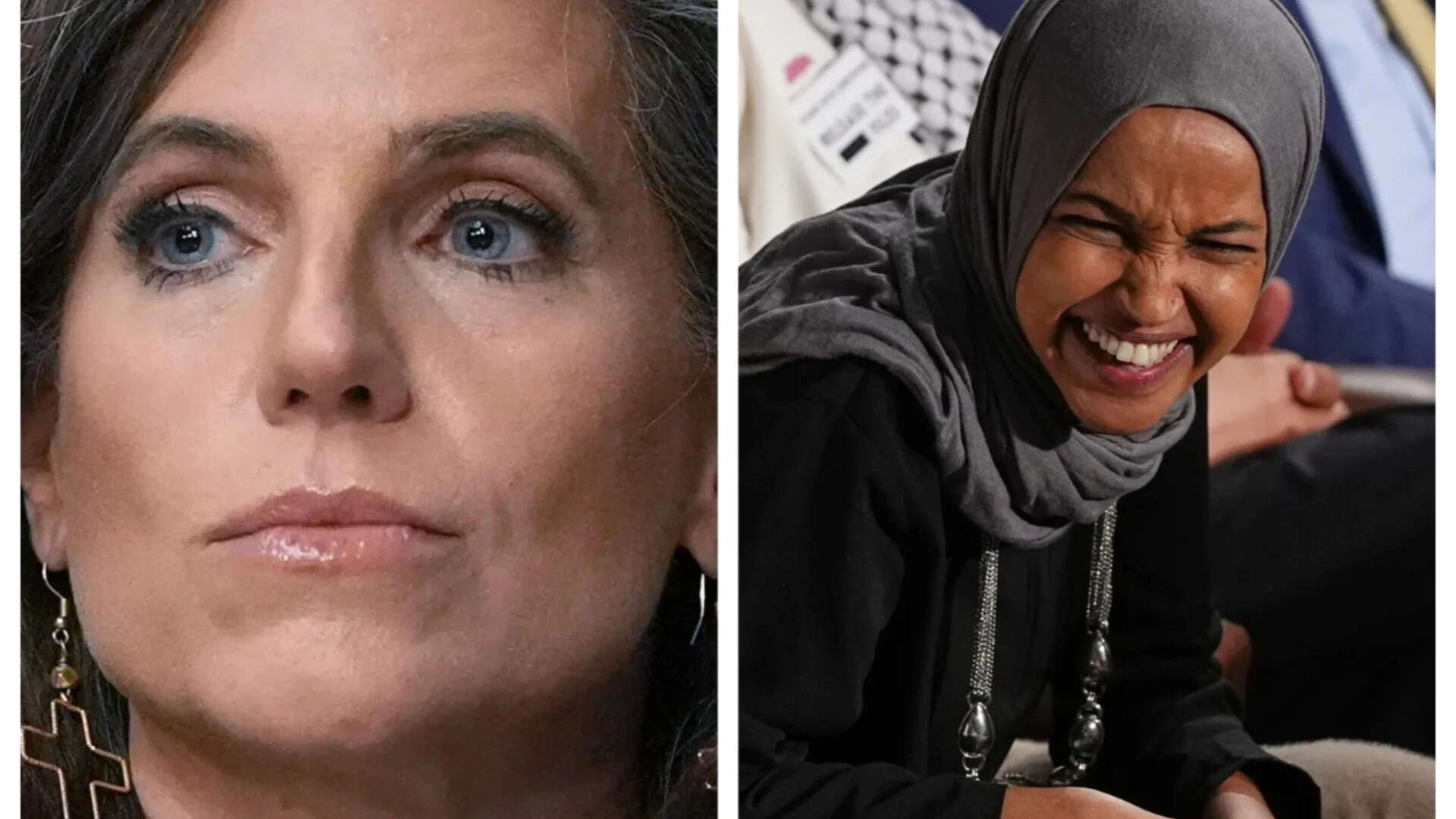
In a period marked by significant international developments, domestic political rhetoric often takes center stage. A recent exchange involving Congresswoman Nancy Mace and Congresswoman Ilhan Omar has drawn considerable attention.
This discussion unfolded against the backdrop of critical geopolitical news, intertwining personal commentary with global affairs.
The Unfolding Geopolitical Event
The news regarding the reported death of Supreme Leader Ayatollah Ali Khamenei has sent ripples across the international community. This event carries profound implications for Iran’s future leadership and regional stability.
His passing could signal a new era for Iranian domestic and foreign policy, potentially reshaping dynamics in the Middle East.
Khamenei’s Legacy and Iran’s Future
Ayatollah Ali Khamenei served as Iran’s Supreme Leader for over three decades, wielding immense spiritual and political authority. His tenure was defined by a firm stance against Western influence and a commitment to revolutionary principles.
Succession plans are typically opaque within the Iranian system, leading to speculation about potential candidates and the direction the country might take.
The death of such a pivotal figure inevitably raises questions about internal power struggles and shifts in the country’s strategic alignment. Regional adversaries and allies alike are closely watching developments for any indications of change.
Global powers are also assessing how this transition might impact nuclear negotiations, regional conflicts, and oil markets.
Nancy Mace’s Provocative Remarks
Amidst this unfolding geopolitical drama, Congresswoman Nancy Mace made headlines with her direct comments concerning fellow legislator Ilhan Omar. Mace’s statements blended concern with pointed advice, sparking immediate debate.
She notably remarked, “Don’t drink too much,” and added that her “heart goes out to Ilhan Omar” following the news about Khamenei’s passing.
Context of the Statement
Mace’s comments were widely interpreted as an insinuation regarding Omar’s potential reaction to Khamenei’s death. The remarks suggested an underlying belief about Omar’s political sympathies or emotional state concerning the Iranian leadership.
Such personal jabs in political discourse are not uncommon but often ignite controversy, especially when linked to sensitive international events.
The timing of the statement, coinciding with major world news, amplified its impact and led to widespread discussion across media platforms. Many observers questioned the appropriateness of such personal remarks during a moment of international gravity.
Critics argued that the comments distracted from the serious implications of Khamenei’s passing, diverting attention to inter-party squabbles.
Ilhan Omar’s Stance and Reactions
Congresswoman Ilhan Omar, a prominent voice on foreign policy, has often been a target of political scrutiny. Her past statements on US foreign policy, particularly concerning the Middle East, have sometimes been met with criticism.
While Omar did not immediately issue a direct public response to Mace’s specific comments, her broader political record offers context.
Omar’s Foreign Policy Views
Omar has consistently advocated for a nuanced approach to US foreign policy, often criticizing interventions and sanctions. She has spoken out on various human rights issues globally, including those within the Middle East.
Her positions have sometimes been misconstrued or intentionally misrepresented by political opponents, leading to repeated controversies.
The implication behind Mace’s “heart goes out” comment could be interpreted as suggesting Omar held pro-Iranian regime sentiments. However, Omar’s public record generally emphasizes human rights and diplomatic solutions rather than endorsement of autocratic regimes.
Understanding the full scope of Omar’s policy positions requires looking beyond isolated remarks or politically charged accusations.
The Intersection of Domestic Politics and Global Events
This episode highlights a recurring theme in contemporary politics: the blurring lines between domestic political rivalries and international affairs. Global events often become fodder for internal political point-scoring.
The rapid dissemination of news through digital channels exacerbates this trend, allowing immediate reactions to become public statements.
Ethical Considerations in Political Commentary
Journalists and the public alike frequently grapple with the ethical boundaries of political commentary. When does critique cross into personal attack, and what are the consequences for public discourse?
Remarks like “Don’t drink too much” directed at a fellow politician during a serious news event raise questions about professionalism and decorum.
Maintaining a respectful yet robust political debate is crucial for democratic health. When personal attacks overshadow substantive policy discussions, it can erode public trust and polarize the electorate further.
The focus shifts from examining critical geopolitical implications to dissecting individual animosities, often at the expense of informed public understanding.
Public and Media Reception
The comments by Nancy Mace quickly ignited a firestorm across social media platforms and traditional news outlets. Opinions were sharply divided, reflecting the deep partisan rifts within American society.
Supporters of Mace lauded her for her bluntness and perceived challenging of a political opponent, while critics condemned her remarks as inappropriate and demeaning.
Broader Implications for Political Discourse
This incident serves as a microcosm of the current state of political communication, where sensationalism often trumps measured debate. The drive for immediate virality can lead to impulsive statements with lasting repercussions.
Understanding latest trends in political rhetoric is essential for navigating the modern media landscape.
The episode underscores the need for leaders to choose their words carefully, especially when discussing sensitive geopolitical matters. Their statements can influence public perception, shape international relations, and set precedents for future political interactions.
For more details on the original reporting of this event, please refer to the Official Source.
FAQs
1. What was the central event that prompted Nancy Mace’s comments?
The central event was the reported death or killing of Supreme Leader Ayatollah Ali Khamenei of Iran. This significant geopolitical development prompted various reactions from international figures and politicians.
2. What exactly did Nancy Mace say about Ilhan Omar?
Nancy Mace remarked, “Don’t drink too much,” and stated that her “heart goes out to Ilhan Omar.” These comments were made in the context of the news regarding Khamenei’s passing, implying a connection to Omar’s perceived emotional response.
3. Why might Nancy Mace have directed these specific comments towards Ilhan Omar?
Mace’s comments were widely interpreted as an insinuation about Omar’s political sympathies or an attempt to link her to the Iranian regime. This likely stems from past controversies surrounding Omar’s foreign policy statements, which some opponents have characterized as critical of US foreign policy or sympathetic to certain regimes.
4. How did Ilhan Omar react to Nancy Mace’s remarks?
The immediate public record does not show a direct, specific response from Ilhan Omar to Nancy Mace’s “Don’t drink too much” comment. However, Omar has a history of defending her foreign policy views against political attacks and misrepresentations.
5. What are the potential geopolitical implications of Khamenei’s death?
Khamenei’s death carries profound implications for Iran, including a potential power vacuum, a shift in its domestic and foreign policy, and changes in regional dynamics. It could affect nuclear negotiations, regional conflicts, and global oil markets, depending on who succeeds him and what direction the new leadership takes.
6. What is the significance of “Don’t drink too much” in this context?
The phrase “Don’t drink too much” is a casual, yet often critical, remark implying excessive indulgence or a lack of sobriety. In this political context, it was interpreted as a personal jab meant to suggest an inappropriate or over-the-top emotional reaction from Omar to the news of Khamenei’s death.
7. Is it common for politicians to make personal remarks like this during major international events?
While personal attacks in politics are not uncommon, directing such remarks at a fellow politician during a significant international event like the death of a supreme leader is often seen as crossing a line of decorum. It can draw criticism for diverting attention from substantive issues.
8. What is Ilhan Omar’s general stance on US-Iran relations?
Ilhan Omar generally advocates for diplomatic solutions and a critical re-evaluation of US foreign policy, including towards Iran. She has often expressed concerns about sanctions’ humanitarian impact and called for engagement, not necessarily endorsement, of various regimes, always stressing human rights and peace.
9. How did the public and media generally react to Mace’s comments?
Public and media reactions were largely polarized. Supporters of Nancy Mace viewed her comments as a bold political move, while critics condemned them as unprofessional, inappropriate, and a distraction from the seriousness of the geopolitical event. Social media was particularly active with divided opinions.
10. What broader issues does this incident raise about political discourse?
This incident highlights the increasingly personal and often sensationalist nature of modern political discourse. It raises questions about the ethical boundaries of political commentary, the impact of personal attacks on democratic health, and the challenge of maintaining substantive debate amidst rapid news cycles and partisan division.
SEO Keywords
Nancy Mace, Ilhan Omar, Khamenei death, Iran Supreme Leader, US politics, geopolitical event, political discourse, foreign policy, Middle East, international relations, Congressional remarks, political controversy, Iran succession, US-Iran relations, diplomatic relations.
Source: Times of India