






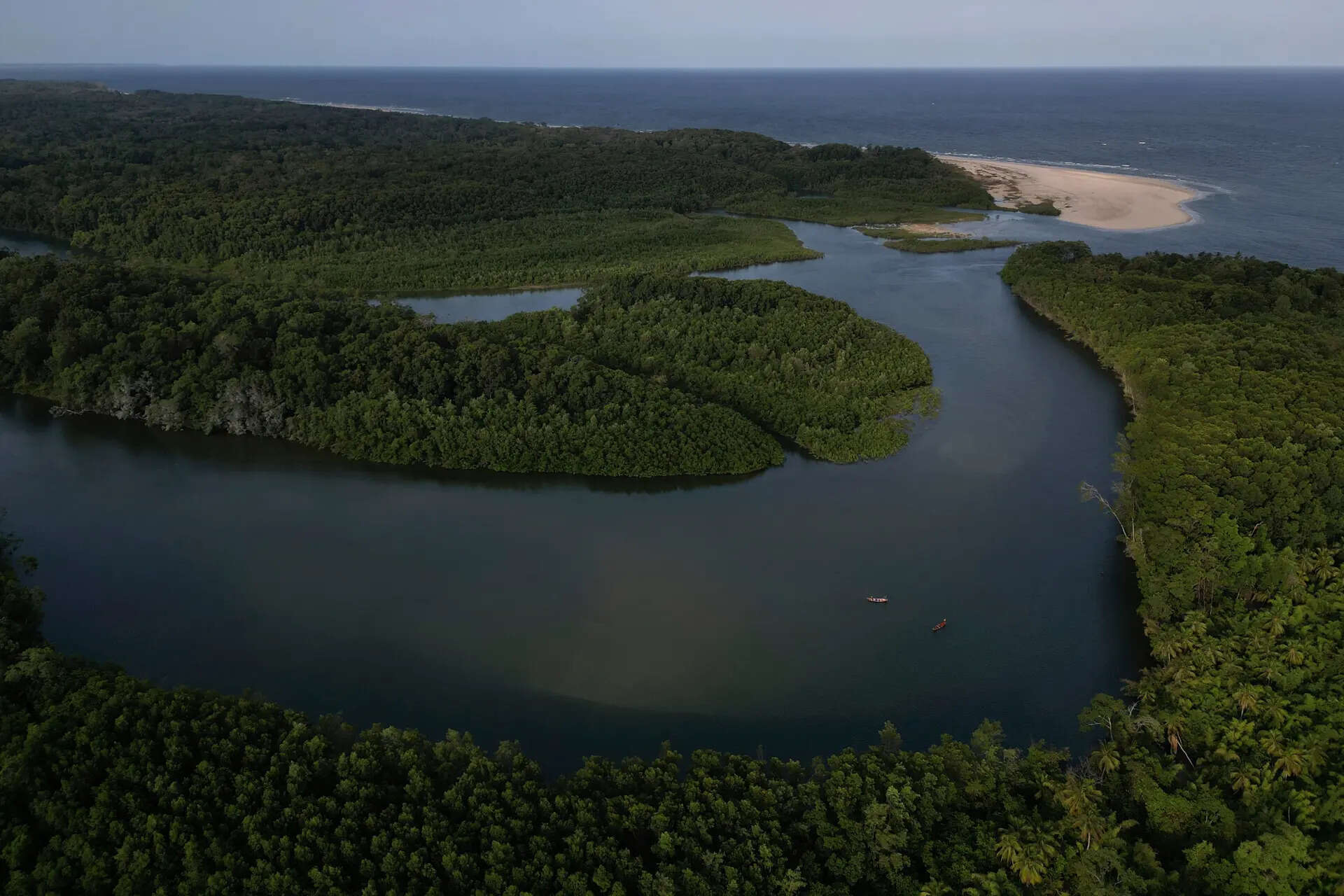
A remarkable natural phenomenon, stretching across continents and defying conventional understanding, sustains one of Earth’s most vital ecosystems. The vast, arid expanse of the Sahara Desert, often perceived as a barren land, plays an unexpected yet crucial role in feeding the lush, vibrant Amazon rainforest. This astonishing connection underscores the profound interconnectedness of our planet’s systems.
This incredible journey, spanning over 10,000 miles, involves billions of tons of dust making an arduous transatlantic voyage. Scientists have meticulously uncovered the intricate details of how this ancient desert secretly delivers essential nutrients to the heart of South America, shaping its biodiversity and even global climate patterns.
The Transatlantic Dust Highway: Origins and Mechanisms
The story begins in the Sahara, the world’s largest hot desert, specifically in a region known as the Bodélé Depression in Chad. This ancient lakebed is a massive reservoir of diatomaceous earth, rich in mineral nutrients.
Strong winds, particularly the Harmattan, regularly sweep across this area, lifting colossal plumes of fine dust high into the atmosphere. These dust particles, microscopic in size, become airborne passengers on a grand global journey.
Origins in the Sahara: A Nutrient Goldmine
The Bodélé Depression is uniquely positioned as a prime source for this nutrient-rich dust. Its geological history, involving the presence of a vast prehistoric lake, left behind sediment extraordinarily rich in phosphorus and other vital minerals.
This region contributes an estimated 70% of the Sahara’s dust emissions. The dry lakebed, combined with persistent, strong winds, creates an ideal launching pad for the transatlantic nutrient delivery system.
The Atmospheric Conveyor Belt: A Journey Through Air
Once airborne, these dust plumes are caught by the prevailing trade winds and high-altitude air currents. They are then transported westward across the Atlantic Ocean, traveling thousands of miles over several days or weeks.
Satellites equipped with advanced sensors track these massive dust storms, providing scientists with critical data on their volume and trajectory. This atmospheric conveyor belt is a consistent, seasonal event, ensuring a steady supply of these airborne nutrients.
A Lifeline for the Amazon: Nutrient Deficiency and Replenishment
The Amazon rainforest, despite its incredible biodiversity and lushness, sits on surprisingly nutrient-poor soils. Years of heavy rainfall leach essential minerals from the soil, making external nutrient input critical for its sustained growth.
This delicate balance means the rainforest constantly requires new sources of essential elements to thrive. The Sahara dust provides precisely this vital replenishment, acting as a natural fertilizer.
Nutrient Deficiency and the Role of Phosphorus
Phosphorus is a crucial macronutrient for plant growth, essential for photosynthesis, energy transfer, and genetic material. In the Amazon, phosphorus is often a limiting factor, meaning its scarcity can restrict plant growth and overall ecosystem productivity.
The dust originating from the Bodélé Depression is exceptionally rich in phosphorus, derived from the fossilized remains of microorganisms from the ancient lake. When this dust settles on the Amazon, it delivers this much-needed nutrient directly to the forest floor.
Beyond Phosphorus: Other Micro-nutrients for Growth
While phosphorus is a primary focus, the Sahara dust also carries a suite of other essential micro-nutrients. These include iron, potassium, calcium, and magnesium, all vital for various physiological processes in plants.
The diverse mineral composition of the dust acts as a comprehensive fertilizer, supporting the incredible variety of plant life in the Amazon. It contributes significantly to the rainforest’s capacity to absorb carbon dioxide and produce oxygen.
Tracking the Invisible Journey: How Science Unraveled the Mystery
For centuries, this phenomenon remained largely unknown, a hidden mechanism of global ecology. Modern scientific advancements, particularly in satellite technology and atmospheric modeling, have made it possible to observe and quantify this vast transport.
Researchers utilize a combination of remote sensing, ground-based measurements, and chemical analysis to trace the dust’s origin and destination. This multidisciplinary approach has provided compelling evidence for this transatlantic connection.
NASA’s CALIPSO and MODIS Satellites
Satellites like NASA’s CALIPSO (Cloud-Aerosol Lidar and Infrared Pathfinder Satellite Observation) and MODIS (Moderate Resolution Imaging Spectroradiometer) have been instrumental. They provide continuous, high-resolution data on dust plumes, tracking their movement across the ocean.
CALIPSO uses lidar technology to create 3D profiles of atmospheric aerosols, showing the altitude and density of dust layers. MODIS offers wide-swath images that capture the vast scale of dust storms as they traverse the Atlantic.
Ground-Based Monitoring and Chemical Analysis
On the ground, scientists collect dust samples in both the Sahara and the Amazon. Chemical analysis of these samples, particularly isotopic fingerprinting, confirms the shared origin of the dust.
Comparing the mineral composition of Amazonian soil and vegetation with that of Saharan dust reveals a striking match. This evidence provides concrete proof that the Amazon is indeed receiving these vital nutrients from Africa.
Implications for Global Climate and Ecosystems
The Sahara-Amazon dust connection is not merely a regional ecological curiosity; it has significant global implications. It impacts atmospheric composition, oceanic productivity, and the Earth’s carbon cycle.
Understanding this intricate system is crucial for predicting how climate change might affect these natural processes. Any alteration in dust transport or rainforest health could have cascading effects worldwide.
Carbon Sequestration and Cloud Formation
By fertilizing the Amazon, the dust indirectly enhances the rainforest’s capacity to sequester carbon dioxide from the atmosphere. A healthier, more robust Amazon acts as a stronger carbon sink, mitigating climate change.
Furthermore, dust particles can act as cloud condensation nuclei, influencing cloud formation and precipitation patterns over the Atlantic. This interaction potentially impacts regional weather and climate systems.
Human Impact and Future Scenarios
Changes in desertification patterns, land use in the Sahara, or shifts in global wind currents due to climate change could alter the amount and composition of dust transported. Such changes might significantly impact the Amazon’s health and resilience.
Deforestation in the Amazon itself also affects the ability of the ecosystem to utilize these incoming nutrients effectively. The delicate balance of this natural cycle is susceptible to both climatic shifts and human activities.
Understanding the Latest Research
Ongoing research continues to refine our understanding of this phenomenal connection. Scientists are exploring the precise pathways of nutrient incorporation, the long-term historical trends of dust transport, and the potential impacts of future climate variability.
For those interested in the latest trends in environmental science, this field offers fascinating insights into planetary resilience. This includes deeper dives into how environmental stressors might impact this critical exchange. According to an Official Source, the scale of this natural phenomenon highlights nature’s intricate feedback loops.
FAQs About the Sahara-Amazon Dust Connection
Q1: How much dust travels from the Sahara to the Amazon annually?
A: Estimates suggest that between 30 to 50 million tons of dust are transported from the Sahara to the Amazon each year. Of this, a significant portion, roughly 22,000 tons, consists of phosphorus, a vital nutrient for plant growth in the nutrient-poor Amazonian soils.
Q2: What specific nutrients does the Sahara dust provide to the Amazon?
A: The most critical nutrient delivered is phosphorus, which is often a limiting factor for plant growth in the Amazon. Additionally, the dust carries other essential micronutrients such as iron, potassium, calcium, and magnesium, all vital for the rainforest’s diverse plant life and overall ecosystem health.
Q3: How long has this dust transport phenomenon been occurring?
A: Geological and paleo-climatic evidence suggests this dust transport mechanism has been active for millions of years. It’s a long-standing natural process that has profoundly shaped the evolution and sustained the biodiversity of the Amazon rainforest over vast timescales.
Q4: Are there any negative impacts of this dust on the Amazon or other regions?
A: While primarily beneficial for the Amazon, large dust plumes can have some localized temporary impacts. These might include reduced air quality for human populations in transit areas or minor alterations to oceanic light penetration, though the overall ecological benefit to the Amazon far outweighs any negligible drawbacks.
Q5: How do scientists track the dust from the Sahara to the Amazon?
A: Scientists use a combination of methods, including satellite imagery from missions like NASA’s CALIPSO and MODIS, which track dust plumes across the ocean. Ground-based lidar systems and direct collection of dust samples in both regions, followed by chemical and isotopic analysis, confirm the shared origin and composition.
Q6: Does this dust also affect the Atlantic Ocean ecosystem?
A: Yes, as the dust travels across the Atlantic, some of it settles into the ocean. The iron and other nutrients in the dust can stimulate phytoplankton blooms, affecting marine food webs and the ocean’s carbon cycle. This fertilization effect can have widespread implications for oceanic productivity.
Q7: What is the source of the phosphorus in the Saharan dust?
A: The primary source of phosphorus is the Bodélé Depression in Chad, an ancient lakebed. The sediments of this former lake are exceptionally rich in the fossilized remains of diatoms, microscopic algae whose shells are packed with phosphorus, making it a natural nutrient reservoir.
Q8: Could climate change affect the Sahara-Amazon dust connection?
A: Yes, climate change could potentially alter this delicate balance. Shifts in wind patterns, changes in precipitation leading to altered desertification, or variations in the intensity and frequency of dust storms could all impact the volume and composition of dust transported, thus affecting the Amazon’s nutrient supply.
Q9: Is the Amazon the only region that receives dust from the Sahara?
A: No, while the Amazon receives a substantial and critical amount, Saharan dust also travels to other regions. It reaches parts of the Caribbean, the southeastern United States, and even influences cloud formation and weather patterns over Europe, demonstrating its broad global climatic influence.
Q10: What is the ecological significance of this phenomenon?
A: The ecological significance is profound; it highlights a critical intercontinental nutrient cycling process. Without this natural fertilization, the Amazon rainforest, sitting on its naturally infertile soils, would likely be less productive and less biodiverse, showcasing nature’s incredible self-sustaining mechanisms.
The journey of Saharan dust to the Amazon is a powerful testament to the intricate and interdependent nature of Earth’s systems. It reminds us that distant ecosystems are often linked in surprising and vital ways. This invisible bridge of dust sustains one of our planet’s most critical natural resources, emphasizing the need for a holistic approach to environmental conservation and climate action.
Understanding these grand-scale natural phenomena is essential for appreciating the delicate balance of our global environment. The continued research into this incredible journey helps us grasp the resilience of nature, even as we confront the challenges of a changing climate.
SEO Keywords: Sahara dust, Amazon rainforest, nutrient transport, phosphorus, transatlantic dust, Bodélé Depression, global ecosystems, climate science, satellite monitoring, environmental science, rainforest nutrients, atmospheric dust, ecological connections, desert dust, Amazonian biodiversity
Source: Times of India