




Trump’s Campaign & A Region Ablaze
As the geopolitical landscape of the Middle East erupted with unprecedented Iranian missile strikes targeting key U.S. interests and allies, former President Donald Trump convened a high-stakes fundraiser at his luxurious Mar-a-Lago estate. This stark juxtaposition of political ambition and international crisis has ignited a fierce debate over leadership, national security, and the future of American foreign policy.
The events of March 1, 2026, laid bare a world grappling with escalating tensions, casting a long shadow over domestic political narratives. While dignitaries and donors gathered in Florida, reports from across the globe painted a grim picture of Iranian aggression, challenging the resolve of Washington and its strategic partners. This article delves into the unfolding crisis, its profound implications, and the complex interplay between foreign policy challenges and the American political arena.
The Unfolding Crisis: Missiles, Diplomacy, and Domestic Politics
The latest wave of Iranian aggression has sent shockwaves through the international community. For years, the delicate balance of power in the Middle East has been a source of constant concern, with diplomatic efforts often overshadowed by regional proxy conflicts and the ever-present threat of direct confrontation. The current escalation, however, marks a significant and dangerous turning point, directly challenging American strategic interests and personnel abroad.
Background Context: A Region on Edge
The Middle East has long been a crucible of geopolitical tension, with Iran playing a central, often confrontational, role. Decades of strained relations with the United States, punctuated by sanctions, nuclear negotiations, and regional power struggles, have fostered an environment of mistrust and periodic escalation. Under various U.S. administrations, policies toward Iran have swung from engagement to maximum pressure, each approach yielding its own set of successes and challenges. The Abraham Accords, while fostering new alliances, have also arguably heightened regional polarization, further entrenching the divide between Iran and its adversaries.
Iran’s development of ballistic missile capabilities has been a persistent point of contention, viewed by the U.S. and its allies as a destabilizing force. Coupled with its support for various non-state actors across the region, Tehran’s actions have frequently tested the boundaries of international diplomacy and regional stability. This current volley of missiles represents not just a continuation but a dangerous intensification of these long-standing grievances, demanding an immediate and decisive response from the international community.
Timeline of Recent Events
- February 28, 2026: Initial intelligence reports suggest heightened Iranian missile readiness following unspecified regional provocations.
- March 1, 2026 (Early Hours GMT): Multiple ballistic missiles launched from Iranian territory, targeting various U.S. bases and allied installations across the Middle East. Early reports confirm impacts in Iraq, Syria, and potentially Saudi Arabia.
- March 1, 2026 (Morning EST): News breaks in the United States, sparking urgent national security briefings in Washington D.C.
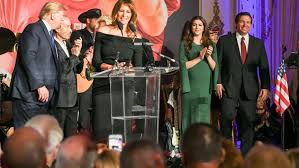
- March 1, 2026 (Evening EST): Former President Donald Trump hosts a significant fundraising event at Mar-a-Lago, drawing criticism and questions regarding timing amidst the international crisis.
- March 2, 2026: Emergency sessions called by the UN Security Council; global markets react with volatility, particularly in oil prices.
Impact and Implications: A Multi-faceted Crisis
The synchronized events of Iranian missile attacks and a high-profile political fundraiser underscore the complex and often disjointed nature of modern global crises. The repercussions ripple through multiple sectors, from defense and energy to international diplomacy and domestic politics.
Industry Impact: Defense, Energy, and Global Markets
The immediate impact on the defense sector is palpable. Demand for advanced missile defense systems, surveillance technology, and rapid deployment capabilities is expected to surge. Defense contractors, already significant players in global security, will likely see increased stock valuations and government contracts. Conversely, the energy market is bracing for significant volatility. With key oil-producing regions and crucial shipping lanes potentially under threat, crude oil prices have already shown an upward trend, raising fears of broader economic instability and inflationary pressures.
Global financial markets, inherently sensitive to geopolitical shocks, reacted with caution, though full long-term effects remain to be seen. Supply chains dependent on Middle Eastern stability, particularly for crude oil and related products, face potential disruptions, pushing companies to re-evaluate risk management strategies.
Policy Implications: Redrawing the Lines of Engagement
This Iranian escalation will undoubtedly force a critical re-evaluation of U.S. foreign policy in the Middle East. The current administration faces immense pressure to craft a response that is both firm and measured, avoiding a wider regional conflict while deterring further aggression. Options range from targeted retaliatory strikes to intensified diplomatic efforts, sanctions, or a combination thereof. The incident also reignites debates about troop presence in the region and the efficacy of current deterrence strategies.
Domestically, the crisis presents a potent challenge for any presidential hopeful. Donald Trump’s decision to proceed with his fundraiser, while characteristic of his political style, has drawn both ardent defense from supporters who view it as a display of strength and severe condemnation from critics who perceive it as tone-deaf during a national security crisis. The event highlights the deep polarization in American politics and how international events are increasingly filtered through partisan lenses.
Expert-Style Analysis: A Confluence of Challenges
“This is more than just another skirmish; it’s a direct challenge to the regional security architecture the U.S. has painstakingly built,” states Dr. Lena Khan, a senior fellow at the Institute for Global Dynamics. “Iran is testing the boundaries, and the global community’s response will define the parameters of future engagements. The timing, coinciding with an active U.S. presidential campaign, adds layers of complexity, as any response will be scrutinized for both its geopolitical impact and its domestic political ramifications.”
Political strategist Mark Jensen offers a different perspective: “For Trump, Mar-a-Lago is his base, his sanctuary. To cancel a major fundraising event during a crisis could be seen by some of his loyalists as a sign of weakness or capitulation. His supporters often see his defiance of traditional political norms as a strength, a sign he’s not beholden to establishment dictates, even in times of crisis. However, the optics for the broader electorate, particularly independents, are incredibly challenging.”
Regional Security Landscape: Key Developments
| Event | Actors Involved | Initial Impact | Long-term Concerns |
|---|---|---|---|
| Iranian Missile Strikes | Iran, U.S., Regional Allies | Immediate security alerts, market volatility, calls for de-escalation | Risk of wider regional conflict, direct U.S. military engagement |
| Mar-a-Lago Fundraiser | Donald Trump, GOP Donors | Political controversy, debate over leadership in crisis | Impact on presidential campaign, public perception of readiness |
| UN Security Council Meetings | Global Powers | Diplomatic condemnation, search for collective response | Divisions among major powers, effectiveness of international bodies |
| Oil Market Fluctuations | OPEC, Global Traders | Price hikes, supply chain concerns | Global inflation, energy security challenges |
Comparing Crisis Responses: Past vs. Present
Historically, U.S. administrations have navigated Middle Eastern crises with varying strategies. A brief comparison highlights the dynamic nature of these responses:
| Administration Trait | “Traditional” Response Model | “Trump-Era” Response Model (Implied) |
|---|---|---|
| Initial Public Stance | Strong condemnation, emphasis on diplomatic solutions first. | Strong condemnation, emphasis on U.S. strength, potential for unilateral action. |
| Coordination with Allies | Extensive consultation and coalition-building. | Prioritizes U.S. interests, may inform allies rather than consult. |
| Economic Levers | Targeted sanctions, international financial pressure. | Broad, aggressive sanctions, often without multilateral consensus. |
| Military Options | Calibrated, proportionate, often covert actions. | Decisive, visible shows of force, less predictable. |
| Domestic Political Messaging | Unifying message, focus on national security above partisanship. | Framing crisis through political lens, leveraging events for campaign. |
Future Outlook: A Volatile Path Ahead
The immediate future of the Middle East hinges on the U.S. response and Iran’s subsequent actions. De-escalation will require sophisticated diplomacy, possibly involving third-party mediators, but the current climate makes such efforts fraught with difficulty. The risk of miscalculation remains exceptionally high, potentially spiraling into a wider regional conflict that could draw in more actors and have devastating humanitarian and economic consequences.
For the U.S. presidential election, this crisis will undoubtedly shape the foreign policy debate. Candidates will be pressed on their strategies for Iran, their vision for American leadership, and their capacity to manage complex global challenges. Trump’s handling of the fundraiser, while controversial, will be integrated into his broader narrative of a decisive leader unburdened by political correctness, for better or worse. The geopolitical firestorm thus becomes another battleground in the ongoing contest for the White House.
Frequently Asked Questions (FAQs)
- What triggered the latest Iranian missile strikes? While specific provocations are often shrouded in classified intelligence, analysts suggest a combination of regional proxy tensions, U.S. military presence, and Iran’s strategic calculations to assert dominance may have contributed.
- Where specifically did the Iranian missiles target? Reports indicate targets included U.S. military bases and installations belonging to key U.S. allies in Iraq and Syria, with potential threats extending to other Gulf nations.
- How has the U.S. administration officially responded to the attacks? Official statements have condemned the attacks as acts of aggression, affirming commitment to protecting U.S. personnel and allies, and indicating a review of response options.
- What was Donald Trump doing during the missile crisis? Former President Donald Trump hosted a significant campaign fundraiser at his Mar-a-Lago estate in Florida.
- Why did Trump proceed with the fundraiser during a national security crisis? Supporters argue it shows steadfast leadership and an unwillingness to be dictated by external events, while critics decried it as insensitive and a distraction from critical national security matters.
- What are the immediate economic impacts of this escalation? Global oil prices have surged, and stock markets have shown volatility, reflecting investor uncertainty regarding regional stability and potential supply chain disruptions.
- What role do U.S. allies in the Middle East play in this crisis? Allies like Saudi Arabia, UAE, and others are crucial partners in regional security, potentially providing intelligence, logistical support, and diplomatic leverage in response to Iranian aggression.
- Is there a risk of a broader war in the Middle East? Experts indicate the risk is substantial, with any misstep or retaliatory action potentially escalating into a full-scale regional conflict. Diplomatic de-escalation is paramount but challenging.
- How might this crisis affect the upcoming U.S. presidential election? The crisis will undoubtedly make foreign policy and national security central campaign issues, influencing voter perception of candidates’ leadership capabilities and experience.
- What are the next steps for international diplomacy? The UN Security Council is actively engaged, and bilateral discussions between key global powers are expected to intensify, aiming to forge a unified front and explore pathways to de-escalation.
Conclusion: A Crossroads for American Leadership
The events surrounding the Iranian missile strikes and Donald Trump’s Mar-a-Lago fundraiser serve as a stark reminder of the interconnectedness of global affairs and domestic politics. As the Middle East grapples with an acute and dangerous escalation, the world watches to see how the United States will respond, both diplomatically and militarily.
The decisions made in the coming days and weeks will not only shape the future of a volatile region but will also profoundly impact the American political landscape, testing the mettle of its leaders and the resolve of its people. Navigating this complex intersection of security threats and political ambition demands foresight, resilience, and a clear vision for America’s role in a rapidly changing world.
For ongoing analysis and updates on this critical situation, consider:
- Geopolitical Impact of Middle East Tensions
- US Foreign Policy Challenges in 2026
- Presidential Election: The Foreign Policy Debate
Further Reading:
- Council on Foreign Relations: Middle East & North Africa
- U.S. Department of State: Near Eastern Affairs
#MiddleEastCrisis #IranMissiles #TrumpFundraiser #USForeignPolicy #NationalSecurity