


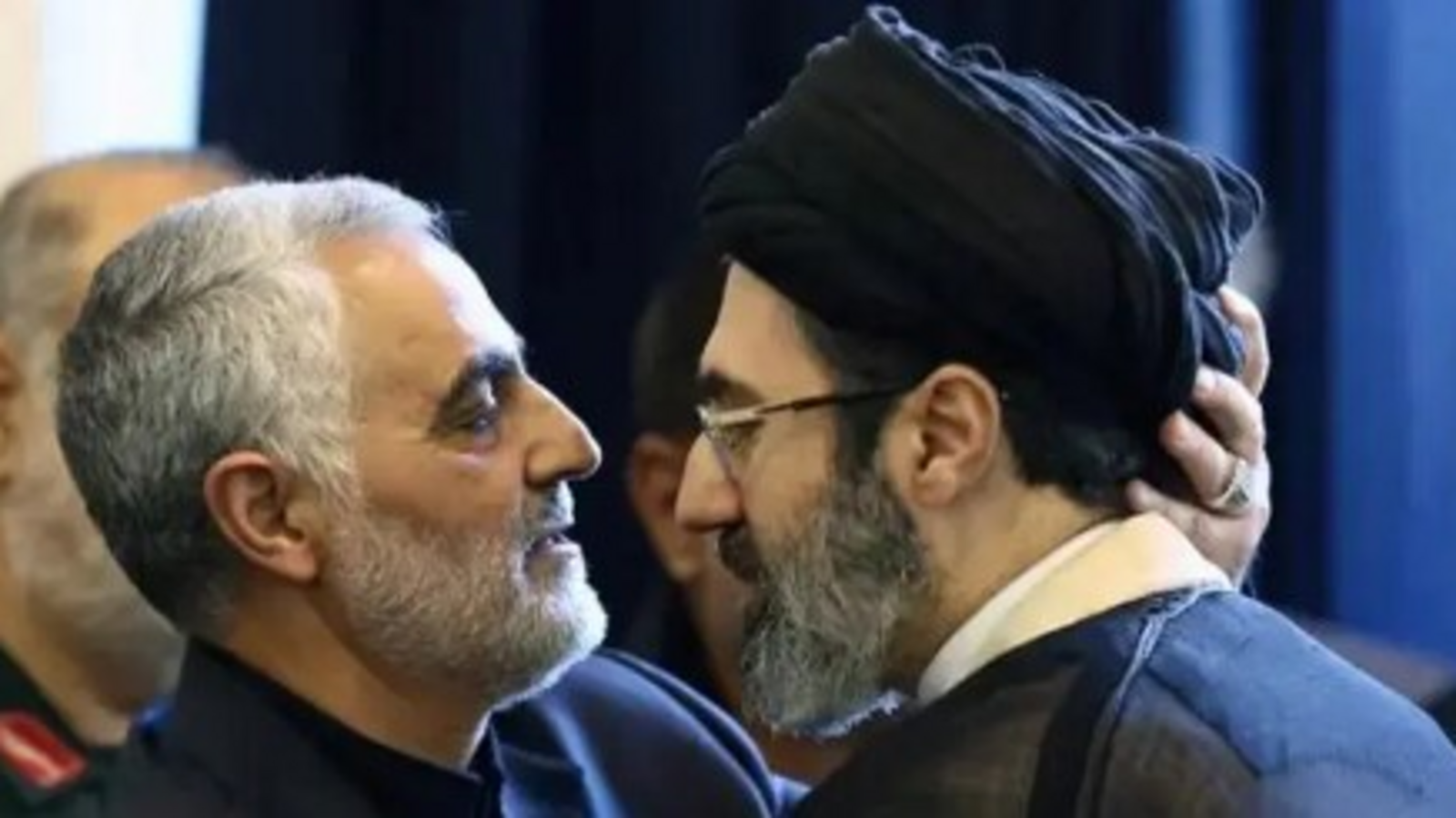
Mojtaba Khamenei
Iran’s Next Supreme Leader? The Rise and Influence of Mojtaba Khamenei
As whispers grow louder in the corridors of power, the question of who will succeed Iran’s aging Supreme Leader, Ayatollah Ali Khamenei, looms large. All eyes are now turning to his enigmatic son, Mojtaba Khamenei, a figure shrouded in mystery yet wielding considerable influence behind the scenes. Could he be the architect of Iran’s future, steering the Islamic Republic into a new era?
Background Context: The Intricate Web of Iranian Succession
The Islamic Republic of Iran, founded on the principles of velayat-e faqih (guardianship of the jurist), is structured around the absolute authority of the Supreme Leader. This pivotal role, currently held by Ayatollah Ali Khamenei since 1989, commands ultimate say on all state matters, foreign policy, and military decisions. The succession process is technically managed by the Assembly of Experts, a body of 88 clerics, who are tasked with selecting the next Leader from among qualified jurists. However, the reality of Iranian politics often involves intricate power plays, lobbying, and the influence of powerful factions, making the selection process far from straightforward or transparent.
The health of the current Supreme Leader, now in his mid-80s, has naturally intensified speculation and jockeying for position among various potential candidates, bringing figures like Mojtaba Khamenei sharply into focus. His lineage alone gives him a unique, albeit controversial, standing in this high-stakes political drama. The very notion of a son succeeding his father in a system that ostensibly rejects dynastic rule highlights the complex interplay between tradition, revolutionary ideology, and pragmatic power consolidation within Iran’s ruling elite.
Mojtaba Khamenei: A Timeline of Influence
- 1969: Birth of Mojtaba Khamenei, second son of Ali Khamenei.
- 1980s: Early religious education and participation in the Iran-Iraq War, providing a revolutionary credential.
- 1989: His father, Ali Khamenei, becomes Supreme Leader after the death of Ayatollah Ruhollah Khomeini, significantly elevating Mojtaba’s family status.
- Late 1990s – Early 2000s: Continues advanced religious studies in Qom, becoming a prominent figure in the clerical establishment, albeit behind the scenes.
- 2005 onwards: Growing reports of Mojtaba’s increasing informal influence over institutions, particularly within the Basij (volunteer paramilitary force) and elements of the Islamic Revolutionary Guard Corps (IRGC), though never holding formal public office.
- 2009: Accusations surface during the Green Movement protests that Mojtaba played a significant role in suppressing dissent, cementing his image as a hardliner.
- 2010s: Consolidates his religious credentials, attaining the rank of Hojjat al-Islam and actively teaching at the Qom seminary, building a network of loyalists.
- Early 2020s: Heightened speculation about his potential succession as his father’s health becomes a more frequent topic of discussion, with various factions either supporting or opposing his rise.
- 2026 (Current Context): Mojtaba Khamenei is widely discussed in international and domestic circles as a leading candidate, given his father’s advanced age and his deep ties within the establishment.
Industry Impact: Geopolitical Ripples and Energy Markets
The succession of Iran’s Supreme Leader is an event with profound geopolitical ramifications, particularly for the global energy market and regional stability. Iran, a major oil and natural gas producer, plays a critical role in the OPEC+ alliance and influences shipping lanes through the Strait of Hormuz. A smooth, predictable transition could alleviate market anxieties, but any perceived instability or a shift towards more hardline policies under a new leader like Mojtaba Khamenei could send shockwaves. A Mojtaba Khamenei succession might signal a continuation, or even intensification, of the current hardline trajectory. This could translate into:
- Oil Prices: Increased geopolitical tensions, especially with Western nations and regional rivals, could lead to supply disruptions or the perception of future disruptions, driving up crude oil prices. Conversely, a stable transition, even to a hardliner, might offer some short-term market certainty if it avoids internal power struggles.
- Regional Security: A more assertive or ideologically rigid leadership could exacerbate existing conflicts in the Middle East, particularly in Yemen, Syria, Lebanon, and Iraq, where Iran supports various proxy groups. This would heighten security risks for shipping and infrastructure, affecting global trade and insurance premiums.
- Sanctions Regime: If a new leader adopts an even more confrontational stance, it could further entrench or expand international sanctions, impacting Iran’s ability to sell oil and gas, thus reducing global supply and affecting prices.
Market and Policy Implications: Domestic Shifts and International Stances
A potential succession involving Mojtaba Khamenei carries significant implications for both domestic and international policy. Domestically, his rumored alignment with hardline factions and the IRGC suggests a continued, if not intensified, focus on revolutionary ideals and internal security. This could lead to:
- Economic Policy: A preference for a “resistance economy” model, prioritizing self-sufficiency and state control over liberal economic reforms or greater integration with global markets. Foreign investment might remain constrained by ideological considerations and ongoing sanctions.
- Social Freedoms: A potential tightening of social controls and cultural restrictions, reflecting a more conservative interpretation of Islamic law. This could further alienate segments of the population, particularly the youth and urban middle class, potentially leading to renewed dissent.
- Human Rights: Continued suppression of dissent and limitations on civil liberties, as seen during past protest movements where Mojtaba’s influence was reportedly significant.
Internationally, his leadership could herald:
- Nuclear Deal: A likely hardening of Iran’s stance on the nuclear program, making any revival of the Joint Comprehensive Plan of Action (JCPOA) or negotiation of a new deal even more challenging. This could escalate tensions with the US and its allies.
- Regional Diplomacy: A continuation of Iran’s current regional strategy, characterized by support for non-state actors and a confrontational approach towards Saudi Arabia, Israel, and other rivals. Diplomatic overtures might be viewed with skepticism, prioritizing ideological purity over pragmatic engagement.
- Relations with China/Russia: A strengthening of ties with non-Western powers, particularly China and Russia, as Iran seeks to counter Western pressure and build alternative alliances. This could shift geopolitical balances, particularly in energy and security spheres.
Expert Analysis: Weighing the Hardline Future
The prospect of Mojtaba Khamenei ascending to the role of Supreme Leader is arguably one of the most polarizing and scrutinized potential successions in recent Iranian history. His lack of formal public office, coupled with his informal yet undeniable influence, makes him a figure of intense speculation. Analysts are divided on what his leadership might signify. One school of thought suggests that Mojtaba represents a continuation of his father’s policies, perhaps even a more rigid iteration. Having grown up within the inner sanctum of power, he embodies the revolutionary ideology and deeply distrusts Western intentions.
His reported strong ties with the IRGC and Basij indicate a leader who would prioritize internal security, military strength, and the ideological purity of the revolution above all else. This perspective posits that his rise would reinforce the conservative foundations of the Islamic Republic, potentially leading to a more confrontational foreign policy and less domestic openness. His religious credentials, while significant, are not universally accepted as being on par with past Supreme Leaders like Khomeini or even his father by all Grand Ayatollahs, which could pose a legitimizing challenge initially. Conversely, other experts argue that his deep understanding of the system from within, combined with his relative youth compared to some other senior clerics,
could allow him to navigate the complex factions of Iranian politics with greater agility. While a hardliner, he is also seen as pragmatic by some, capable of adapting to maintain the system’s stability. His informal networks, built over decades, could provide a strong power base, circumventing the need for widespread public popularity, which he lacks. However, his perceived role in the 2009 crackdown has made him a controversial figure among reformists and a significant segment of the populace, potentially fueling internal opposition if he were to assume leadership. The biggest question remains whether the Assembly of Experts,
under the sway of powerful figures, would risk the perception of dynastic succession, even if such a move is strategically advantageous for the current power structure. The choice of Mojtaba would certainly signal a consolidation of power within the Supreme Leader’s immediate circle, strengthening the institutional memory and current policies of the existing establishment.
Future Outlook: A Nation at a Crossroads
The future of Iran, intertwined with the forthcoming succession, remains a subject of intense conjecture. If Mojtaba Khamenei were indeed to become the next Supreme Leader, the immediate outlook points towards a continuity, and possibly an intensification, of current policies. Expect a strong emphasis on national self-reliance, a robust defense posture, and a firm stance against perceived foreign interference. The likelihood of a return to a more conciliatory foreign policy or significant domestic reforms under his leadership appears low. However, the path to succession is fraught with potential challenges.
The Assembly of Experts, while influenced, still holds nominal power, and other powerful clerical figures and political factions have their own aspirations. The economic hardships faced by the Iranian populace, coupled with persistent social grievances, mean that any new leader will inherit a nation grappling with significant internal pressures. Mojtaba’s legitimacy, derived more from his father’s position and his ties to powerful institutions than from widespread public or even broad clerical support, could be a vulnerability. The long-term outlook will depend heavily on his ability to consolidate power, manage internal dissent, and navigate the complex geopolitical landscape. A hardline approach might ensure stability in the short term for the regime, but it risks further isolation and economic stagnation,
potentially fueling future unrest. Conversely, a surprising turn towards pragmatism, while less anticipated, could offer unexpected avenues for engagement and domestic reform. The world will be watching closely as Iran prepares for this momentous transition, understanding that the choice of the next Supreme Leader will shape not only the destiny of Iran but also the delicate balance of power across the Middle East for decades to come. The coming era promises to be as challenging as it is consequential, and the world must prepare for its unfolding realities.
Potential Successors: A Comparison
| Attribute | Ayatollah Ali Khamenei (Current) | Mojtaba Khamenei (Potential Successor) |
|---|---|---|
| Public Role & Visibility | Supreme Leader, highly visible, public sermons & decrees. | Informal advisor, less public, known for behind-the-scenes influence. |
| Religious Rank | Grand Ayatollah (Marja-e Taqlid). | Hojjat al-Islam (higher-ranking than an ordinary Mullah, but generally not a Grand Ayatollah). |
| Political Stance | Hardline conservative, emphasis on revolutionary principles, anti-Western. | Widely perceived as a hardliner, strong ties to IRGC, emphasis on internal security. |
| Experience | President of Iran (1981-1989), then Supreme Leader since 1989. | No formal public office; significant experience within intelligence, security, and clerical circles. |
| Succession Legitimacy | Chosen by Assembly of Experts after Khomeini’s death; strong revolutionary credentials. | Lineage-based influence; faces potential challenges regarding dynastic perception and clerical rank. |
Mojtaba Khamenei: Key Facts at a Glance
| Key Fact | Detail |
|---|---|
| Full Name | Sayyid Mojtaba Hosseini Khamenei |
| Born | 1969 |
| Father | Ayatollah Ali Khamenei (Current Supreme Leader) |
| Religious Status | Hojjat al-Islam (advanced clerical rank) |
| Key Influence Areas | IRGC, Basij, clerical establishment, father’s office. |
| Public Offices Held | None formally. |
| Political Alignment | Strongly conservative/hardline. |
Frequently Asked Questions (FAQs) About Mojtaba Khamenei and Iran’s Succession
- Who is Mojtaba Khamenei and why is he significant in Iran?
Mojtaba Khamenei is the second son of Iran’s current Supreme Leader, Ayatollah Ali Khamenei. He is significant due to his informal yet profound influence within Iran’s political and security apparatus, making him a leading contender to succeed his father as Supreme Leader.
- What are Mojtaba Khamenei’s religious credentials?
Mojtaba Khamenei holds the religious rank of Hojjat al-Islam, a significant level of clerical scholarship, and teaches at the Qom seminary. While highly educated, his rank is generally below that of a Grand Ayatollah (Marja-e Taqlid), which has sometimes been a prerequisite for the Supreme Leader position.
- How does Iran’s Supreme Leader succession process work?
The Supreme Leader is chosen by the Assembly of Experts, an 88-member body of senior clerics. They are responsible for evaluating and selecting the most qualified jurist (faqih) to lead the country, based on religious knowledge, political acumen, and adherence to revolutionary ideals.
- What role does Mojtaba Khamenei play in Iranian politics currently?
Although Mojtaba Khamenei holds no formal public office, he is widely believed to be a powerful behind-the-scenes operator. He reportedly advises his father, maintains strong ties with the Islamic Revolutionary Guard Corps (IRGC) and the Basij paramilitary force, and exerts influence over key decisions.
- What are the potential implications of Mojtaba Khamenei’s succession for Iran’s foreign policy?
If Mojtaba Khamenei succeeds his father, Iran’s foreign policy is largely expected to remain hardline, prioritizing revolutionary principles and a confrontational stance towards Western powers. This could further complicate relations regarding the nuclear program and regional conflicts.
- How might Mojtaba Khamenei’s leadership impact Iran’s economy?
A leadership under Mojtaba Khamenei is likely to continue favoring a “resistance economy” model, focusing on self-sufficiency and state control. This might mean continued challenges for foreign investment and a cautious approach to integrating with global markets, particularly under existing sanctions.
- Is there opposition to Mojtaba Khamenei’s potential succession?
Yes, various factions within Iran, including reformists and some segments of the clerical establishment, express opposition or concerns. Criticisms often center on the perception of dynastic rule, his alleged role in suppressing protests, and debates over his religious qualifications compared to other senior clerics.
- What impact could Mojtaba Khamenei’s succession have on regional stability in the Middle East?
A hardline leader like Mojtaba Khamenei could potentially lead to increased regional tensions, particularly with Saudi Arabia and Israel. His leadership might signify continued support for proxy groups, potentially exacerbating conflicts in Yemen, Syria, and Lebanon, impacting overall Middle Eastern stability.
- What is the significance of the 2009 Green Movement in understanding Mojtaba Khamenei’s influence?
During the 2009 Green Movement protests, Mojtaba Khamenei was widely accused of playing a crucial role in orchestrating the crackdown on demonstrators. This period cemented his image as a hardliner deeply involved in the state’s security apparatus and suppression of dissent.
- What are the main challenges Mojtaba Khamenei would face as Supreme Leader?
Major challenges would include legitimizing his rule amidst accusations of dynastic succession, navigating Iran’s severe economic issues, managing persistent domestic social unrest, and dealing with intense international pressure over the nuclear program and regional policies.
A New Chapter for Iran: The Road Ahead
As the Islamic Republic of Iran stands on the precipice of a monumental leadership transition, the gaze of the world remains firmly fixed on the enigmatic figure of Mojtaba Khamenei. While his path to power is fraught with traditional complexities and modern challenges, his unique position within the ruling establishment makes him an undeniable force in the succession calculus. His ascension would not merely signify a changing of the guard, but potentially a reaffirmation of the revolutionary ideals that have defined Iran for over four decades, albeit with a new generation at the helm.
The decisions made in the coming years, particularly regarding this pivotal succession, will reverberate far beyond Iran’s borders, shaping regional dynamics, global energy markets, and the intricate fabric of international relations. Whether Mojtaba Khamenei ultimately steps into his father’s immense shoes or another figure emerges from the shadows, the underlying questions of Iran’s future — its engagement with the world, its domestic trajectory, and its adherence to its foundational principles — will define a new chapter for this historically rich and strategically vital nation. The coming era promises to be as challenging as it is consequential, and the world must prepare for its unfolding realities.
Internal Linking Suggestions:
- Understanding Iran’s Revolutionary Guard Corps (IRGC): Power and Influence
- The Iran Nuclear Deal (JCPOA): Future Prospects and Regional Tensions
- Middle East Power Struggles: Assessing Regional Stability Amidst Geopolitical Shifts
External Authority Links:
#IranSuccession #MojtabaKhamenei #SupremeLeader #IranianPolitics #Geopolitics