






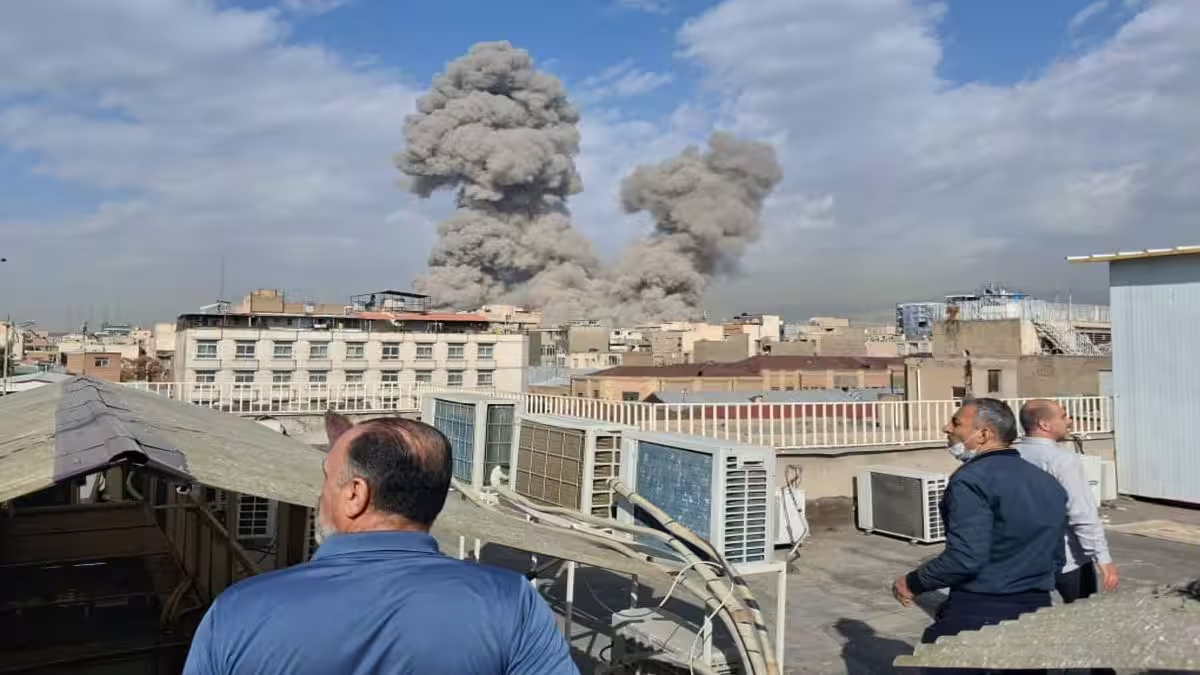
Unpacking the Arsenal: How US-Israel Strikes on Iran Redefined Modern Warfare
In a dramatic display of coordinated military might, the recent US-Israel strikes against key Iranian strategic assets have reverberated across the globe, fundamentally reshaping geopolitical dynamics in the Middle East. At the heart of this complex operation lay an advanced arsenal, from stealthy suicide drones to precision-guided Tomahawk missiles, showcasing a new frontier in hybrid warfare. This article delves into the sophisticated weaponry deployed and the profound implications of these decisive actions.
The Escalating Tensions: A Precursor to Conflict
The dawn of March 1, 2026, witnessed a meticulously planned joint military operation that had been brewing amidst years of escalating tensions between Iran, the United States, and Israel. A confluence of factors, including persistent proxy conflicts, advancements in Iran’s nuclear program, and sustained threats to regional stability, culminated in an environment ripe for direct confrontation. Diplomacy had repeatedly stalled, leaving military intervention as a perceived last resort to de-escalate a rapidly destabilizing region. The international community had watched with bated breath as intelligence reports indicated a critical threshold had been crossed, prompting a coordinated response from Washington and Jerusalem.
Timeline of Key Events Leading to the Strikes:
- Early 2025: UN inspectors report significant unaddressed discrepancies in Iran’s declared nuclear material.
- Mid-2025: Increased frequency of Iranian-backed proxy attacks on international shipping lanes and US interests in the Gulf.
- Late 2025: Intelligence agencies confirm acceleration of Iran’s ballistic missile and drone development, with capabilities threatening regional allies.
- January 2026: Critical cyberattacks attributed to state-sponsored Iranian actors target US infrastructure, elevating the crisis.
- February 2026: Final diplomatic efforts collapse after Iran rejects international proposals for de-escalation and transparency.
- February 28, 2026: US and Israeli forces initiate synchronized precision strikes on identified strategic targets within Iran.
- March 1, 2026: Global media reports confirm the extensive use of advanced weaponry, including suicide drones and Tomahawk missiles, in the operation.
The Architects of Precision: Weapons that Shaped the Outcome
The success of the US-Israel operation hinged on a carefully selected and synergistically deployed array of modern military hardware. Each weapon system played a distinct role, contributing to the surgical precision and minimized collateral damage that characterized the strikes. The deployment strategy exemplified a contemporary approach to warfare, prioritizing intelligence-led targeting and advanced technological capabilities.
Suicide Drones: The Unseen Harbingers
Central to the initial phase of the strikes were swarms of advanced suicide drones, often referred to as loitering munitions. These unmanned aerial vehicles (UAVs), equipped with sophisticated navigation systems and high-explosive payloads, offered a unique blend of reconnaissance and strike capabilities. Their ability to loiter over targets, gather real-time intelligence,
and execute precision strikes with minimal risk to human pilots made them invaluable. The drones likely targeted air defense systems, radar installations, and command-and-control centers, effectively paving the way for subsequent manned and unmanned assets. Their low radar cross-section and saturation tactics presented a significant challenge to Iranian defenses, demonstrating a key evolution in asymmetric warfare.
Tomahawk Cruise Missiles: Long-Range Precision
The iconic Tomahawk cruise missiles, launched from US naval vessels strategically positioned in the region, provided the long-range, high-precision strike capability essential for hitting deeply buried or heavily fortified targets. With their advanced terrain-following and GPS guidance systems, Tomahawks proved instrumental in neutralizing critical infrastructure, such as nuclear-related facilities, missile production sites, and key logistical hubs, often located deep within Iranian territory. Their proven reliability and capacity to deliver substantial payloads underscore their continued relevance in high-stakes military operations.
Complementary Assets: Air Superiority and Electronic Warfare
Beyond the headline-grabbing drones and Tomahawks, the operation integrated a spectrum of advanced platforms. Israeli F-35 stealth fighters likely contributed to achieving air superiority, providing vital escort and strike capabilities against remaining air defense threats. Furthermore, sophisticated electronic warfare (EW) systems were undoubtedly employed to jam Iranian communications, disrupt radar, and create corridors for strike packages, severely limiting Tehran’s ability to respond effectively. This multi-layered approach highlighted the comprehensive nature of modern military planning.
Industry Impact and Market Implications
The demonstrable effectiveness of these advanced weapon systems will undoubtedly trigger significant shifts in the global defense industry. Nations worldwide will be reassessing their own defensive and offensive capabilities, with a particular focus on counter-drone technologies and precision-guided munitions. Defense contractors specializing in UAVs, AI-driven targeting systems, and electronic warfare will likely see increased demand and investment. The conflict also underscores the critical importance of robust missile defense systems, prompting further research and development in this sector.
From a market perspective, regional instability tends to create volatility. Oil prices experienced an immediate surge following news of the strikes, reflecting concerns over potential disruptions to energy supplies from the Persian Gulf. Defense stocks, predictably, saw a boost. However, the long-term economic implications for the region and global trade remain uncertain, contingent on the aftermath and any potential for prolonged escalation.
Comparative Capabilities of Key Strike Assets
| Weapon System | Primary Role | Key Advantages | Typical Range | Payload (Approx.) |
|---|---|---|---|---|
| Suicide Drones (Loitering Munitions) | SEAD (Suppression of Enemy Air Defenses), Precision Strike, Reconnaissance | Low cost, stealthy, persistent, saturating attacks, minimal risk to personnel | 50-400 km+ | 2-50 kg (explosive) |
| Tomahawk Cruise Missile | Long-Range Precision Strike, Deep Penetration | High accuracy, all-weather capability, diverse launch platforms, heavy warhead | 1,600 km+ | 450 kg (conventional) |
| F-35 Lightning II (Stealth Fighter) | Air Superiority, Air-to-Ground Strike, Electronic Warfare | Stealth, sensor fusion, advanced avionics, multi-role capability | 2,200 km (combat radius) | Up to 8,200 kg (internal/external) |
Expert Analysis: A New Era of Deterrence?
Military strategists and geopolitical analysts are now dissecting the implications of these strikes, with many pointing to a potential paradigm shift in deterrence strategy. “What we witnessed was not merely a punitive action, but a demonstration of asymmetric and symmetric capabilities designed to fundamentally alter Iran’s strategic calculus,” remarked Dr. Evelyn Reed, a senior fellow at the Institute for Global Security Studies. “The coordinated deployment of diverse weapon systems, from expendable drones to multi-million dollar cruise missiles, presented Iran with an impossible defense dilemma. It sends a clear message about the costs of continued proliferation and regional destabilization.”
Others caution against overstating the long-term effectiveness, suggesting that while the immediate impact is undeniable, Iran’s adaptive nature and strategic depth mean that this may represent a temporary setback rather than a permanent solution. “Tehran will undoubtedly learn from this, adapt its defenses, and potentially accelerate clandestine programs,” noted former Pentagon official Mark Jenkins. “The challenge now lies in diplomatic follow-up and sustained international pressure to ensure these strikes lead to a lasting reduction in tensions, rather than an even more dangerous arms race.”
Future Outlook: Navigating a Fractured Landscape
The aftermath of the US-Israel strikes on Iran ushers in a period of intense diplomatic maneuvering and heightened security concerns across the Middle East. While the immediate military objectives may have been met, the path forward is fraught with challenges. The international community will be closely watching for signs of Iranian retaliation, as well as the long-term impact on the nuclear deal negotiations and regional power balances.
The demonstrated capabilities of precision warfare will force a reevaluation of defense doctrines globally, pushing smaller nations towards acquiring similar technologies or developing asymmetric counters. The imperative for de-escalation and a renewed commitment to diplomatic solutions has never been more urgent.
Summary of Strike Outcomes and Initial Impact
| Aspect | Initial Impact/Outcome |
|---|---|
| Military Objectives | Significant damage to identified nuclear, missile, and drone production facilities. Disruption of command & control. |
| Regional Stability | Increased volatility short-term, with potential for escalation. Long-term impact hinges on diplomatic follow-up. |
| Oil Prices | Immediate surge, reflecting market concerns over supply disruptions. |
| Defense Industry | Boost in demand for advanced precision munitions, counter-drone systems, and electronic warfare technologies. |
| Geopolitical Landscape | Reaffirmation of US-Israel security alliance; complex dynamics for regional and global powers. |
Frequently Asked Questions (FAQs)
- What were the primary targets of the US-Israel strikes on Iran?
The primary targets included nuclear-related facilities, ballistic missile production sites, drone manufacturing hubs, and critical command-and-control infrastructure within Iran. - Which specific weapons were most prominently used in the operation?
The most prominently used weapons were advanced suicide drones (loitering munitions) and Tomahawk cruise missiles, complemented by stealth fighters and electronic warfare systems. - How effective were the suicide drones in these strikes?
Suicide drones were highly effective in saturating Iranian air defenses and executing precision strikes against critical, hard-to-reach targets, minimizing risk to manned aircraft. - What role did Tomahawk missiles play in the overall strategy?
Tomahawk missiles provided long-range precision strike capabilities, targeting deeply embedded or heavily fortified strategic assets with high accuracy. - What is the immediate impact of these strikes on oil prices?
Following the strikes, oil prices experienced an immediate and significant surge due to concerns about regional stability and potential disruptions to global energy supplies. - Will these strikes lead to a full-scale war in the Middle East?
While the risk of escalation remains, the stated objective was precision targeting to deter further aggression, making a full-scale war a potential, but not guaranteed, outcome; diplomatic efforts are ongoing to prevent such a scenario. - How will Iran likely respond to these military actions?
Iran’s response could vary from retaliatory actions via proxies, cyber warfare, or acceleration of its military programs, necessitating close monitoring and continued deterrence. - What are the long-term implications for the nuclear deal with Iran?
The strikes significantly complicate any future negotiations on a nuclear deal, potentially pushing Iran further away from compliance or prompting new, more stringent international demands. - How has the global defense industry reacted to these events?
The global defense industry is expected to see increased demand for advanced military technologies, particularly in precision munitions, drone countermeasures, and electronic warfare systems. - What is the significance of the US-Israel coordination in these strikes?
The coordinated nature of the strikes underscores the strength and strategic depth of the US-Israel security alliance, demonstrating a united front against perceived threats in the region.
A New Chapter in Geopolitical Strategy
The precision strikes orchestrated by the US and Israel against Iranian targets represent a pivotal moment in contemporary geopolitics, demonstrating a formidable blend of advanced military technology and strategic foresight. While the immediate tactical successes are evident, the long-term reverberations will shape international relations, defense doctrines, and regional stability for years to come.
The emphasis on smart, targeted force, rather than broad engagement, signals a new era of deterrence. However, the true measure of success will not just be in the immediate destruction of capabilities, but in the ability of global powers to navigate the complex aftermath, fostering sustainable peace and preventing further escalation through sustained diplomatic engagement and robust international cooperation. The world watches, hopeful that this decisive action paves the way for a more secure, albeit fragile, future in the Middle East.
Further Reading:
- Geopolitical Impact: Analyzing Shifts in Middle East Power Dynamics
- The Future of Drone Warfare: Autonomy and Ethics
- Countering State-Sponsored Cyber Threats: A Global Challenge
External Authority Links:
- Center for Strategic and International Studies (CSIS) – Iranian Military Capabilities
- Council on Foreign Relations (CFR) – Iran Issues
#USIsraelStrikes #IranConflict #MilitaryTechnology #Geopolitics #MiddleEast