



Trump’s Prescient ‘Iran Card’ Tweet Ignites Geopolitical Firestorm Amidst US-Israeli Strikes
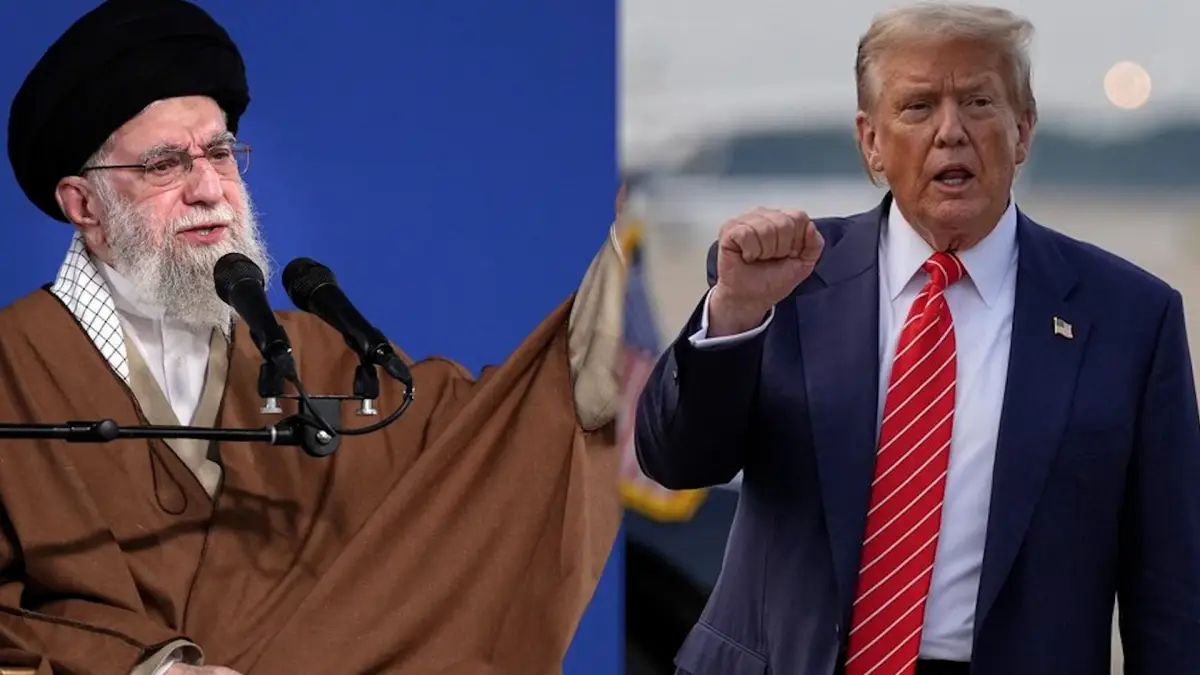
A decade-old tweet from former President Donald Trump, warning that “Obama will attack, will use Iran card,” has explosively resurfaced in the wake of recent, highly sensitive US-Israeli military operations. As the Middle East once again simmers with heightened tensions, this seemingly prophetic social media post is forcing a critical re-evaluation of past foreign policy rhetoric and its uncanny resonance with today’s complex geopolitical landscape, prompting widespread debate over historical predictions and present realities.
The Echo of a Decade: Trump’s 2013 Iran Warning Resurfaces
In the volatile tapestry of Middle Eastern geopolitics, few topics ignite as much passion and controversy as the intricate relationship between the United States, Israel, and Iran. Amidst a flurry of recent US-Israeli military strikes targeting strategic assets in the region, a remarkable relic from the past has re-entered public discourse: a tweet by then-private citizen Donald Trump, posted on September 19, 2013. The tweet, stark in its simplicity, declared: “Obama will attack, will use Iran card.” At the time,
it was largely dismissed as characteristic Trumpian bluster. Today, against the backdrop of a region teetering on the brink, its re-emergence has sent shockwaves through political circles, forcing analysts and the public alike to question the underlying currents of foreign policy and the enduring nature of geopolitical strategies.
The resurfacing of this particular tweet isn’t merely a nostalgic trip down memory lane; it’s a potent symbol of how deeply entrenched certain narratives are in the geopolitical arena. Trump’s comment, made during a period when the Obama administration was actively pursuing diplomatic solutions with Iran, including the eventual Joint Comprehensive Plan of Action (JCPOA),
suggests a fundamental skepticism about the intentions behind such engagements. It implied a cynical view that the “Iran card” — the perceived threat or opportunity presented by Iran’s actions — could be strategically deployed for domestic or international political gain, rather than purely for conflict resolution or national security.
Understanding the Context: A Decade of Shifting Sands
To fully grasp the contemporary significance of Trump’s 2013 tweet, one must delve into the historical context that both spawned it and now amplifies its relevance. The Obama administration’s approach to Iran was largely defined by its efforts to prevent Iran from developing nuclear weapons through diplomatic means. The JCPOA, signed in 2015, was a landmark agreement designed to restrict Iran’s nuclear program in exchange for sanctions relief. This approach was met with fierce opposition from various quarters, most notably from then-Prime Minister Benjamin Netanyahu of Israel and, vocally, from Donald Trump.
Trump consistently argued that the Iran deal was a catastrophic failure, emboldening rather than containing Tehran. His critique often centered on the idea that the deal left Iran with too many concessions and failed to address its broader malign activities in the region, including its support for proxy groups. His “Iran card” tweet, therefore, can be seen as an early articulation of a deeply ingrained belief that the Obama administration was either naive or intentionally manipulative in its dealings with Iran.
The Recent US-Israeli Strikes: A Catalyst for Reflection
The immediate trigger for the tweet’s renewed prominence lies in a series of coordinated US-Israeli military actions. While specifics often remain shrouded in secrecy, reports indicate these recent strikes targeted elements perceived as threats to regional stability, potentially including Iranian-backed militia infrastructure or clandestine nuclear facilities. These operations, undertaken with precision and strategic intent, underscore a continued commitment from both nations to counter Iranian influence and prevent nuclear proliferation. The decision to execute such strikes inevitably raises questions about escalation, regional security, and the long-term efficacy of military deterrence – precisely the kind of questions that Trump’s decade-old tweet now, for some, appears to address with uncanny foresight.
Timeline of Escalation and Diplomacy
- 2006-2009: International efforts to curb Iran’s nuclear program intensify; UN sanctions imposed.
- 2009-2012: Obama administration pursues engagement while maintaining sanctions; Stuxnet cyberattack against Iran’s nuclear facilities.
- September 2013: Donald Trump tweets: “Obama will attack, will use Iran card.”
- 2013-2015: P5+1 nations (US, UK, France, China, Russia, Germany) negotiate with Iran, leading to the JCPOA.
- July 2015: Joint Comprehensive Plan of Action (JCPOA) is signed.
- May 2018: Trump administration withdraws the US from the JCPOA and reimposes crippling sanctions.
- 2019-2023: Iran reduces compliance with JCPOA limits; increased regional proxy conflicts and attacks attributed to Iran-backed groups.
- Early 2026 (Recent): US and Israeli forces conduct targeted military strikes against strategic threats in the Middle East, widely interpreted as a response to Iranian or Iran-backed aggression/nuclear advancements.
- February 2026: Trump’s 2013 tweet resurfaces, igniting debate and analysis.
Industry Impact and Market Implications
The geopolitical tremors emanating from the Middle East inevitably send ripples across global industries and financial markets. The recent US-Israeli strikes, coupled with the renewed focus on Iran’s role, have particular implications:
Geopolitical Instability and Energy Markets
Any escalation in the Persian Gulf region, a critical chokepoint for global oil supplies, immediately sends jitters through energy markets. Oil prices typically react sensitively to perceived threats to supply, leading to volatility. Major shipping lanes are also potentially impacted, raising insurance costs and disrupting global trade. While immediate market reactions to the current strikes might be contained by existing reserves or diversified supplies, prolonged tension or direct confrontation with Iran would undoubtedly trigger significant price spikes and economic uncertainty. Industries reliant on stable energy prices, from manufacturing to transportation, face increased operational costs and strategic planning challenges.
Defense Sector Boom
Conversely, periods of heightened geopolitical tension often provide a boost to the defense industry. Increased defense spending, demand for advanced weaponry, and robust security measures become priorities for nations in the region and their allies. Companies specializing in air defense systems, surveillance technology, and precision-guided munitions often see increased orders and stock valuations. This trend, while economically beneficial for the sector, simultaneously highlights the grave reality of an increasingly militarized and unstable Middle East.
Policy Implications: Navigating a Perilous Path
The policy implications of these developments are profound and multi-faceted. The Biden administration, inheriting a deeply fractured relationship with Iran from its predecessor, has sought to balance diplomatic engagement with deterrence. The recent strikes suggest a firm stance against perceived aggression, yet the long-term strategy remains delicate. The “Iran card” — whether seen as a genuine threat or a political tool — continues to shape foreign policy debates in Washington and beyond.
Furthermore, the close coordination between the US and Israel in these operations underscores the enduring strategic alliance between the two nations, particularly concerning shared threats from Iran. This cooperation sends a clear message of unified resolve, yet also risks further entrenching regional divisions and escalating tensions with Iran and its proxies.
The policy challenge lies in deterring malign behavior without inadvertently triggering a broader, more destructive conflict. The upcoming US presidential election also looms large, as different candidates will undoubtedly offer starkly contrasting visions for America’s role in the Middle East and its approach to Iran, potentially swinging policy dramatically in the near future.
Expert Analysis: Deconstructing the ‘Iran Card’
Political scientists and foreign policy veterans offer diverse interpretations of Trump’s original tweet and its current relevance. Dr. Eleanor Vance, a Middle East policy expert at the National Security Institute, notes, “Trump’s tweet, while simplistic, tapped into a persistent debate about whether administrations, consciously or unconsciously, utilize external threats for internal political purposes.
The ‘Iran card’ concept suggests a strategic deployment of rhetoric or action to galvanize domestic support or achieve specific diplomatic leverage. In 2013, the context was primarily the nuclear deal negotiations and domestic pushback against Obama. Today, it’s a commentary on the perceived necessity of military action.”
Another perspective comes from Dr. Marcus Thorne, a geopolitical strategist specializing in social media and public opinion. “What makes this tweet so compelling now is its apparent foresight,” Thorne explains. “It feeds into a narrative of ‘I told you so’ for Trump’s supporters and prompts genuine introspection for others. It also highlights the double-edged sword of social media in foreign policy – a quick, informal thought from a decade ago can become a major talking point, shaping perceptions of current events and even influencing policy discussions.”
The core of the debate revolves around intent. Was Obama genuinely considering an attack to gain leverage, as Trump suggested? Or was Trump’s tweet merely a cynical projection of his own political philosophy? The truth likely lies in a complex interplay of strategic considerations, domestic pressures, and geopolitical realities that characterize any presidential administration’s foreign policy decisions. The current administration, while not subscribing to Trump’s exact rhetoric, nonetheless faces similar pressures and choices regarding Iran’s escalating regional activities and nuclear ambitions.
Comparing US Presidential Approaches to Iran
| Policy Aspect | Obama Administration (2009-2017) | Trump Administration (2017-2021) | Biden Administration (2021-Present) |
|---|---|---|---|
| Core Strategy | Diplomacy & Engagement (JCPOA) | “Maximum Pressure” Campaign | Diplomacy & Deterrence (Sanctions & Targeted Strikes) |
| JCPOA Stance | Architect & Supporter | Withdrawal & Rejection | Attempted Re-engagement (Stalled) |
| Sanctions | Utilized for leverage, eased post-JCPOA | Massive expansion & reimposition | Maintained & expanded selectively |
| Military Action | Limited, primarily covert operations | Targeted strikes (e.g., Soleimani) | Targeted strikes (recent US-Israeli ops) |
| Regional Allies | Sought broader coalition | Strong alignment with Israel & Saudi Arabia | Reaffirmed traditional alliances, cautious approach |
Summary of Recent Iran-Related Developments (Early 2026)
| Date Range | Key Development | Implication |
|---|---|---|
| Late 2025 – Early 2026 | Reports of Iran accelerating uranium enrichment beyond JCPOA limits. | Raises proliferation concerns, shortens ‘breakout time’ for nuclear weapon capability. |
| Early 2026 | Increased activity by Iran-backed militias targeting US interests in Iraq & Syria. | Regional instability, direct threat to US personnel, calls for retaliation. |
| February 2026 | Coordinated US-Israeli military strikes against specific targets in Syria/Iraq. | Deterrent action, demonstration of resolve, risk of escalation. |
| February 2026 | Donald Trump’s 2013 “Iran card” tweet resurfaces. | Fueling political debate, historical comparison, shaping public perception. |
Future Outlook: A Precarious Balance
The road ahead for US-Iran relations, and indeed for broader Middle Eastern stability, remains fraught with uncertainty. The resurfacing of Trump’s tweet, alongside the recent military actions, serves as a stark reminder that historical grievances and predictions continue to color contemporary policy decisions. The immediate future will likely see:
- Continued Tensions: Iran’s strategic patience will be tested, and retaliatory actions, possibly through proxies, cannot be ruled out.
- Diplomatic Standoff: Efforts to revive the JCPOA or negotiate a new nuclear deal are likely to remain stalled, given the current climate of mistrust and escalation.
- Regional Realignment: Gulf states and other regional actors will continue to navigate their own security interests, potentially leading to new alliances or further entrenchment of existing blocs.
- US Election Impact: The outcome of the next US presidential election will be a monumental factor. A return of Donald Trump to the White House would undoubtedly lead to a radically different Iran policy, potentially rekindling the “maximum pressure” campaign with renewed vigor. A second Biden term would likely continue a cautious approach, balancing deterrence with a slim hope for future diplomacy.
Ultimately, the “Iran card” will continue to be a central feature of Middle East policy. Whether it is played by external powers or by Iran itself, its implications for peace and stability are immense. The challenge for policymakers will be to navigate this complex terrain with foresight, prudence, and a clear understanding of both historical precedents and the rapidly evolving geopolitical landscape.
Frequently Asked Questions (FAQs)
- What was Donald Trump’s original tweet about Iran?
On September 19, 2013, Donald Trump tweeted: “Obama will attack, will use Iran card.” This tweet resurfaced after recent US-Israeli strikes in the Middle East. - Why is Trump’s 2013 tweet resurfacing now?
The tweet gained renewed attention following coordinated US-Israeli military strikes in early 2026, which targeted perceived threats linked to Iran, leading many to revisit Trump’s decade-old prediction. - What was the context of US-Iran relations in 2013 when Trump made his tweet?
In 2013, the Obama administration was actively pursuing diplomatic negotiations with Iran, which eventually led to the Joint Comprehensive Plan of Action (JCPOA) in 2015, aimed at curbing Iran’s nuclear program. - What does “use Iran card” mean in this context?
“Using the Iran card” implies leveraging the perceived threat or actions of Iran as a strategic tool for political gain, whether domestically (to rally support) or internationally (to gain diplomatic leverage or justify military action). - What were the recent US-Israeli strikes targeting?
While specific details are often classified, reports indicate the recent US-Israeli strikes targeted strategic assets in the Middle East, likely related to Iranian-backed militia infrastructure or clandestine nuclear facilities, in response to escalating regional threats. - How did the Obama administration’s Iran policy differ from Trump’s?
Obama focused on diplomacy and the JCPOA to prevent a nuclear Iran. Trump withdrew from the JCPOA, opting for a “maximum pressure” campaign through stringent sanctions and increased military presence. - What are the current policy implications for the Biden administration regarding Iran?
The Biden administration faces the challenge of balancing deterrence against Iranian aggression with attempts at diplomatic re-engagement, maintaining sanctions while trying to prevent further escalation. - How do geopolitical tensions in the Middle East affect global energy markets?
Heightened tensions in the Persian Gulf, a crucial oil transit region, often lead to increased volatility in global oil prices and can disrupt shipping, impacting economies worldwide. - What is the future outlook for US-Iran relations?
The future is highly uncertain, marked by continued tensions, a stalled nuclear deal, and potential regional realignments. The outcome of upcoming US elections will significantly influence policy direction. - Is there evidence that Obama intended to “use the Iran card” as Trump suggested?
There is no definitive evidence that the Obama administration was planning an attack purely to “use the Iran card.” Trump’s tweet was an expression of skepticism and a critical perspective on the administration’s strategic intent during a period of intense diplomatic efforts.
Conclusion: The Enduring Shadow of Prophecy
The resurfacing of Donald Trump’s 2013 tweet — “Obama will attack, will use Iran card” — amidst a fresh wave of US-Israeli strikes in the Middle East transcends mere political nostalgia. It serves as a powerful, if uncomfortable, reminder of how deeply intertwined historical rhetoric, strategic foresight, and present-day geopolitical realities truly are. What was once dismissed as a provocative utterance has, for many, taken on a veneer of prescience, igniting crucial conversations about the motivations behind foreign policy decisions and the often-unseen currents that shape international relations.
As the world grapples with persistent instability in a critical region, this single tweet underscores the enduring complexity of the “Iran card” and the high stakes involved in its strategic play. The coming years will undoubtedly test the resolve of global powers, demanding nuanced diplomacy, robust deterrence, and a clear-eyed understanding of the region’s intricate dynamics, all while navigating the echoes of past predictions that continue to reverberate across the geopolitical stage.
Internal Linking Suggestions:
- The Future of Middle East Peace Accords: Challenges and Opportunities
- Analyzing the Economic Impact of Sanctions on Iran
- How Social Media Influences International Relations and Diplomacy
External Authority Links:
- Council on Foreign Relations: Middle East and North Africa
- Carnegie Endowment for International Peace: Iran Program
#USForeignPolicy #IranSanctions #MiddleEastNews #Geopolitics #TrumpObama