






Celestial Compass: Ramazan Moon to Align Above Kaaba, Offering Divine Qibla Guidance Tonight
The night sky is set to become a celestial beacon for millions worldwide as the Ramazan moon prepares for a rare and profound alignment directly above the Holy Kaaba in Mecca. This extraordinary astronomical event, anticipated with immense spiritual reverence, will provide a natural and ancient guide to the Qibla, the direction Muslims face during prayer. For believers across the globe, this moment transcends mere astronomy, offering a direct, visual connection to the heart of their faith and a timeless reaffirmation of divine signs.
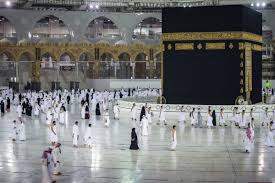
Illuminating the Path: The Spiritual Significance of the Kaaba Alignment
Tonight, as the sacred month of Ramazan continues, the moon will reach its zenith directly over the Kaaba, the cubic building at the center of Islam’s most important mosque, the Masjid al-Haram in Mecca, Saudi Arabia. This alignment is not just a visual spectacle but a deeply meaningful occurrence for Muslims, offering a unique opportunity to precisely determine the direction of Qibla without the aid of modern instruments. For centuries, celestial bodies have served as natural guides for navigation and religious practices, and this alignment harks back to an era when humanity looked to the heavens for direction.
A Journey Through Time: Historical Context of Qibla Determination
The determination of Qibla has always been a cornerstone of Islamic practice, ensuring uniformity and unity in prayer. Historically, before the advent of sophisticated navigational tools, Muslims relied on a combination of astronomical observations, local landmarks, and traditional knowledge to ascertain the direction of the Kaaba. Early Islamic scholars made significant contributions to astronomy and cartography, developing methods that included observing the sun’s shadow, star positions, and even designing special astrolabes to calculate Qibla from various locations. The moon’s direct alignment above the Kaaba is a powerful reminder of these ancient methods, bridging the gap between historical reverence and contemporary spiritual practice.
The very act of facing the Kaaba during prayer (Salat) symbolizes unity among Muslims globally, a collective turning towards a single point regardless of geographical distance. This celestial event reinforces that unity, providing a universal, undeniable sign visible to many. It underscores the belief that the natural world itself provides signs for those who reflect, intertwining the physical universe with spiritual devotion.
The Astronomical Phenomenon: Precision in the Heavens
Astronomically, the alignment occurs when the moon reaches its maximum declination (its angular distance north or south of the celestial equator) at a longitude that places it directly over Mecca. This precise celestial geometry is a result of the moon’s predictable orbit and Earth’s rotation. While the moon passes over the approximate longitude of Mecca regularly, a direct overhead alignment with the Kaaba, particularly during a significant Islamic month like Ramazan, is a noteworthy event that captures both scientific and spiritual attention.
Timeline of Celestial Events Leading to the Alignment
- Early Ramazan Observances: The start of Ramazan is determined by the sighting of the crescent moon, initiating a month of fasting, prayer, and spiritual reflection.
- Lunar Orbit Progression: Throughout Ramazan, the moon continues its elliptical orbit around the Earth, changing its position relative to the Earth’s surface.
- Specific Tonight: The moon’s trajectory will bring it into a direct overhead alignment with the Kaaba. This is a culmination of its orbital path converging with the geographical coordinates of Mecca.
- Visual Confirmation: For those in regions where the moon is visible at its highest point, the direct alignment above the Kaaba will be observable, offering an unmistakable visual guide.
- Global Reverberations: News and discussions about this event will spread rapidly, encouraging Muslims globally to observe and reflect on its significance.
Industry Impact and Cultural Resonance
While not an “industry” in the traditional sense, the religious and cultural sphere is significantly impacted by such events. The alignment serves as a powerful reminder of faith, enhancing spiritual tourism to Mecca (though the observation itself is global). Educational institutions, particularly those focusing on Islamic studies and astronomy, will likely use this event as a teaching moment, explaining both the scientific principles and theological implications. Islamic media outlets will undoubtedly feature extensive coverage, further amplifying its reach and significance.
Market and Policy Implications (Indirect)
The immediate market implications are minimal, as this is a natural phenomenon. However, indirectly, such events can bolster the spiritual economy surrounding religious observances. For instance, an increased awareness of celestial navigation might subtly influence demand for traditional astrolabes or guidebooks on Islamic astronomy. From a policy perspective, governments in Muslim-majority nations often consider astronomical calculations for religious calendar determination, highlighting the intersection of science and faith in state affairs. Events like this reinforce the cultural importance of preserving and understanding traditional methods of celestial observation.
Expert Analysis: Bridging Science and Spirituality
Astrophysicists and Islamic scholars alike view this alignment with profound interest. From a scientific standpoint, it’s a beautiful demonstration of celestial mechanics. From a spiritual perspective, it is seen as a divine sign. Dr. Aisha Rahman, an expert in Islamic astronomy, notes, “These alignments are a testament to the order and precision in the universe, which many believers attribute to divine design. For Muslims, it offers not just a practical guide but a moment of deep spiritual contemplation about the vastness of creation and the centrality of the Kaaba.”
This event serves as an excellent opportunity to engage younger generations in both astronomy and Islamic heritage, demonstrating how scientific knowledge has historically intertwined with religious practice. It encourages a holistic understanding of the world, where faith and reason can coexist and even illuminate each other.
| Event Detail | Description |
|---|---|
| Celestial Body | Ramazan Moon (Waxing Gibbous/Full Moon phase, depending on exact timing within Ramazan) |
| Alignment Point | Directly above the Holy Kaaba, Mecca, Saudi Arabia |
| Significance | Natural Qibla guide, spiritual contemplation, astronomical spectacle |
| Observability | Visible from regions where the moon is highest in the sky during the alignment period. Best observed at local zenith. |
| Historical Context | Echoes ancient methods of celestial navigation and Qibla determination. |
Future Outlook: Celestial Guides in an Evolving World
As technology advances, the reliance on celestial bodies for practical navigation diminishes. However, their spiritual and cultural significance remains, and perhaps even grows stronger in an increasingly digital world. Such alignments serve as powerful reminders of humanity’s connection to the cosmos and the timeless practices of faith. They foster a sense of shared experience among billions, transcending borders and languages.
The interest generated by this Ramazan moon alignment could spark renewed enthusiasm for archaeoastronomy – the study of how ancient cultures understood and used celestial phenomena – within an Islamic context. It could also inspire greater collaboration between astronomers and religious scholars to explore these intersections further, enriching both scientific understanding and spiritual appreciation.
| Method | Description | Advantages | Disadvantages |
|---|---|---|---|
| Celestial Alignment (e.g., Moon over Kaaba) | Direct observation of a celestial body (Sun/Moon) positioned precisely over the Kaaba. | Highly accurate (when available), spiritually profound, universally accessible (if visible). | Rare occurrence for direct overhead alignment, limited to specific times/locations for observation. |
| Traditional Astronomical Observation | Using sun’s position, star charts, or astrolabes to calculate Qibla direction. | Reliable for experienced observers, historical significance, works globally. | Requires knowledge of astronomy, can be complex without tools. |
| Magnetic Compass/GPS Applications | Modern technology using magnetic north or satellite data to pinpoint Qibla. | Highly convenient, very accurate, accessible to most people with smartphones. | Requires technology, can be affected by local magnetic interference. |
| Mosque Orientation | Assuming a local mosque is correctly oriented towards the Qibla. | Simple and communal. | Accuracy depends on the mosque’s initial construction and orientation. |
Frequently Asked Questions About the Ramazan Moon Alignment
- What is the significance of the Ramazan moon aligning above the Kaaba?
The alignment offers a natural and precise visual guide to the Qibla, the direction of prayer for Muslims worldwide. It also holds deep spiritual significance, reinforcing the unity of the Muslim community and serving as a reminder of divine signs in the cosmos. - How often does the moon align directly over the Kaaba?
While the moon passes over the general longitude of Mecca regularly, a precise overhead alignment with the Kaaba is a relatively rare astronomical event. Specific dates vary each year due to the moon’s complex orbit. - Can this alignment be seen from anywhere in the world?
The direct overhead alignment is observable primarily from regions where the Kaaba is at the zenith relative to the moon’s position. However, its spiritual significance and impact resonate globally. - How does this alignment help determine the Qibla?
If the moon is directly overhead the Kaaba, then from any point on Earth where the moon is visible, the direction towards the moon will be the exact Qibla. This provides an unmistakable reference point. - Is this the only celestial event used for Qibla determination?
No. Historically, the sun’s alignment (when it passes directly over the Kaaba twice a year) and specific star positions were also used. This lunar alignment is another powerful celestial guide. - What is the scientific explanation for this phenomenon?
It is a result of the moon’s predictable orbit around Earth and Earth’s rotation, bringing the moon to its highest point (zenith) directly above the geographical coordinates of the Kaaba at a specific time. - Does this event have any special prayers associated with it?
While there isn’t a specific prayer designated for the alignment itself, the event deepens the spiritual experience during Ramazan, encouraging increased prayer, reflection, and gratitude for divine signs. - How accurate is using the moon for Qibla compared to modern tools?
A direct overhead alignment provides an extremely accurate Qibla direction, often as precise as, if not more intuitive than, many modern tools, especially for those who understand the astronomical principles. - What impact does this have on Muslim unity?
Such a visible, universal sign that points to the Kaaba reinforces the concept of unity (Ummah) in Islam, as all Muslims are directed towards a single spiritual center, whether through prayer or contemplation of this event. - Where can I learn more about Islamic astronomy?
Many academic institutions, Islamic research centers, and online resources provide extensive information on Islamic astronomy, its historical contributions, and its role in religious practices.
Conclusion: A Timeless Guide, A Unified Path
Tonight’s celestial spectacle, the Ramazan moon’s alignment directly above the Kaaba, is more than just an astronomical event; it is a profound spiritual sign that resonates across generations and continents. It reminds us of the timeless wisdom embedded in observing the natural world and how these observations have historically guided humanity, both practically and spiritually. As millions turn their gaze towards the heavens, seeking not just a direction but a deeper connection, this alignment reaffirms the unity of faith, the precision of creation, and the enduring power of celestial wonders to inspire and guide. In a rapidly changing world, such ancient, natural compasses offer a reassuring constant, pointing always to the sacred heart of Islam and fostering a global sense of belonging and shared purpose.
Internal Linking Suggestions:
- Understanding the Spiritual Journey of Ramazan
- The History and Significance of the Kaaba
- Islamic Astronomy: A Legacy of Innovation
External Authority Links:
#RamazanMoon #KaabaAlignment #QiblaGuide #IslamicAstronomy #CelestialCompass