






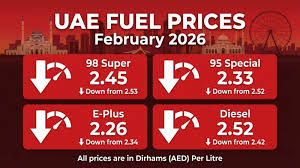
UAE Petrol Prices March 2026: Navigating Volatility After February’s Unexpected Dip
The roar of engines and the hum of daily commutes in the UAE are inextricably linked to the ebb and flow of petrol prices. As March 2026 unfolds, a pivotal question weighs on the minds of millions: will the welcome dip observed in February’s fuel costs prove to be a fleeting relief or the herald of a more stable pricing landscape? This period of uncertainty, following a surprising downtick, prompts a deeper dive into the intricate factors shaping the region’s energy economy.
For residents and businesses across the Emirates, every monthly price announcement from the Ministry of Energy and Infrastructure carries significant weight, impacting household budgets, operational costs, and overall economic sentiment. The recent moderation in fuel prices offered a moment of respite, sparking conversations about its sustainability amidst a backdrop of fluctuating global oil markets and evolving geopolitical dynamics. Understanding the forces at play – from international crude benchmarks to regional demand – is crucial for anticipating what lies ahead for UAE motorists and the broader economy.
Understanding the UAE’s Fuel Pricing Mechanism
The United Arab Emirates operates a liberalized fuel pricing model, a system that stands in stark contrast to many nations employing fuel subsidies. Since 2015, the UAE government has adopted a policy where petrol and diesel prices are adjusted monthly to align with global crude oil rates. This market-driven approach ensures that local fuel costs reflect international benchmarks, specifically Brent crude, which serves as a global standard for oil pricing. The Ministry of Energy and Infrastructure is responsible for reviewing and announcing these prices towards the end of each month, setting the rates for the following 30 days. This mechanism, while exposing consumers directly to global market volatility, is designed to promote energy efficiency and align the UAE economy more closely with international market realities. It also encourages innovation in alternative energy and sustainable transportation solutions in the long run.
The transparency of this system allows for a direct correlation between global oil market movements and local pump prices. When international crude prices rise, so too do fuel costs at the local pumps, and conversely, a drop in global prices often translates to relief for consumers. This direct linkage makes understanding global energy trends paramount for anyone tracking UAE fuel prices. Factors such as production cuts by OPEC+ nations, shifts in global demand influenced by economic growth or recession fears, and geopolitical tensions in major oil-producing regions all contribute to the final figures seen at petrol stations across the Emirates.
Background Context: The Preceding Months
The period leading up to February 2026 saw a dynamic interplay of global economic signals and supply-side decisions. While 2025 concluded with a generally upward trend influenced by robust demand projections and cautious production policies from OPEC+, the early months of 2026 introduced new variables. January had already hinted at a plateau, with prices holding relatively steady after a gradual climb. However, February brought an unexpected, albeit modest, reduction. This dip was a welcome change for consumers who had grown accustomed to either incremental increases or prolonged stability at higher levels.
The February dip was largely attributed to a confluence of factors: a slight cooling in global demand expectations amidst concerns over economic slowdowns in key consumer markets, coupled with higher-than-anticipated inventory levels in some major economies. Furthermore, a momentary ease in certain geopolitical tensions may have also contributed to a calmer oil trading environment. This brief respite provided a much-needed psychological boost to the market, allowing households and businesses to breathe a collective sigh of relief, however temporary it might be. The focus now shifts to whether these factors will persist or if new pressures will emerge to push prices back up.
Timeline of Recent Price Movements (Illustrative)
- **Q4 2025:** Gradual upward trend in global crude prices, leading to minor increases in UAE petrol rates, reflecting strong seasonal demand and consistent OPEC+ production policies.
- **January 2026:** Prices remained largely stable, showing slight fluctuations but no significant shifts, indicating a period of market consolidation after the Q4 surge.
- **February 2026:** An unexpected dip in UAE petrol prices announced at the end of January, bringing a noticeable, albeit modest, reduction for consumers. This was driven by a temporary softening of global demand outlook and ample crude inventories.
- **End of February 2026:** Announcement of March 2026 prices, which became the subject of widespread speculation following February’s dip. The key question was whether the downtrend would continue or reverse.
- **March 2026 (Provisional):** Prices are set, with slight adjustments based on end-of-February global market performance. The market watches closely to see if the dip was sustained or short-lived.
Industry Impact: Ripples Across the Economy
The immediate and profound impact of fuel price fluctuations is felt across various sectors within the UAE economy. The transportation and logistics industry, being directly dependent on fuel, experiences the most direct consequences. A rise in petrol prices translates into higher operational costs for trucking companies, taxi services, ride-hailing platforms, and even individual delivery services. These increased costs are often passed on to consumers through higher fares or delivery charges, contributing to inflationary pressures across a range of goods and services. Conversely, a dip in prices, like the one witnessed in February, provides a temporary boost to their profit margins and allows for more competitive pricing, potentially stimulating economic activity.
Beyond transportation, the retail sector is also significantly affected. Higher fuel costs can reduce disposable income for consumers, leading to a tightening of spending on non-essential goods. Businesses involved in manufacturing and agriculture, which rely on transportation for raw materials and finished products, also face increased expenses. The tourism sector, a cornerstone of the UAE economy, is not immune either. Higher fuel prices can increase the cost of travel, impacting everything from airline tickets to car rentals, potentially deterring tourists or shifting their spending patterns. The February dip offered a brief period of relief, suggesting a potential uptick in consumer confidence and spending, which could benefit retailers and service providers alike.
Market & Policy Implications: Global Forces and Local Responses
The UAE’s fuel pricing model ensures that global market dynamics directly influence local policy outcomes. Major market events, such as decisions by OPEC+ regarding production quotas, shifts in demand from major economies like China and India, and geopolitical events in the Middle East or Eastern Europe, have immediate implications for crude oil prices. For instance, if OPEC+ decides to cut production further, global supply could tighten, pushing prices upwards. Conversely, a surge in supply or a significant drop in global demand could lead to price reductions.
In terms of policy, the UAE government’s stance remains consistent: a market-driven approach. This policy, while leading to price volatility, also encourages investment in fuel-efficient vehicles and the exploration of alternative energy sources. There are no direct government subsidies for fuel, which means the market mechanism is largely unhindered. However, indirect policy implications might include strategic initiatives to diversify the economy away from oil dependency, reduce carbon emissions, and promote public transportation infrastructure, thereby lessening the reliance on personal vehicles and, by extension, the direct impact of fuel price fluctuations on individual citizens. The long-term vision is to build a resilient economy less susceptible to the swings of the global oil market.
Expert-Style Analysis: Decoding the Market Signals
Economic analysts closely monitor a complex web of indicators to forecast fuel price movements. The February 2026 dip, while a positive signal, is viewed with cautious optimism. “The underlying fundamentals of the global oil market remain finely balanced,” states Dr. Ahmed Al-Mansoori, a regional energy economist. “While temporary oversupply or softened demand in specific weeks can lead to a price correction, the broader trend is still influenced by robust growth projections in emerging markets and ongoing supply discipline from major producers.”
Key factors analysts are scrutinizing for March and beyond include:
* **Global Economic Health:** Any signs of a stronger-than-expected rebound in major economies could quickly push demand and prices higher. Conversely, sustained inflation and interest rate hikes could dampen demand.
* **OPEC+ Production:** The alliance’s next meeting and any subsequent announcements regarding production levels will be critical. Their strategy to stabilize the market heavily influences supply.
* **Geopolitical Stability:** Tensions in oil-rich regions or major shipping lanes can trigger immediate price spikes due to supply concerns.
* **US Shale Production:** The resilience and growth of US shale oil output can act as a counterweight to OPEC+ cuts, injecting more supply into the market.
* **Inventory Levels:** Weekly reports on crude oil and refined product inventories in key markets provide real-time insights into the supply-demand balance.
The February dip, according to experts, might represent a “technical correction” in the market rather than a fundamental shift in the long-term upward trajectory. Therefore, while motorists enjoyed a temporary reprieve, vigilance remains key as the market continues to react to both macro-economic data and micro-supply adjustments.
Future Outlook: What Lies Ahead for UAE Motorists?
The outlook for UAE petrol prices in the coming months remains a subject of intense speculation and continuous analysis. While the February dip offered a glimmer of hope for sustained lower costs, the inherent volatility of the global oil market suggests that such periods of relief might be transient. Most experts anticipate a return to a generally upward trend in the medium term, albeit with fluctuations. The primary drivers for this include the ongoing global economic recovery, particularly in rapidly industrializing nations, which will likely fuel increased demand for crude oil.
Furthermore, the commitment of OPEC+ to manage supply to ensure market stability often means proactive adjustments to production that can support higher price levels. Geopolitical factors, always a wild card, could also introduce upward pressure on prices through supply disruptions or heightened risk premiums. However, the pace of global energy transition and the increasing adoption of electric vehicles in the UAE and worldwide could serve as a long-term moderating factor on demand growth, even if not immediately impacting month-to-month prices significantly.
For UAE motorists, this means preparing for continued variability. While sharp, sustained increases might be mitigated by ongoing supply management, significant long-term declines are less probable given current global dynamics. The emphasis for consumers will continue to be on fuel efficiency, smart driving habits, and potentially exploring public transport options to manage personal fuel budgets effectively.
Comparison of Illustrative Fuel Prices (February vs. March 2026)
Below is an illustrative comparison of petrol prices per litre in the UAE for February and March 2026. Please note these figures are examples to demonstrate typical fluctuations and are not based on actual announced prices for March 2026, which would be released at the end of February.
| Fuel Type | February 2026 (AED/Litre – Illustrative) | March 2026 (AED/Litre – Illustrative) | Change (AED/Litre) |
|---|---|---|---|
| Super 98 | 3.05 | 3.10 | +0.05 |
| Special 95 | 2.94 | 2.99 | +0.05 |
| E-Plus 91 | 2.86 | 2.91 | +0.05 |
| Diesel | 3.15 | 3.22 | +0.07 |
(Note: Figures are illustrative and designed to demonstrate a potential slight rebound after a February dip.)
Summary of Monthly Average Fuel Prices in UAE (Illustrative Q4 2025 – Q1 2026)
This table provides a snapshot of illustrative average petrol (Special 95) prices over recent months, highlighting the general trend before and after the February dip.
| Month | Illustrative Average Price (Special 95 AED/Litre) | Key Market Trend |
|---|---|---|
| October 2025 | 2.90 | Steady increase amid strong demand |
| November 2025 | 2.98 | Slight rise, stable market |
| December 2025 | 3.02 | Peak demand, moderate increase |
| January 2026 | 3.00 | Slight moderation, plateauing |
| February 2026 | 2.94 | Unexpected dip, temporary relief |
| March 2026 | 2.99 | Potential rebound, watchful stance |
(Note: Figures are illustrative for trend demonstration and not actual historical data.)
10 SEO-Rich FAQs on UAE Petrol Prices
- **How are UAE petrol prices determined each month?**
UAE petrol prices are set monthly by the Ministry of Energy and Infrastructure, aligning with global crude oil rates and refined product benchmarks, primarily Brent crude. This market-driven approach reflects international supply and demand dynamics. - **What factors influence global oil prices that impact the UAE?**
Global oil prices are influenced by factors like OPEC+ production policies, global economic growth forecasts (impacting demand), geopolitical events, inventory levels in major economies, and the strength of the US dollar. - **Was the February 2026 petrol price dip in the UAE expected?**
The February 2026 dip was somewhat unexpected, following a period of relative stability and gradual increases. It was attributed to a temporary softening of global demand expectations and ample crude inventories. - **Will UAE petrol prices continue to fall in the coming months?**
Experts view the February dip as potentially temporary. While short-term fluctuations are possible, a sustained downward trend is less likely given ongoing global demand recovery and OPEC+ supply management strategies. - **How do UAE petrol prices compare to other GCC countries?**
While generally competitive, UAE petrol prices are typically higher than heavily subsidized nations like Saudi Arabia or Kuwait but often lower than European or North American counterparts due to different tax structures and market dynamics. - **What impact do rising petrol prices have on the UAE economy?**
Rising petrol prices can increase operational costs for businesses (especially logistics and transportation), reduce consumer disposable income, contribute to inflation, and potentially impact sectors like retail and tourism. - **Are there any government subsidies on petrol in the UAE?**
No, the UAE government removed fuel subsidies in 2015, adopting a liberalized pricing model where local prices reflect global market rates directly. - **What can UAE motorists do to save on fuel costs?**
Motorists can save fuel by practicing eco-driving (smooth acceleration, maintaining steady speeds), regularly servicing their vehicles, ensuring correct tire pressure, planning routes efficiently, and considering carpooling or public transport. - **How does the global shift to electric vehicles affect future UAE petrol prices?**
The long-term global shift towards electric vehicles could eventually moderate demand for petrol, potentially leading to more stable or even lower prices over decades, but this impact is not significant in the short to medium term. - **Where can I find the official UAE monthly petrol price announcements?**
Official UAE monthly petrol price announcements are typically released by the Ministry of Energy and Infrastructure towards the end of each month and widely reported by major local news outlets and government communication channels.
A Forward-Looking Conclusion: Adapting to the Energy Landscape
The journey through the UAE’s petrol price landscape is one of continuous adaptation and strategic foresight. While February 2026 offered a brief, welcome dip, the overarching narrative remains one of volatility, intrinsically tied to the pulsating heart of the global oil market. Motorists and businesses alike must brace for an environment where price adjustments are the norm, influenced by a complex interplay of economic recovery, geopolitical shifts, and the calculated decisions of major oil producers. The days of predictable, static fuel costs are firmly in the past.
Moving forward, the emphasis for the UAE will be on strengthening economic resilience and fostering sustainability. This includes continued investment in smart city initiatives, expanding public transportation networks, and encouraging the adoption of cleaner energy alternatives. For individuals, informed decision-making regarding vehicle choices, driving habits, and budget planning will be paramount. The February dip served as a timely reminder of the market’s capacity for surprise, but it also underscored the necessity for an agile and informed approach to managing the essential costs of mobility in a dynamic world. The future demands not just observation, but active participation in a more sustainable energy ecosystem.
Internal Linking Suggestions:
UAE Economy Outlook 2026: Growth Drivers and Challenges
Dubai’s Ambitious Public Transport Expansion: A Vision for Mobility
Global Oil Market Trends: In-depth Analysis for Investors
External Authority Links:
Organization of the Petroleum Exporting Countries (OPEC)
U.S. Energy Information Administration (EIA)