






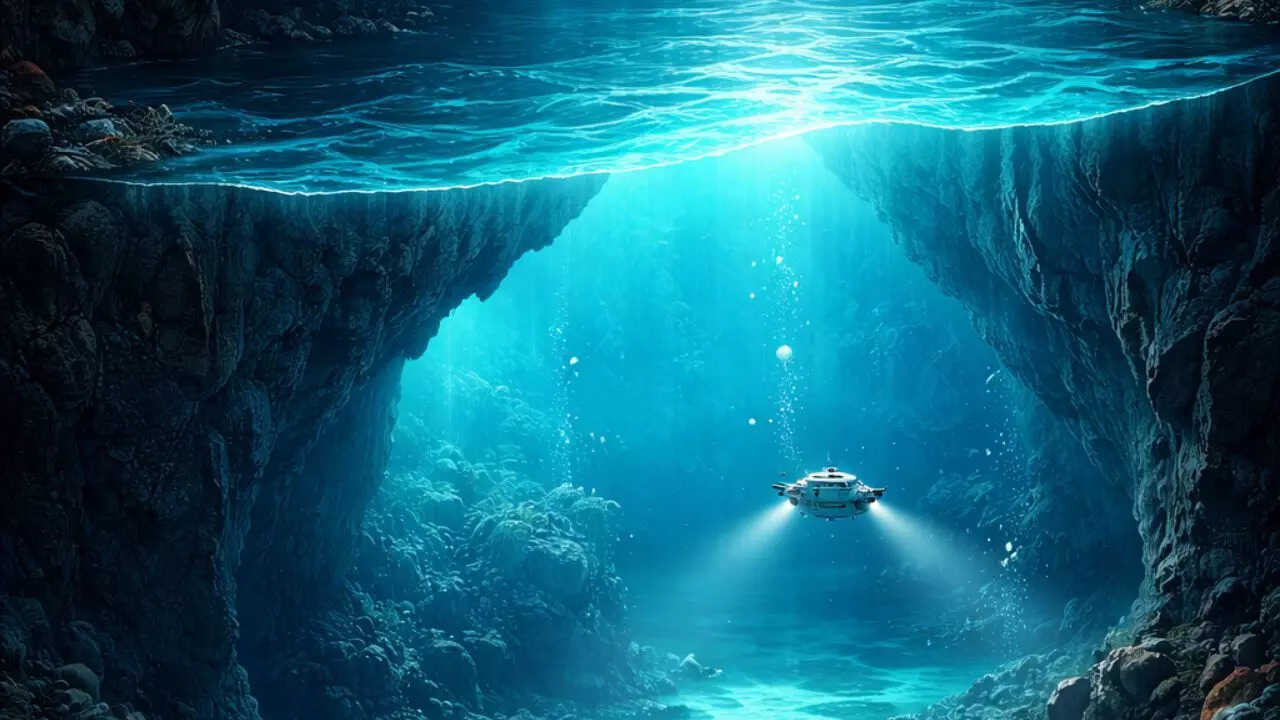
A Monumental Discovery Under the Waves
An extraordinary scientific breakthrough has recently captured global attention, offering a glimmer of hope for future generations facing escalating water scarcity.
Scientists have uncovered an immense, 20,000-year-old freshwater reserve hidden deep beneath the Atlantic Ocean, a discovery that could profoundly redefine global water security paradigms.
Unveiling the Immense Scope of the Discovery
This unprecedented find represents a potential game-changer, revealing a vast, previously unknown underwater aquifer that has remained undisturbed for millennia.
The reserve is estimated to be so extensive that it could potentially supply major coastal cities with potable water for generations, significantly easing ongoing water stress and drought pressures.
Geographic Extent and Estimated Volume
Preliminary studies indicate that this colossal aquifer stretches for hundreds of kilometers offshore, predominantly situated beneath the continental shelf in specific regions of the Atlantic.
While precise volumetric assessments are still ongoing and subject to refinement, initial estimates are staggering, suggesting billions of cubic meters of fresh, potable water locked within the seabed.
Advanced Geophysical Imaging Techniques
The groundbreaking discovery was made possible through the deployment of cutting-edge geophysical imaging technologies, most notably controlled-source electromagnetic (CSEM) surveying and seismic reflection methods.
These sophisticated techniques allowed researchers to peer deep beneath the ocean floor, accurately mapping geological structures and identifying distinct freshwater lenses amidst surrounding saline groundwater due to their differing electrical conductivities.
The Remarkable Formation of the Submarine Aquifer
Understanding the intricate geological and climatic conditions that led to the formation and preservation of this massive freshwater body is critical to appreciating its scientific and societal significance.
Its existence is intricately linked to major global climate shifts and dramatic sea level fluctuations that occurred tens of thousands of years ago.
Origins During the Last Glacial Maximum
The aquifer is firmly believed to have formed during the Last Glacial Maximum (LGM), approximately 20,000 years ago, a geological epoch when vast ice sheets covered significant portions of the Northern Hemisphere.
During this period, global sea levels were dramatically lower by over 100 meters than they are today, exposing extensive areas of what are now submerged continental shelves.
Meltwater Infiltration and Sediment Trapping
As these colossal ice sheets began their melting phase, immense quantities of freshwater runoff flowed across the newly exposed landmasses and readily percolated into the porous, unconsolidated sediments of the continental shelves.
Subsequently, as the global climate warmed and sea levels progressively rose, these freshwater-saturated sediments became sealed off and trapped beneath newly deposited layers of impermeable marine clay and shale, effectively preserving them from saltwater intrusion for millennia.
Profound Implications for Global Water Security
The discovery of such a substantial, previously untapped freshwater source has profound implications for humanity, particularly for countless regions grappling with persistent and worsening water scarcity.
It opens up entirely new avenues for addressing critical freshwater shortages on a global scale, potentially altering long-term water management strategies and resource allocation policies.
A Potential Lifeline for Coastal Urban Centers
Many coastal urban centers worldwide are already struggling with dwindling traditional groundwater supplies, increasing population demand, and the high energy and environmental costs associated with conventional desalination processes.
Access to this vast, potentially accessible freshwater source could offer a significant reprieve, alleviating immense pressure on existing water infrastructure, reducing ecological footprints, and enhancing regional water resilience.
Reducing Global Reliance on Desalination Technologies
Desalination, while a vital technological solution for water-stressed regions, is notoriously energy-intensive, expensive to operate, and often results in the production of concentrated brine byproducts that pose significant environmental challenges when disposed of.
Tapping into this naturally occurring ancient reserve could provide a more sustainable, environmentally benign, and potentially more cost-effective alternative to the expansion of large-scale desalination infrastructure.
Navigating the Complexities: Challenges and Ethical Considerations
While the prospect of utilizing this immense resource is undoubtedly exciting and promising, its responsible development and long-term sustainability will require careful navigation through significant technical, environmental, and ethical challenges.
International cooperation, robust scientific investigation, and transparent governance frameworks will be absolutely paramount to ensure equitable and sustainable utilization.
Developing Sustainable Extraction Methods
A primary technical challenge involves developing and implementing sustainable extraction methods that can effectively access this deep-sea aquifer without compromising its long-term integrity or inducing adverse effects.
Crucially, uncontrolled or over-extraction could lead to irreversible saltwater intrusion into the freshwater lens, contaminating the entire reserve and rendering it unusable for future generations, negating its potential benefits.
International Governance and Ownership Dilemmas
The reserve’s location, potentially spanning international waters or exclusive economic zones, raises complex legal and ethical questions regarding ownership, equitable access rights, and benefit-sharing mechanisms among nations.
Establishing equitable access protocols and robust management frameworks will require unprecedented collaboration among nations and potentially the development of new international maritime laws specifically tailored for transboundary resource governance.
Crucial Environmental Impact Assessments
Any potential plans for the exploration, development, and eventual exploitation of this immense freshwater resource must be rigorously preceded by comprehensive, independent, and transparent environmental impact assessments (EIAs).
The delicate and often poorly understood deep-sea marine ecosystems surrounding the aquifer’s potential extraction sites must be thoroughly studied, mapped, and protected from any undue harm.
Minimizing Ecological Disruption and Habitat Protection
The physical process of drilling, installing subsea pipelines, and continuous water extraction could potentially disturb sensitive seabed habitats, impacting a wide array of benthic (bottom-dwelling) and pelagic (open-water) marine life.
Strategic site selection, advanced drilling techniques, and the implementation of stringent environmental safeguards and mitigation measures must be developed and applied to minimize any adverse ecological effects during all phases of operation.
Long-Term Monitoring and Conservation Strategies
Establishing robust, long-term monitoring programs will be absolutely essential to continuously assess the aquifer’s hydrological health, monitor water quality changes, and track the stability of the surrounding geological structures over decades.
Integrated conservation efforts, focusing on both the intrinsic value of the aquifer itself and the broader marine environment it inhabits, must be embedded into any future development and operational plans to ensure its enduring sustainability and ecological balance.
The Path Forward: Research, Innovation, and Global Collaboration
This groundbreaking discovery marks not an end to inquiry, but rather the exciting beginning of a new era of scientific investigation into submarine freshwater resources and their potential.
Further intensive research, dedicated technological innovation, and unparalleled international collaboration are now critically needed to unlock the full potential of this ancient resource responsibly and effectively.
Advanced Mapping, Modeling, and Geochemistry
More detailed, high-resolution geophysical mapping and sophisticated hydrological modeling will be required to precisely delineate the aquifer’s exact boundaries, accurately estimate its total usable volume, and thoroughly understand its internal flow dynamics.
Comprehensive geochemical analysis of the water itself is also vital to confirm its quality, identify any dissolved minerals, assess potential contaminants, and ensure its ultimate suitability for various intended uses, including drinking water.
Technological Innovation for Offshore Extraction
Developing truly cost-effective, energy-efficient, and environmentally benign technologies specifically designed for deep-sea, offshore freshwater extraction will be a paramount engineering challenge.
This will likely involve innovations in subsea drilling platforms capable of sustained operation, specialized pumping systems resistant to corrosion, robust pipeline infrastructure designed for deep-sea conditions, and potentially novel methods for water transport to shore.
A Glimpse into the Future of Water Resilience
The uncovering of this incredible 20,000-year-old freshwater treasure beneath the Atlantic Ocean offers more than just a new resource; it provides a powerful beacon of hope and inspiration for a water-stressed world.
It profoundly underscores the dynamic and often hidden geological wonders of our planet and the immense potential for unexpected resources that could aid humanity in its most pressing challenges.
Inspiring Further Submarine Exploration
This monumental find will undoubtedly catalyze and inspire intensified exploration efforts for similar submarine aquifers beneath other continental shelves across the globe.
Many other oceanic regions, particularly those with similar geological histories involving glacial periods and subsequent sea-level rise, might harbor analogous ancient freshwater reserves, waiting to be discovered and assessed.
Reshaping Global Water Policy and Strategy
The confirmed existence of such a massive and potentially accessible freshwater reserve will inevitably compel policymakers, governmental bodies, and international organizations to fundamentally rethink global water security strategies.
It highlights the urgent need for adaptive, innovative, and collaborative approaches to water resource management in an era of increasing climate uncertainty, environmental degradation, and unprecedented population growth.
Staying Informed on Cutting-Edge Water Discoveries
The scientific community continues to make incredible, often paradigm-shifting, strides in understanding our planet’s hidden resources and complex hydrological systems.
For more insights into groundbreaking environmental science, technological advancements, and the latest trends impacting water resources globally, staying tuned to expert analyses and scientific publications is crucial.
Official Source and Further In-Depth Reading
This monumental and impactful discovery has been meticulously detailed by leading researchers in the field and published in respected scientific forums, bringing its findings to global attention.
Readers are strongly encouraged to consult the Official Source for the comprehensive scientific report to delve deeper into the methodologies, primary findings, and broader implications discussed herein.
Frequently Asked Questions About the Atlantic Freshwater Reserve
1. What exactly has been discovered beneath the Atlantic Ocean, and what is its overarching significance?
Scientists have uncovered an immense, ancient freshwater reserve, estimated to be approximately 20,000 years old, situated deep beneath the seabed of the Atlantic Ocean. This discovery is profoundly significant because the aquifer holds a volume of water so vast it could potentially supply major coastal cities for many generations, offering a critical new source amidst growing global water scarcity, increasing population demands, and the accelerating impacts of climate change on freshwater resources.
2. How was this massive underwater freshwater reserve initially detected and subsequently confirmed by researchers?
The discovery was made possible through the application of advanced geophysical imaging techniques, primarily controlled-source electromagnetic (CSEM) surveying and seismic reflection. These sophisticated methods allowed researchers to send electromagnetic signals and acoustic waves deep into the ocean floor. By meticulously analyzing how these waves propagated and reflected through different geological layers, scientists could accurately map the subsurface structures and crucially differentiate between saline seawater-filled pores and freshwater-filled pores, revealing the distinct freshwater lens.
3. Can you elaborate on the estimated size, average depth, and specific geographic location of this reserve?
While precise boundaries and full extent are still being refined through ongoing research, initial studies indicate the reserve stretches for hundreds of kilometers offshore, predominantly lying beneath the continental shelf in specific regions of the Atlantic. It exists at varying depths, typically hundreds of meters below the seabed, shielded by overlying layers of impermeable clay and shale. The preliminary volume estimates are in the billions of cubic meters, making it one of the largest such discoveries known, though specific coordinates often remain proprietary for detailed scientific research and future planning purposes.
4. What is the geological and climatic process behind the formation of this 20,000-year-old freshwater aquifer?
This ancient aquifer formed during the Last Glacial Maximum, approximately 20,000 years ago, a geological epoch characterized by extensive ice sheets across the Northern Hemisphere and significantly lower global sea levels. At that time, large portions of the continental shelves were exposed as dry land. As the massive glaciers began to melt, vast quantities of freshwater runoff percolated into the porous sediments of these exposed shelves. Subsequently, as the global climate warmed and sea levels progressively rose, these freshwater-saturated sediments were submerged, and continuous deposition of marine clays and silts created an impermeable cap, effectively trapping the freshwater and protecting it from saltwater intrusion for millennia.
5. Is the water from this reserve immediately potable and safe for human consumption, or does it require extensive treatment?
While preliminary analyses confirm the water is freshwater, its immediate potability for direct human consumption is yet to be fully determined and cannot be assumed. Extensive chemical and microbial testing would be absolutely essential before any utilization. Factors such as dissolved mineral content, the potential presence of naturally occurring contaminants from the surrounding geology (e.g., heavy metals), and microbial purity would all need rigorous evaluation and likely some form of advanced purification or treatment processes to meet stringent drinking water standards before it could be supplied to public systems.
6. What are the most significant potential benefits that this discovery could offer to humanity on a global scale?
The primary benefits are monumental and multifaceted. It offers a substantial new source of freshwater to combat escalating global scarcity, particularly in drought-prone coastal regions and densely populated urban areas. It could significantly reduce the current reliance on energy-intensive and environmentally impactful desalination plants. Furthermore, it provides a strategic, long-term water reserve that could dramatically enhance water security for future generations, acting as a crucial buffer against escalating climate change challenges, unpredictable weather patterns, and increasing population growth pressures.
7. What are the key technical, legal, and environmental challenges associated with accessing and utilizing this reserve effectively?
Key technical challenges include developing sustainable, deep-sea extraction methods that can effectively prevent saltwater intrusion during pumping and are both cost-effective and energy-efficient. Legally, the reserve’s location in international or shared waters raises complex questions of national ownership, equitable access, and the development of international governance frameworks, necessitating unprecedented cross-border agreements. Environmentally, thorough impact assessments are crucial to ensure extraction does not harm delicate marine ecosystems, disturb seabed habitats, or negatively affect localized oceanographic conditions and geological stability.
8. What specific environmental risks or potential damage could arise from tapping into this deep-sea freshwater reserve?
Careless or improperly managed extraction could pose several significant environmental risks. These include the physical disturbance of the seabed and associated benthic habitats during initial drilling and subsequent pipeline installation. There’s also the risk of inducing localized geological instability, such as subsidence, or altering subsurface pressure regimes, which could have unforeseen consequences. Most critically, over-extraction or improper well design could lead to irreversible saltwater intrusion into the freshwater aquifer, contaminating the precious resource and potentially rendering the entire reserve unusable for future generations, thereby negating its long-term value and purpose.
9. Are scientists optimistic about finding other similar underwater freshwater reserves in other parts of the world, and why?
Yes, this discovery has significantly boosted optimism among scientists and oceanographers. It provides compelling empirical evidence that similar “fossil” freshwater aquifers are highly likely to exist beneath other continental shelves globally, especially in regions with similar geological histories and past glacial influences. This breakthrough is expected to spur intensified and targeted exploration efforts in other oceans and seas, potentially uncovering more hidden reserves and offering further viable solutions to the world’s intensifying freshwater challenges, expanding our understanding of global hydrology.
10. What are the crucial next steps for the scientific community, governments, and international organizations regarding this discovery?
The immediate next steps involve comprehensive scientific investigations: higher-resolution geophysical mapping, exhaustive geochemical analysis of the water to ascertain its quality and composition, and advanced hydrological modeling to understand the aquifer’s full dynamics, recharge rates (if any), and safe yield. For governments and international organizations, the priority is to initiate proactive dialogues on establishing international cooperation frameworks, developing clear legal guidelines for resource ownership, equitable access, and responsible extraction, and ensuring transparent governance. Concurrently, accelerated research into sustainable deep-sea extraction technologies and robust environmental planning must proceed to pave the way for responsible and ethical utilization.
SEO Keywords
Atlantic freshwater reserve, underwater aquifer, ancient water source, 20000-year-old freshwater, global water security, submarine freshwater, ocean discovery, water scarcity solution, deep-sea exploration, fossil water, continental shelf, climate change impact, desalination alternative, marine geology, water resource management, offshore water extraction, environmental impact assessment, international water law, sustainable water resources, glacial meltwater.