






Introduction to a Global Marvel
Between the vibrant landscapes of Brazil and Argentina lies an awe-inspiring natural wonder, recognized globally for its sheer scale.
This colossal waterfall system boasts an unparalleled width, stretching for an astonishing 2.7 kilometres across the border.
A Breathtaking Scale and Majestic Presence
This vast network of cascades majestically defines the border between the two South American nations, drawing millions of visitors annually.
Its immense scale and raw power captivate visitors from across the globe, offering an unforgettable and immersive experience.
Indeed, it holds the distinguished title as the world’s largest waterfall system by width, a fact highlighted by numerous international reports and scientific observations.
This remarkable geological formation stands as a testament to nature’s grandeur, continuously shaping the surrounding landscape and inspiring awe.
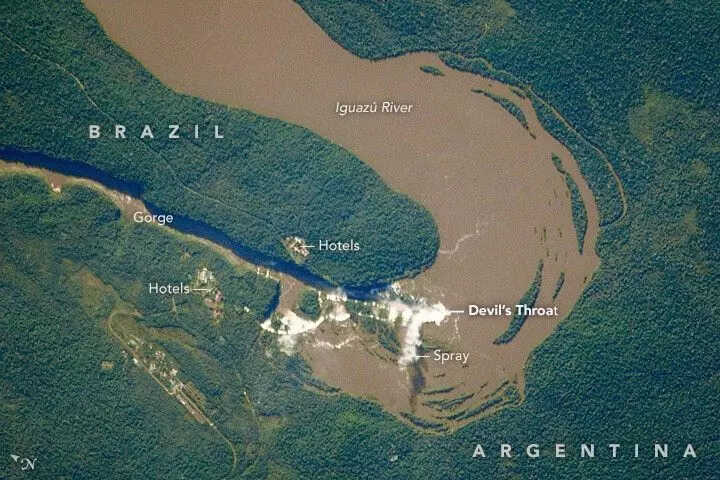
An Official Source further confirms its impressive dimensions and unparalleled significance on the global stage.
Geographical Splendor and Geological Formation
The magnificent system is primarily fed by the powerful Iguazu River, which eventually flows into the larger Paraná River.
Millions of years ago, intense volcanic activity created the massive geological fault line and basaltic rock formations where the falls spectacularly now exist.
The Iconic Devil’s Throat: A Core Feature
Central to the entire system is the renowned “Garganta del Diablo” or “Devil’s Throat,” a colossal U-shaped chasm of immense power and depth.
Here, approximately half of the Iguazu River’s substantial flow plunges over an 82-meter drop, generating a perpetual, deafening roar and a towering column of mist.
This specific section is often considered the most dramatic and awe-inspiring part of the entire waterfall complex, drawing the most attention.
An Intricate Network of Cascades
Comprising hundreds of individual falls, the system varies significantly in size and shape across its extensive 2.7-kilometre span.
The exact number of distinct falls can fluctuate dramatically, ranging from 150 to over 300, depending on the prevailing water levels and seasonal variations.
This intricate network forms a complex and dynamic hydrological landscape, where every drop of water is continuously in motion, carving and reshaping the ancient rock.
Each cascade contributes to the overall symphony of sound and sight, creating a truly unparalleled natural spectacle.
Biodiversity and Pristine Ecosystem
Surrounding the thundering falls is a lush subtropical rainforest, a vital component of the critically endangered Atlantic Forest biome.
This incredibly rich ecosystem is deservedly designated a UNESCO World Heritage site, protected for its outstanding universal natural beauty and unparalleled biodiversity.
Abundant Flora and Diverse Fauna
The area teems with an incredible variety of plant and animal life, making it a critical conservation zone of global importance.
Exquisite orchids, vibrant ferns, and towering ancient trees create a verdant, dense canopy, providing essential habitat for diverse wildlife populations.
The forest floor itself is a mosaic of life, with countless insect species contributing to the ecosystem’s health.
Home to Unique and Endangered Species
Majestic jaguars, elusive tapirs, graceful ocelots, and various playful monkey species inhabit the surrounding dense forests.
The vibrant avian population includes colourful toucans, melodious parrots, and the critically endangered Toco Toucan, easily identifiable by its large orange bill.
Hundreds of species of butterflies in a myriad of colours flutter gracefully through the pervasive mist, adding to the enchanting and almost magical atmosphere of the falls.
These creatures are integral to the ecosystem, playing vital roles in pollination and the food chain.
Tourism and the Unforgettable Visitor Experience
Both Brazil and Argentina offer distinct and equally spectacular perspectives of the magnificent falls, each providing unique vantage points.
Each country diligently maintains a national park, providing well-developed infrastructure and comprehensive services for millions of tourists annually.
The Panoramic Brazilian Side
The Brazilian side, located within Iguaçu National Park, offers grand, panoramic views of the entire system, allowing visitors to grasp its immense scale.
Visitors follow well-maintained walkways that lead to stunning vistas, culminating in a dramatic viewpoint at the very brink of the Devil’s Throat.
Iconic boardwalks extend out over the river, bringing spectators closer to the thunderous roars and powerful sprays of the cascades.
For an even more breathtaking perspective, helicopter tours are readily available from the Brazilian side, providing an unparalleled aerial view of the falls’ immense breadth and power.
The Immersive Argentine Side
Argentina’s Iguazú National Park provides a more immersive and intimate experience, with extensive trails winding directly through and even over the falls themselves.
The meticulously designed lower and upper circuits allow visitors to get incredibly close to the roaring cascades, feeling the spray on their faces.
The “Devil’s Throat Trail” walkway extends far into the chasm, placing visitors almost directly above the most powerful section of the falls.
Boat trips, such as the exhilarating “Gran Aventura,” take daring passengers right under the falling water, guaranteeing an unforgettable and thoroughly soaking encounter.
Accessibility and Park Facilities
Both national parks are thoughtfully equipped with modern visitor centres, diverse restaurants, and various amenities designed to enhance the overall experience for all guests.
Environmentally friendly transport options, including an ecological train, are conveniently available within the expansive Argentine park, reducing carbon footprints.
Accessibility features ensure that the majesty of the falls can be experienced by a wide range of visitors.
Conservation Efforts and Sustainable Practices
Protecting this irreplaceable natural treasure is a paramount concern and a shared responsibility for both nations.
Strict environmental regulations are diligently enforced to preserve the delicate ecosystem and meticulously manage the impacts of burgeoning tourism.
International Cooperation for Preservation
Brazil and Argentina actively collaborate on a multitude of conservation initiatives, recognizing their shared stewardship of this cross-border marvel.
These crucial efforts aim to maintain the ecological integrity of both national parks and the vast surrounding forested areas for future generations.
Joint research projects and anti-poaching operations demonstrate a strong commitment to conservation.
Ongoing Challenges and Future Goals
Illegal logging, poaching of endangered species, and the potential impact of large-scale hydroelectric projects pose ongoing and significant challenges to the region’s biodiversity.
Implementing sustainable tourism practices and continuous environmental monitoring are absolutely vital for the long-term preservation and health of the falls and their ecosystem.
Staying informed about latest trends in ecological conservation and sustainable development is crucial for managing such a globally important natural site effectively.
Cultural Significance and Enduring Legends
The magnificent falls hold deep cultural significance for the indigenous Guarani communities and local populations who have resided there for centuries.
Numerous captivating legends and ancient myths are profoundly associated with their awe-inspiring formation and immense spiritual power.
The Poignant Guarani Legends
One prominent Guarani legend tells of a powerful deity, M’Boi, who fell deeply in love with a beautiful tribal girl named Naipí, destined to marry a mortal warrior, Tarobá.
When Naipí and Tarobá attempted to flee by canoe, the enraged deity, in a fit of jealous fury, split the river and the earth, thereby creating the colossal falls to condemn them to an eternal fall and separation.
This tragic tale serves as a powerful explanation for the falls’ dramatic appearance and the perpetual sorrowful roar.
A Symbol of National Pride
For both Brazil and Argentina, the falls are not merely a geographical feature; they are a profound symbol of national pride and an essential cornerstone of their natural heritage.
They attract millions of visitors annually, showcasing the South American continent’s stunning natural beauty to a global audience.
The falls foster a sense of shared identity and mutual respect between the two nations.
Comparing to Other Global Waterfalls
While not holding the record for the tallest single drop, the Iguazu system’s sheer width, volumetric flow, and segmented nature make it truly unique among global waterfalls.
It frequently draws direct comparisons with other iconic cascades such as Victoria Falls in Africa and Niagara Falls in North America.
Iguazu versus Victoria Falls
Victoria Falls, straddling Zambia and Zimbabwe, though undeniably impressive, measures approximately 1.7 kilometres (1.05 miles) in width, significantly less than Iguazu’s 2.7 kilometres.
Both are majestic wonders, but Iguazu’s broken, segmented nature across numerous islands and its lush subtropical setting give it a distinctly different and perhaps more intricate character.
The multitude of individual cascades at Iguazu offers a complex visual tapestry.
Iguazu versus Niagara Falls
Niagara Falls, famously shared by the USA and Canada, is far narrower in comparison, spanning roughly 1.2 kilometres (0.75 miles) across its three distinct segments.
Iguazu significantly dwarfs Niagara in terms of overall scale, the sheer number of individual falls, and its surrounding vibrant tropical rainforest environment.
The climatic zones and biodiversity surrounding them are also markedly different, enhancing Iguazu’s exotic appeal.
Planning Your Visit to This Natural Wonder
Visiting this unparalleled natural wonder demands careful planning and foresight to maximize the experience and ensure a smooth trip.
Understanding entry requirements, local currencies, and efficient transportation options between the two park sides is absolutely essential for visitors.
Best Time to Experience the Falls
The ideal time to visit is generally during the shoulder seasons, which include spring (September to November) and autumn (March to May), to avoid peak crowds and extreme summer temperatures.
However, the falls are spectacular year-round, with varying water levels during different seasons adding to their dynamic beauty and offering unique perspectives with each visit.
Each season presents its own charm, from lush greenery in the wet season to clearer views in drier periods.
Logistics and Accommodation Options
Foz do Iguaçu in Brazil and Puerto Iguazú in Argentina serve as the main gateway cities, offering a diverse array of accommodation options to suit every budget and preference.
Cross-border travel between the two national parks is generally straightforward, often involving readily available taxis, public buses, or convenient organized tour services.
Always ensure your passport and visa requirements are meticulously in order for seamless transit and an enjoyable visit between the two South American countries.
The Future of This Natural Wonder
The Iguazu Falls represent a critical landmark in global natural heritage, demanding continued vigilance and proactive conservation efforts from all stakeholders.
Their enduring future hinges critically on effective, collaborative conservation strategies and responsible, well-managed tourism practices.
Balancing Progress and Preservation
Ongoing discussions about regional development, including new infrastructure and significant energy projects, require incredibly careful consideration of potential environmental impacts.
The delicate balance between essential human progress and the imperative preservation of such pristine and globally significant natural environments remains an ongoing and complex act.
Sustainable development models are crucial to ensure long-term harmony.
An Enduring Legacy for Humanity
For generations to come, the majestic waterfall system bridging Brazil and Argentina will undoubtedly continue to inspire awe, wonder, and profound respect.
Its powerful roar, ethereal mist, and breathtaking beauty serve as a constant and powerful reminder of Earth’s extraordinary natural power and resilience.
This shared treasure embodies the spirit of our planet’s wild, untamed beauty, urging us to protect it fiercely.
Frequently Asked Questions About the Widest Waterfall System
1. How wide is the waterfall system between Brazil and Argentina?
The incredible waterfall system stretches an astonishing 2.7 kilometres (approximately 1.7 miles) in total width, proudly making it the widest waterfall system known globally.
This impressive measurement encompasses the entire span of its numerous cascades and islands, extending from one bank of the mighty Iguazu River to the other.
2. What is the official name of this magnificent waterfall system?
This magnificent natural wonder is universally known as Iguazu Falls, or sometimes referred to as Iguaçu Falls in Portuguese, reflecting its location.
The evocative name “Iguazu” originates from the indigenous Guarani language, combining the words “y” (meaning water) and “guasu” (meaning big), aptly translating to “big water.”
3. Which two countries precisely share the Iguazu Falls?
Iguazu Falls are majestically shared by the South American nations of Brazil and Argentina, with the international border running directly through the falls themselves.
Both countries have established and diligently maintain national parks, specifically Iguaçu National Park in Brazil and Iguazú National Park in Argentina, to protect this invaluable natural area.
4. What is the specific significance of the “Devil’s Throat” at Iguazu Falls?
The “Devil’s Throat,” or Garganta del Diablo in Spanish, is undoubtedly the most iconic, powerful, and visually dramatic section of the entire Iguazu Falls system.
It forms a massive U-shaped chasm where approximately half of the Iguazu River’s immense flow plunges a spectacular 82 meters (269 feet) downwards, generating an immense roar, a perpetual cloud of mist, and breathtaking rainbows.
5. How many individual waterfalls comprise the vast Iguazu system?
The number of individual waterfalls making up the Iguazu system is quite dynamic and can vary significantly depending on seasonal water levels, ranging from 150 to well over 300 separate cascades.
This constant variation means the falls present a different appearance throughout the year, offering a unique and ever-changing experience with each subsequent visit.
6. What kind of diverse wildlife can be encountered around Iguazu Falls?
The surrounding subtropical rainforest is remarkably biodiverse, serving as home to elusive jaguars, graceful ocelots, large tapirs, fascinating anteaters, and various species of playful monkeys.
Birdlife is extraordinarily abundant, featuring colourful toucans, vibrant parrots, and tiny hummingbirds, while hundreds of butterfly species add a mesmerizing, vivid display of colour to the misty landscape.
7. Which side typically offers a superior view: Brazil or Argentina?
Both the Brazilian and Argentine sides offer distinct, yet complementary, experiences, making it highly recommended to visit both if time and logistics permit for a comprehensive understanding.
The Brazilian side generally provides more expansive, panoramic, and wide-angle views of the entire system, while the Argentine side offers a more immersive experience with extensive walkways that allow visitors to get intimately close to and even over the roaring falls.
8. Is Iguazu Falls officially recognized as a UNESCO World Heritage Site?
Yes, both Iguaçu National Park in Brazil (designated in 1986) and Iguazú National Park in Argentina (designated in 1984) hold the prestigious status of UNESCO World Heritage Sites.
They are celebrated for their outstanding universal value, exceptional natural beauty, and the unparalleled biological diversity of their vital subtropical rainforest ecosystem, highlighting their global importance.
9. How can visitors get very close to the thunderous waterfalls?
On the Argentine side, visitors can walk on extensive upper and lower circuit trails, including a breathtaking long walkway that leads directly to the very brink of the powerful Devil’s Throat.
Additionally, thrilling boat tours, such as the renowned “Gran Aventura,” operate on both sides of the falls, taking daring passengers exhilaratingly close to or even directly underneath the cascading water, ensuring an unforgettable, soaking, and adrenaline-pumping experience.
10. What is considered the best time of year to visit Iguazu Falls for optimal experience?
The best time to visit Iguazu Falls is typically during the shoulder seasons, specifically spring (from September to November) and autumn (from March to May).
During these months, the weather is generally pleasant with comfortable temperatures, water levels are typically robust, and the crowds are usually thinner compared to the bustling peak summer holiday periods, offering a more serene visit.
Conclusion: A Testament to Nature’s Grandeur
The majestic waterfall system bridging Brazil and Argentina stands as a monumental testament to the raw power, intricate artistry, and enduring beauty of nature.
Its impressive 2.7-kilometre width firmly establishes its place not only as the widest but also as one of the most breathtaking and awe-inspiring cascades on Earth, a true global spectacle.
More than just a geographical marvel, it is a vibrant, biodiverse ecosystem, a profound cultural touchstone for indigenous communities, and a beacon for ongoing global conservation efforts.
Visitors depart with indelible memories of its thunderous roar, the ethereal, ever-present mist, and the unparalleled beauty of its surrounding, ancient rainforest.
This shared natural wonder continues to inspire and serves as a powerful reminder of the precious, wild landscapes we must diligently strive to protect and preserve for countless generations to come.
Iguazu Falls, Iguaçu Falls, widest waterfall, Brazil Argentina border, 2.7 kilometres waterfall, Devil’s Throat, natural wonder, South American waterfalls, Iguazu National Park, UNESCO World Heritage, waterfall tourism, rainforest biodiversity, Brazil travel, Argentina travel, ecological tourism, South America travel, Misiones province, Paraná state, Gran Aventura, Guarani legend.