






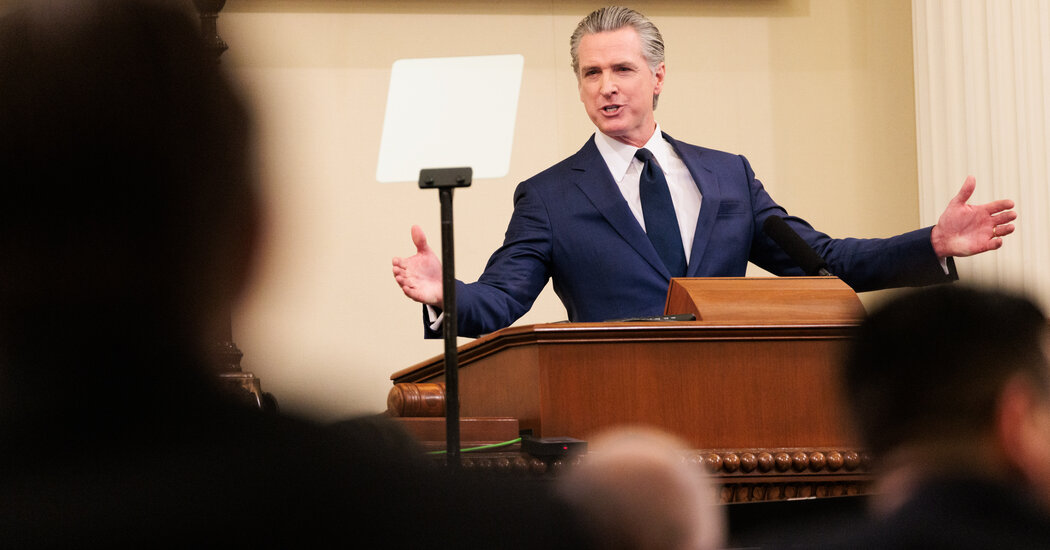
Newsom Vows to Stop Proposed Billionaire Tax in California
California Governor Gavin Newsom has vowed to stop a proposed billionaire tax in the state, citing concerns that it could lead to a mass exodus of wealthy residents. The proposed tax, which would impose a 1% tax on individuals with a net worth of over $20 million, has been gaining traction in recent months as a way to address the state’s growing wealth gap.
However, Newsom believes that the tax would be counterproductive and could ultimately harm the state’s economy. “I’m not interested in chasing people out of the state,” he said in a recent interview. “I’m interested in creating an environment where people want to come and stay.” Newsom has instead proposed a series of alternative measures to address the state’s wealth gap, including increasing funding for education and affordable housing.
Background on the Proposed Tax
The proposed billionaire tax was first introduced by a group of California lawmakers in February. The tax would apply to individuals with a net worth of over $20 million, and would be used to fund a range of social programs, including education, healthcare, and housing. Proponents of the tax argue that it would help to reduce the state’s growing wealth gap, which has been exacerbated by the COVID-19 pandemic.
| Proposed Tax Rate | Net Worth Threshold |
|---|---|
| 1% | $20 million |
Concerns About the Tax
Despite its popularity among some lawmakers, the proposed billionaire tax has raised concerns among business leaders and wealthy residents. Many have argued that the tax would be difficult to enforce, and could lead to a range of unintended consequences, including a decline in charitable giving and a reduction in investment in the state.
Others have pointed out that the tax would be unfair to certain groups, such as retirees and small business owners, who may have a high net worth but limited liquid assets. “This tax would be a disaster for our state,” said one business leader. “It would send the wrong message to investors and entrepreneurs, and would ultimately harm our economy.”
| Concerns About the Tax | Description |
|---|---|
| Difficulty in Enforcement | The tax would be difficult to enforce, particularly when it comes to tracking the net worth of individuals. |
| Unintended Consequences | The tax could lead to a decline in charitable giving and a reduction in investment in the state. |
| Unfairness to Certain Groups | The tax would be unfair to certain groups, such as retirees and small business owners, who may have a high net worth but limited liquid assets. |
Alternative Measures
Newsom has proposed a series of alternative measures to address the state’s wealth gap. These measures include increasing funding for education and affordable housing, as well as implementing policies to support small businesses and entrepreneurs.
One of the key measures proposed by Newsom is an increase in funding for the state’s education system. This would include a boost in funding for schools in low-income areas, as well as an increase in funding for programs that support disadvantaged students. “Education is the key to unlocking opportunity,” said Newsom. “By investing in our education system, we can help to create a more level playing field and reduce the wealth gap.”
| Alternative Measure | Description |
|---|---|
| Increasing Funding for Education | Newsom has proposed an increase in funding for the state’s education system, including a boost in funding for schools in low-income areas. |
| Increasing Funding for Affordable Housing | Newsom has proposed an increase in funding for affordable housing, including programs that support low-income families and individuals. |
| Implementing Policies to Support Small Businesses and Entrepreneurs | Newsom has proposed a range of policies to support small businesses and entrepreneurs, including tax breaks and access to capital. |
Frequently Asked Questions
- What is the proposed billionaire tax? The proposed billionaire tax is a 1% tax on individuals with a net worth of over $20 million.
- Why has Newsom vowed to stop the proposed tax? Newsom has vowed to stop the proposed tax because he believes it could lead to a mass exodus of wealthy residents and harm the state’s economy.
- What alternative measures has Newsom proposed? Newsom has proposed a series of alternative measures, including increasing funding for education and affordable housing, as well as implementing policies to support small businesses and entrepreneurs.
- How would the proposed tax be enforced? The proposed tax would be enforced through a range of measures, including self-reporting and audits.
- What are the concerns about the proposed tax? Concerns about the proposed tax include difficulty in enforcement, unintended consequences, and unfairness to certain groups.
- How much revenue would the proposed tax generate? The proposed tax would generate an estimated $5 billion in revenue per year.
- What would the revenue from the proposed tax be used for? The revenue from the proposed tax would be used to fund a range of social programs, including education, healthcare, and housing.
- Would the proposed tax apply to all billionaires in California? No, the proposed tax would only apply to individuals with a net worth of over $20 million.
- Could the proposed tax be used as a model for other states? Yes, the proposed tax could be used as a model for other states looking to address their own wealth gaps.
- What is the next step in the process of implementing the proposed tax? The next step in the process would be for the state legislature to vote on the proposed tax, which would then need to be signed into law by the Governor.
Image Credit: The New York Times